Andreas Marks – författare
Visar alla böcker från författaren Andreas Marks. Handla med fri frakt och snabb leverans.
23 produkter
23 produkter
Inbunden, Engelska, 2025
1 454 kr
Skickas inom 3-6 vardagar
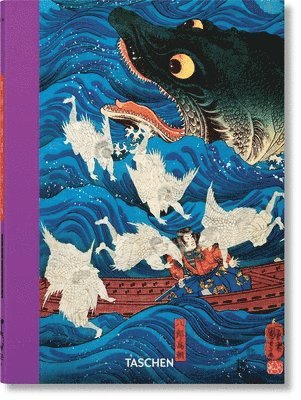
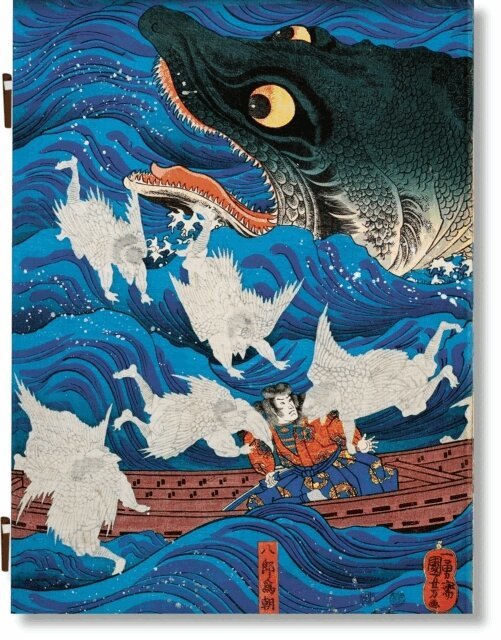
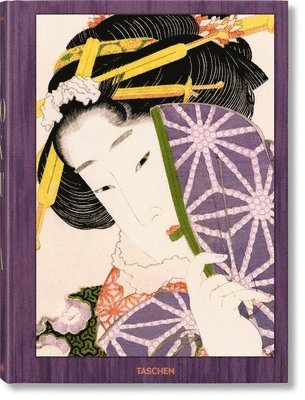
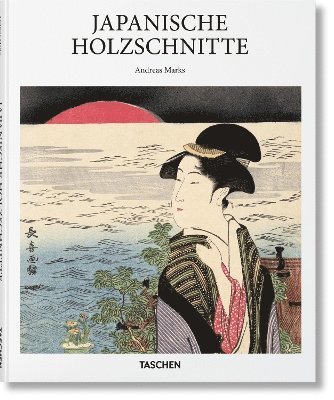
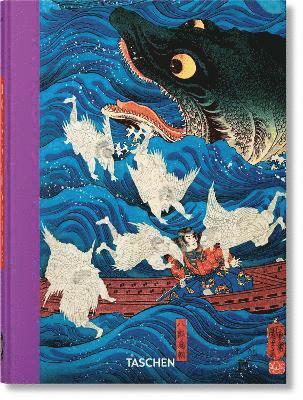
From Edouard Manet’s portrait of naturalist writer Émile Zola sitting among his Japanese art finds to Van Gogh’s meticulous copies of the Hiroshige prints he devotedly collected, 19th-century pioneers of European modernism made no secret of their love of Japanese art. In all its sensuality, freedom, and effervescence, the woodblock print is single-handedly credited with the wave of japonaiserie that first enthralled France and, later, all of Europe—but often remains misunderstood as an “exotic” artifact that helped inspire Western creativity.The fact is that the Japanese woodblock print is a phenomenon of which there exists no Western equivalent. Some of the most disruptive ideas in modern art—including, as Karl Marx put it, that “all that is solid melts into air”—were invented in Japan in the 1700s and expressed like never before in the designs of such masters as Hokusai, Utamaro, and Hiroshige in the early 19th century.This book lifts the veil on a much-loved but little-understood art form by presenting the 200 most exceptional Japanese woodblock prints in their historical context. Ranging from the 17th-century development of decadent ukiyo-e, or “pictures of the floating world,” to the decline and later resurgence of prints in the early 20th century, the images collected in this edition make up an unmatched record not only of a unique genre in art history, but also of the shifting mores and cultural development of Japan.From mystical mountains to snowy passes, samurai swordsmen to sex workers in shop windows, each piece is explored as a work of art in its own right, revealing the stories and people behind the motifs. We discover the four pillars of the woodblock print—beauties, actors, landscapes, and bird-and-flower compositions—alongside depictions of sumo wrestlers, kabuki actors, or enticing courtesans—rock stars who populated the “floating world” and whose fan bases fueled the frenzied production of woodblock prints. We delve into the horrifying and the obscure in prints where demons, ghosts, man-eaters, and otherworldly creatures torment the living—stunning images that continue to influence Japanese manga, film, and video games to this day. We witness how, in their incredible breadth, from everyday scenes to erotica, the martial to the mythological, these works are united by the technical mastery and infallible eye of their creators and how, with tremendous ingenuity and tongue-in-cheek wit, publishers and artists alike fought to circumvent government censorship.This two-volume edition in a box, crafted with traditional Japanese binding, presents reproductions of the finest extant impressions from the vaults of museums and private collections across the globe. Stunning fold-outs invite us to study even the subtlest details, while extensive descriptions guide us through this frantic period in Japanese art history.
Inbunden, Engelska, 2010
507 kr
Skickas inom 3-6 vardagar
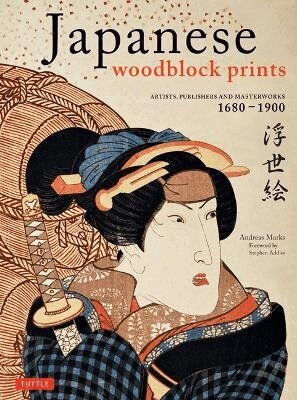
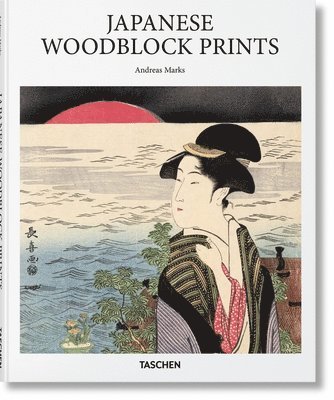
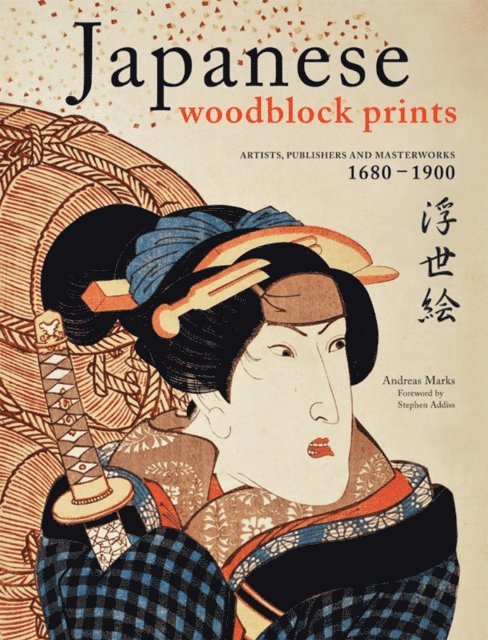
An unparalleled survey of Japanese woodbloack prints from 1680 through 1900 — with over 500 color prints, and detailed histories of both the artists and the publishers of this famous art form.Japanese woodblock prints, or ukiyo-e, are the most recognizable Japanese art form. Their massive popularity has spread from Japan to be embraced by a worldwide audience. Covering the period from the beginning of the Japanese woodblock print in the 1680s until the year 1900, Japanese Woodblock Prints provides a detailed survey of all the famous ukiyo-e artists, along with over 500 full-color prints.Unlike previous examinations of this art form, Japanese Woodblock Prints includes detailed histories of the publishers of woodblock prints—who were often the driving force determining which prints, and therefore which artists, would make it into mass circulation for a chance at critical and popular success. Invaluable as a guide for ukiyo-e enthusiasts looking for detailed information about their favorite Japanese woodblock print artists and prints, it is also an ideal introduction for newcomers to the world of the woodblock print. This lavishly illustrated book will be a valued addition to the libraries of scholars, as well as the general art enthusiast.
Inbunden, Engelska, 2016
851 kr
Skickas inom 5-8 vardagar
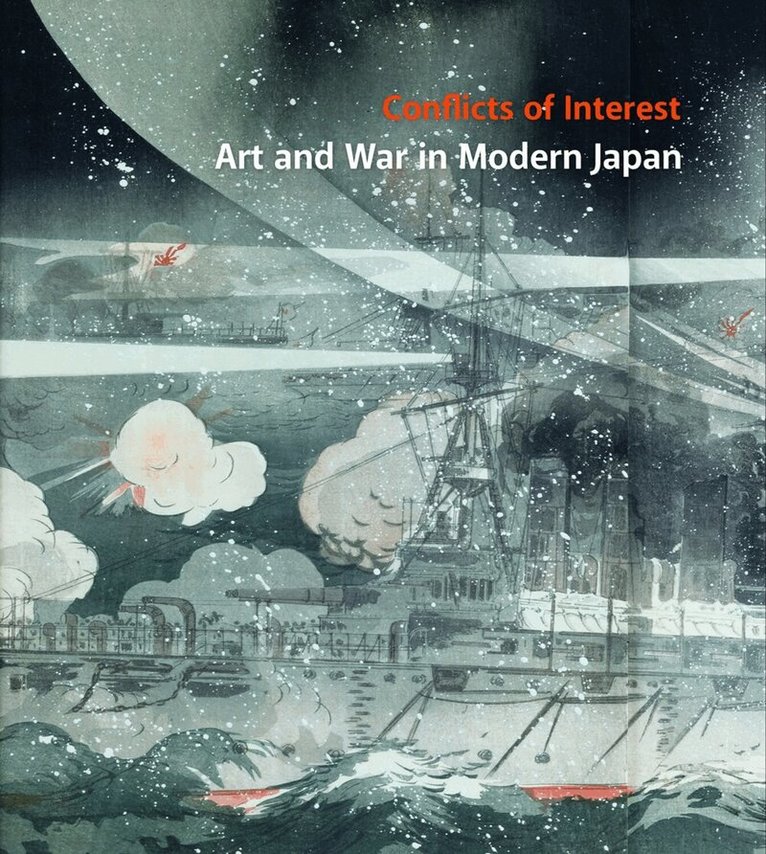
This fascinating publication showcases the Saint Louis Art Museum’s collection of Japanese military prints and related materials—one of the largest collections of such works in the world. The 1,400 objects in the collection are mostly color woodblock prints, but the holdings also include paintings, lithographs, photographs, stereographs, books, magazines, maps, game boards, textiles, ceramics, toys, sketchbooks, and commemorative materials. This extraordinary body of visual works chronicles Japan’s rise as a modern nation from the beginning of the Meiji Restoration in 1868 through the aftermath of Pearl Harbor in 1942, with a focus on the Sino-Japanese and Russo-Japanese wars. Conflicts of Interest will bring to light an important aspect of Japan’s visual culture and the narratives it circulated for its citizens, allies, and enemies on the world stage.
Inbunden, Engelska, 2010
851 kr
Skickas inom 5-8 vardagar
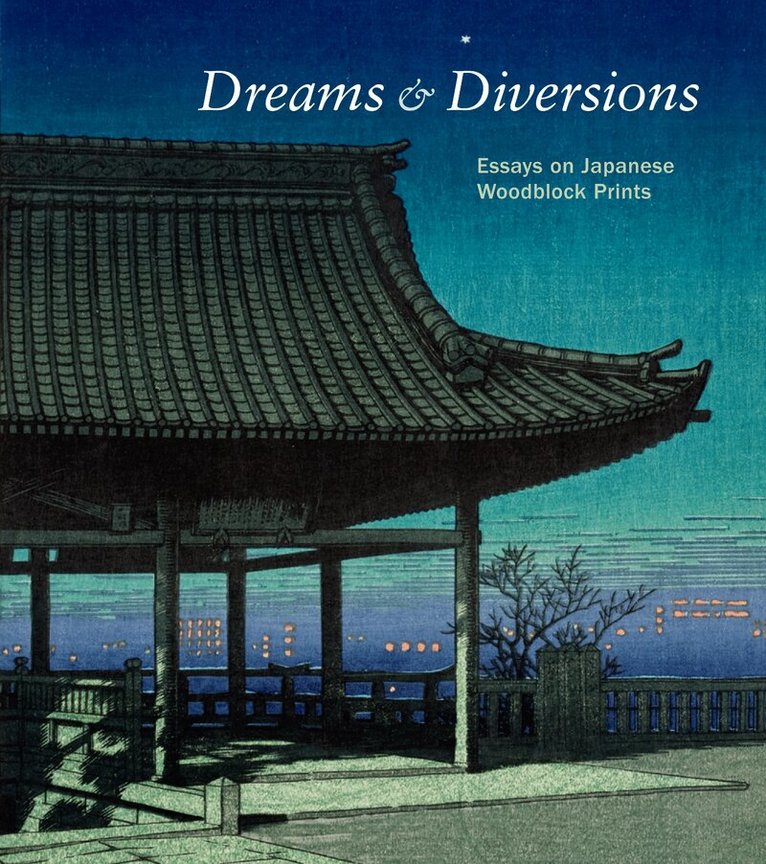
Celebrates Japanese woodblock prints with a collection of ten original essays by an international team of scholars
Inbunden, Engelska, 2025
660 kr
Skickas inom 3-6 vardagar
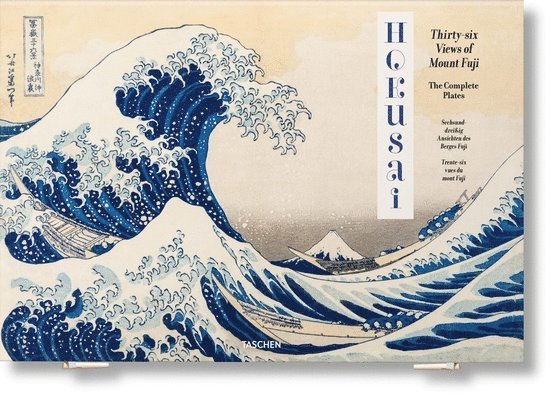
Mount Fuji has long been a centerpiece of Japanese cultural imagination, and nothing captures this with more virtuosity than the landmark woodblock print series Thirty-six Views of Mount Fuji by Katsushika Hokusai (1760–1849). The renowned printmaker documents 19th-century Japan with exceptional artistry and adoration, celebrating its countryside, cities, people, and serene natural beauty. Produced at the peak of Hokusai’s artistic ambition, the series is a quintessential work of ukiyo-e that earned the artist world-wide recognition as a leading master of his craft.The prints illustrate Hokusai’s own obsession with Mount Fuji as well as the flourishing domestic tourism of the late Edo period. Just as the mountain was a cherished view for travelers heading to the capital Edo (now Tokyo) along the Tōkaidō road, Mount Fuji is the infallible backdrop to each of the series’ unique scenes. Hokusai captures the distinctive landscape and provincial charm of each setting with a vivid palette and exquisite detail. Including the iconic Under the Great Wave off Kanagawa (also The Great Wave), this widely celebrated series is a treasure of international art history.Among only a few complete reprints of the series, this XL edition pays homage to Hokusai’s striking colors and compositions with unprecedented care and magnitude. Bound in the Japanese tradition, Thirty-six Views of Mount Fuji presents the original 36 plates plus the additional 10 later added by the artist. The perfect companion piece to TASCHEN’s One Hundred Views of Edo and The Sixty-Nine Stations along the Kisokaidō, this publication paints an enchanting picture of pre-industrial Japan and is itself a stunning monument to the art of woodblock printing.
Inbunden, Engelska, 2017
1 494 kr
Skickas inom 3-6 vardagar
The Kisokaidō route through Japan was ordained in the early 1600s by the country’s then-ruler Tokugawa Ieyasu, who decreed that staging posts be installed along the length of the arduous passage between Edo (present-day Tokyo) and Kyoto. Inns, shops, and restaurants were established to provide sustenance and lodging to weary travelers. In 1835, renowned woodblock print artist Keisai Eisen was commissioned to create a series of works to chart the Kisokaidō journey. After producing 24 prints, Eisen was replaced by Utagawa Hiroshige, who completed the series of 70 prints in 1838.Both Eisen and Hiroshige were master print practitioners. In The Sixty-Nine Stations along the Kisokaidō, we find the artists’ distinct styles as much as their shared expertise. From the busy starting post of Nihonbashi to the castle town of Iwamurata, Eisen opts for a more muted palette but excels in figuration, particularly of glamorous women, and relishes snapshots of activity along the route, from shoeing a horse to winnowing rice. Hiroshige demonstrates his mastery of landscape with grandiose and evocative scenes, whether it’s the peaceful banks of the Ota River, the forbidding Wada Pass, or a moonlit ascent between Yawata and Mochizuki.Taken as a whole, The Sixty-Nine Stations collection represents not only a masterpiece of woodblock practice, including bold compositions and an experimental use of color, but also a charming tapestry of 19th-century Japan, long before the specter of industrialization. This TASCHEN XXL edition revives the series with due scale and splendor. Sourced from the only-known set of a near-complete run of the first edition of the series, this legendary publication is reproduced in the finest quality, bound in the Japanese tradition and with uncut paper. A perfect companion piece to TASCHEN’s One Hundred Famous Views of Edo, it is at once a visual delight and a major artifact from the bygone era of Imperial Japan.
Inbunden, Engelska, 2021
1 430 kr
Skickas inom 3-6 vardagar
Mount Fuji has long been a centerpiece of Japanese cultural imagination, and nothing captures this with more virtuosity than the landmark woodblock print series Thirty-six Views of Mount Fuji by Katsushika Hokusai (1760–1849). The renowned printmaker documents 19th-century Japan with exceptional artistry and adoration, celebrating its countryside, cities, people, and serene natural beauty. Produced at the peak of Hokusai’s artistic ambition, the series is a quintessential work of ukiyo-e that earned the artist world-wide recognition as a leading master of his craft. The prints illustrate Hokusai’s own obsession with Mount Fuji as well as the flourishing domestic tourism of the late Edo period. Just as the mountain was a cherished view for travelers heading to the capital Edo (now Tokyo) along the Tōkaidō road, Mount Fuji is the infallible backdrop to each of the series’ unique scenes. Hokusai captures the distinctive landscape and provincial charm of each setting with a vivid palette and exquisite detail. Including the iconic Under the Great Wave off Kanagawa (also The Great Wave), this widely celebrated series is a treasure of international art history. Among only a few complete reprints of the series, this XXL edition pays homage to Hokusai’s striking colors and compositions with unprecedented care and magnitude. Bound in the Japanese tradition with uncut paper, Thirty-six Views of Mount Fuji presents the original 36 plates plus the additional 10 later added by the artist. The perfect companion piece to TASCHEN’s One Hundred Views of Edo and The Sixty-Nine Stations along the Kisokaidō, this publication paints an enchanting picture of pre-industrial Japan and is itself a stunning monument to the art of woodblock printing.
Inbunden, Tyska, 2024
165 kr
Skickas inom 3-6 vardagar
From Edouard Manet’s portrait of naturalist writer Émile Zola sitting among his Japanese art finds to Van Gogh’s meticulous copies of the Hiroshige prints he devotedly collected, 19th-century pioneers of European modernism made no secret of their love of Japanese art. In all its sensuality, freedom, and effervescence, the woodblock print is single-handedly credited with the wave of japonaiserie that first enthralled France and, later, all of Europe—but often remains misunderstood as an “exotic” artifact that helped inspire Western creativity.The fact is that the Japanese woodblock print is a phenomenon of which there exists no Western equivalent. Some of the most disruptive ideas in modern art—including, as Karl Marx put it, that “all that is solid melts into air”—were invented in Japan in the 1700s and expressed like never before in the designs of such masters as Hokusai, Utamaro, and Hiroshige in the early 19th century.This volume lifts the veil on a much-loved but little-understood art form by presenting the most exceptional Japanese woodblock prints in their historical context. Ranging from the 17th-century development of decadent ukiyo-e, or “pictures of the floating world,” to the decline and later resurgence of prints in the early 20th century, the images collected in this edition make up a record not only of a unique genre in art history, but also of the shifting mores and cultural development of Japan.We discover the four pillars of the woodblock print—beauties, actors, landscapes, and bird-and-flower compositions—alongside depictions of sumo wrestlers, kabuki actors, or enticing courtesans—rock stars who populated the “floating world” and whose fan bases fueled the frenzied production of woodblock prints. We delve into the horrifying and the obscure in prints where demons, ghosts, and otherworldly creatures torment the living—stunning images that continue to influence Japanese manga, film, and video games to this day. We witness how, in their incredible breadth, from everyday scenes to erotica, the martial to the mythological, these works are united by the technical mastery and infallible eye of their creators and how, with tremendous ingenuity and tongue-in-cheek wit, publishers and artists alike fought to circumvent government censorship.This edition compiles the finest extant impressions from museums and private collections across the globe, accompanied by descriptions to guide us through this frantic period in Japanese art history.
Inbunden, Franska, 2024
188 kr
Skickas inom 3-6 vardagar
From Edouard Manet’s portrait of naturalist writer Émile Zola sitting among his Japanese art finds to Van Gogh’s meticulous copies of the Hiroshige prints he devotedly collected, 19th-century pioneers of European modernism made no secret of their love of Japanese art. In all its sensuality, freedom, and effervescence, the woodblock print is single-handedly credited with the wave of japonaiserie that first enthralled France and, later, all of Europe—but often remains misunderstood as an “exotic” artifact that helped inspire Western creativity.The fact is that the Japanese woodblock print is a phenomenon of which there exists no Western equivalent. Some of the most disruptive ideas in modern art—including, as Karl Marx put it, that “all that is solid melts into air”—were invented in Japan in the 1700s and expressed like never before in the designs of such masters as Hokusai, Utamaro, and Hiroshige in the early 19th century.This volume lifts the veil on a much-loved but little-understood art form by presenting the most exceptional Japanese woodblock prints in their historical context. Ranging from the 17th-century development of decadent ukiyo-e, or “pictures of the floating world,” to the decline and later resurgence of prints in the early 20th century, the images collected in this edition make up a record not only of a unique genre in art history, but also of the shifting mores and cultural development of Japan.We discover the four pillars of the woodblock print—beauties, actors, landscapes, and bird-and-flower compositions—alongside depictions of sumo wrestlers, kabuki actors, or enticing courtesans—rock stars who populated the “floating world” and whose fan bases fueled the frenzied production of woodblock prints. We delve into the horrifying and the obscure in prints where demons, ghosts, and otherworldly creatures torment the living—stunning images that continue to influence Japanese manga, film, and video games to this day. We witness how, in their incredible breadth, from everyday scenes to erotica, the martial to the mythological, these works are united by the technical mastery and infallible eye of their creators and how, with tremendous ingenuity and tongue-in-cheek wit, publishers and artists alike fought to circumvent government censorship.This edition compiles the finest extant impressions from museums and private collections across the globe, accompanied by descriptions to guide us through this frantic period in Japanese art history.
Inbunden, Engelska, 2024
177 kr
Skickas inom 3-6 vardagar
From Edouard Manet’s portrait of naturalist writer Émile Zola sitting among his Japanese art finds to Van Gogh’s meticulous copies of the Hiroshige prints he devotedly collected, 19th-century pioneers of European modernism made no secret of their love of Japanese art. In all its sensuality, freedom, and effervescence, the woodblock print is single-handedly credited with the wave of japonaiserie that first enthralled France and, later, all of Europe—but often remains misunderstood as an “exotic” artifact that helped inspire Western creativity.The fact is that the Japanese woodblock print is a phenomenon of which there exists no Western equivalent. Some of the most disruptive ideas in modern art—including, as Karl Marx put it, that “all that is solid melts into air”—were invented in Japan in the 1700s and expressed like never before in the designs of such masters as Hokusai, Utamaro, and Hiroshige in the early 19th century.This volume lifts the veil on a much-loved but little-understood art form by presenting the most exceptional Japanese woodblock prints in their historical context. Ranging from the 17th-century development of decadent ukiyo-e, or “pictures of the floating world,” to the decline and later resurgence of prints in the early 20th century, the images collected in this edition make up a record not only of a unique genre in art history, but also of the shifting mores and cultural development of Japan.We discover the four pillars of the woodblock print—beauties, actors, landscapes, and bird-and-flower compositions—alongside depictions of sumo wrestlers, kabuki actors, or enticing courtesans—rock stars who populated the “floating world” and whose fan bases fueled the frenzied production of woodblock prints. We delve into the horrifying and the obscure in prints where demons, ghosts, and otherworldly creatures torment the living—stunning images that continue to influence Japanese manga, film, and video games to this day. We witness how, in their incredible breadth, from everyday scenes to erotica, the martial to the mythological, these works are united by the technical mastery and infallible eye of their creators and how, with tremendous ingenuity and tongue-in-cheek wit, publishers and artists alike fought to circumvent government censorship.This edition compiles the finest extant impressions from museums and private collections across the globe, accompanied by descriptions to guide us through this frantic period in Japanese art history.
Inbunden, Tyska, 2021
284 kr
Skickas inom 3-6 vardagar
From Edouard Manet’s portrait of naturalist writer Émile Zola sitting among his Japanese art finds to Van Gogh’s meticulous copies of the Hiroshige prints he devotedly collected, 19th-century pioneers of European modernism made no secret of their love of Japanese art. In all its sensuality, freedom, and effervescence, the woodblock print is single-handedly credited with the wave of japonaiserie that first enthralled France and, later, all of Europe—but often remains misunderstood as an “exotic” artifact that helped inspire Western creativity. The fact is that the Japanese woodblock print is a phenomenon of which there exists no Western equivalent. Some of the most disruptive ideas in modern art—including, as Karl Marx put it, that “all that is solid melts into air”—were invented in Japan in the 1700s and expressed like never before in the designs of such masters as Hokusai, Utamaro, and Hiroshige in the early 19th century. This volume, derived from the original XXL monograph, lifts the veil on a much-loved but little-understood art form by presenting the most exceptional Japanese woodblock prints in their historical context. Ranging from the 17th-century development of decadent ukiyo-e, or “pictures of the floating world,” to the decline and later resurgence of prints in the early 20th century, the images collected in this edition make up an unmatched record not only of a unique genre in art history, but also of the shifting mores and cultural development of Japan. From mystical mountains to snowy passes, samurai swordsmen to sex workers in shop windows, each piece is explored as a work of art in its own right, revealing the stories and people behind the motifs. We discover the four pillars of the woodblock print—beauties, actors, landscapes, and bird-and-flower compositions—alongside depictions of sumo wrestlers, kabuki actors, or enticing courtesans—rock stars who populated the “floating world” and whose fan bases fueled the frenzied production of woodblock prints. We delve into the horrifying and the obscure in prints where demons, ghosts, man-eaters, and otherworldly creatures torment the living—stunning images that continue to influence Japanese manga, film, and video games to this day. We witness how, in their incredible breadth, from everyday scenes to erotica, the martial to the mythological, these works are united by the technical mastery and infallible eye of their creators and how, with tremendous ingenuity and tongue-in-cheek wit, publishers and artists alike fought to circumvent government censorship. As part of our 40th anniversary series, this edition compiles the finest extant impressions from museums and private collections across the globe in a lightweight, accessible format, offering extensive descriptions to guide us through this frantic period in Japanese art history.
Inbunden, Engelska, 2021
286 kr
Skickas inom 3-6 vardagar
From Edouard Manet’s portrait of naturalist writer Émile Zola sitting among his Japanese art finds to Van Gogh’s meticulous copies of the Hiroshige prints he devotedly collected, 19th-century pioneers of European modernism made no secret of their love of Japanese art. In all its sensuality, freedom, and effervescence, the woodblock print is single-handedly credited with the wave of japonaiserie that first enthralled France and, later, all of Europe—but often remains misunderstood as an “exotic” artifact that helped inspire Western creativity. The fact is that the Japanese woodblock print is a phenomenon of which there exists no Western equivalent. Some of the most disruptive ideas in modern art—including, as Karl Marx put it, that “all that is solid melts into air”—were invented in Japan in the 1700s and expressed like never before in the designs of such masters as Hokusai, Utamaro, and Hiroshige in the early 19th century. This volume, derived from the original XXL monograph, lifts the veil on a much-loved but little-understood art form by presenting the most exceptional Japanese woodblock prints in their historical context. Ranging from the 17th-century development of decadent ukiyo-e, or “pictures of the floating world,” to the decline and later resurgence of prints in the early 20th century, the images collected in this edition make up an unmatched record not only of a unique genre in art history, but also of the shifting mores and cultural development of Japan. From mystical mountains to snowy passes, samurai swordsmen to sex workers in shop windows, each piece is explored as a work of art in its own right, revealing the stories and people behind the motifs. We discover the four pillars of the woodblock print—beauties, actors, landscapes, and bird-and-flower compositions—alongside depictions of sumo wrestlers, kabuki actors, or enticing courtesans—rock stars who populated the “floating world” and whose fan bases fueled the frenzied production of woodblock prints. We delve into the horrifying and the obscure in prints where demons, ghosts, man-eaters, and otherworldly creatures torment the living—stunning images that continue to influence Japanese manga, film, and video games to this day. We witness how, in their incredible breadth, from everyday scenes to erotica, the martial to the mythological, these works are united by the technical mastery and infallible eye of their creators and how, with tremendous ingenuity and tongue-in-cheek wit, publishers and artists alike fought to circumvent government censorship. As part of our 40th anniversary series, this edition compiles the finest extant impressions from museums and private collections across the globe in a lightweight, accessible format, offering extensive descriptions to guide us through this frantic period in Japanese art history.
Inbunden, Engelska, 2024
2 029 kr
Skickas inom 3-6 vardagar
At the age of six, Hokusai was said to have painted his first picture, and a year after his death aged 89, his designs for illustrated books were posthumously published. Tracing a long, prolific career, this edition spans each of the artist’s creative phases: from the actor portraits with which Hokusai started out to the 1,300 designs carried out in his final years under the name Manji.Reproducing 746 woodblock prints, paintings, sketches, and book illustrations, many of them in granular detail, this volume is comfortably the most complete publication on perhaps Japan’s most famous artist. Hokusai’s wide appeal as the recognizable figure of Japan’s Edo period endures to this day: in March 2023, a version of his iconic woodblock print Under the Wave off Kanagawa (or The Great Wave), from his series Thirty-six Views of Mount Fuji, was auctioned for 2.76 million US dollars.Looking far beyond The Great Wave, this monograph features both familiar and lesser known, rarely reprinted artworks. Entitled The (almost) complete Hokusai, it offers an unmatched variety of subjects and techniques: from a landscape of the Kirifuri Waterfall to large-format maps of the Tōkaidō and Kisokaidō roads and the Bōsō Peninsula; spreads of illustrated books, from his sensual, imaginative erotica (shunga) to drawing manuals such as the fifteen-volume Hokusai manga; and several depictions of animals, from his various woodblock print series on birds and flowers to his later hanging scroll paintings of ducks amidst a flowing stream and a tiger suspended in the snow.The result of an extensive campaign of new photography, this edition has sourced images of artworks from over 100 institutions worldwide. These include museums and collections from Europe and the United States to Japan, such as the Hiei Shrine at Kisarazu, where a surviving panel painting of a boar hunt at the foot of Mount Fuji was rephotographed for this edition.Accompanying texts by Andreas Marks place Hokusai’s works in historical context, exploring his influence on Western artists such as Degas and Gauguin despite never leaving Japan himself. Combining rigorous research on the authenticity of Hokusai’s art with extra-large reproductions, including four fold-outs, The (almost) complete Hokusai is both a visual carnival of Edo-period Japan and a significant monograph of scholarly reference.
Inbunden, Engelska, 2025
1 166 kr
Skickas inom 3-6 vardagar
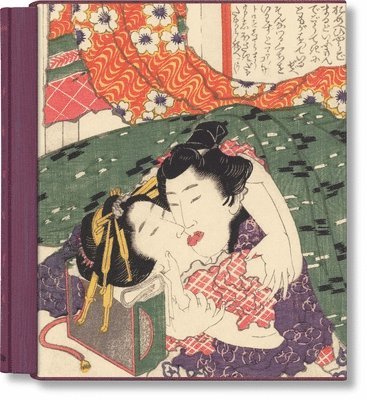
If you think you know Hokusai (1760–1849), think again. Long before The Great Wave, the great master turned his hand (and eye) to something altogether more intimate. From maidservants and wives to courtesans, lovers, and curious onlookers – and, yes, an infamous pair of frisky octopuses – Hokusai’s shunga (literally “spring pictures”) are bold, joyful, and often laugh-out-loud funny.This comprehensive portfolio brings together eight complete books and print sets from 1786–1823, with many of their accompanying narratives penned by the artist himself. Blending the visual with the verbal, the pages brim with exaggerated anatomy, impish voyeurism, tender exchanges, and a surprisingly egalitarian attitude to enjoyment for both sexes.In contrast to the prudery of 18th-century Europe, Edo-period (1603–1868) Japan accepted sexuality as a natural part of life. With shunga officially banned but tolerated in practice, many reputable artists navigated government censorship to embrace the genre with gusto, albeit under pseudonyms. These works were made to entertain, to arouse, and even used for good luck – samurai carried them as talismans when going into battle. Technical innovations in printing during Hokusai’s lifetime allowed for rich colours and exquisitely rendered textiles, but the content remained delightfully human: full of risky rendezvous, stolen moments, and scenes of marital (or extra-marital) bliss.Realized with new photography of these rare works, and complemented by an in-depth introduction and explanatory essays, this retrospective offers gorgeous glimpses into a lesser-known but wildly imaginative thread in Hokusai’s over 70-year career: proof, perhaps, that great masters have their guilty pleasures too.
Inbunden, Engelska, 2015
193 kr
Skickas
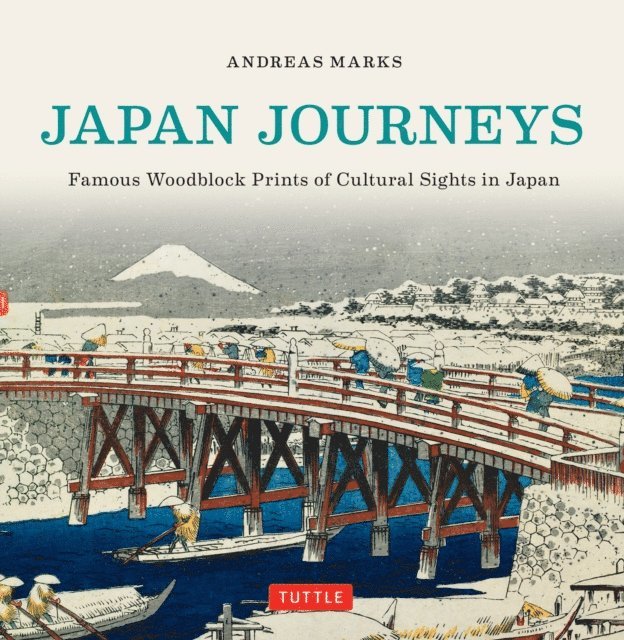
Presenting classic Japanese woodblock prints, Japan Journeys offers a unique perspective on the country's most famous travel destinations.This stunning art book gathers together approximately two hundred Japanese woodblock prints depicting scenic spots and cultural icons that still delight visitors today. Many of the prints are by masters such as Utagawa Hiroshige, Kitagawa Utamaro, and Utagawa Kunisada, and currently hang in prestigious galleries and museums worldwide. Katsuhika Hokusai, the artform's most celebrated artist, is also well represented, with many prints from his "Fifty-three Stations of the Tokaido Road" series and "Thirty-six Views of Mount Fuji" series, including his world-renowned "Great Wave" print. In addition to prints showcasing Japan's natural beauty, this carefully curated selection depicts roads and railways; favorite pastimes, such as blossom viewing and attending festivals; beloved entertainment, such as kabuki theater; the fashions they wore, and the food they ate. Author Andreas Marks is a leading expert on Japanese woodblock prints, and his Illuminating captions provide background context to the scenes depicted.
Inbunden, Engelska, 2023
248 kr
Skickas
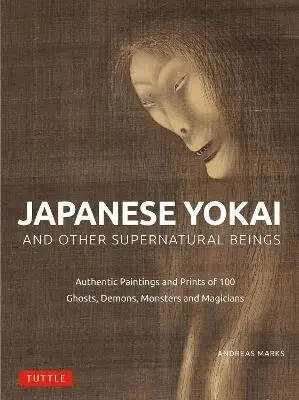
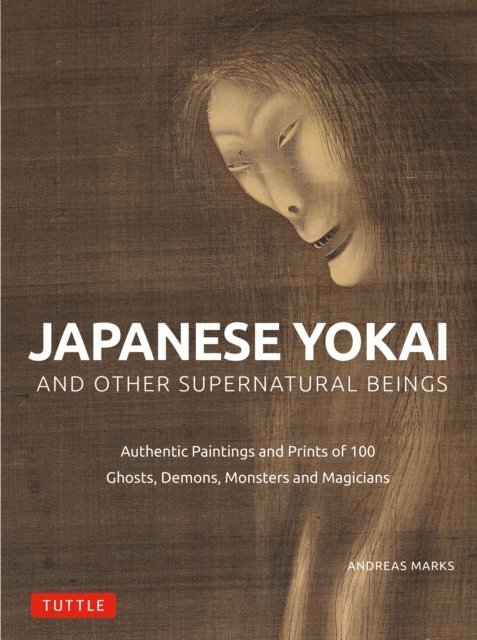
Superb Yokai images from the world's leading museums and private collections!Japan's vast pantheon of supernatural creatures includes demons (yokai), monsters, ogres (oni), ghosts (yurei) and magicians—mythical beings from folklore and popular culture which continue to thrill readers of traditional stories and manga today.This richly illustrated book by Andreas Marks, the leading authority on Japanese woodblock prints, presents authentic illustrations and descriptions of 100 different creatures, including:Bakeneko: Monster cats in human form who lick lamp oil and prey on humans born in the year of the RatHan'nya: Female demons with sharp and pointed horns, metallic eyes and a smirking smileHihi: Large ape-like monsters who live in the mountains and have superhuman strength, enabling them to kidnap and kill humansMikoshi-nyudo: Yokai with an enormously extended necks who appear only at nightAnd many more!The striking visual examples in this book are drawn from the rich canon of early Japanese prints, books, and paintings—sourced from leading museums, libraries and private collections worldwide. They show the "original" forms and appearances of the creatures which form the basis for all subsequent depictions.Also included are two long handscrolls from the Minneapolis Institute of Art (A Collection of Monsters and Night Parade of One Hundred Demons) which are reproduced here for the very first time.Prints and Paintings sourced from the following list of museums, libraries and private collections:Art Institute of ChicagoChristie's, London & New YorkThe Cleveland Museum of ArtHarold B. Lee Library, Brigham Young UniversityKyoto University, Main LibraryLibrary of CongressLos Angeles County Museum of ArtThe Metropolitan Museum of ArtMinneapolis Institute of ArtNational Museum of Japanese HistoryPrinceton University LibraryRijksmuseum, AmsterdamSmithsonian Libraries
Inbunden, Engelska, 2024
329 kr
Skickas
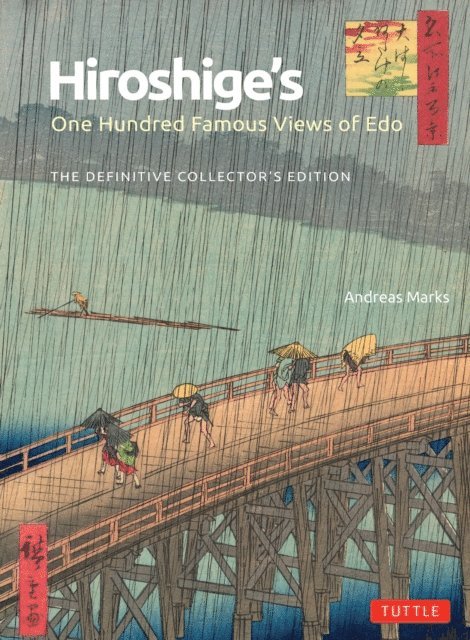
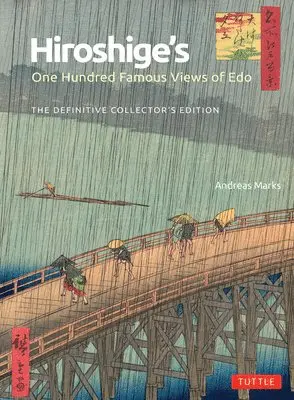
**Honorable Mention 2025 International Fine Print Dealers Association Book Award** "A feast for the eyes…the most complete volume you're ever likely to find about Hiroshige's monumental masterwork […] [A] rare compendium." —The Japan TimesA landmark book presenting the early "deluxe" versions of Hiroshige's Edo prints for the first time!Utagawa Hiroshige's unique landscape series One Hundred Famous Views of Edo (modern-day Tokyo), first published in the 1850s, is among the best-known collections of Japanese prints and was revolutionary in its day. Individual prints from this collection are regarded as among the finest works in all of Japanese art.In this series, Hiroshige captures 118 locations in and around Edo, today's Tokyo, during all four seasons and often from hitherto unknown and unique perspectives. These views were first printed in exquisite luxury versions, incorporating innovative woodblock printing features like color gradation. No complete set of the early versions exists today and this is the first book to present a complete set of the deluxe early printings, sourced from 32 different museums and private collections.Author Andreas Marks consulted 4,700 prints in order to compile this definitive guide to Hiroshige's One Hundred Famous Views of Edo. Marks presents the various printed versions along with reference images showing how and where Hiroshige sourced his ideas for each view—from previous books and illustrations. The result is a definitive guide to understanding the complexity of Hiroshige's great work as well as the dynamics of the Japanese print market during this period.Marks' introduction discusses the genesis of the series in the context of Japanese landscape art as well as Hiroshige's personal biography. The book then presents all 118 prints together with their source materials and a map showing the locations of each view, followed by a detailed appendix discussing the great color variations found in subsequent printings of the series.
Häftad, Engelska, 2023
387 kr
Skickas
Inbunden, Engelska, 2025
262 kr
Skickas
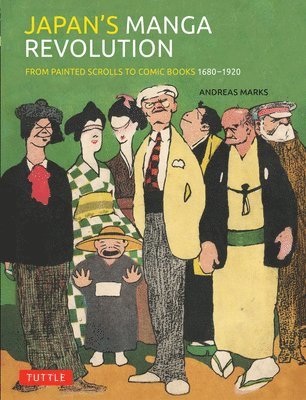
Journey through Japan's illustrated history and discover the roots of manga before it took the world by storm.In this compelling survey, art historian Andreas Marks traces the development of Japanese illustrated books in premodern times. As early as the 17th century, Japanese publishers were producing thousands of illustrated titles on subjects ranging from religion and poetry to celebrated beauties, famous kabuki actors, farting warriors, and adventure tales. This flourishing book culture laid the foundation for the vibrant manga and comics industry of today.Marks explores this evolution through five key works, including:Kitagawa Utamaro's Illustrated Book of Selected Creatures (1788) — a beautifully illustrated collection of plants and animals paired with poetry.Hokusai's Sketchbooks (early 1800s) — featuring hundreds of innovative drawing and design ideas by Katsushika Hokusai, whose work influenced many renowned European artists.The New Illustrated Water Margin — Hokusai's adaptation of a Chinese novel about a band of fictional heroes with superpowers, offering a bold reimagining of the story.The Tale of Shiranui (1849 - 1910) — an adventure novel serialized over six decades.The early-20th-century Current Affairs Manga — the first periodical to use the word "manga" in its title, providing illustrated commentary on contemporary political events.Japan's Manga Revolution offers the first comprehensive overview of Japan's rich tradition of illustrated storytelling and its lasting impact on visual culture worldwide.
Inbunden, Engelska, 2026
262 kr
Kommande
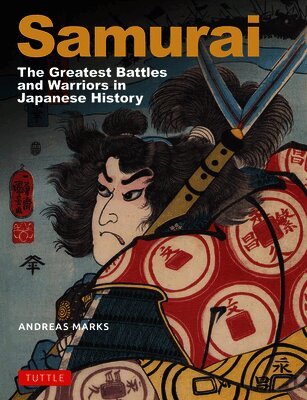
An exciting visual record of the greatest battles and warriors in Japanese history!This book describes the momentous battles in Japanese history and the renowned Samurai who fought them, as seen in over 300 great works of art by leading artists, including Katsushika Hokusai, Utagawa Hiroshige and Utagawa Kunisada. Art historian Andreas Marks has scoured museum archives and private collections worldwide to present the finest prints and colored folded screen paintings depicting the dramatic events and personalities that shaped Japan as a nation.Marks includes descriptions and striking visual images of over 50 battles and 75 great warriors, including:The Battle of Dannoura (1185): The final battle of the Genpei War, in which Minamoto forces led by Yoshitsune defeated the Taira fleet led by Tomomori. Emperor Antoku and many Taira committed suicide, spelling an end to the clan and ushering in the Kamakura shogunate.The Battle of Okehazama (1560): A decisive battle where Oda Nobunaga's samurai were outnumbered but managed to defeat Imagawa Yoshimoto's larger army. This victory was achieved through a surprise attack in driving rain and led to the final downfall of the Imagawa clan in the Tokai region.The Battle of Nagashino (1575): Tokugawa Ieyasu and Oda Nobunaga unite to defeat Takeda Katsuyori. They employ innovative tactics, revolutionizing Japanese warfare to secure a decisive victory against the formidable Takeda clan.The Battle of Sekigahara (1600): The greatest and bloodiest battle in Japanese history, in which Tokugawa Ieyasu's Eastern Army defeated the Toyotomi clan's Western Army, leading to the establishment of the Tokugawa Shogunate which unified and ruled Japan for over 250 years.This richly-illustrated volume will be of huge interest to military history buffs and fans of the Emmy award-winning Shogun TV series, providing coverage of the epic battles, weaponry and armor to be featured in the upcoming 2027 and 2028 seasons.
Häftad, Engelska, 2026
262 kr
Kommande
A stunning survey of the avant-garde in Japanese ceramics from 1948 to 1990, from renowned art historian Andreas Marks.For many Japanese artists, the process of conceptualizing and producing artwork underwent fundamental change after the end of World War II in 1945. The long-standing emphasis on continuity, as was embedded for centuries in traditional media, formats, and hereditary lineages, was rejected by some in favor of a radical new approach, particularly within the field of ceramics. The emergence of an avant-garde and a formal pursuit of innovation can be traced across multiple media. One significant development was the shift by certain artists toward the creation of sculptural forms rather than functional objects.In 1948, a group of five ceramic artists, including Yagi Kazuo (1918-1979), Yamada Hikaru (1923-2001), and Suzuki Osamu (1926-2001), founded Sodeisha—literally, the Crawling through Mud Association. The group remained active until 1998. While more than 60 artists were associated with Sodeisha over time, not all ceramic artists pursuing innovative sculptural work chose to join. Artists such as Kawamoto Goro (1919-1986) and Morino Taimei (born 1934) worked independently, developing distinct artistic paths.Individualism remains a defining characteristic of contemporary Japanese ceramics. This volume examines the origins of that shift by presenting works created before 1990 by both independent artists and members of Sodeisha, tracing the early rupture with established ceramic traditions.
Inbunden, Engelska, 2026
1 792 kr
Kommande
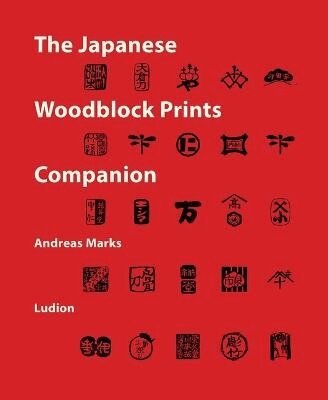
The complete resource on Japanese woodblock printing Japanese woodblock prints, exemplified by iconic works such as Hokusai’s Great Wave, Utamaro’s portraits of beauties, Hiroshige’s Heavy Rain on Ohashi Bridge, and Kuniyoshi’s tattooed warriors, represent one of the most influential art forms in history. While the artists behind these masterpieces are celebrated worldwide, the many others who played crucial roles in their creation, style, and distribution have long remained overlooked. Publishers were the driving force behind the highly commercial world of Japanese printmaking. They evaluated market demand, commissioned designs from artists, and assumed the financial risks of production. Once a design was completed, the publisher coordinated every step of the process: obtaining censor approval, hiring block carvers and printers, and overseeing the distribution of prints to specific audiences. The Japanese Woodblock Prints Companion explores this collaborative production process and highlights the indispensable contributions of publishers, carvers, and printers—without whom many celebrated works, later admired by Western artists such as Monet, Van Gogh, and Toulouse-Lautrec, would never have existed. Andreas Marks’ book profiles more than 1,900 publishers and nearly 900 carvers and printers, includes publication lists for almost 1,000 artists, and reproduces thousands of publisher, carver, and printer seals, covering a period from the 1640s to the 1990s. Each entry documents places of operation, active periods, clientele, and issued print series, offering insight into professional status, favored collaborations, and distinctive working strategies. Lists of censor and collector seals further enrich the reference. With over 1,000 pages of detailed information, this companion is an essential resource for scholars and collectors and a comprehensive tribute to the often-unsung figures who shaped the history of Japanese woodblock prints.
Inbunden, Engelska, 2023
635 kr
Skickas inom 5-8 vardagar