Andrew Buchwalter - Böcker
Visar alla böcker från författaren Andrew Buchwalter. Handla med fri frakt och snabb leverans.
8 produkter
8 produkter
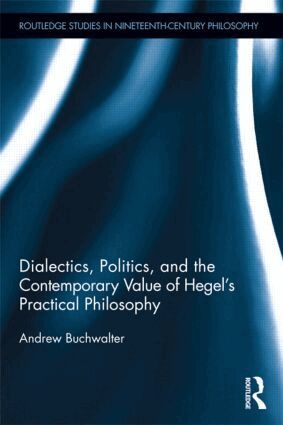
Dialectics, Politics, and the Contemporary Value of Hegel's Practical Philosophy
Inbunden, Engelska, 2011
2 171 kr
Skickas inom 10-15 vardagar
This book explores and details the actuality (Aktualität) of Hegel’s social and political philosophy--its relevance, topicality, and contemporary validity. It asserts--against the assumptions of those in a wide range of traditions--that Hegel’s thought not only remains relevant to debates in current social and political theory, but is capable of productively enhancing and enriching those debates. The book is divided into three main sections. Part 1 considers the actuality of Hegel’s social and political thought in the context of a constructed dialogues with later social and political theorists, including Marx, Adorno, Habermas, and Rawls. Part 2 explores Hegel’s internal criticism of Enlightenment rationality as well as the unique manner in which his thought reaffirms both the classical tradition of politics and the Christian conception of freedom in order to deepen and further develop our understanding of modernity and modern secularity. Part 3 considers Hegel’s contribution to current theorizing about globalization.
1 968 kr
Skickas inom 10-15 vardagar
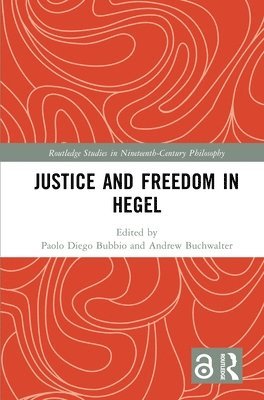
This volume explores the relationship between justice and freedom in Hegel’s practical philosophy, with a particular focus on the pivotal concept of reciprocal recognition. The contributors analyze the intersubjective relations between individuals and institutions through the lens of Hegel and demonstrate how his account of justice and freedom can be applied to address pressing issues in political philosophy.Despite extensive scrutiny of the concept of justice by political philosophers, Hegel’s unique account has been notably overlooked. What sets Hegel apart is his emphasis on the inseparable link between justice and freedom. Freedom is inextricably tied to an account of just social relations and institutions, while justice itself is intertwined with a robust endorsement of freedom. The chapters comprising this volume examine three crucial dimensions of Hegel’s framework for freedom and justice. First, the contributors address how Hegel’s distinctive integration of freedom and justice sheds new light on the nature of his practical philosophy. Second, they relate Hegel’s theory to other prominent accounts of justice, including Rawlsian forms of Kantian constructivism, Habermas’ neo‑Kantian discourse theory, republican views, neo‑Aristotelian accounts, and critical theory approaches. Finally, the contributors apply Hegel’s reconstructed theory of justice to ongoing debates encompassing criminal justice, distributive justice, global justice, environmental justice, and issues related to racial and gender justice, as well as populism.Justice and Freedom in Hegel will appeal to scholars and advanced students engaged in research on Hegel’s practical philosophy, 19th‑century philosophy, and political philosophy.
629 kr
Skickas inom 10-15 vardagar
This volume explores the relationship between justice and freedom in Hegel’s practical philosophy, with a particular focus on the pivotal concept of reciprocal recognition. The contributors analyze the intersubjective relations between individuals and institutions through the lens of Hegel and demonstrate how his account of justice and freedom can be applied to address pressing issues in political philosophy.Despite extensive scrutiny of the concept of justice by political philosophers, Hegel’s unique account has been notably overlooked. What sets Hegel apart is his emphasis on the inseparable link between justice and freedom. Freedom is inextricably tied to an account of just social relations and institutions, while justice itself is intertwined with a robust endorsement of freedom. The chapters comprising this volume examine three crucial dimensions of Hegel’s framework for freedom and justice. First, the contributors address how Hegel’s distinctive integration of freedom and justice sheds new light on the nature of his practical philosophy. Second, they relate Hegel’s theory to other prominent accounts of justice, including Rawlsian forms of Kantian constructivism, Habermas’ neo‑Kantian discourse theory, republican views, neo‑Aristotelian accounts, and critical theory approaches. Finally, the contributors apply Hegel’s reconstructed theory of justice to ongoing debates encompassing criminal justice, distributive justice, global justice, environmental justice, and issues related to racial and gender justice, as well as populism.Justice and Freedom in Hegel will appeal to scholars and advanced students engaged in research on Hegel’s practical philosophy, 19th‑century philosophy, and political philosophy.
Dialectics, Politics, and the Contemporary Value of Hegel's Practical Philosophy
Häftad, Engelska, 2015
818 kr
Skickas inom 10-15 vardagar
This book explores and details the actuality (Aktualität) of Hegel’s social and political philosophy--its relevance, topicality, and contemporary validity. It asserts--against the assumptions of those in a wide range of traditions--that Hegel’s thought not only remains relevant to debates in current social and political theory, but is capable of productively enhancing and enriching those debates. The book is divided into three main sections. Part 1 considers the actuality of Hegel’s social and political thought in the context of a constructed dialogues with later social and political theorists, including Marx, Adorno, Habermas, and Rawls. Part 2 explores Hegel’s internal criticism of Enlightenment rationality as well as the unique manner in which his thought reaffirms both the classical tradition of politics and the Christian conception of freedom in order to deepen and further develop our understanding of modernity and modern secularity. Part 3 considers Hegel’s contribution to current theorizing about globalization.
1 456 kr
Skickas inom 3-6 vardagar
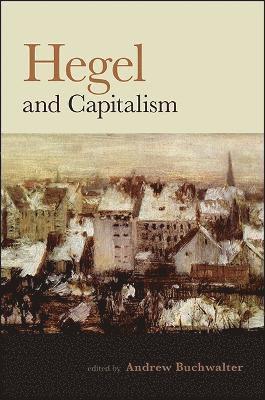
Examines Hegel's unique understanding and assessment of capitalism as an economic, social, and cultural phenomenon.Bringing together scholars from varying perspectives, this book examines the value of Hegel's thought for understanding and assessing capitalism, both as encountered by Hegel himself and in forms it takes today. The contributors consider Hegel's complex and multifaceted appraisal of modern market societies, which he understands variously as a condition for a proper account of individual freedom, the framework for a productive account of social interdependency, and the breeding ground for a host of social pathologies concerning individual consumption, labor conditions, and disparities in wealth between the rich and poor. Hegel's ideas about the topic are situated in the context of work by other important thinkers, including Adam Smith, Immanuel Kant, J. G. Fichte, Karl Marx, Max Weber, and Theodor Adorno, along with contemporary social and economic theorists. Demonstrating the value of Hegel's philosophy for addressing issues pertaining to capitalism today, the essays bring insight to contemporary concerns such as resurgent neoliberalism, economic globalization, the subordination of ever more spheres of human life to the logic of economic imperatives, and the adequacy of models of utility maximization for comprehending contemporary market societies.
382 kr
Skickas inom 5-8 vardagar
Examines Hegel's unique understanding and assessment of capitalism as an economic, social, and cultural phenomenon.Bringing together scholars from varying perspectives, this book examines the value of Hegel's thought for understanding and assessing capitalism, both as encountered by Hegel himself and in forms it takes today. The contributors consider Hegel's complex and multifaceted appraisal of modern market societies, which he understands variously as a condition for a proper account of individual freedom, the framework for a productive account of social interdependency, and the breeding ground for a host of social pathologies concerning individual consumption, labor conditions, and disparities in wealth between the rich and poor. Hegel's ideas about the topic are situated in the context of work by other important thinkers, including Adam Smith, Immanuel Kant, J. G. Fichte, Karl Marx, Max Weber, and Theodor Adorno, along with contemporary social and economic theorists. Demonstrating the value of Hegel's philosophy for addressing issues pertaining to capitalism today, the essays bring insight to contemporary concerns such as resurgent neoliberalism, economic globalization, the subordination of ever more spheres of human life to the logic of economic imperatives, and the adequacy of models of utility maximization for comprehending contemporary market societies.
1 593 kr
Skickas inom 10-15 vardagar
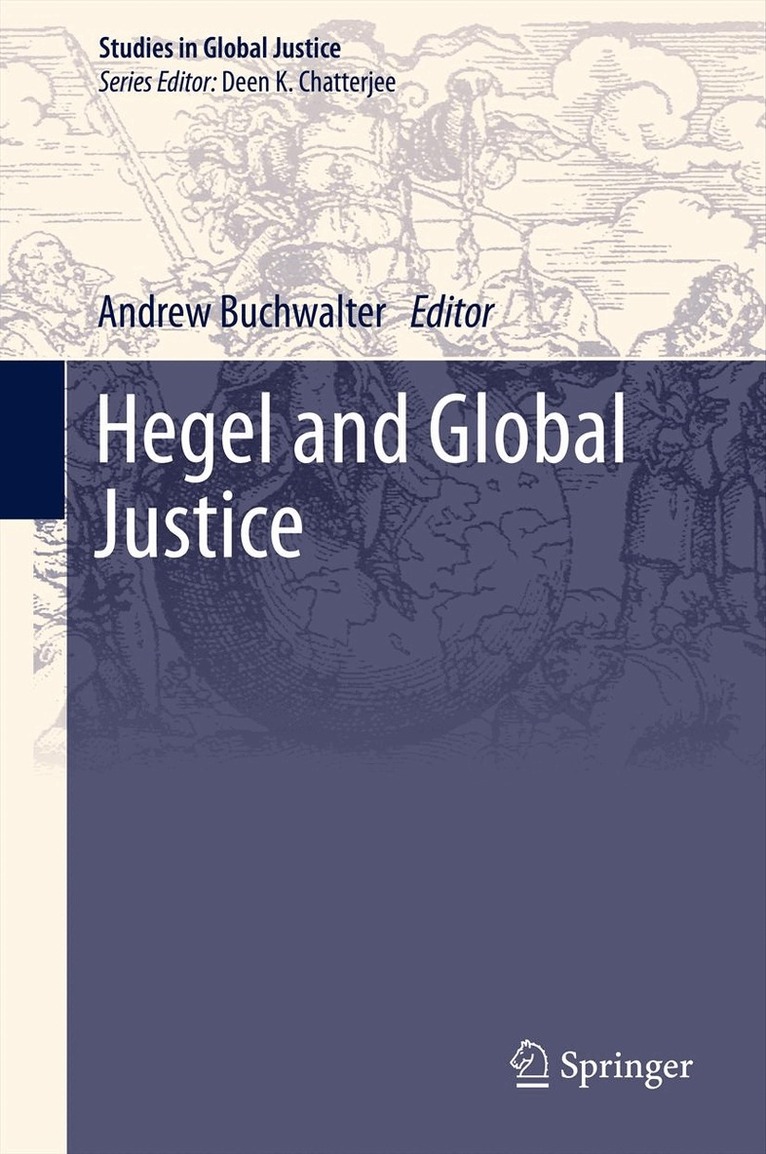
Hegel and Global Justice details the relevance of the thought of G.W.F. Hegel for the burgeoning academic discussions of the topic of global justice. Against the conventional view that Hegel has little constructive to offer to these discussions, this collection, drawing on the expertise of distinguished Hegel scholars and internationally recognized political and social theorists, explicates the contribution both of Hegel himself and his "dialectical" method to the analysis and understanding of a wide range of topics associated with the concept of global justice, construed very broadly. These topics include universal human rights, cosmopolitanism, and cosmopolitan justice, transnationalism, international law, global interculturality, a global poverty, cosmopolitan citizenship, global governance, a global public sphere, a global ethos, and a global notion of collective self-identity. Attention is also accorded the value of Hegel’s account of mutual recognition for analysing themes in global justice, both as regards the politics of recognition at the global level and the conditions for a general account of relations of people and persons under conditions of globalization. In exploring these and related themes, the authors of this book regularly compare Hegel to others who have contributed to the discourse on global justice, including Kant, Marx, Rawls, Habermas, Singer, Pogge, Nussbaum, Appiah, and David Miller.
1 593 kr
Skickas inom 10-15 vardagar
Hegel and Global Justice details the relevance of the thought of G.W.F. Hegel for the burgeoning academic discussions of the topic of global justice. Against the conventional view that Hegel has little constructive to offer to these discussions, this collection, drawing on the expertise of distinguished Hegel scholars and internationally recognized political and social theorists, explicates the contribution both of Hegel himself and his "dialectical" method to the analysis and understanding of a wide range of topics associated with the concept of global justice, construed very broadly. These topics include universal human rights, cosmopolitanism, and cosmopolitan justice, transnationalism, international law, global interculturality, a global poverty, cosmopolitan citizenship, global governance, a global public sphere, a global ethos, and a global notion of collective self-identity. Attention is also accorded the value of Hegel’s account of mutual recognition for analysing themes in global justice, both as regards the politics of recognition at the global level and the conditions for a general account of relations of people and persons under conditions of globalization. In exploring these and related themes, the authors of this book regularly compare Hegel to others who have contributed to the discourse on global justice, including Kant, Marx, Rawls, Habermas, Singer, Pogge, Nussbaum, Appiah, and David Miller.