Andrew Dillon - Böcker
Visar alla böcker från författaren Andrew Dillon. Handla med fri frakt och snabb leverans.
7 produkter
7 produkter
481 kr
Skickas inom 10-15 vardagar
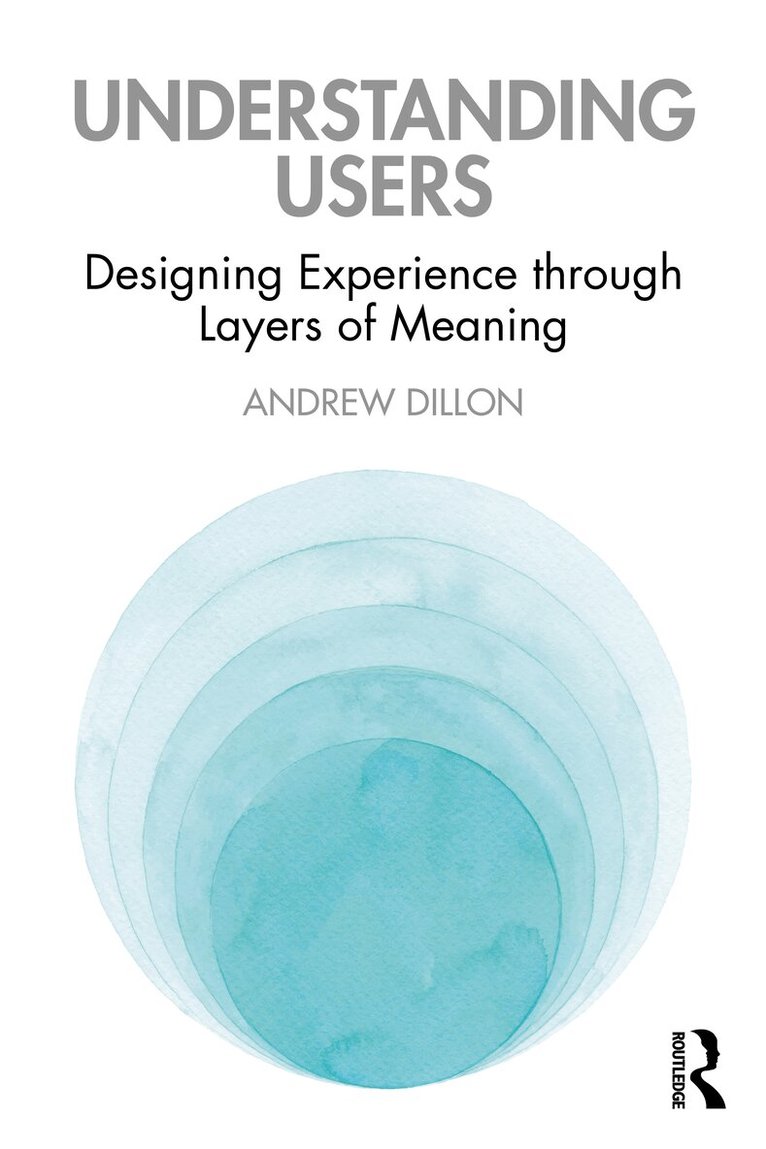
Grounded in the user-centered design movement, this book offers a broad consideration of how our civilization has evolved its technical infrastructure for human purpose to help us make sense of our contemporary information infrastructure and online existence. The author incorporates historical, cultural, and aesthetic approaches to situating information and its underlying technologies across time in the collective, lived experiences of humanity.In today’s digital environment, user experience is vital to the success of any product or service. Yet as the user population expands to include us all, designing for people who vary in skills, abilities, preferences, and backgrounds is challenging. This book provides an integrated understanding of users, and the methods that have evolved to identify usability challenges, that can facilitate cohesive and earlier solutions. The book treats information creation and use as a core human behavior based on acts of representation and recording that humans have always practiced. It suggests that the traditional ways of studying information use, with their origins in the distinct layers of social science theories and models is limiting our understanding of what it means to be an information user and hampers our efforts at being truly user-centric in design. Instead, the book offers a way of integrating the knowledge base to support a richer view of use and users in design education and evaluation.Understanding Users is aimed at those studying or practicing user-centered design and anyone interested in learning how people might be better integrated in the design of new technologies to augment human capabilities and experiences.
1 887 kr
Skickas inom 10-15 vardagar
Grounded in the user-centered design movement, this book offers a broad consideration of how our civilization has evolved its technical infrastructure for human purpose to help us make sense of our contemporary information infrastructure and online existence. The author incorporates historical, cultural, and aesthetic approaches to situating information and its underlying technologies across time in the collective, lived experiences of humanity.In today’s digital environment, user experience is vital to the success of any product or service. Yet as the user population expands to include us all, designing for people who vary in skills, abilities, preferences, and backgrounds is challenging. This book provides an integrated understanding of users, and the methods that have evolved to identify usability challenges, that can facilitate cohesive and earlier solutions. The book treats information creation and use as a core human behavior based on acts of representation and recording that humans have always practiced. It suggests that the traditional ways of studying information use, with their origins in the distinct layers of social science theories and models is limiting our understanding of what it means to be an information user and hampers our efforts at being truly user-centric in design. Instead, the book offers a way of integrating the knowledge base to support a richer view of use and users in design education and evaluation.Understanding Users is aimed at those studying or practicing user-centered design and anyone interested in learning how people might be better integrated in the design of new technologies to augment human capabilities and experiences.
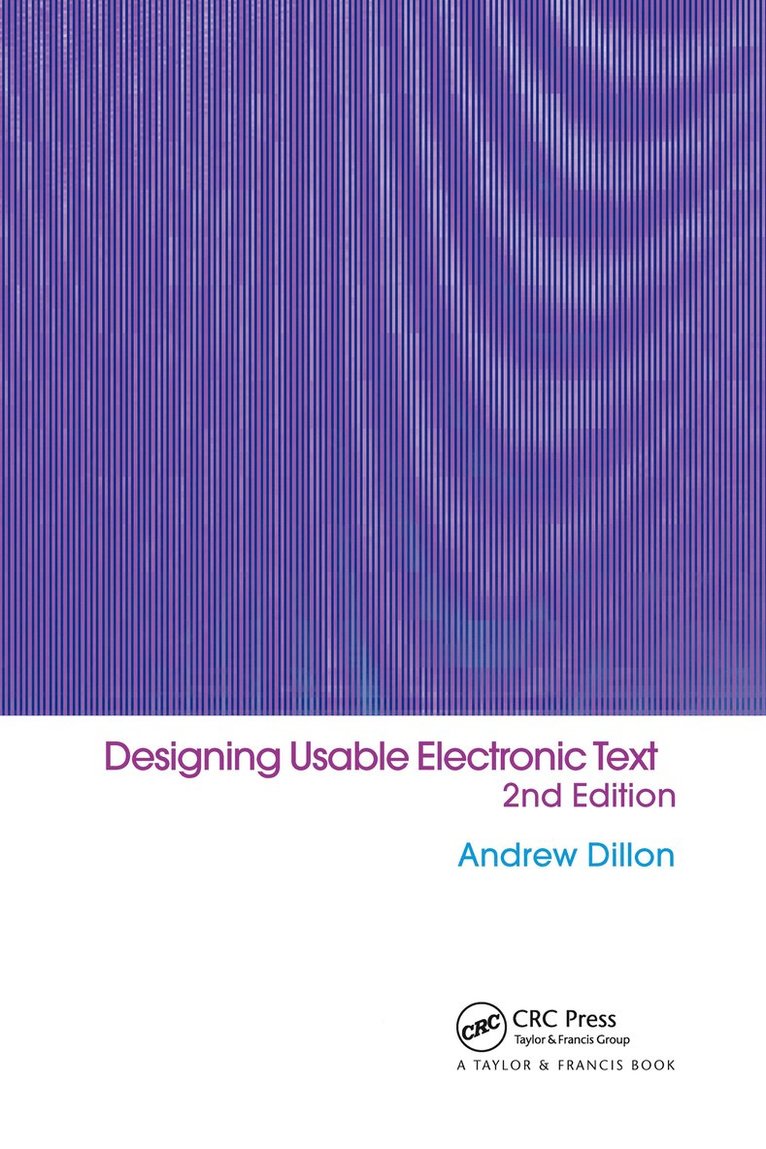
Designing Usable Electronic Text
Ergonomic Aspects Of Human Information Usage
Inbunden, Engelska, 2004
2 358 kr
Skickas inom 10-15 vardagar
Poor design and a failure to consider the user often act against the effectiveness in online communication. Designing Usable Electronic Text, Second Edition explores the human issues that underlie information usage and stresses that usability is the main barrier to the electronic medium's campaign to gain mass acceptance. The book is a revision of the successful First Edition with a new emphasis on the Web and hypertext design and their impacts. With the emergence of new uses of information, such as e-commerce and telemedicine, text presentation will take on a new and greater importance. Its focus on the design framework and its empirical approach make it a unique book.
1 964 kr
Skickas inom 10-15 vardagar
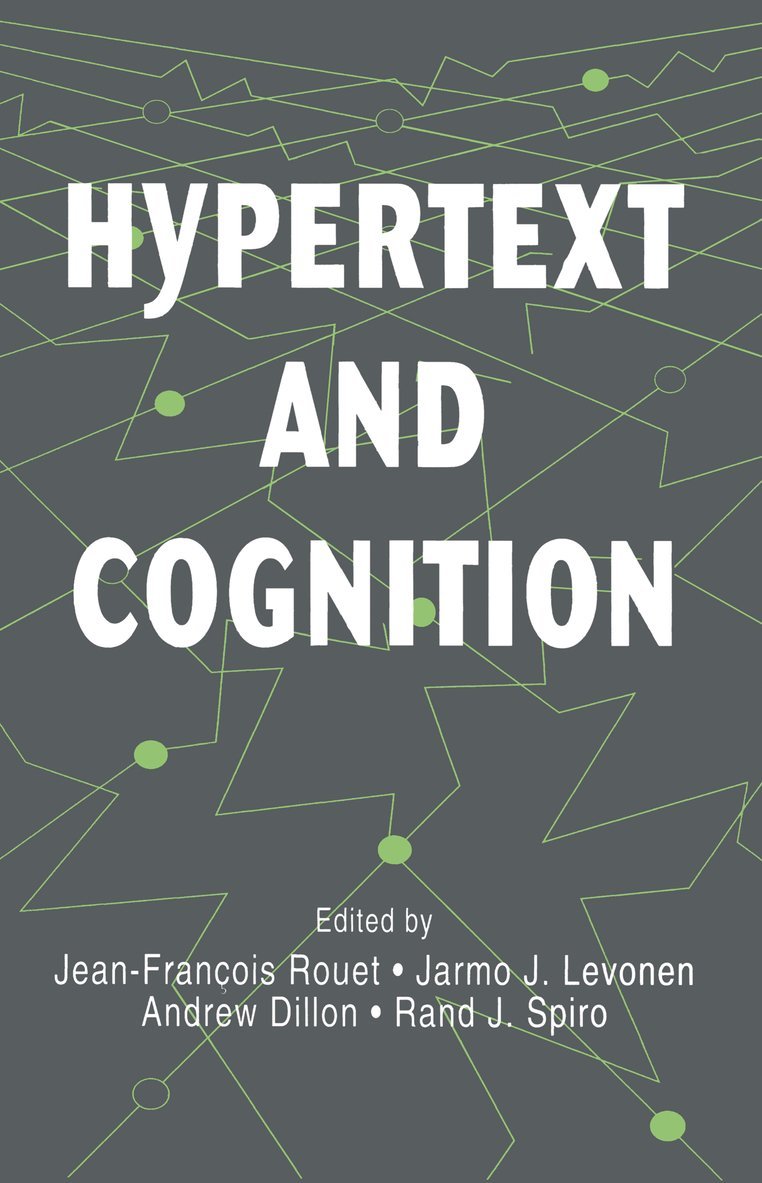
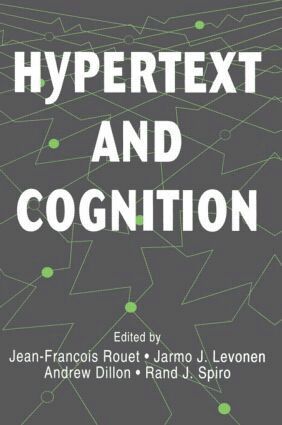
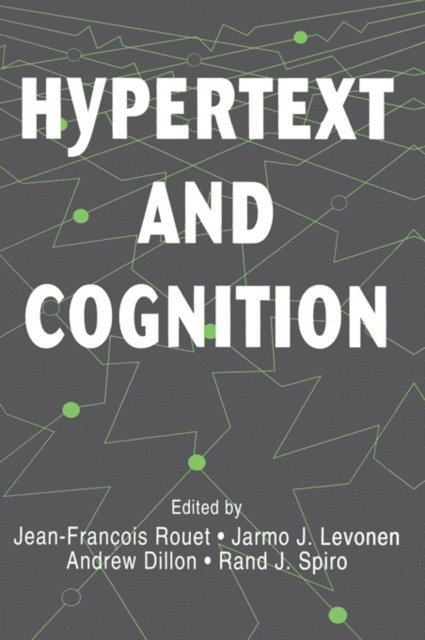
The recent evolution of western societies has been characterized by an increasing emphasis on information and communication. As the amount of available information increases, however, the user -- worker, student, citizen -- faces a new problem: selecting and accessing relevant information. More than ever it is crucial to find efficient ways for users to interact with information systems in a way that prevents them from being overwhelmed or simply missing their targets. As a result, hypertext systems have been developed as a means of facilitating the interactions between readers and text. In hypertext, information is organized as a network in which nodes are text chunks (e.g., lists of items, paragraphs, pages) and links are relationships between the nodes (e.g., semantic associations, expansions, definitions, examples -- virtually any kind of relation that can be imagined between two text passages). Unfortunately, the many ways in which these hypertext interfaces can be designed has caused a complexity that extends far beyond the processing abilities of regular users. Therefore, it has become widely recognized that a more rational approach based on a thorough analysis of information users' needs, capacities, capabilities, and skills is needed. This volume seeks to meet that need.From a user-centered perspective -- between systems and users -- this volume presents theoretical and empirical research on the cognitive processes involved in using hypertext. In so doing, it illustrates three main approaches to the design of hypertext systems: *cognitive, which examines how users process multilayered hypertext structures; *ergonomical, which explores how users interact with the design characteristics of hardware and software; and *educational, which studies the learning objectives, frequency and duration of hypertext sessions, type of reading activity, and the user's learning characteristics. This volume also tries to provide answers for the questions that have plagued hypertext research:*What is hypertext good for? *Who is hypertext good for? *If it is useful for learning and instruction, then what type? *What particular cognitive skills are needed to interact successfully with a hypertext system? Anyone interested in the fields of computer science, linguistics, psychology, education, and graphic design will find this volume intriguing, informative, and a definitive starting point for future research in the field of hypertext.
705 kr
Skickas inom 10-15 vardagar
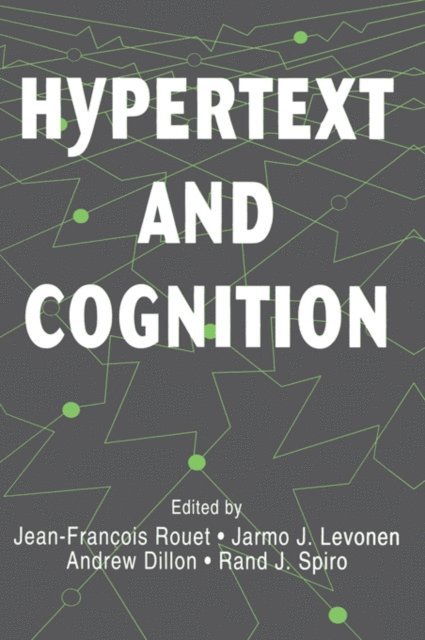
The recent evolution of western societies has been characterized by an increasing emphasis on information and communication. As the amount of available information increases, however, the user -- worker, student, citizen -- faces a new problem: selecting and accessing relevant information. More than ever it is crucial to find efficient ways for users to interact with information systems in a way that prevents them from being overwhelmed or simply missing their targets. As a result, hypertext systems have been developed as a means of facilitating the interactions between readers and text. In hypertext, information is organized as a network in which nodes are text chunks (e.g., lists of items, paragraphs, pages) and links are relationships between the nodes (e.g., semantic associations, expansions, definitions, examples -- virtually any kind of relation that can be imagined between two text passages). Unfortunately, the many ways in which these hypertext interfaces can be designed has caused a complexity that extends far beyond the processing abilities of regular users. Therefore, it has become widely recognized that a more rational approach based on a thorough analysis of information users' needs, capacities, capabilities, and skills is needed. This volume seeks to meet that need.From a user-centered perspective -- between systems and users -- this volume presents theoretical and empirical research on the cognitive processes involved in using hypertext. In so doing, it illustrates three main approaches to the design of hypertext systems: *cognitive, which examines how users process multilayered hypertext structures; *ergonomical, which explores how users interact with the design characteristics of hardware and software; and *educational, which studies the learning objectives, frequency and duration of hypertext sessions, type of reading activity, and the user's learning characteristics. This volume also tries to provide answers for the questions that have plagued hypertext research:*What is hypertext good for? *Who is hypertext good for? *If it is useful for learning and instruction, then what type? *What particular cognitive skills are needed to interact successfully with a hypertext system? Anyone interested in the fields of computer science, linguistics, psychology, education, and graphic design will find this volume intriguing, informative, and a definitive starting point for future research in the field of hypertext.
733 kr
Skickas inom 10-15 vardagar
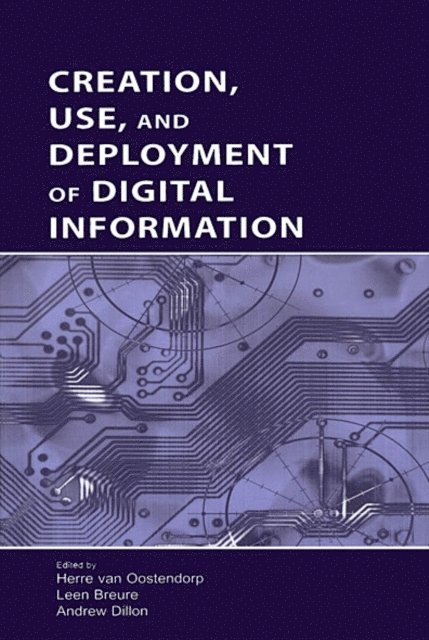
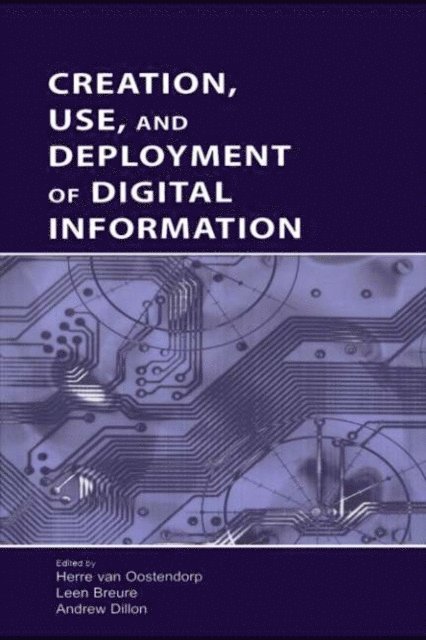
The aim of this book is to present results of scientific research on how digital information should be designed and how artifacts or systems containing digital content should maximize usability, and to explain how context can influence the nature and effectiveness of digital communication. Using a philosophical, cognitive, and technical standpoint, the book covers the issue of what digital information actually is. The text also presents research outcomes from the perspective of research in information science--broadly construed--a term now used to cover a range of theoretical and practical approaches.Creation, Use, and Deployment of Digital Information is broken down into three parts:*Part I presents information on how electronic documents can be realized--the complexities, alternatives, functions, and restrictions are treated here.*Part II discusses how human beings process information and how technical solutions can satisfy human restrictions.*Part III treats the context in which digital information processing and deployment takes place.The book has much to offer to academics in many disciplines, including science, the arts, psychology, education, and the information and computing sciences.
2 151 kr
Skickas inom 10-15 vardagar
The aim of this book is to present results of scientific research on how digital information should be designed and how artifacts or systems containing digital content should maximize usability, and to explain how context can influence the nature and effectiveness of digital communication. Using a philosophical, cognitive, and technical standpoint, the book covers the issue of what digital information actually is. The text also presents research outcomes from the perspective of research in information science--broadly construed--a term now used to cover a range of theoretical and practical approaches.Creation, Use, and Deployment of Digital Information is broken down into three parts:*Part I presents information on how electronic documents can be realized--the complexities, alternatives, functions, and restrictions are treated here.*Part II discusses how human beings process information and how technical solutions can satisfy human restrictions.*Part III treats the context in which digital information processing and deployment takes place.The book has much to offer to academics in many disciplines, including science, the arts, psychology, education, and the information and computing sciences.