Andrew Fiala – författare
962 kr
Skickas inom 5-8 vardagar
1 056 kr
Skickas inom 5-8 vardagar
473 kr
Skickas inom 10-15 vardagar
2 068 kr
Skickas inom 10-15 vardagar
784 kr
Skickas inom 10-15 vardagar
657 kr
Skickas inom 10-15 vardagar
2 205 kr
Skickas inom 10-15 vardagar
243 kr
Skickas inom 10-15 vardagar
1 189 kr
Skickas inom 10-15 vardagar
452 kr
Skickas inom 10-15 vardagar
1 120 kr
Skickas inom 10-15 vardagar
521 kr
Läs direkt efter köp
Can war be justified? Pacifists answer that it cannot; they oppose war and advocate for nonviolent alternatives to war. But defenders of just war theory argue that in some circumstances, when the effectiveness of nonviolence is limited, wars can be justified.
In this book, two philosophers debate this question, drawing on contemporary scholarship and new developments in thinking about pacifism and just war theory. Andrew Fiala defends the pacifist position, while Jennifer Kling defends just war traditions. Fiala argues that pacifism follows from the awful reality of war and the nonviolent goal of building a more just and peaceful world. Kling argues that war is sometimes justified when it is a last-ditch, necessary effort to defend people and their communities from utter destruction and death. Pulling from global traditions and histories, their debate will captivate anyone who has wondered or worried about the morality of political violence and military force. Topics discussed include ethical questions of self-defense and other-defense, the great analogy between individuals and states, evolving technologies and methods of warfighting, moral injury and post-traumatic stress disorder, broader political and communal issues, and the problem of regional security in a globalizing world. The authors consider cultural and religious issues as well as the fundamental question of moral obligation in a world saturated in military conflict. The book was written in the aftermath of the war on terrorism and includes reflection on lessons learned from the past decades of war, as well as hopes for the future in light of emerging threats in Europe and elsewhere.
The book is organized in a user-friendly fashion. Each author presents a self-contained argument, which is followed by a series of responses, replies, and counter-arguments. Throughout, the authors model civil discourse by emphasizing points of agreement and remaining areas of disagreement. The book includes reader-friendly summaries, a glossary of key concepts, and suggestions for further study. All of this will help students and scholars follow the authors’ dialogue so they may develop their own answer to the question of whether war can be justified.
Key Features
Summarizes the debate between pacifism and just war theory Considers historical and traditional sources as well as contemporary scholarship and applications Models philosophical dialogue and civil discourse, while seeking common ground Discusses issues of concern in contemporary warfighting and peacemaking, while offering an analysis of the war on terrorism521 kr
Läs direkt efter köp
Can war be justified? Pacifists answer that it cannot; they oppose war and advocate for nonviolent alternatives to war. But defenders of just war theory argue that in some circumstances, when the effectiveness of nonviolence is limited, wars can be justified.
In this book, two philosophers debate this question, drawing on contemporary scholarship and new developments in thinking about pacifism and just war theory. Andrew Fiala defends the pacifist position, while Jennifer Kling defends just war traditions. Fiala argues that pacifism follows from the awful reality of war and the nonviolent goal of building a more just and peaceful world. Kling argues that war is sometimes justified when it is a last-ditch, necessary effort to defend people and their communities from utter destruction and death. Pulling from global traditions and histories, their debate will captivate anyone who has wondered or worried about the morality of political violence and military force. Topics discussed include ethical questions of self-defense and other-defense, the great analogy between individuals and states, evolving technologies and methods of warfighting, moral injury and post-traumatic stress disorder, broader political and communal issues, and the problem of regional security in a globalizing world. The authors consider cultural and religious issues as well as the fundamental question of moral obligation in a world saturated in military conflict. The book was written in the aftermath of the war on terrorism and includes reflection on lessons learned from the past decades of war, as well as hopes for the future in light of emerging threats in Europe and elsewhere.
The book is organized in a user-friendly fashion. Each author presents a self-contained argument, which is followed by a series of responses, replies, and counter-arguments. Throughout, the authors model civil discourse by emphasizing points of agreement and remaining areas of disagreement. The book includes reader-friendly summaries, a glossary of key concepts, and suggestions for further study. All of this will help students and scholars follow the authors’ dialogue so they may develop their own answer to the question of whether war can be justified.
Key Features
Summarizes the debate between pacifism and just war theory Considers historical and traditional sources as well as contemporary scholarship and applications Models philosophical dialogue and civil discourse, while seeking common ground Discusses issues of concern in contemporary warfighting and peacemaking, while offering an analysis of the war on terrorism774 kr
Läs direkt efter köp
This book explores the idea of religious pluralism while defending the norms of secular cosmopolitanism, which include liberty, tolerance, civility, and hospitality. The secular cosmopolitan ideal requires us to be more tolerant and more hospitable toward religious believers and non-believers from diverse traditions in our religiously pluralistic world. Some have argued that the world’s religions can be united around a common core. This book argues that it is both impossible and inadvisable either to reduce religion to one thing or to deny religion. Instead, the book affirms non reductive pluralism and seeks to understand how we should live in a pluralistic world.
Building on work in the sociology of religion and philosophy of religion, the book examines the grown of religious diversity (and the spread of nonreligion) in the contemporary world. It argues that religious toleration, hospitality, and compassion must be extended in a global direction. Secular cosmopolitanism recognizes that each person has a right to his or her deepest beliefs and that the diversity of the world’s religious and non-religious traditions cannot be reduced or eliminated.
774 kr
Läs direkt efter köp
This book explores the idea of religious pluralism while defending the norms of secular cosmopolitanism, which include liberty, tolerance, civility, and hospitality. The secular cosmopolitan ideal requires us to be more tolerant and more hospitable toward religious believers and non-believers from diverse traditions in our religiously pluralistic world. Some have argued that the world’s religions can be united around a common core. This book argues that it is both impossible and inadvisable either to reduce religion to one thing or to deny religion. Instead, the book affirms non reductive pluralism and seeks to understand how we should live in a pluralistic world.
Building on work in the sociology of religion and philosophy of religion, the book examines the grown of religious diversity (and the spread of nonreligion) in the contemporary world. It argues that religious toleration, hospitality, and compassion must be extended in a global direction. Secular cosmopolitanism recognizes that each person has a right to his or her deepest beliefs and that the diversity of the world’s religious and non-religious traditions cannot be reduced or eliminated.
639 kr
Läs direkt efter köp
This book focuses on the problem of religious diversity, civil dialogue, and religion education in public schools, exploring the ways in which atheists, secularists, fundamentalists, and mainstream religionists come together in the public sphere, examining how civil discourse about religion fit swithin the ideals of the American political and pedagogical systems and how religious studies education can help to foster civility and toleration.
639 kr
Läs direkt efter köp
This book focuses on the problem of religious diversity, civil dialogue, and religion education in public schools, exploring the ways in which atheists, secularists, fundamentalists, and mainstream religionists come together in the public sphere, examining how civil discourse about religion fit swithin the ideals of the American political and pedagogical systems and how religious studies education can help to foster civility and toleration.
3 682 kr
Skickas inom 10-15 vardagar
556 kr
Skickas inom 10-15 vardagar
2 339 kr
Skickas inom 10-15 vardagar
906 kr
Skickas inom 5-8 vardagar
874 kr
Läs direkt efter köp
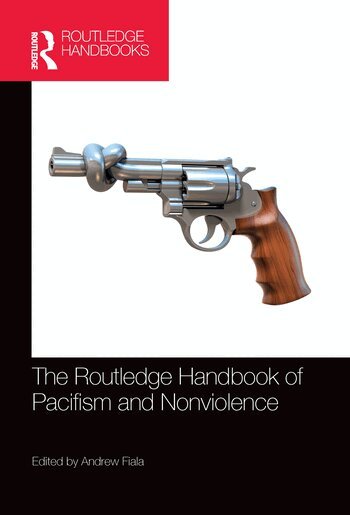
Interest in pacifism—an idea with a long history in philosophical thought and in several religious traditions—is growing. The Routledge Handbook of Pacifism and Nonviolence is the first comprehensive reference designed to introduce newcomers and researchers to the many varieties of pacifism and nonviolence, to their history and philosophy, and to pacifism’s most serious critiques. The volume offers 32 brand new chapters from the world’s leading experts across a diverse range of fields, who together provide a broad discussion of pacifism and nonviolence in connection with virtue ethics, capital punishment, animal ethics, ecology, queer theory, and feminism, among other areas. This Handbook is divided into four sections: (1) Historical and Tradition-Specific Considerations, (2) Conceptual and Moral Considerations, (3) Social and Political Considerations, and (4) Applications. It concludes with an Afterword by James Lawson, one of the icons of the nonviolent American Civil Rights movement. The text will be invaluable to scholars and students, as well as to activists and general readers interested in peace, nonviolence, and critical perspectives on war and violence.
874 kr
Läs direkt efter köp
Interest in pacifism—an idea with a long history in philosophical thought and in several religious traditions—is growing. The Routledge Handbook of Pacifism and Nonviolence is the first comprehensive reference designed to introduce newcomers and researchers to the many varieties of pacifism and nonviolence, to their history and philosophy, and to pacifism’s most serious critiques. The volume offers 32 brand new chapters from the world’s leading experts across a diverse range of fields, who together provide a broad discussion of pacifism and nonviolence in connection with virtue ethics, capital punishment, animal ethics, ecology, queer theory, and feminism, among other areas. This Handbook is divided into four sections: (1) Historical and Tradition-Specific Considerations, (2) Conceptual and Moral Considerations, (3) Social and Political Considerations, and (4) Applications. It concludes with an Afterword by James Lawson, one of the icons of the nonviolent American Civil Rights movement. The text will be invaluable to scholars and students, as well as to activists and general readers interested in peace, nonviolence, and critical perspectives on war and violence.
515 kr
Läs direkt efter köp
1 815 kr
Skickas inom 10-15 vardagar
497 kr
Läs direkt efter köp
480 kr
Skickas inom 10-15 vardagar
1 954 kr
Skickas inom 10-15 vardagar
2 118 kr
Läs direkt efter köp
2 118 kr
Läs direkt efter köp