Andrew J. Bottomley - Böcker
Visar alla böcker från författaren Andrew J. Bottomley. Handla med fri frakt och snabb leverans.
3 produkter
3 produkter
1 914 kr
Skickas inom 5-8 vardagar
Radio today remains the most accessible and widely available communication medium worldwide, despite technological shifts and a host of upstart challengers. Since its origins in the 1920s, radio has innovated a new world of sound culture - now expanded into the digital realm of podcasting that is enabling the medium to reach larger audiences than ever before. Yet radio remains one of the least studied of the major areas of communication arts, due largely to its broadcast-era ephemerality. With the advent of digital technology, radio's past has been unlocked and soundwork is exploding as a creative field, creating a lively and diverse sonic present while simultaneously making critical historical analysis possible at last. This volume offers newly commissioned chapters giving readers a wide-ranging view of current critical work in the fields of radio and podcasting, employing specific case studies to analyze sound media's engagement with the arts; with the factual world of news, talk, and documentary programming; as a primary means of forging community along with national, transnational, and alternative identities; and as a subject of academic and critical research. Its historical scope extends from radio's earliest days, through its mid-twentieth century decades as the powerful voice of nations and empires, onto its transformation into a secondary medium during the television era, and into the expanding digital present. Over the course of 37 chapters, it provides evidence of the sound media's flexibility and adaptation across diverse cultures by examining radio's past and present uses in regions including the United States, Canada, Britain, Australia, Poland, China, Korea, Kenya, Angola and Mozambique, South Asia, and the Caribbean. Contributors include historians and media scholars as well as sound artists and radio/podcast producers. Notably, companion links to digital “quotations” from works analyzed are included in many chapters along with chapter audiographies offering links to further listening.Throughout, The Oxford Handbook of Radio and Podcasting connects radio's broadcast past to its digital present, and traces themes of creativity, identity, community, nation, and transnationality across more than a century of audio media.
607 kr
Skickas inom 7-10 vardagar
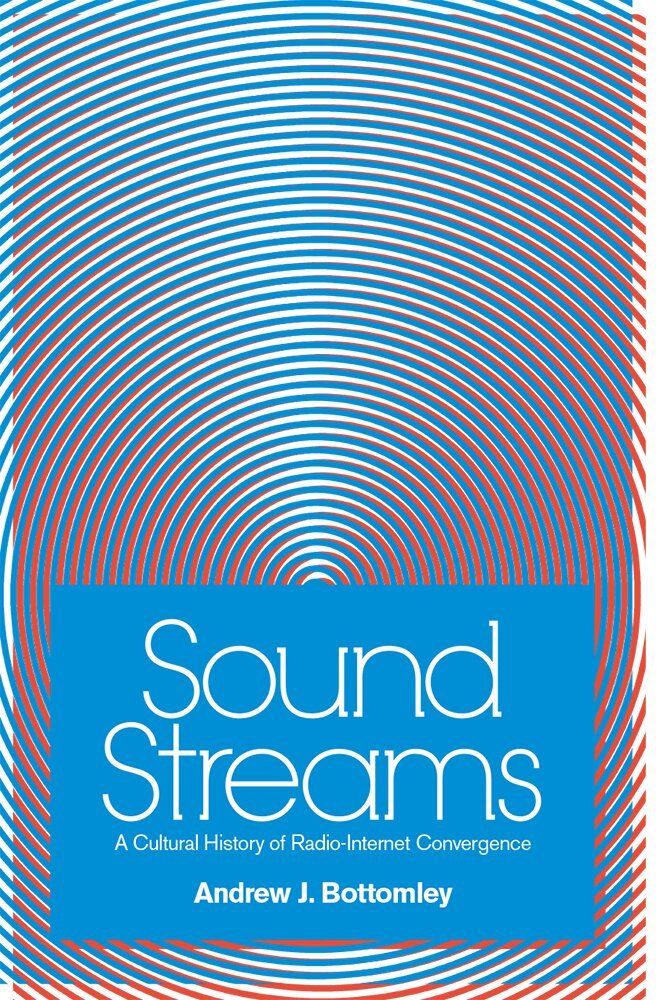
In talking about contemporary media, we often use a language of newness, applying words like “revolution” and “disruption.” Yet, the emergence of new sound media technologies and content—from the earliest internet radio broadcasts to the development of algorithmic music services and the origins of podcasting—are not a disruption, but a continuation of the century-long history of radio. Today’s most innovative media makers are reintroducing forms of audio storytelling from radio’s past.Sound Streams is the first book to historicize radio-internet convergence from the early ’90s through the present, demonstrating how so-called new media represent an evolutionary shift that is nevertheless historically consistent with earlier modes of broadcasting. Various iterations of internet radio, from streaming audio to podcasting, are all new radio practices rather than each being a separate new medium: radio is any sound media that is purposefully crafted to be heard by an audience. Rather than a particular set of technologies or textual conventions, web-based broadcasting combines unique practices and features and ideas from radio history. In addition, there exists a distinctive conversationality and reflexivity to radio talk, including a propensity for personal stories and emotional disclosure, that suits networked digital media culture. What media convergence has done is extend and intensify radio’s logics of connectivity and sharing; sonically mediated personal expression intended for public consideration abounds in online media networks.Sound Streams marks a significant contribution to digital media and internet studies. Its mix of cultural history, industry research, and genre and formal analysis, especially of contemporary audio storytelling, will appeal to media scholars, radio and podcast practitioners, audio journalism students, and dedicated podcast fans.
1 229 kr
Skickas inom 7-10 vardagar
In talking about contemporary media, we often use a language of newness, applying words like “revolution” and “disruption.” Yet, the emergence of new sound media technologies and content—from the earliest internet radio broadcasts to the development of algorithmic music services and the origins of podcasting—are not a disruption, but a continuation of the century-long history of radio. Today’s most innovative media makers are reintroducing forms of audio storytelling from radio’s past.Sound Streams is the first book to historicize radio-internet convergence from the early ’90s through the present, demonstrating how so-called new media represent an evolutionary shift that is nevertheless historically consistent with earlier modes of broadcasting. Various iterations of internet radio, from streaming audio to podcasting, are all new radio practices rather than each being a separate new medium: radio is any sound media that is purposefully crafted to be heard by an audience. Rather than a particular set of technologies or textual conventions, web-based broadcasting combines unique practices and features and ideas from radio history. In addition, there exists a distinctive conversationality and reflexivity to radio talk, including a propensity for personal stories and emotional disclosure, that suits networked digital media culture. What media convergence has done is extend and intensify radio’s logics of connectivity and sharing; sonically mediated personal expression intended for public consideration abounds in online media networks.Sound Streams marks a significant contribution to digital media and internet studies. Its mix of cultural history, industry research, and genre and formal analysis, especially of contemporary audio storytelling, will appeal to media scholars, radio and podcast practitioners, audio journalism students, and dedicated podcast fans.