Andrew N. Kleit - Böcker
Visar alla böcker från författaren Andrew N. Kleit. Handla med fri frakt och snabb leverans.
5 produkter
5 produkter
682 kr
Skickas inom 7-10 vardagar
Electricity is one of the largest and most vital industries in the U.S. economy, with sales exceeding $200 billion annually. While electricity represents the backbone of commerce, industry, and household production, the structure of the industry has been changing in rather dramatic ways. After being heavily regulated for more than a century by local, state, regional, and federal authorities, deregulation is taking center stage. In general, deregulation results in lower prices, more product choices, and more rapid technological advances. Conversely, rate regulation has inherent flaws, including the encouragement of waste and inefficiency, and a retarding of innovation. There is little doubt to the contributors of this book that putting regulation aside offers enormous efficiency gains in the production of electricity. But can market forces handle the delicate matter of transmitting electricity when the simple model of supply and demand must be more precise than other goods and services? How much regulation does the electric industry need? The essays in this timely collection explore these difficult questions and propose a new, market-based plan to improve America's electrical future.Published in cooperation with The Independent Institute.
1 206 kr
Skickas inom 7-10 vardagar
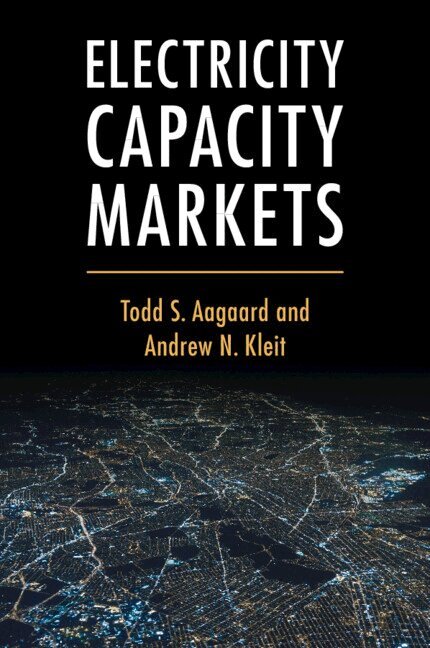
Initially created as afterthoughts to competitive electricity markets, capacity markets were intended to enhance system reliability. They have evolved into massive, highly controversial, and poorly understood billion-dollar institutions. Electricity Capacity Markets examines the rationales for creating capacity markets, how capacity markets work, and how well these markets are meeting their objectives. This book will appeal to energy experts and non-experts alike, across a range of disciplines, including economics, business, engineering, public policy, and law. Capacity markets are an important and provocative topic on their own, but they also offer an interesting case study of how well our energy systems are meeting the needs of our increasingly complex society. The challenges facing capacity markets - harnessing market forces for social good, creating networks that manage complexity, and achieving sustainability - are very much core challenges for our twenty-first century advanced industrial society.
377 kr
Skickas inom 7-10 vardagar
Initially created as afterthoughts to competitive electricity markets, capacity markets were intended to enhance system reliability. They have evolved into massive, highly controversial, and poorly understood billion-dollar institutions. Electricity Capacity Markets examines the rationales for creating capacity markets, how capacity markets work, and how well these markets are meeting their objectives. This book will appeal to energy experts and non-experts alike, across a range of disciplines, including economics, business, engineering, public policy, and law. Capacity markets are an important and provocative topic on their own, but they also offer an interesting case study of how well our energy systems are meeting the needs of our increasingly complex society. The challenges facing capacity markets - harnessing market forces for social good, creating networks that manage complexity, and achieving sustainability - are very much core challenges for our twenty-first century advanced industrial society.
1 113 kr
Skickas inom 7-10 vardagar
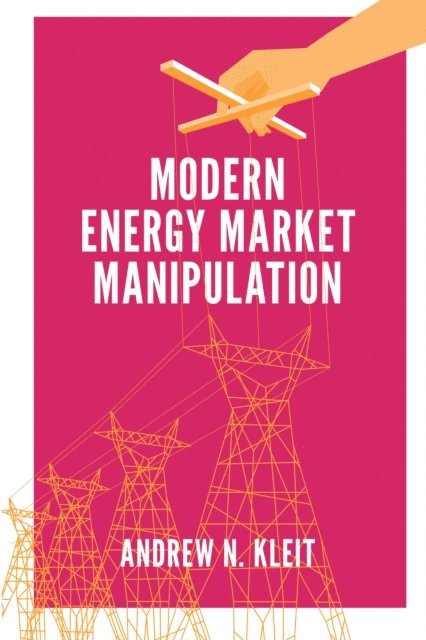
As long as commodity and securities markets have been in operation, market manipulation has been a serious concern. Now that many electricity and natural gas markets have been opened to competition, manipulation threatens to destroy the value of these markets as well. Yet market manipulation itself remains ill-defined, with uncertain legal and economic principles operating on both sides of regulatory proceedings. Andrew N. Kleit’s Modern Energy Market Manipulation offers an in-depth exploration of this crucial gray area. It presents a coherent definition of market manipulation, and drawing upon the substantial available legal evidence, it examines two categories of manipulation cases: those in which the allegations clearly fit the definition of manipulation but in which the facts of the case are unclear, and conversely, those in which the facts of the case are clear but in which it is uncertain whether they actually constitute manipulation. Throughout his discussions, Professor Kleit casts a critical eye not only on energy companies but also on the legal decisions and processes at the Federal Energy Regulatory Commission, which acts as both prosecutor and judge in manipulation matters, and which has consistently sided with its own staff and against defendants. As this book deftly shows, both defendants and prosecutors alike have benefitted from the ambiguities at the heart of existing definitions of market manipulation. Modern Energy Market Manipulation is essential reading for regulators, jurists, litigants, and business managers, and it is of interest to anyone who wants to learn about the enforcement mechanisms of federal regulators.
5 270 kr
Skickas inom 7-10 vardagar
The antitrust litigation process is, to a large and perhaps surprising degree, driven by the underlying economic literature. The articles in this volume have been chosen to provide a sense of both the history and the current state of thinking about antitrust.The opening section considers the flaws in the 1960s view on monopoly. Part II then examines economic thinking with respect to mergers. The next three sections contain selections on three specific sets of practices that have been frequent targets of antitrust scrutiny. Part VI examines perspectives on exclusionary behavior. Part VII studies the literature on network externalities. The final part explores works in the area of bureaucracy and politics.This insightful volume will be a valuable source of reference for both economists and lawyers concerned with antitrust and competition issues.