Andrew R. Smith - Böcker
Visar alla böcker från författaren Andrew R. Smith. Handla med fri frakt och snabb leverans.
4 produkter
4 produkter
Recovering Pragmatism's Voice
The Classical Tradition, Rorty, and the Philosophy of Communication
Häftad, Engelska, 1994
402 kr
Tillfälligt slut
This book focuses on what pragmatism tells us about the nature and function of communication. Its goals are to recover a singular voice of pragmatism, and to identify and develop alternative methods and aims for the philosophy of communication. It shows how pragmatism assumes and proposes a philosophy of communication that can lead to a reconceptualization of contemporary communication studies.The authors explore recurrent themes in the tradition's various classical extensions that commend pragmatism as a methodology for social change and human development. They show that pragmatism fosters inquiry and pluralism by rejecting strategies for closure, questioning prevailing metanarratives, and encouraging the development of new habits of conduct through a critical practice that is fundamentally self-reflective.Contributors to this volume include Mitchell Aboulafia, Thomas Alexander, Arthur Bochner and Joanne Waugh, Isaac Catt, Vincent Colapietro, Janet Horne, Richard Lanigan, Frank Macke, Mick Presnell, Charlene Haddock Seigfried, and Leonard Shyles.
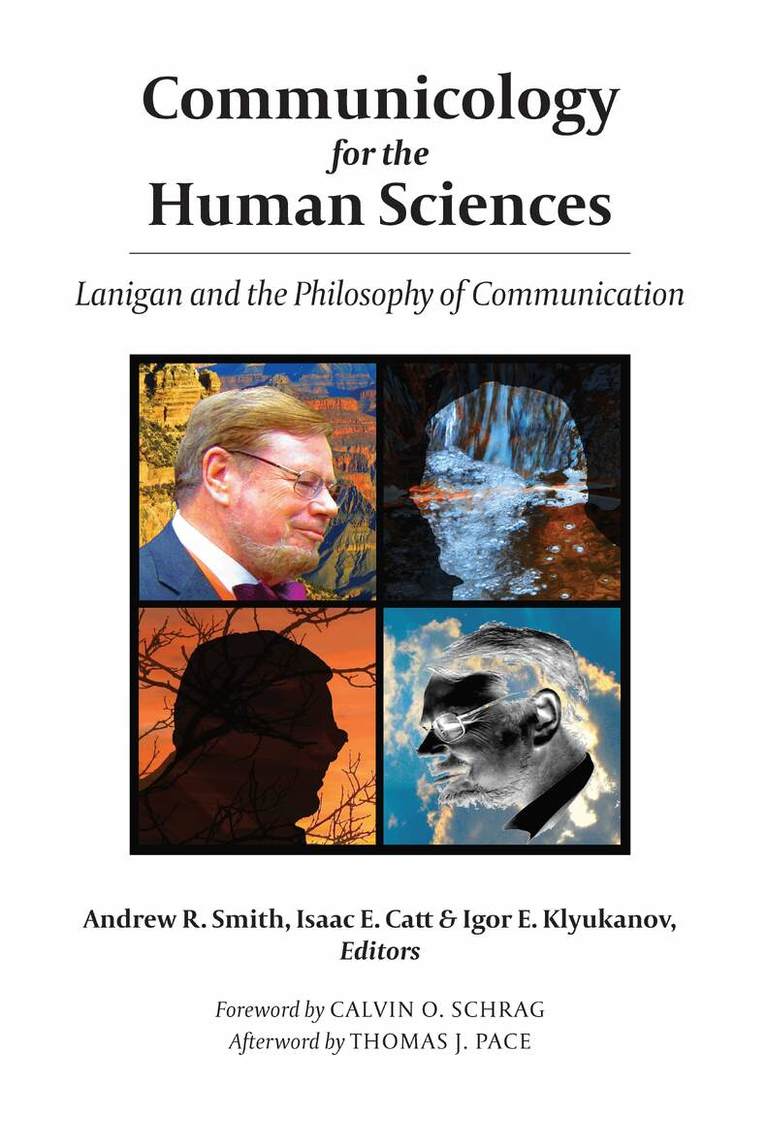
Communicology for the Human Sciences
Lanigan and the Philosophy of Communication
Häftad, Engelska, 2018
772 kr
Skickas inom 5-8 vardagar
Winner of the National Communication Association 2018 Philosophy of Communication Division Top Edited Book AwardThis edited volume develops the philosophy of communication inspired by the scholarship of Richard L. Lanigan, with emphasis on communicology as a human science. Lanigan’s syntheses of the philosophies of speech, language and discourse stemming from the works of Edmund Husserl, Maurice Merleau-Ponty, Michel Foucault, Julia Kristeva, Charles Sanders Peirce, Roman Jakobson, Umberto Eco, Pierre Bourdieu, Jurgen Reusch and Gregory Bateson, and many others offers a compelling framework for systematic analysis of human communication in all domains of lived experience. His work defines the theory and method of the human sciences in general and the discipline of communicology in particular. The focus in this collection is on the theoretical and methodological foundations for semiotic phenomenology whereby communication is recognized as constitutive of all human conscious experience and social relationships, involving gestural, nonverbal, discursive, performative, artistic, poetic and mass mediated forms.The volume is divided into five thematic sections: Founding(s), which marks out primary influences on communicology conceived as a human science; Tropologic(s), which reveals how abduction, adduction and semiosis are essential for understanding human conduct in multiple forms of expression; Trans/formations, which addresses problems of change in self-other relations advancing an ethical life; Voicing Bodies/Embodied Voices, which elaborates the reversible relations between body and voice, and voice and world; and Horizons of Communicability, which takes up operative intentionalities that typically escape human conscious experience. All chapters are original to this volume, written by leading international scholars in the philosophy of communication who cross several disciplinary boundaries in the human sciences.
Communicology for the Human Sciences
Lanigan and the Philosophy of Communication
Inbunden, Engelska, 2018
1 288 kr
Skickas inom 5-8 vardagar
Winner of the National Communication Association 2018 Philosophy of Communication Division Top Edited Book AwardThis edited volume develops the philosophy of communication inspired by the scholarship of Richard L. Lanigan, with emphasis on communicology as a human science. Lanigan’s syntheses of the philosophies of speech, language and discourse stemming from the works of Edmund Husserl, Maurice Merleau-Ponty, Michel Foucault, Julia Kristeva, Charles Sanders Peirce, Roman Jakobson, Umberto Eco, Pierre Bourdieu, Jurgen Reusch and Gregory Bateson, and many others offers a compelling framework for systematic analysis of human communication in all domains of lived experience. His work defines the theory and method of the human sciences in general and the discipline of communicology in particular. The focus in this collection is on the theoretical and methodological foundations for semiotic phenomenology whereby communication is recognized as constitutive of all human conscious experience and social relationships, involving gestural, nonverbal, discursive, performative, artistic, poetic and mass mediated forms.The volume is divided into five thematic sections: Founding(s), which marks out primary influences on communicology conceived as a human science; Tropologic(s), which reveals how abduction, adduction and semiosis are essential for understanding human conduct in multiple forms of expression; Trans/formations, which addresses problems of change in self-other relations advancing an ethical life; Voicing Bodies/Embodied Voices, which elaborates the reversible relations between body and voice, and voice and world; and Horizons of Communicability, which takes up operative intentionalities that typically escape human conscious experience. All chapters are original to this volume, written by leading international scholars in the philosophy of communication who cross several disciplinary boundaries in the human sciences.
1 698 kr
Skickas inom 10-15 vardagar
Radical Conflictaddresses conflict at interpersonal and communal, legal and rhetorical, ethnopolitical, global, and geopolitical levels. The conflicts analyzed are "radical" because in each some intense and often prolonged violence takes place. The chapters address different kinds of violence(s)—physical and gratuitous, structural and socio-economic, legal and symbolic, all with significant ill effects and injustices that spiral in all directions. All share an interest in exploring imaginatively and speculatively what can be done to attenuate such cycles of violence. The volume analyzes how recurrent narratives, mythologies, media(ted) constructions and other discourse(s) of liberal democratic and authoritarian states play a significant role in exacerbating or thwarting violence, exposing, escalating, legitimizing, rationalizing, propagating, but also possibly mitigating violence in all of its forms. Each contributor provides a critical interpretation of the status of the conflict under inquiry, including: a teacher verbally abusing and ridiculing a student then exposing it in social media; a community torn apart by environmental disaster; the incommensurate but not incommensurable conflict between Israelis and Palestinians; the Muslim Brotherhood and the militarized state(s) of Egypt and Libya; urban discourses in cyberspace among Moroccan and Maghreb youth that have become counter-signifying publics against oppression of the state; the role of media and violence in Zimbabwe's political struggle; the impact of the Circassian diaspora in global politics especially in the United States; India's soft power approach to the Kashmir conflict as a way to capitalize on it through tourism; the agonistic discourses that pervade the conflict over the Sahara and deprive Sahrawi people of rights; and how the liberal state is implicated in the gratuitous violence of ISIL. The volume also offers a section on the rhetoric of exclusionary laws associated with intractable conflicts of the abortion conflict, the right to die controversy, and a Burkean perspective on violence in Bangladesh. Contributors suggest what can be done conceptually and politically to mitigate and end violations of those who are most vulnerable, banished, forgotten, damaged, and often silenced.