Andrew Schonebaum – författare
Visar alla böcker från författaren Andrew Schonebaum. Handla med fri frakt och snabb leverans.
6 produkter
6 produkter
585 kr
Skickas inom 5-8 vardagar
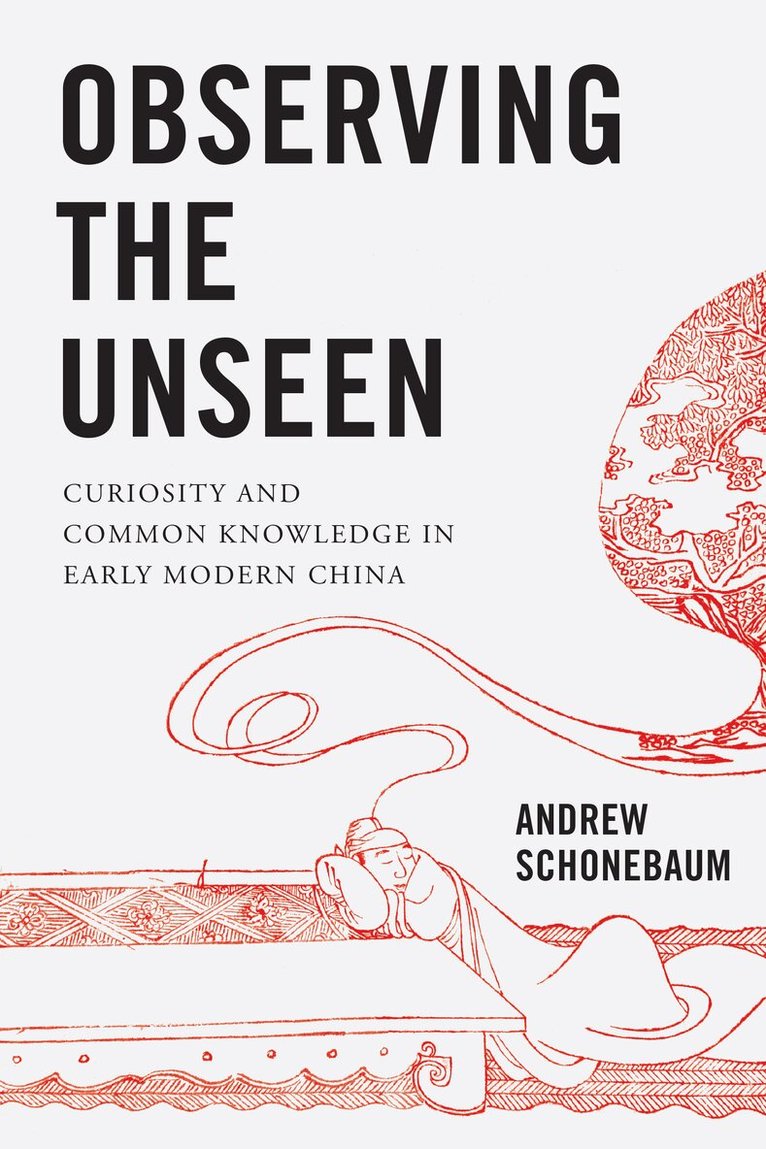
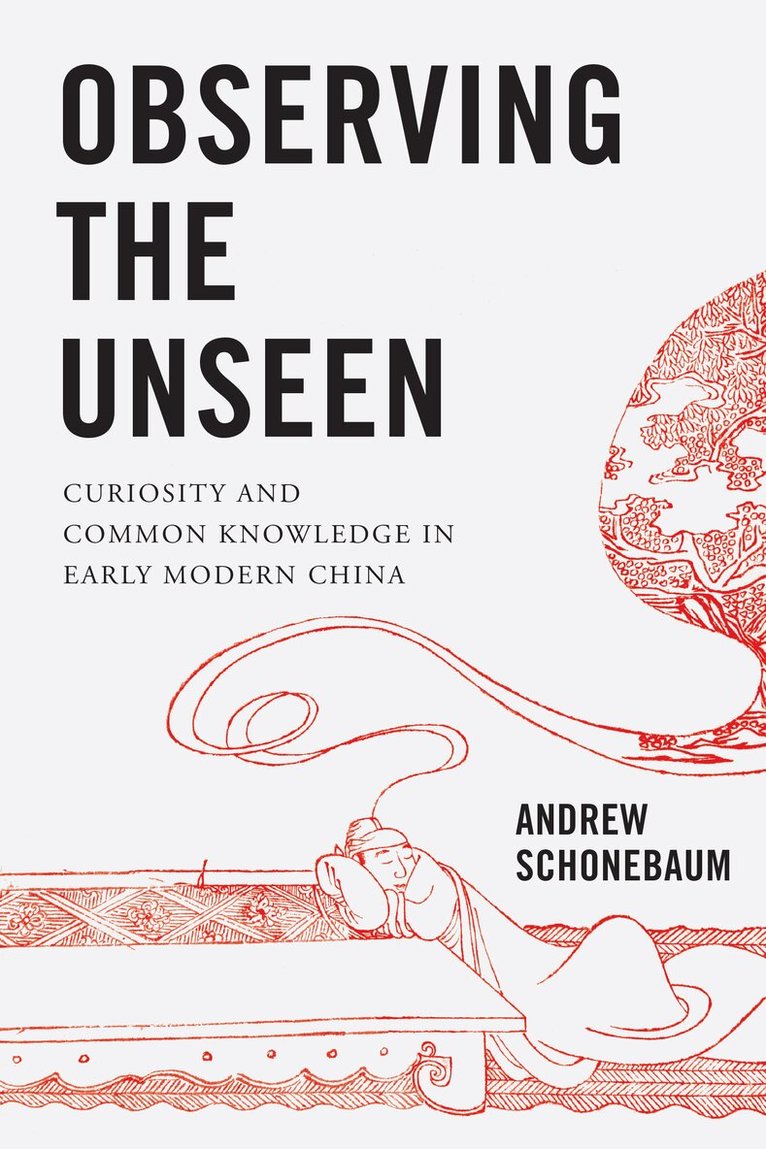
Explores the relationship between fantastical literature and scientific inquiryWhat did early modern Chinese readers believe about dragons, thunder, or fate, and where did they learn it? Observing the Unseen explores how literate and marginally literate people in China between the sixteenth and nineteenth centuries investigated the invisible, the ubiquitous, and the inexplicable. Whether through medical encyclopedias, daily-use almanacs, or novels and anecdotes, readers pursued knowledge of the natural world with curiosity shaped as much by wonder as by empiricism.Andrew Schonebaum reveals that for many readers, stories were an important source of reliable information about the world. Knowledge of the natural world evolved in the margins of “fiction.” Entertainment literature and practical texts alike conveyed information that was collected, debated, and even used to treat illness or predict the future. Drawing from overlooked genres such as brush notes, court records, and sequels to popular stories, Schonebaum demonstrates that common knowledge was constructed through a patchwork of sources—elite and vernacular, empirical and fantastical.Rather than privileging science as courtly or Western, Observing the Unseen shows how ordinary readers made sense of the cosmos in an age of expanding literacy and print culture. It challenges assumptions about what Chinese literature was and how it was read, offering a nuanced picture of everyday life in early modern China. This is a work for scholars of Chinese history and literature, historians of science, and anyone interested in the complicated ways humans seek to understand the unseen.
Novel Medicine
Healing, Literature, and Popular Knowledge in Early Modern China
Häftad, Engelska, 2018
585 kr
Skickas inom 5-8 vardagar
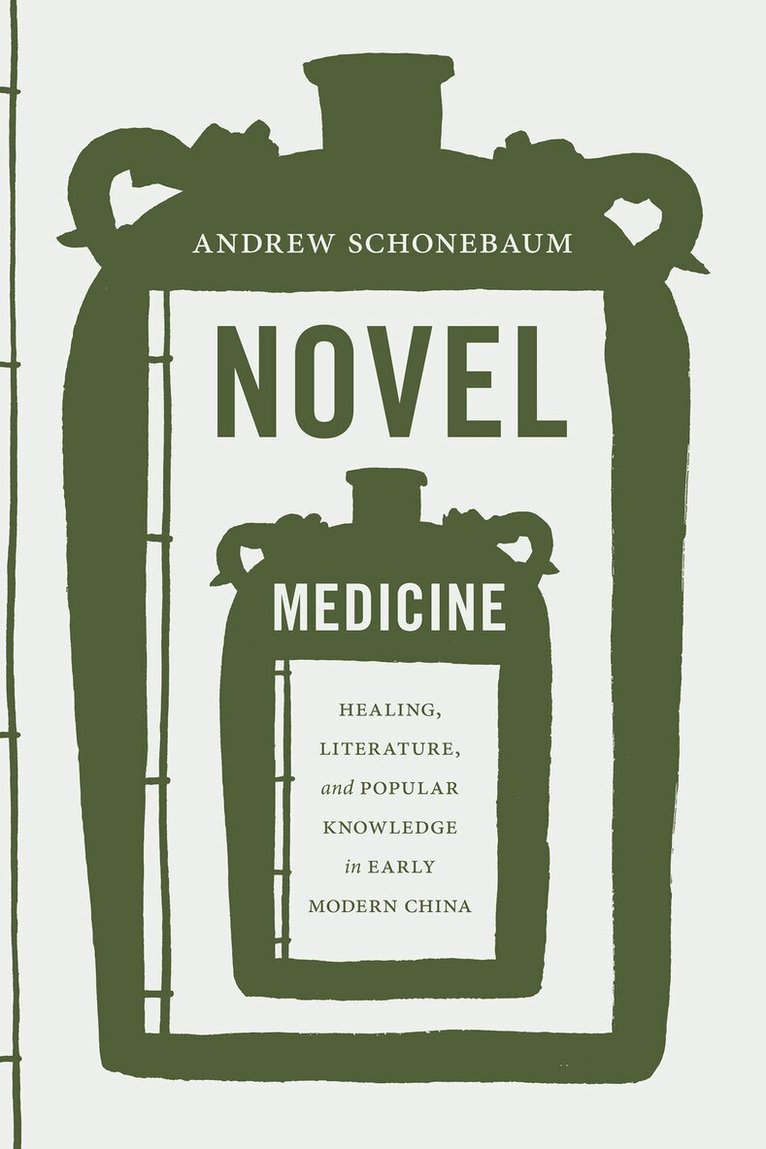
By examining the dynamic interplay between discourses of fiction and medicine, Novel Medicine demonstrates how fiction incorporated, created, and disseminated medical knowledge in China, beginning in the sixteenth century. Critical readings of fictional and medical texts provide a counterpoint to prevailing narratives that focus only on the “literati” aspects of the novel, showing that these texts were not merely read, but were used by a wide variety of readers for a range of purposes. The intersection of knowledge—fictional and real, elite and vernacular—illuminates the history of reading and daily life and challenges us to rethink the nature of Chinese literature.The open access publication of this book was made possible by a grant from the James P. Geiss and Margaret Y. Hsu Foundation.DOI: 10.6069/9780295806327
2 044 kr
Skickas inom 5-8 vardagar
Explores the relationship between fantastical literature and scientific inquiryWhat did early modern Chinese readers believe about dragons, thunder, or fate, and where did they learn it? Observing the Unseen explores how literate and marginally literate people in China between the sixteenth and nineteenth centuries investigated the invisible, the ubiquitous, and the inexplicable. Whether through medical encyclopedias, daily-use almanacs, or novels and anecdotes, readers pursued knowledge of the natural world with curiosity shaped as much by wonder as by empiricism.Andrew Schonebaum reveals that for many readers, stories were an important source of reliable information about the world. Knowledge of the natural world evolved in the margins of “fiction.” Entertainment literature and practical texts alike conveyed information that was collected, debated, and even used to treat illness or predict the future. Drawing from overlooked genres such as brush notes, court records, and sequels to popular stories, Schonebaum demonstrates that common knowledge was constructed through a patchwork of sources—elite and vernacular, empirical and fantastical.Rather than privileging science as courtly or Western, Observing the Unseen shows how ordinary readers made sense of the cosmos in an age of expanding literacy and print culture. It challenges assumptions about what Chinese literature was and how it was read, offering a nuanced picture of everyday life in early modern China. This is a work for scholars of Chinese history and literature, historians of science, and anyone interested in the complicated ways humans seek to understand the unseen.
484 kr
Skickas inom 5-8 vardagar
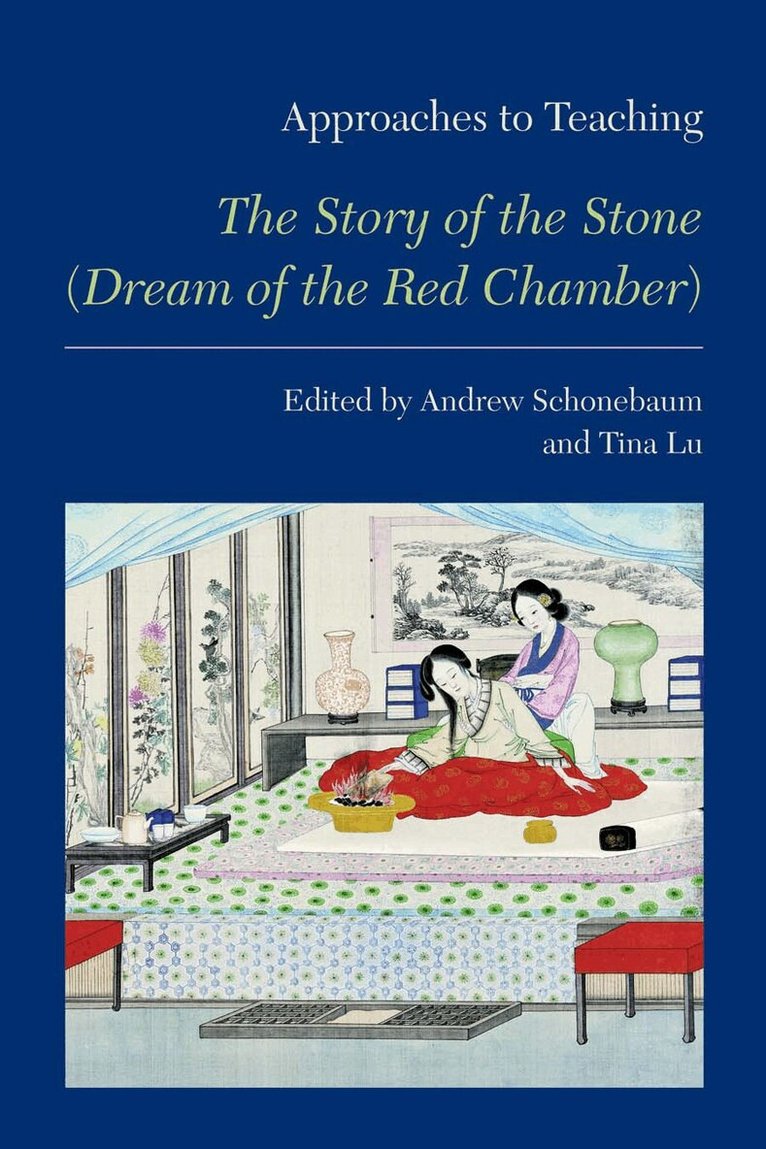
The Story of the Stone (or Dream of the Red Chamber), a Chinese novel by Cao Xueqin and continued by Gao E, tells of an amazing garden, of a young man’s choice between two beautiful women, of his journey toward enlightenment, and of the moral and financial decline of a powerful family. Published in 1792, it depicts virtually every facet of life in eighteenth-century China—and has influenced culture in China ever since.Part 1 of this volume, “Materials,” provides information and resources that will help teachers and students begin and pursue their study of Stone. The essays that constitute part 2, “Approaches,” introduce major topics to be covered in the classroom: Chinese religion, medicine, history, traditions of poetry, material culture, sexual mores, servants; Stone in film and on television; and the formidable challenges of translation into English that were faced by David Hawkes and then by John Minford.
484 kr
Skickas inom 5-8 vardagar
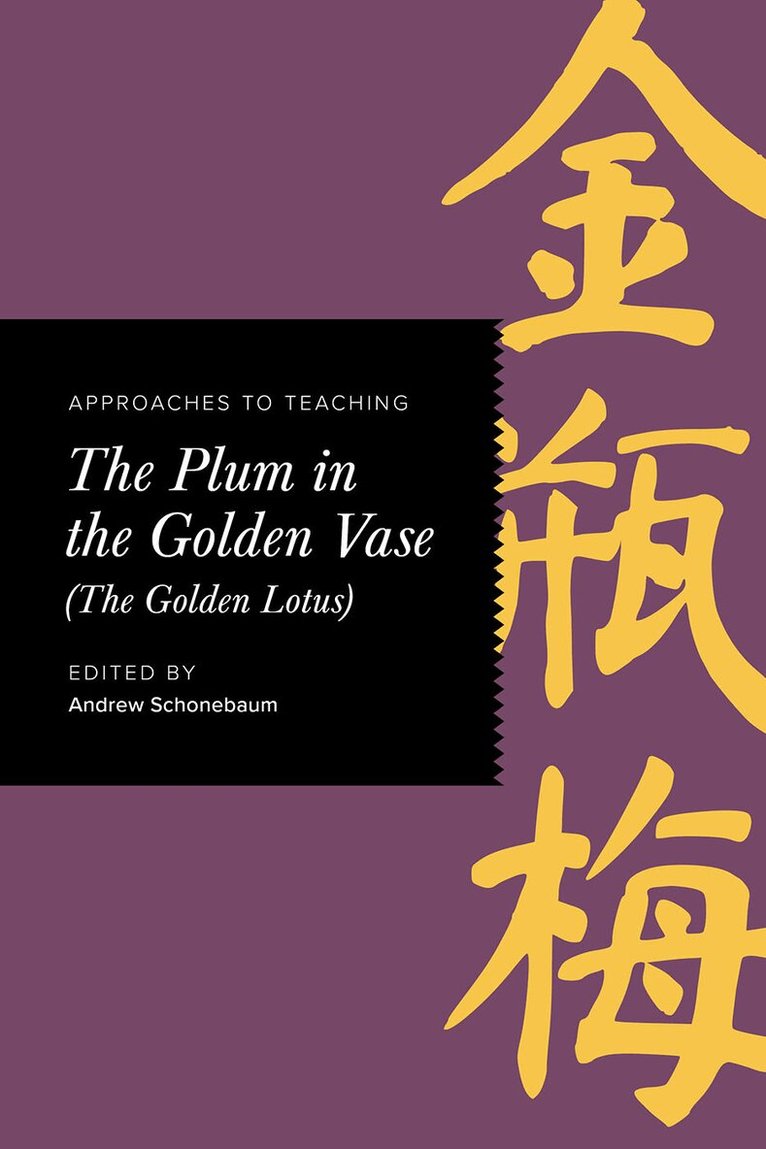
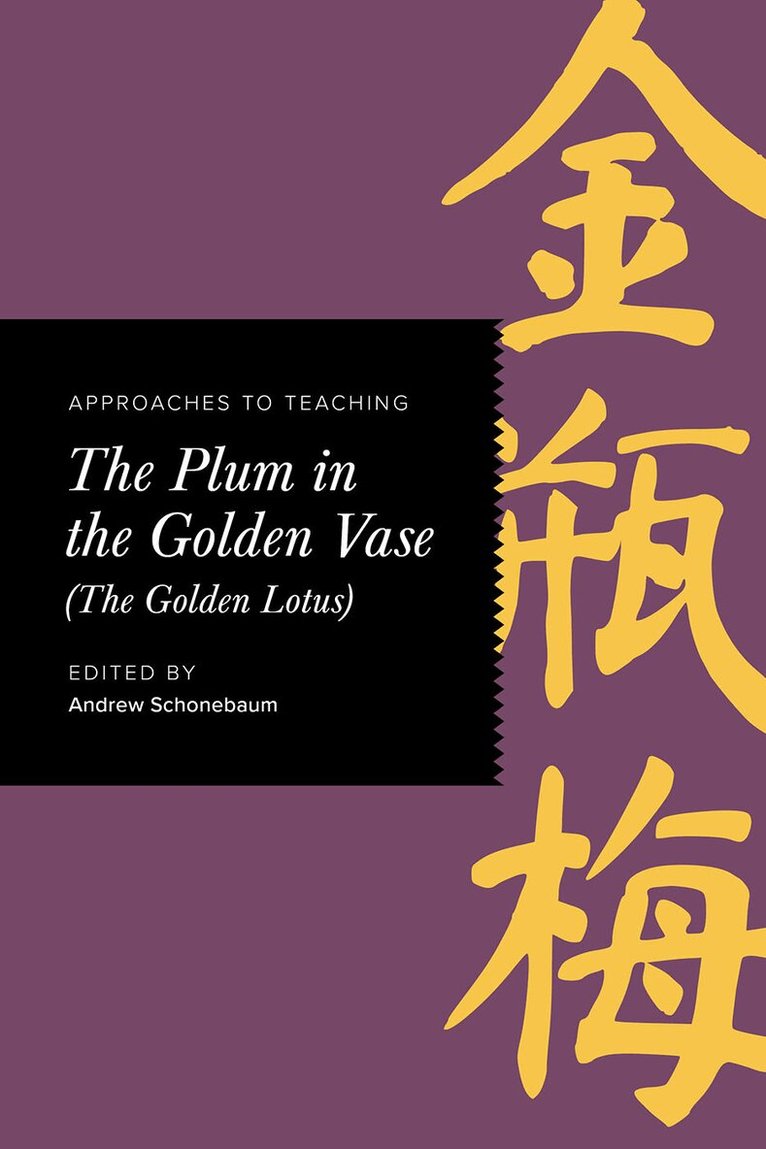
The Plum in the Golden Vase (also known as The Golden Lotus) was published in the early seventeenth century and may be the first long work of Chinese fiction written by a single (though anonymous) author. Featuring both complex structural features and psychological and emotional realism, the novel centers on the rich merchant Ximen Qing and his household and describes the physical surroundings and material objects of a Ming Dynasty city. In part a social, political, and moral critique, the novel reflects on hierarchical power relations of family and state and the materialism of life at the time.The essays in this volume provide ideas for teaching the novel from a variety of approaches, from questions of genre, intertextuality, and the novel's reception to material culture, family and social dynamics, and power structures in sexual relations. Insights into the novel's representation of Buddhism, Chinese folk religion, legal culture, class, slavery, and obscenity are offered throughout the volume.
1 114 kr
Skickas inom 5-8 vardagar
The Plum in the Golden Vase (also known as The Golden Lotus) was published in the early seventeenth century and may be the first long work of Chinese fiction written by a single (though anonymous) author. Featuring both complex structural features and psychological and emotional realism, the novel centers on the rich merchant Ximen Qing and his household and describes the physical surroundings and material objects of a Ming Dynasty city. In part a social, political, and moral critique, the novel reflects on hierarchical power relations of family and state and the materialism of life at the time.The essays in this volume provide ideas for teaching the novel from a variety of approaches, from questions of genre, intertextuality, and the novel's reception to material culture, family and social dynamics, and power structures in sexual relations. Insights into the novel's representation of Buddhism, Chinese folk religion, legal culture, class, slavery, and obscenity are offered throughout the volume.