Andrew Schotter – författare
Visar alla böcker från författaren Andrew Schotter. Handla med fri frakt och snabb leverans.
10 produkter
10 produkter
E-bok
PDF, Engelska, 20152 176 kr
Läs direkt efter köp
The Handbook of Experimental Economic Methodology, edited by Guillaume R. Fr?chette and Andrew Schotter, aims to confront and debate the issues faced by the growing field of experimental economics. For example, as experimental work attempts to test theory, it raises questions about the proper relationship between theory and experiments. As experimental results are used to inform policy, the utility of these results outside the lab is questioned, and finally, as experimental economics tries to integrate ideas from other disciplines like psychology and neuroscience, the question of their proper place in the discipline of economics becomes less clear.This book contains papers written by some of the most accomplished scholars working at the intersection of experimental, behavioral, and theoretical economics talking about methodology. It is divided into four sections, each of which features a set of papers and a set of comments on those papers. The intention of the volume is to offer a place where ideas about methodology could be discussed and even argued. Some of the papers are contentious---a healthy sign of a dynamic discipline---while others lay out a vision for how the authors think experimental economics should be pursued. This exciting and illuminating collection of papers brings light to a topic at the core of experimental economics. Researchers from a broad range of fields will benefit from the exploration of these important questions.
E-bok
Engelska, 20152 255 kr
Läs direkt efter köp
The Handbook of Experimental Economic Methodology, edited by Guillaume R. Fr?chette and Andrew Schotter, aims to confront and debate the issues faced by the growing field of experimental economics. For example, as experimental work attempts to test theory, it raises questions about the proper relationship between theory and experiments. As experimental results are used to inform policy, the utility of these results outside the lab is questioned, and finally, as experimental economics tries to integrate ideas from other disciplines like psychology and neuroscience, the question of their proper place in the discipline of economics becomes less clear.This book contains papers written by some of the most accomplished scholars working at the intersection of experimental, behavioral, and theoretical economics talking about methodology. It is divided into four sections, each of which features a set of papers and a set of comments on those papers. The intention of the volume is to offer a place where ideas about methodology could be discussed and even argued. Some of the papers are contentious---a healthy sign of a dynamic discipline---while others lay out a vision for how the authors think experimental economics should be pursued. This exciting and illuminating collection of papers brings light to a topic at the core of experimental economics. Researchers from a broad range of fields will benefit from the exploration of these important questions.
Inbunden, Engelska, 2015
2 352 kr
Skickas inom 5-8 vardagar
The Handbook of Experimental Economic Methodology, edited by Guillaume R. Fréchette and Andrew Schotter, aims to confront and debate the issues faced by the growing field of experimental economics. For example, as experimental work attempts to test theory, it raises questions about the proper relationship between theory and experiments. As experimental results are used to inform policy, the utility of these results outside the lab is questioned, and finally, as experimental economics tries to integrate ideas from other disciplines like psychology and neuroscience, the question of their proper place in the discipline of economics becomes less clear.This book contains papers written by some of the most accomplished scholars working at the intersection of experimental, behavioral, and theoretical economics talking about methodology.It is divided into four sections, each of which features a set of papers and a set of comments on those papers. The intention of the volume is to offer a place where ideas about methodology could be discussed and even argued. Some of the papers are contentious---a healthy sign of a dynamic discipline---while others lay out a vision for how the authors think experimental economics should be pursued. This exciting and illuminating collection of papers brings light to a topic at the core of experimental economics. Researchers from a broad range of fields will benefit from the exploration of these important questions.
E-bok
PDF, Engelska, 2008459 kr
Läs direkt efter köp
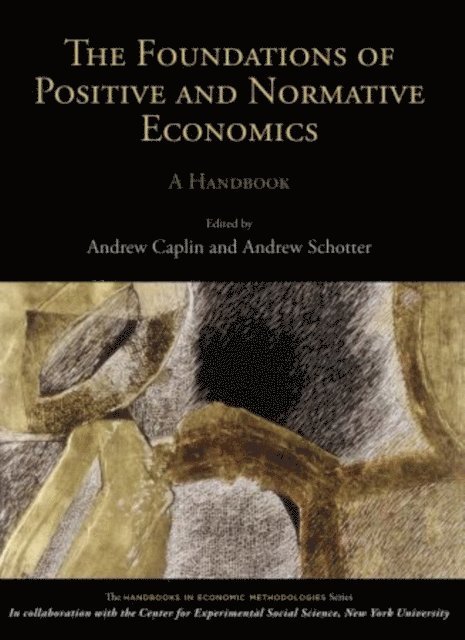
The Foundations of Positive and Normative Economics: A Handbook is the first book in a new series by Andrew Caplin and Andrew Schotter. There is currently no guide available on the rapidly changing methodological frontiers of the field of economics. Economists have been introducing new theories and new sources of data at a remarkable rate in recent years, and there are widely divergent views both on how productive these expansions have been in the past, and how best to make progress in the future. The speed of these changes has left economists ill at ease, and has created a backlash against new methods. The series will debate these critical issues, allowing proponents of a particular research method to present proposals in a safe yet critical context, with alternatives being clarified. This first volume, written by some of the most prominent researchers in the discipline, reflects the challenges that are opened by new research opportunities. The goal of the current volume and the series it presages, is to formally open a dialog on methodology. The editors'' conviction is that such a debate will rebound to the benefit of social science in general, and economics in particular. The issues under discussion strike to the very heart of the social scientific enterprise. This work is of tremendous importance to all who are interested in the contributions that academic research can make not only to our scientific understanding, but also to matters of policy.
E-bok
Engelska, 2010408 kr
Läs direkt efter köp
The Foundations of Positive and Normative Economics: A Handbook is the first book in a new series by Andrew Caplin and Andrew Schotter. There is currently no guide available on the rapidly changing methodological frontiers of the field of economics. Economists have been introducing new theories and new sources of data at a remarkable rate in recent years, and there are widely divergent views both on how productive these expansions have been in the past, and how best to make progress in the future. The speed of these changes has left economists ill at ease, and has created a backlash against new methods. The series will debate these critical issues, allowing proponents of a particular research method to present proposals in a safe yet critical context, with alternatives being clarified. This first volume, written by some of the most prominent researchers in the discipline, reflects the challenges that are opened by new research opportunities. The goal of the current volume and the series it presages, is to formally open a dialog on methodology. The editors'' conviction is that such a debate will rebound to the benefit of social science in general, and economics in particular. The issues under discussion strike to the very heart of the social scientific enterprise. This work is of tremendous importance to all who are interested in the contributions that academic research can make not only to our scientific understanding, but also to matters of policy.
Häftad, Engelska, 2008
595 kr
Skickas inom 7-10 vardagar
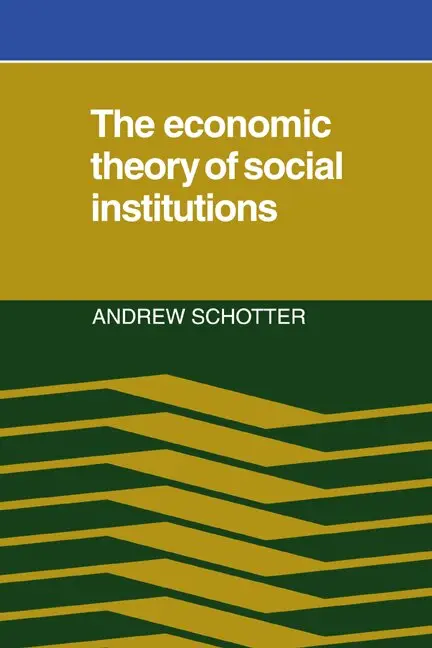
This book uses game theory to analyse the creation, evolution and function of economic and social institutions. The author illustrates his analysis by describing the organic or unplanned evolution of institutions such as the conventions of war, the use of money, property rights and oligopolistic pricing conventions. Professor Schotter begins by linking his work with the ideas of the philosophers Rawls, Nozick and Lewis. Institutions are regarded as regularities in the behaviour of social agents, which the agents themselves tacitly create to solve a wide variety of recurrent problems. The repetitive nature of the problems permits them to be described as a recurrent game or 'supergame.' The agents use these regularities as informational devices to supplement the information contained in competitive prices. The final chapter explores the applicability of this theory, first by relating it to previous work on the theory of teams, hierarchies, and non-maximizing decision theory, and then by using it to provide a new approach to a variety of questions both within and outside economics.
Häftad, Engelska, 2023
391 kr
Skickas inom 7-10 vardagar
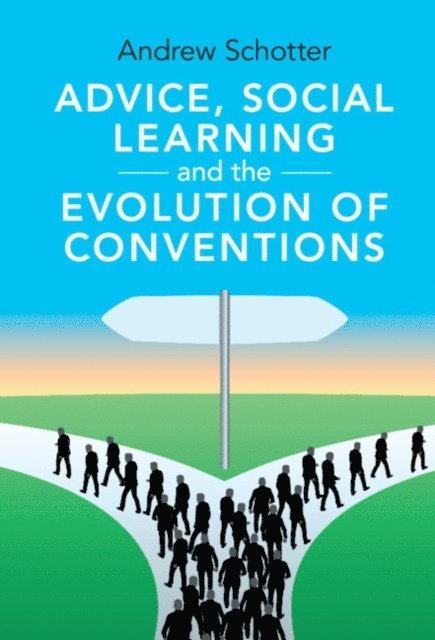
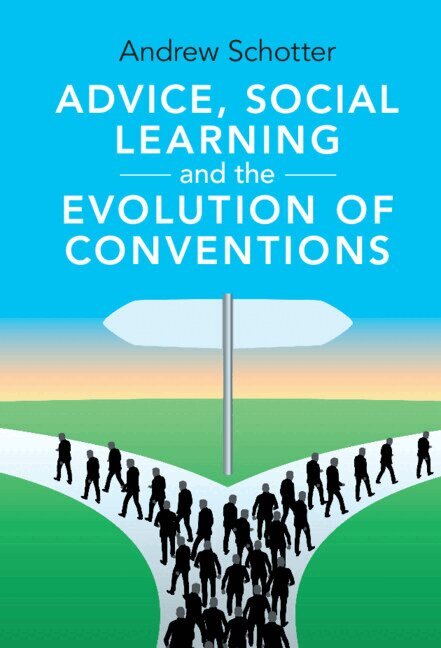
As societies progress, old generations of social agents die and are replaced by new ones. This book explores what happens in this transition as the old guard instructs the new arrivals about the wisdom of their ways. Do new entrants listen and follow the advice of their elders or dismiss it? Is intergenerational advice welfare improving or can it be destructive? Does such advice enhance the stability of social conventions or disrupt it? Using the concept of an Intergenerational Game and the tools of game theory and experimental economics, this study delves into the process of social leaning created by intergenerational advice passed from generation to generation. This book presents a unique theoretical and empirical study of the dynamics of social conventions not offered elsewhere.
E-bok
PDF, Engelska, 2023456 kr
Läs direkt efter köp
Inbunden, Engelska, 2023
1 212 kr
Skickas inom 7-10 vardagar
As societies progress, old generations of social agents die and are replaced by new ones. This book explores what happens in this transition as the old guard instructs the new arrivals about the wisdom of their ways. Do new entrants listen and follow the advice of their elders or dismiss it? Is intergenerational advice welfare improving or can it be destructive? Does such advice enhance the stability of social conventions or disrupt it? Using the concept of an Intergenerational Game and the tools of game theory and experimental economics, this study delves into the process of social leaning created by intergenerational advice passed from generation to generation. This book presents a unique theoretical and empirical study of the dynamics of social conventions not offered elsewhere.
Häftad, Engelska, 1990
736 kr
Skickas inom 5-8 vardagar
This book is an account of one of the central issues in economics, namely the potential of the free market system to solve social and economic problems. It explains the basic assumptions of the free market argument, examines their historical development, presents the standard criticisms of them and demonstrates how they can lead to social outcomes unacceptable to a consistent free market advocate. The author argues that while markets do work in many situations, they are not panaceas, and for some problems, non-market institutions organized and co-ordinated by the state are essential.