Andrew Sven Erickson – författare
Visar alla böcker från författaren Andrew Sven Erickson. Handla med fri frakt och snabb leverans.
5 produkter
5 produkter
637 kr
Tillfälligt slut
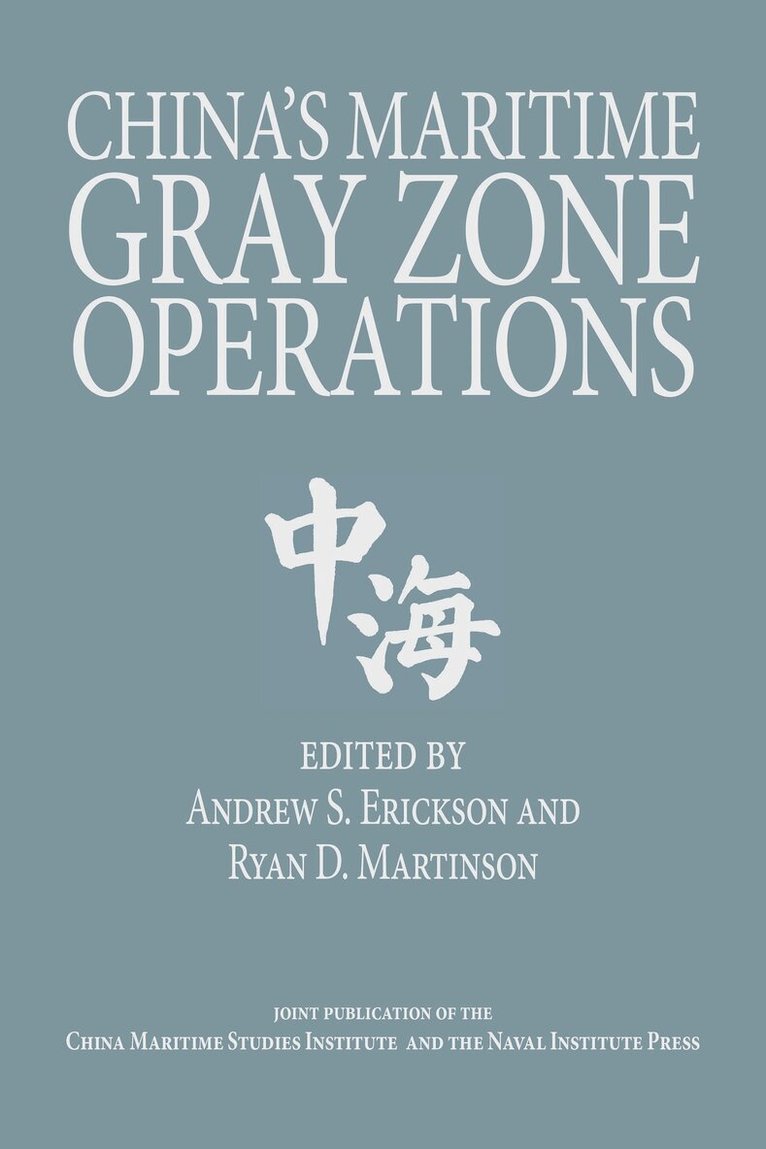
China's maritime "gray zone" operations represent a new challenge for the U.S. Navy and the sea services of our allies, partners, and friends in maritime East Asia. There, Beijing is waging what some Chinese sources term a "war without gunsmoke." Already winning in important areas, China could gain far more if left unchecked. One of China's greatest advantages thus far has been foreign difficulty in understanding the situation, let alone determining an effective response. With contributions from some of the world's leading subject matter experts, this volume aims to close that gap by explaining the forces and doctrines driving China's paranaval expansion, operating in the "gray zone" between war and peace. The book covers China's major maritime forces beyond core gray-hulled Navy units, with particular focus on China's second and third sea forces: the "white-hulled" Coast Guard and "blue-hulled" Maritime Militia. Increasingly, these paranaval forces, and the "gray zone" in which they typically operate, are on the frontlines of China's seaward expansion.
230 kr
Skickas inom 5-8 vardagar
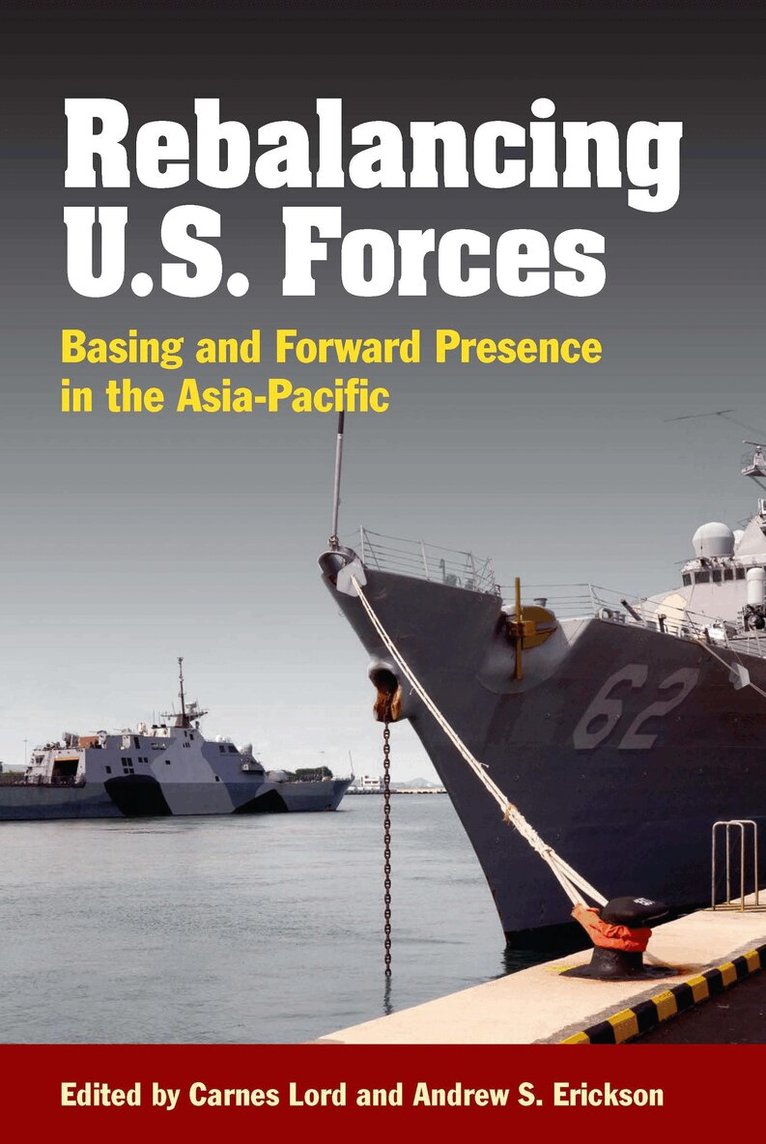
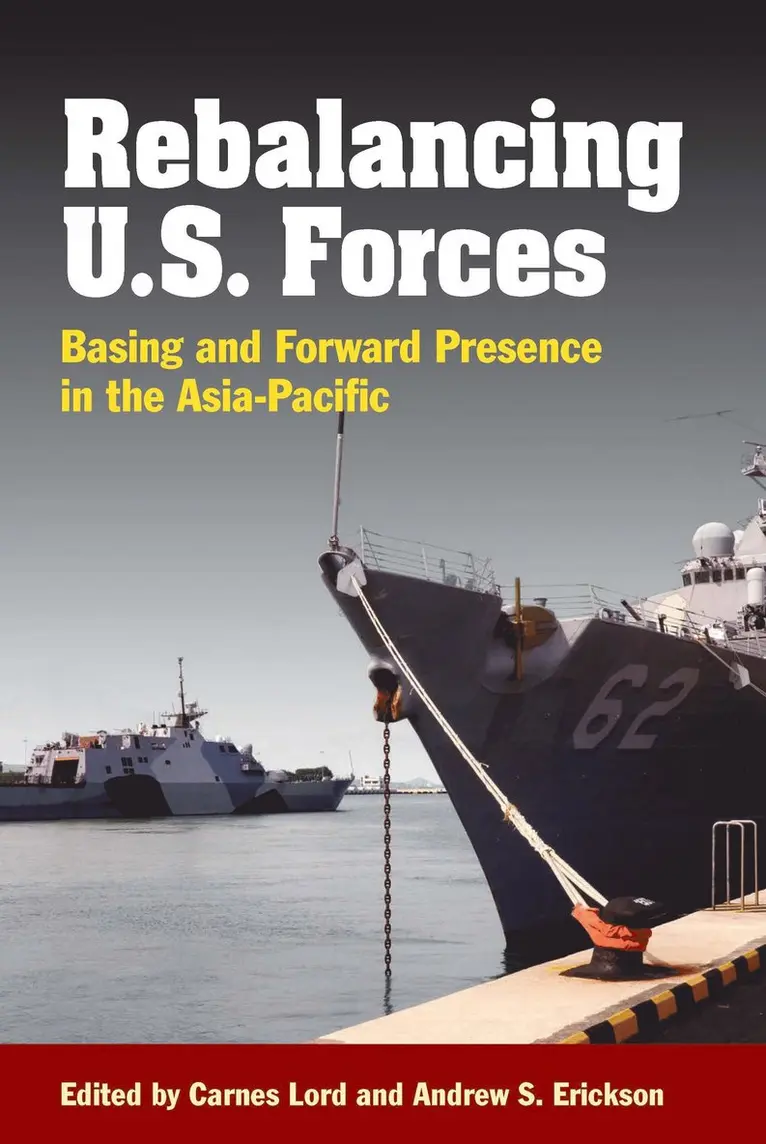
As the U.S. military presence in the Middle East winds down, Asia and the Pacific are receiving increased attention from the American national security community. The Obama administration has announced a “rebalancing” of the U.S. military posture in the region, in reaction primarily to the startling improvement in Chinese air and naval capabilities over the last decade or so. This timely study sets out to assess the implications of this shift for the long-established U.S. military presence in Asia and the Pacific. This presence is anchored in a complex basing infrastructure that scholars-and Americans generally-too often take for granted. In remedying this state of affairs, this volume offers a detailed survey and analysis of this infrastructure, its history, the political complications it has frequently given rise to, and its recent and likely future evolution.American seapower requires a robust constellation of bases to support global power projection. Given the rise of China and the emergence of the Asia-Pacific as the center of global economic growth and strategic contention, nowhere is American basing access more important than in this region. Yet manifold political and military challenges, stemming not least of which from rapidly-improving Chinese long-range precision strike capabilities, complicate the future of American access and security here. This book addresses what will be needed to maintain the fundaments of U.S. seapower and force projection in the Asia-Pacific, and where the key trend lines are headed in that regard. This book demonstrates that U.S. Asia-Pacific basing and access is increasingly vital, yet increasingly vulnerable. It demands far more attention than the limited coverage it has received to date, and cannot be taken for granted. More must be done to preserve capabilities and access upon which American and allied security and prosperity depend.
China Goes to Sea
Maritime Transformation in Comparative Historical Perspective
Häftad, Engelska, 2021
456 kr
Skickas inom 5-8 vardagar
In modern history, China has been primarily a land power, dominating smaller states along its massive continental flanks. But China's turn toward the sea is now very much a reality, as evident in its stunning rise in global shipbuilding markets, its vast and expanding merchant marine, the wide offshore reach of its energy and minerals exploration companies, its growing fishing fleet, and indeed its increasingly modern navy. Yet, for all these achievements, there is still profound skepticism regarding China's potential as a genuine maritime power. Beijing must still import the most vital subcomponents for its shipyards, maritime governance remains severely bureaucratically challenged, and the navy evinces, at least as of yet, little enthusiasm for significant blue water power projection capabilities.This volume provides a truly comprehensive assessment of prospects for China's maritime development by situating these important geostrategic phenomena within a larger world historical context. China is hardly the only land power in history to attempt transformation by fostering sea power. Many continental powers have elected or been impelled to transform themselves into significant maritime powers in order to safeguard their strategic position or advance their interests. We examine cases of attempted transformation from the Persian Empire to the Soviet Union, and determine the reasons for their success or failure. Too many works on China view the nation in isolation. Of course, China's history and culture are to some extent exceptional, but building intellectual fences actually hinders the effort to understand China's current development trajectory.Without underestimating the enduring pull of China's past as it relates to threats to the country's internal stability and its landward borders, this comparative study provides reason to believe that China has turned the corner on a genuine maritime transformation. If that proves indeed to be the case, it would be a remarkable if not singular event in the history of the last two millennia.
342 kr
Tillfälligt slut
China’s shipbuilding industry has grown more rapidly than any other in modern history. Commercial shipbuilding output jumped thirteen-fold from 2002–12, ensuring that Beijing has largely reached its goal of becoming the world’s leading shipbuilder. Yet progress is uneven, with military shipbuilding leading overall but with significant weakness in propulsion and electronics for military and civilian applications. It has never been more important to assess what ships China can supply its navy and other maritime forces with, today and in the future. Chinese Naval Shipbuilding answers three pressing questions: What are China’s prospects for success in key areas of naval shipbuilding? What are the likely results for China’s navy? What are the implications for the U.S. Navy?To address these critical issues, this volume assembles some of the world’s leading experts and linguistic analysts, often pairing them in research teams. These sailors, scholars, industry professionals, and government specialists have commanded ships at sea, led shipbuilding programs ashore, toured Chinese vessels and production facilities, invested in Chinese shipyards, and analyzed and presented important data to top-level decision-makers in times of crisis. In synthesizing their collective insights, this book fills a key gap in our understanding of China, its shipbuilding industry, its navy, and what it all means.
533 kr
Tillfälligt slut
China's maritime "gray zone" operations represent a new challenge for the U.S. Navy and the sea services of our allies, partners, and friends in maritime East Asia. There, Beijing is waging what some Chinese sources term a "war without gunsmoke." Already winning in important areas, China could gain far more if left unchecked. One of China's greatest advantages thus far has been foreign difficulty in understanding the situation, let alone determining an effective response. With contributions from some of the world's leading subject matter experts, this volume aims to close that gap by explaining the forces and doctrines driving China's paranaval expansion, operating in the "gray zone" between war and peace. The book covers China's major maritime forces beyond core gray-hulled Navy units, with particular focus on China's second and third sea forces: the "white-hulled" Coast Guard and "blue-hulled" Maritime Militia. Increasingly, these paranaval forces, and the "gray zone" in which they typically operate, are on the frontlines of China's seaward expansion.