Andrew T. H. Tan - Böcker
Visar alla böcker från författaren Andrew T. H. Tan. Handla med fri frakt och snabb leverans.
16 produkter
16 produkter
Terrorism and Insurgency in Asia
A contemporary examination of terrorist and separatist movements
Häftad, Engelska, 2020
576 kr
Skickas inom 10-15 vardagar
The rise of the Islamic State since 2014 has led to the re-emergence of terrorism as a serious security threat in Asia. Coupled with the ongoing terrorism and insurgency challenges from both radical religious extremists and also ethno-nationalist insurgencies, it is clear that some parts of Asia remain mired in armed rebellion despite decades of nation-building. While the situation in Afghanistan and Pakistan has obviously deteriorated, there is also a growing terrorist challenge, on top of armed insurgencies, in other parts of Asia. A common theme in armed rebellions in the region has been the lack of legitimacy of the state and the presence of fundamental causes stemming from political, economic or social grievances. Addressing rebellion in the region thus requires a comprehensive approach involving transnational co-operation, addressing fundamental grievances, and also the use of more innovative approaches, such as religious rehabilitation and reconciliation programmes.
563 kr
Skickas inom 10-15 vardagar
While global attention has been focused on other regional issues, such as China-US tensions and North Korea’s nuclear ambitions, little attention has been paid to Taiwan. Yet the so-called Taiwan issue, namely the continued separation of the island from mainland China, remains a major regional security challenge that could potentially spark direct conflict involving the USA, China and Japan, the three largest economies in the world, two of which are nuclear powers. Although Taiwan has continued to find opportunities to maintain the current status quo despite a deteriorating geo-strategic environment as a result of the rise of China and the uncertainties of the Trump Administration, its room for manoeuvre continues to narrow. This volume examines the challenges and evaluates the prospects for preventing conflict on the Taiwan Strait, by focusing on the political conditions that Taiwan faces internally and externally.
2 088 kr
Skickas inom 10-15 vardagar
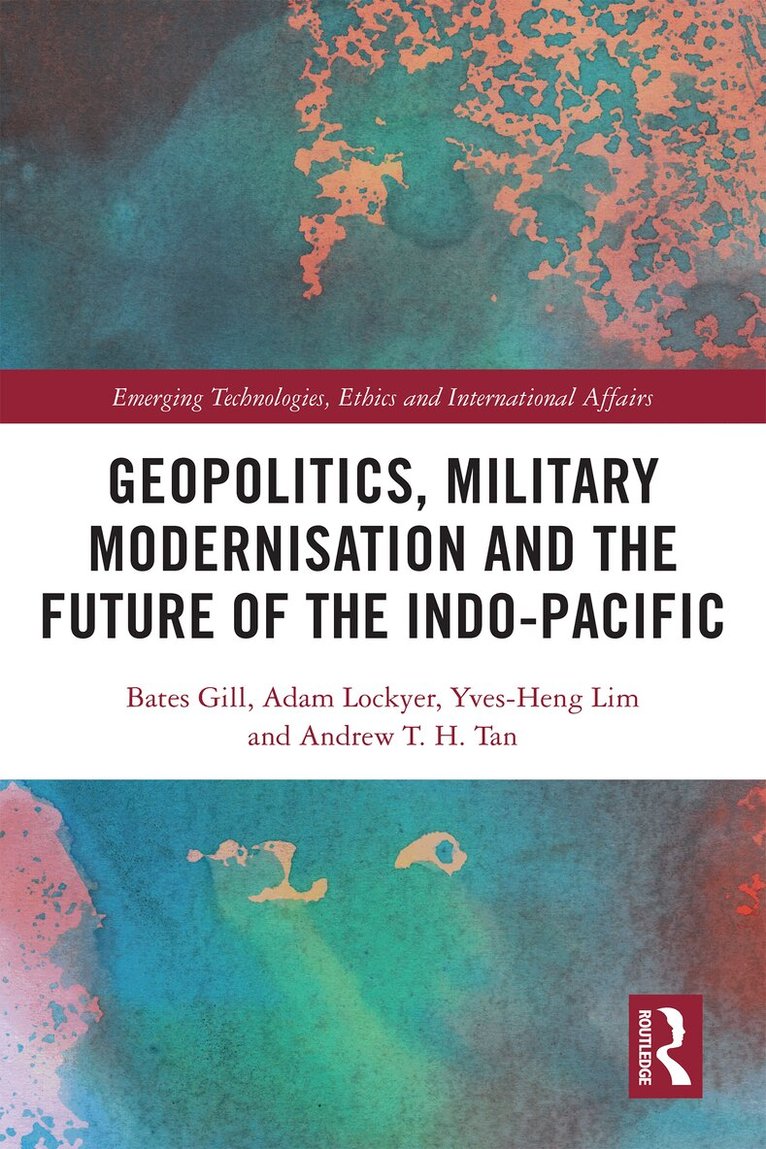
This book examines to what extent geopolitics explains the current wave of force modernisation in the Indo-Pacific region. Examining the leading Indo-Pacific nations in terms of defence spending: the United States, China, India, Japan, South Korea, Australia, Taiwan, Singapore, Pakistan, Indonesia and Thailand, geopolitical principles are used to create hypotheses that can be tested against the military modernisation programmes of the major actors in the Indo-Pacific region. The book represents a bridge between reference works and the literature on international politics in the Indo-Pacific. The empirical chapters provide qualitative narratives that explore the force postures, military modernisation and procurement patterns of the cases, and assess why these nations’ military modernisation has followed particular courses and evaluate this evidence against the expectations of geopolitics and its rivals. This book will be a valuable addition to scholars, practitioners and, indeed, anyone interested in the future stability of one of the world’s most important and dynamic regions.
541 kr
Skickas inom 10-15 vardagar
This book examines to what extent geopolitics explains the current wave of force modernisation in the Indo-Pacific region. Examining the leading Indo-Pacific nations in terms of defence spending: the United States, China, India, Japan, South Korea, Australia, Taiwan, Singapore, Pakistan, Indonesia and Thailand, geopolitical principles are used to create hypotheses that can be tested against the military modernisation programmes of the major actors in the Indo-Pacific region. The book represents a bridge between reference works and the literature on international politics in the Indo-Pacific. The empirical chapters provide qualitative narratives that explore the force postures, military modernisation and procurement patterns of the cases, and assess why these nations’ military modernisation has followed particular courses and evaluate this evidence against the expectations of geopolitics and its rivals. This book will be a valuable addition to scholars, practitioners and, indeed, anyone interested in the future stability of one of the world’s most important and dynamic regions.
2 088 kr
Skickas inom 10-15 vardagar
This thoroughly revised and updated edition explores the evolution and persistence of terrorism by examining the core motivations—religious, ethnic, and political—driving violent extremist groups and individuals. Global Terrorism, Fifth Edition, features a variety of comprehensive case studies, and expanded coverage on: The intersection between terrorism and insurgency Modern terrorism financing networks Emerging weapons and tactical innovations, such as the use of drones and online extremism Right-Wing Extremism (RWE) Updated case studies The Hamas–Israel conflict in Gaza Counter-terrorism strategies How terrorism ends By placing contemporary events within broader historical and geopolitical contexts, the authors demonstrate that terrorism is not confined to any single region, ideology, or tactical approach. The book’s flexible structure allows instructors and readers to focus on specific aspects most relevant to their interests. It will be an essential text for upperlevel undergraduate courses in political science, international relations, security studies, peace and conflict studies, and history, and an invaluable resource for anyone seeking to understand the complexity of global terrorism and the challenges it presents to the entire world.
576 kr
Skickas inom 10-15 vardagar
This thoroughly revised and updated edition explores the evolution and persistence of terrorism by examining the core motivations—religious, ethnic, and political—driving violent extremist groups and individuals. Global Terrorism, Fifth Edition, features a variety of comprehensive case studies, and expanded coverage on: The intersection between terrorism and insurgency Modern terrorism financing networks Emerging weapons and tactical innovations, such as the use of drones and online extremism Right-Wing Extremism (RWE) Updated case studies The Hamas–Israel conflict in Gaza Counter-terrorism strategies How terrorism ends By placing contemporary events within broader historical and geopolitical contexts, the authors demonstrate that terrorism is not confined to any single region, ideology, or tactical approach. The book’s flexible structure allows instructors and readers to focus on specific aspects most relevant to their interests. It will be an essential text for upperlevel undergraduate courses in political science, international relations, security studies, peace and conflict studies, and history, and an invaluable resource for anyone seeking to understand the complexity of global terrorism and the challenges it presents to the entire world.
2 960 kr
Skickas inom 10-15 vardagar
Terrorism is increasingly at the forefront of political agendas. Events world-wide have led to an increased awareness and response to this global phenomenon. The focus of this volume is on examining the fundamental causes of alienation and rebellion that underlie the use of terrorism as an instrument of violence.This title includes:essays, each of around 8,000 words in length, providing in-depth analysis of topics of relevance in the subjectan A-Z glossary of key terrorist groups and organizations, as well as major terrorist incidences and eventsdetailed maps and statisticsan extensive bibliography listing further relevant reading material.This unique combination of analytically detailed essays with statistics and a glossary make this title a unique one-stop reference source as well as a training and education guide on the politics of terrorism world-wide.
3 264 kr
Skickas inom 10-15 vardagar
Since the crucial maritime battles that were fought during the Second World War in both the Atlantic and Pacific Oceans and the post-war period, which saw a naval standoff between a vast US navy and a growing Soviet navy, the focus of international maritime power has changed. Major maritime powers have deployed warships, aircraft carriers and heavy land forces around the globe, for purposes of diplomacy, such as in maintaining far-flung alliances; for deterrent purposes, such as in the Taiwan Straits; for warfighting, such as in its crucial support roles in recent conflicts in Afghanistan and both Gulf Wars; and for complex emergencies, such as tsunami and earthquake rescue in Indonesia and Pakistan. Increasingly, maritime power is employed in counter-terrorism, such as in joint patrols, counter-terrorism exercises and in intercepting ships suspected of carrying weapons of mass destruction. The Politics of Maritime Power is an exploration of the contemporary facets of maritime power, particularly as an instrument of the state, in the post-Second World War era. This reference volume is divided into four parts, with chapters exploring various aspects of modern maritime power written by maritime experts; a series of maps which show major maritime zones; a glossary which contains over 240 entries on various aspects of maritime power; and a detailed bibliography.
3 397 kr
Skickas inom 10-15 vardagar
The Global Arms Trade is written by a team of security experts drawn from around the world, analysing a phenomenon which has continued to flourish despite the end of the Cold War and the preoccupation with global terrorism after 11 September 2001. It provides a clear description and analysis of the demand for, and supply of, modern weapons systems, and assesses key issues of concern. The comprehensive and in-depth treatment of the subject establishes this volume as a standard reference on the subject. It is divided sections which examine the demand for arms, the supply of arms and the key issues in the global arms trade. Part 1: Introduction. Develops the general conceptual framework by providing and overview of the global arms trade Part 2: Arms Modernization after the Cold War. Focuses on the demand for arms, in terms of defence spending, procurement and modernization Part 3: The Arms Industry after the Cold War. Examines the supply of arms, and the evolution, development of the arms industry, as well as its problems and prospects Part 4: Key Issues in the Global Arms Trade. Discusses the major issues arising from the arms trade phenomenonThe global arms trade is a major area of academic and governmental enquiry. With chapters looking at World regions such as Asia, Europe and the Middle East, as well as individual countries, this book will be of particular use and interest to scholars of international relations and security studies, policy analysts and defence professionals.
630 kr
Skickas inom 10-15 vardagar
Terrorism is increasingly at the forefront of political agendas. Events world-wide have led to an increased awareness and response to this global phenomenon. The focus of this volume is on examining the fundamental causes of alienation and rebellion that underlie the use of terrorism as an instrument of violence.This title includes:essays, each of around 8,000 words in length, providing in-depth analysis of topics of relevance in the subjectan A-Z glossary of key terrorist groups and organizations, as well as major terrorist incidences and eventsdetailed maps and statisticsan extensive bibliography listing further relevant reading material.This unique combination of analytically detailed essays with statistics and a glossary make this title a unique one-stop reference source as well as a training and education guide on the politics of terrorism world-wide.
630 kr
Skickas inom 10-15 vardagar
Since the crucial maritime battles that were fought during the Second World War in both the Atlantic and Pacific Oceans and the post-war period, which saw a naval standoff between a vast US navy and a growing Soviet navy, the focus of international maritime power has changed. Major maritime powers have deployed warships, aircraft carriers and heavy land forces around the globe, for purposes of diplomacy, such as in maintaining far-flung alliances; for deterrent purposes, such as in the Taiwan Straits; for warfighting, such as in its crucial support roles in recent conflicts in Afghanistan and both Gulf Wars; and for complex emergencies, such as tsunami and earthquake rescue in Indonesia and Pakistan. Increasingly, maritime power is employed in counter-terrorism, such as in joint patrols, counter-terrorism exercises and in intercepting ships suspected of carrying weapons of mass destruction. The Politics of Maritime Power is an exploration of the contemporary facets of maritime power, particularly as an instrument of the state, in the post-Second World War era. This reference volume is divided into four parts, with chapters exploring various aspects of modern maritime power written by maritime experts; a series of maps which show major maritime zones; a glossary which contains over 240 entries on various aspects of maritime power; and a detailed bibliography.
3 027 kr
Skickas inom 10-15 vardagar
The economic growth of East and South-East Asia in the context of the global financial crisis has strengthened the view that this region is emerging in the 21st century as the most economically vibrant region in the world. With some of the largest economies, and generally high economic growth rates compared to the rest of the world, it is unsurprising that East and South-East Asia has become the subject of global interest. East Asia’s rise inevitably focuses attention on the issue of China’s emergence as a regional and global power. Such a prospect challenges the current status quo, in which the region is dominated by the USA and its regional allies, and issues in Sino-US strategic relations have raised global awareness of the need to understand this pivotal region better. In addition, the Taiwan issue continues to evoke nationalist sentiments in China, and North Korea continues to threaten regional stability. Non-traditional (or alternative) security issues are also of major importance in the region, including natural disasters and epidemics, as well as challenges relating to human rights and governance, transnational crime, demographic issues, economics and trade and regionalism. This Handbook aims to offer an insight into these issues. The volume is divided into two main sections. The first, International Relations and Security Perspectives, will focus on the international relations of the region, paying special attention to the key state players. The chapter contributions will examine the security perspectives, and foreign and defence policies of these states, as well as key bilateral relationships. The second section will examine key Regional Non-traditional Security Issues, including globalization, transnational health challenges, population growth and the environment.
752 kr
Skickas inom 10-15 vardagar
The Global Arms Trade is written by a team of security experts drawn from around the world, analysing a phenomenon which has continued to flourish despite the end of the Cold War and the preoccupation with global terrorism after 11 September 2001. It provides a clear description and analysis of the demand for, and supply of, modern weapons systems, and assesses key issues of concern. The comprehensive and in-depth treatment of the subject establishes this volume as a standard reference on the subject. It is divided sections which examine the demand for arms, the supply of arms and the key issues in the global arms trade. Part 1: Introduction. Develops the general conceptual framework by providing and overview of the global arms trade Part 2: Arms Modernization after the Cold War. Focuses on the demand for arms, in terms of defence spending, procurement and modernization Part 3: The Arms Industry after the Cold War. Examines the supply of arms, and the evolution, development of the arms industry, as well as its problems and prospects Part 4: Key Issues in the Global Arms Trade. Discusses the major issues arising from the arms trade phenomenonThe global arms trade is a major area of academic and governmental enquiry. With chapters looking at World regions such as Asia, Europe and the Middle East, as well as individual countries, this book will be of particular use and interest to scholars of international relations and security studies, policy analysts and defence professionals.
766 kr
Skickas inom 10-15 vardagar
The economic growth of East and South-East Asia in the context of the global financial crisis has strengthened the view that this region is emerging in the 21st century as the most economically vibrant region in the world. With some of the largest economies, and generally high economic growth rates compared to the rest of the world, it is unsurprising that East and South-East Asia has become the subject of global interest. East Asia’s rise inevitably focuses attention on the issue of China’s emergence as a regional and global power. Such a prospect challenges the current status quo, in which the region is dominated by the USA and its regional allies, and issues in Sino-US strategic relations have raised global awareness of the need to understand this pivotal region better. In addition, the Taiwan issue continues to evoke nationalist sentiments in China, and North Korea continues to threaten regional stability. Non-traditional (or alternative) security issues are also of major importance in the region, including natural disasters and epidemics, as well as challenges relating to human rights and governance, transnational crime, demographic issues, economics and trade and regionalism. This Handbook aims to offer an insight into these issues. The volume is divided into two main sections. The first, International Relations and Security Perspectives, will focus on the international relations of the region, paying special attention to the key state players. The chapter contributions will examine the security perspectives, and foreign and defence policies of these states, as well as key bilateral relationships. The second section will examine key Regional Non-traditional Security Issues, including globalization, transnational health challenges, population growth and the environment.
Terrorism and Insurgency in Asia
A contemporary examination of terrorist and separatist movements
Inbunden, Engelska, 2019
1 886 kr
Skickas inom 10-15 vardagar
The rise of the Islamic State since 2014 has led to the re-emergence of terrorism as a serious security threat in Asia. Coupled with the ongoing terrorism and insurgency challenges from both radical religious extremists and also ethno-nationalist insurgencies, it is clear that some parts of Asia remain mired in armed rebellion despite decades of nation-building. While the situation in Afghanistan and Pakistan has obviously deteriorated, there is also a growing terrorist challenge, on top of armed insurgencies, in other parts of Asia. A common theme in armed rebellions in the region has been the lack of legitimacy of the state and the presence of fundamental causes stemming from political, economic or social grievances. Addressing rebellion in the region thus requires a comprehensive approach involving transnational co-operation, addressing fundamental grievances, and also the use of more innovative approaches, such as religious rehabilitation and reconciliation programmes.
1 886 kr
Skickas inom 10-15 vardagar
While global attention has been focused on other regional issues, such as China-US tensions and North Korea’s nuclear ambitions, little attention has been paid to Taiwan. Yet the so-called Taiwan issue, namely the continued separation of the island from mainland China, remains a major regional security challenge that could potentially spark direct conflict involving the USA, China and Japan, the three largest economies in the world, two of which are nuclear powers. Although Taiwan has continued to find opportunities to maintain the current status quo despite a deteriorating geo-strategic environment as a result of the rise of China and the uncertainties of the Trump Administration, its room for manoeuvre continues to narrow. This volume examines the challenges and evaluates the prospects for preventing conflict on the Taiwan Strait, by focusing on the political conditions that Taiwan faces internally and externally.