Andrew Trigg – författare
Visar alla böcker från författaren Andrew Trigg. Handla med fri frakt och snabb leverans.
9 produkter
Marxian Reproduction Schema
Money and Aggregate Demand in a Capitalist Economy
Av Andrew Trigg
Inbunden, 2006
2578 kr
Lägg i varukorg
In 1878 Karl Marx developed the reproduction schema: his model of how total capital is produced and reproduced. This is thought to be the first two-sector economic model ever constructed. Two key aspects of Marx’s writings are widely agreed to be undeveloped: The role of aggregate demand and the …
Marxian Reproduction Schema
Money and Aggregate Demand in a Capitalist Economy
Av Andrew Trigg
Häftad, 2009
772 kr
Lägg i varukorg
In 1878 Karl Marx developed the reproduction schema: his model of how total capital is produced and reproduced. This is thought to be the first two-sector economic model ever constructed. Two key aspects of Marx’s writings are widely agreed to be undeveloped: The role of aggregate demand and the …
Marxian Reproduction Schema
Money and Aggregate Demand in a Capitalist Economy
Av Andrew Trigg
E-bok, 2006
803 kr
Lägg i varukorg
In 1878 Karl Marx developed the reproduction schema: his model of how total capital is produced and reproduced. This is thought to be the first two-sector economic model ever constructed. Two key aspects of Marx’s writings are widely agreed to be undeveloped: The role of aggregate demand and the …
Marxian Reproduction Schema
Money and Aggregate Demand in a Capitalist Economy
Av Andrew Trigg
E-bok, 2006
803 kr
Lägg i varukorg
In 1878 Karl Marx developed the reproduction schema: his model of how total capital is produced and reproduced. This is thought to be the first two-sector economic model ever constructed. Two key aspects of Marx’s writings are widely agreed to be undeveloped: The role of aggregate demand and the …
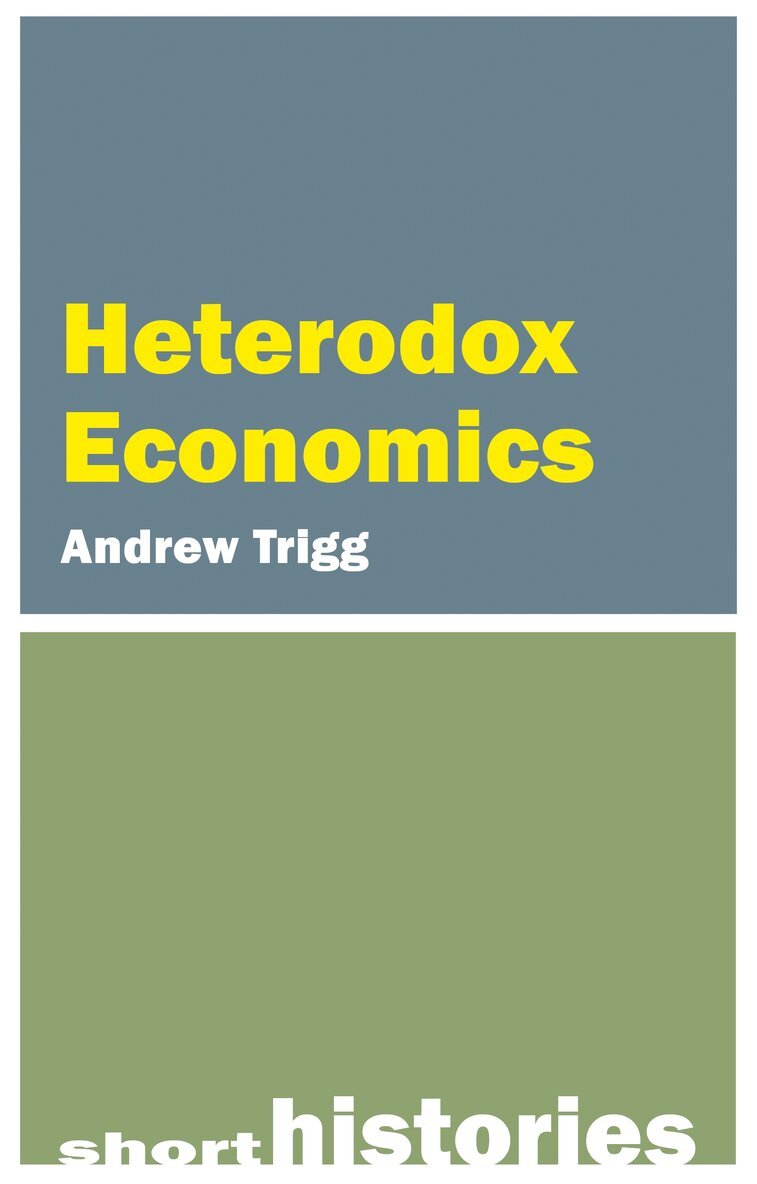
Heterodox Economics
Av Andrew Trigg
Inbunden, 2025
1303 kr
Lägg i varukorg
Heterodox economics differs from orthodox or mainstream economics. It draws on a multiplicity of ideas, disciplines, methods and voices to present a more radical alternative to the dominant paradigm of neoclassical economics, which is viewed as overly narrow and blind-sided to how economies …
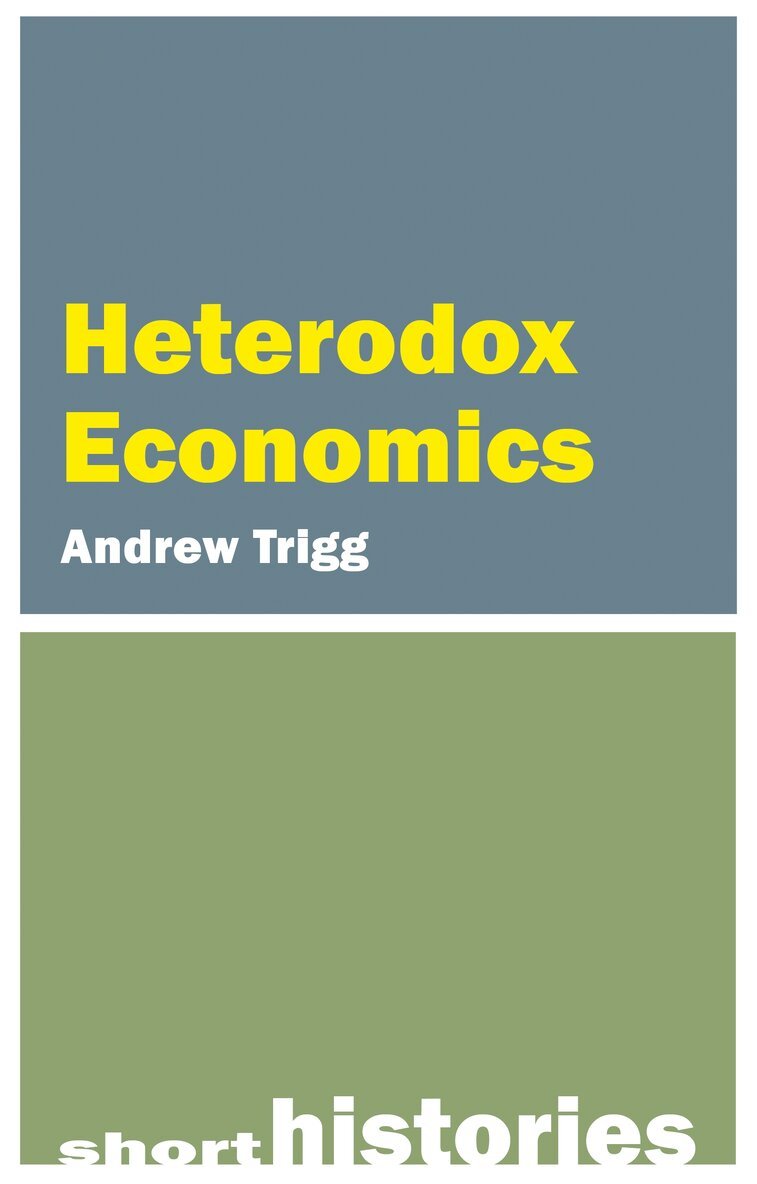
Heterodox Economics
Av Andrew Trigg
Häftad, 2025
259 kr
Lägg i varukorg
Heterodox economics differs from orthodox or mainstream economics. It draws on a multiplicity of ideas, disciplines, methods and voices to present a more radical alternative to the dominant paradigm of neoclassical economics, which is viewed as overly narrow and blind-sided to how economies …
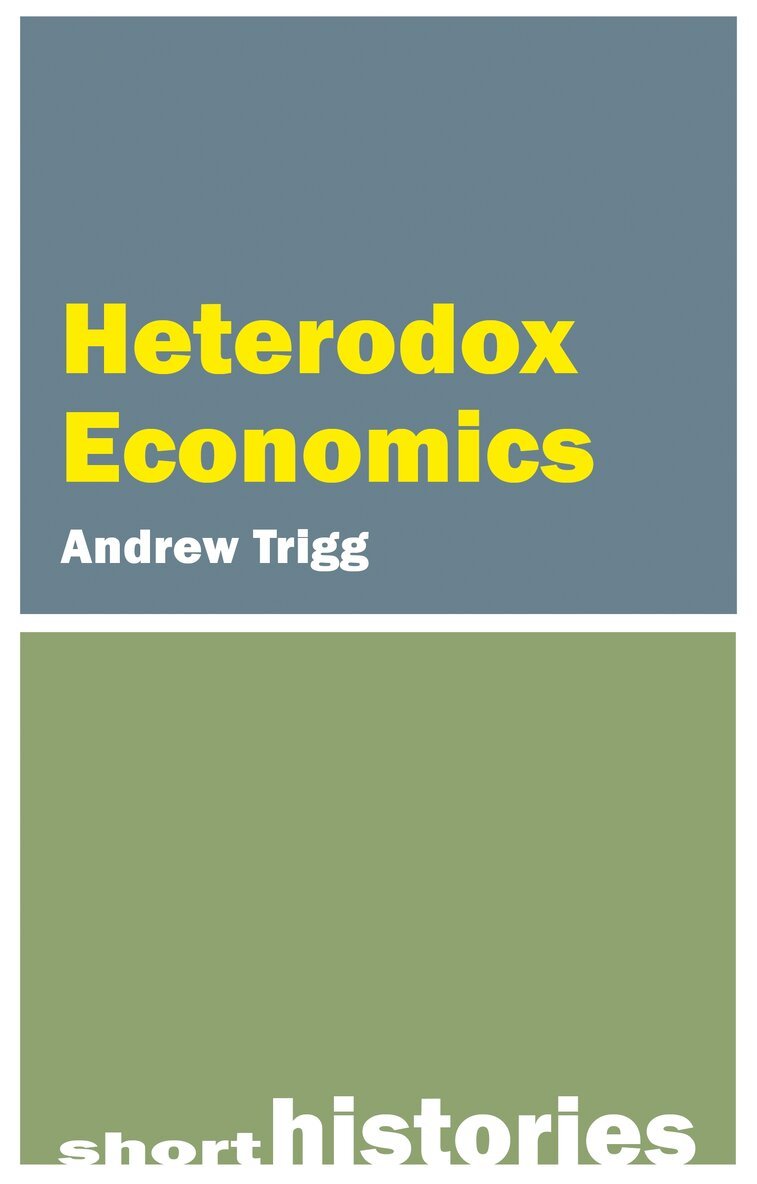
Heterodox Economics
Av Andrew Trigg
E-bok, 2025
336 kr
Lägg i varukorg
Heterodox economics differs from orthodox or mainstream economics. It draws on a multiplicity of ideas, disciplines, methods and voices to present a more radical alternative to the dominant paradigm of neoclassical economics, which is viewed as overly narrow and blind-sided to how economies …
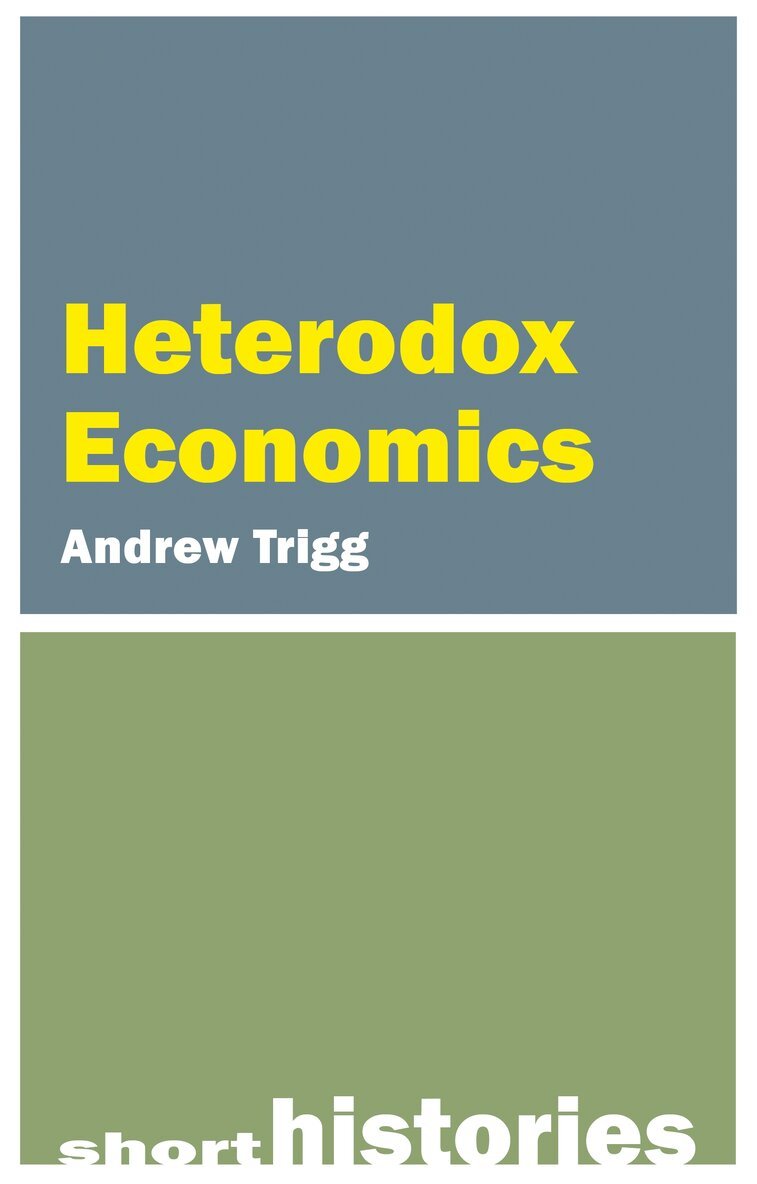
Heterodox Economics
Av Andrew Trigg
E-bok, 2025
336 kr
Lägg i varukorg
Heterodox economics differs from orthodox or mainstream economics. It draws on a multiplicity of ideas, disciplines, methods and voices to present a more radical alternative to the dominant paradigm of neoclassical economics, which is viewed as overly narrow and blind-sided to how economies …
Microeconomics
Neoclassical and Institutional Perspectives on Economic Behaviour
Av Susan Himmelweit, Roberto Simonetti m. fl.
Häftad, 2001
1374 kr
Lägg i varukorg
In economics the dominant framework for exploring the structure of market economies is provided by the neoclassical school of thought. This text aims to show how neoclassical theory is used to model market mechanisms, both in particular markets and in the market economy as a whole. Underpinning …