Andrew Weiss - Böcker
Visar alla böcker från författaren Andrew Weiss. Handla med fri frakt och snabb leverans.
9 produkter
9 produkter
325 kr
Skickas inom 7-10 vardagar
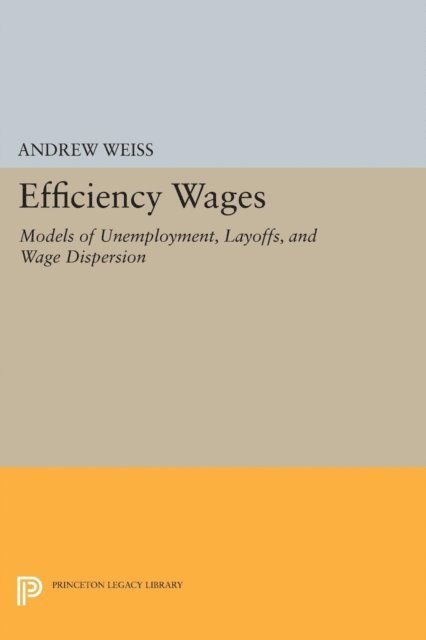
Known for his seminal work in efficiency-wage theory, Andrew Weiss surveys recent research in the field and presents new results. He shows how wage schedules affect the kinds of workers a firm employs and how well those workers perform on the job. Using straightforward examples, he demonstrates how efficiency-wage theory can explain labor market outcomes and guide government policy. There is a separate section of applications to less developed countries. "Efficiency-wage models represent one of the most important developments in economic theory of recent years. They have, at last, provided integrated explanations both of macroeconomic phenomena, such as unemployment and wage rigidity, and microeconomic phenomena, such as wage dispersion. Weiss--one of the pioneers of efficiency-wage theory--provides here a masterful survey, a lucid and systematic and yet critical account of this rapidly developing branch of economics. This book should be required reading in all courses in macroeconomics."--Joseph Stiglitz, Stanford University "Efficiency Wages should be on the bookshelf of all labor and macroeconomists."--Lawrence H. Summers, Harvard University "A splendid monograph ...most readable...I will put it on my reading list."--Partha Dasgupta, Stanford University Originally published in 1991. The Princeton Legacy Library uses the latest print-on-demand technology to again make available previously out-of-print books from the distinguished backlist of Princeton University Press. These editions preserve the original texts of these important books while presenting them in durable paperback and hardcover editions. The goal of the Princeton Legacy Library is to vastly increase access to the rich scholarly heritage found in the thousands of books published by Princeton University Press since its founding in 1905.
1 456 kr
Skickas inom 3-6 vardagar
Known for his seminal work in efficiency-wage theory, Andrew Weiss surveys recent research in the field and presents new results. He shows how wage schedules affect the kinds of workers a firm employs and how well those workers perform on the job. Using straightforward examples, he demonstrates how efficiency-wage theory can explain labor market outcomes and guide government policy. There is a separate section of applications to less developed countries. "Efficiency-wage models represent one of the most important developments in economic theory of recent years. They have, at last, provided integrated explanations both of macroeconomic phenomena, such as unemployment and wage rigidity, and microeconomic phenomena, such as wage dispersion. Weiss--one of the pioneers of efficiency-wage theory--provides here a masterful survey, a lucid and systematic and yet critical account of this rapidly developing branch of economics. This book should be required reading in all courses in macroeconomics."--Joseph Stiglitz, Stanford University "Efficiency Wages should be on the bookshelf of all labor and macroeconomists."--Lawrence H. Summers, Harvard University "A splendid monograph ...most readable...I will put it on my reading list."--Partha Dasgupta, Stanford University Originally published in 1991. The Princeton Legacy Library uses the latest print-on-demand technology to again make available previously out-of-print books from the distinguished backlist of Princeton University Press. These editions preserve the original texts of these important books while presenting them in durable paperback and hardcover editions. The goal of the Princeton Legacy Library is to vastly increase access to the rich scholarly heritage found in the thousands of books published by Princeton University Press since its founding in 1905.
986 kr
Skickas inom 3-6 vardagar
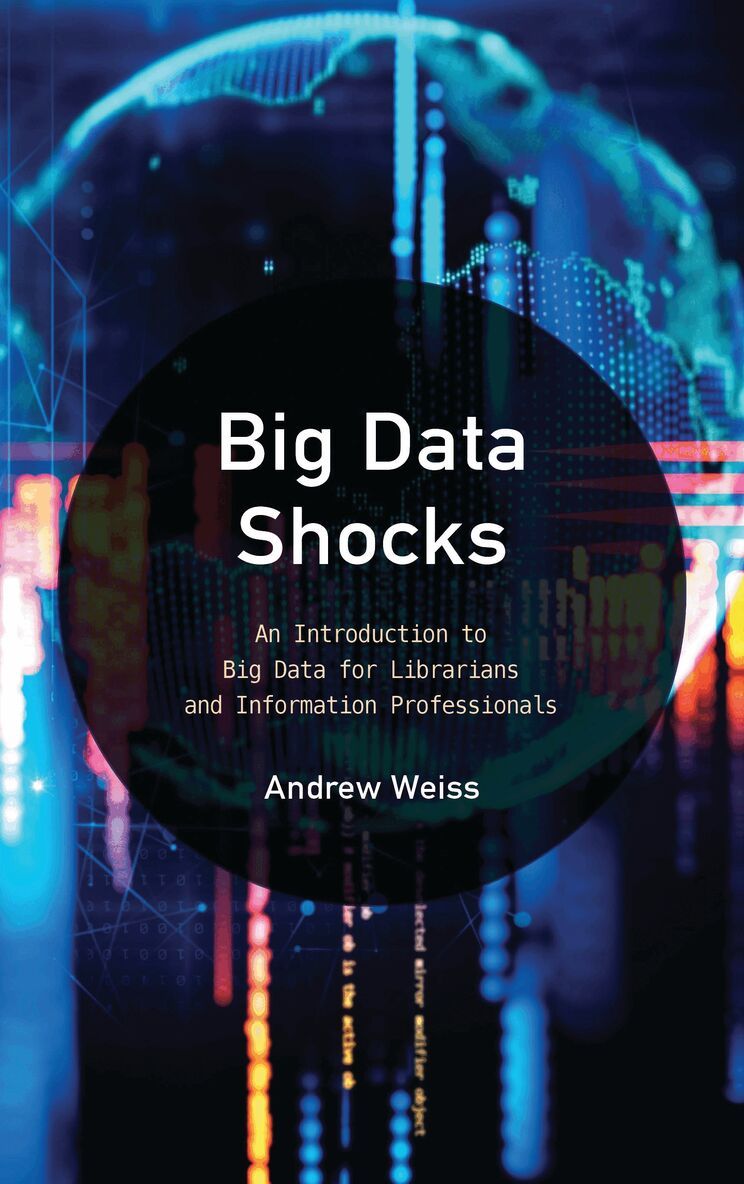
Big Data Shocks
An Introduction to Big Data for Librarians and Information Professionals
Inbunden, Engelska, 2018
1 131 kr
Skickas inom 10-15 vardagar
"Big data," as it has become known in business and information technology circles, has the potential to improve our knowledge about human behavior, and to help us gain insight into the ways in which we organize ourselves, our cultures, and our external and internal lives. Libraries stand at the center of the information world, both facilitating and contributing to this flood as well as helping to shape and channel it to specific purposes. But all technologies come with a price. Where the tool can serve a purpose, it can also change the user's behavior to fit the purposes of the tool. Big Data Shocks: An Introduction to Big Data for Librarians and Information Professionals examines the roots of big data, the current climate and rising stars in this world. The book explores the issues raised by big data and discusses theoretical as well as practical approaches to managing information whose scope exists beyond the human scale.What’s at stake ultimately is the privacy of the people who support and use our libraries and the temptation for us to examine their behaviors. Such tension lies deep in the heart of our great library institutions. This book addresses these issues and many of the questions that arise from them, including: What is our role as librarians within this new era of big data? What are the impacts of new powerful technologies that track and analyze our behavior? Do data aggregators know more about us and our patrons than we do? How can librarians ethically balance the need to demonstrate learning and knowledge creation and privacy? Do we become less private merely because we use a tool or is it because the tool has changed us? What's in store for us with the internet of things combining with data mining techniques?All of these questions and more are explored in this book
Big Data Shocks
An Introduction to Big Data for Librarians and Information Professionals
Häftad, Engelska, 2018
589 kr
Skickas inom 10-15 vardagar
"Big data," as it has become known in business and information technology circles, has the potential to improve our knowledge about human behavior, and to help us gain insight into the ways in which we organize ourselves, our cultures, and our external and internal lives. Libraries stand at the center of the information world, both facilitating and contributing to this flood as well as helping to shape and channel it to specific purposes. But all technologies come with a price. Where the tool can serve a purpose, it can also change the user's behavior to fit the purposes of the tool. Big Data Shocks: An Introduction to Big Data for Librarians and Information Professionals examines the roots of big data, the current climate and rising stars in this world. The book explores the issues raised by big data and discusses theoretical as well as practical approaches to managing information whose scope exists beyond the human scale.What’s at stake ultimately is the privacy of the people who support and use our libraries and the temptation for us to examine their behaviors. Such tension lies deep in the heart of our great library institutions. This book addresses these issues and many of the questions that arise from them, including: What is our role as librarians within this new era of big data? What are the impacts of new powerful technologies that track and analyze our behavior? Do data aggregators know more about us and our patrons than we do? How can librarians ethically balance the need to demonstrate learning and knowledge creation and privacy? Do we become less private merely because we use a tool or is it because the tool has changed us? What's in store for us with the internet of things combining with data mining techniques?All of these questions and more are explored in this book
430 kr
Skickas inom 10-15 vardagar
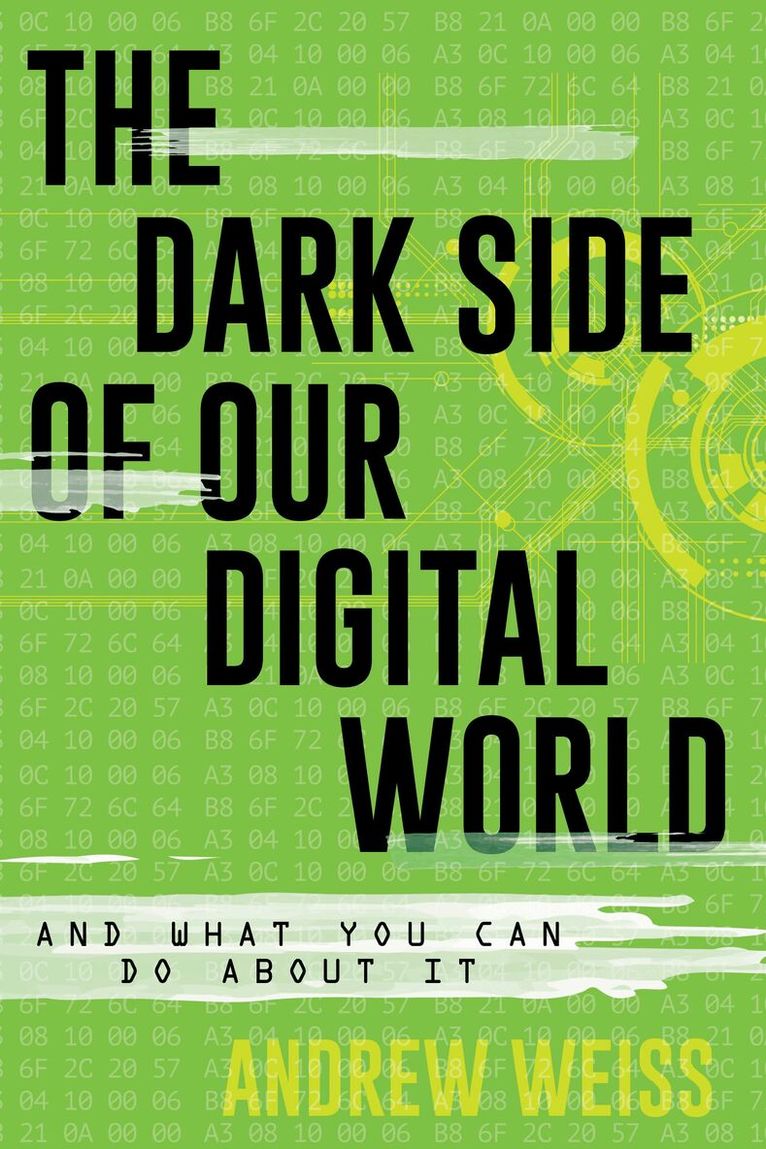
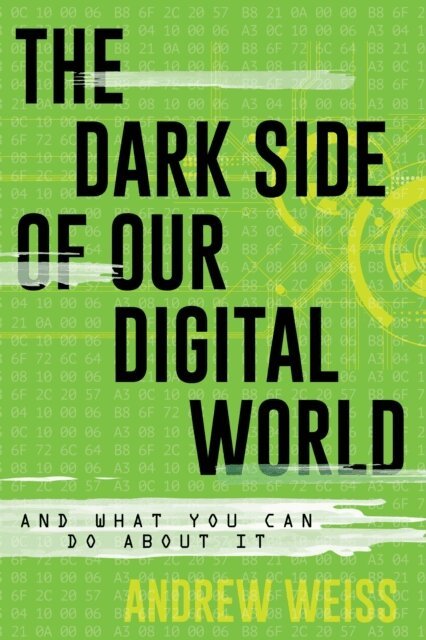
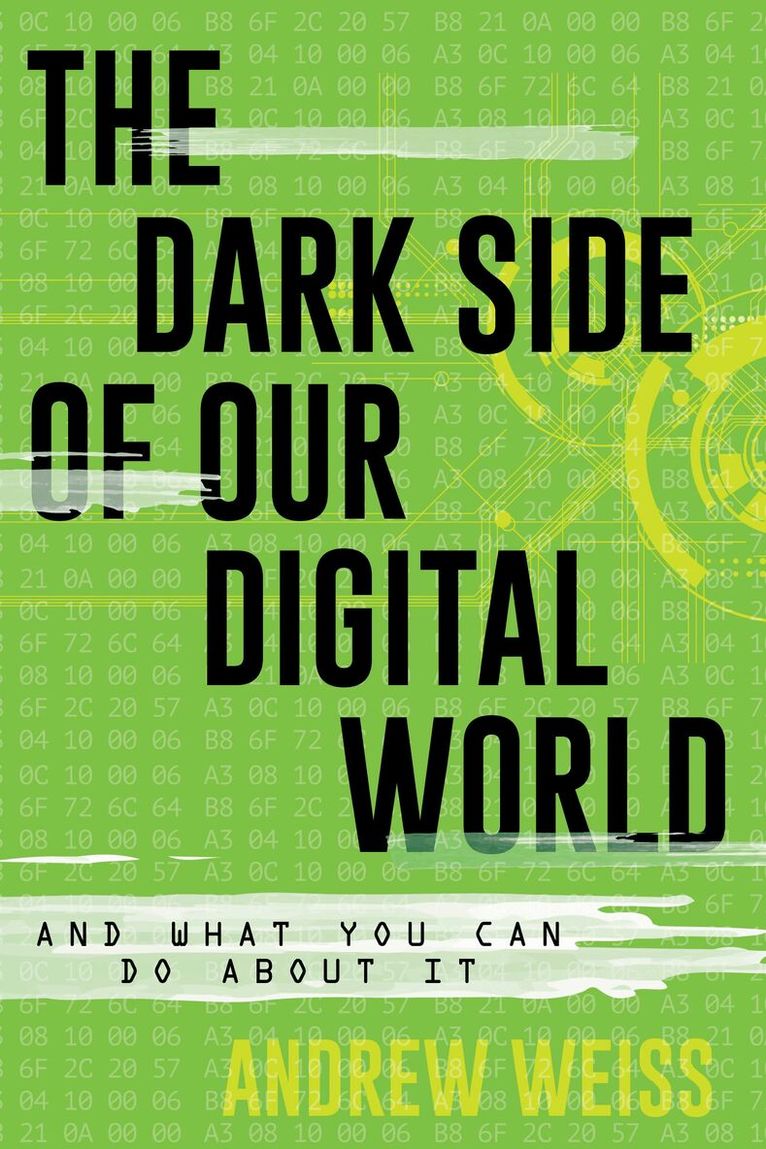
An all-in-one guide to understanding and managing the dark side of our digital lives.It all started out so well: the online world began as an effective tool for communication that carried with it a great promise to level the playing field and eliminate borders. But it’s morphed into something totally unintended. We’ve all had to endure the troll that derails a generally benign conversation; or received that scam email from a wealthy Nigerian prince; or felt the strange feeling of being watched and tracked by advertising companies as we navigate the web. Welcome to the modern internet. These are but a few of the topics that The Dark Side of Our Digital World: And What You Can Do about It examines to get at the root causes of our current problems with information technology, social media, and problematic online behavior. The book explores the issues raised by the negative side of information technology, including surveillance and spying, declining privacy, information overload, surveillance capitalism and big data analytics, conspiracy theories and fake news, misinformation and disinformation, trolling and phishing. What’s ultimately at stake is how we are able to cope with increasingly invasive anti-social behaviors, the overall decline of privacy in the face of total surveillance technologies, and the lack of a quality online experience that doesn’t devolve into flame wars and insults. The future of the internet as well as our societies depends upon our ability to discern truth from lies and reality from propaganda. The book will therefore also examine the possible directions we could take to improve the situation, looking at solutions in the areas of psychology and behavioral conditioning, social engineering through nudging techniques, the development of e-democracy movements, and the implementation of public policy.
1 192 kr
Skickas inom 10-15 vardagar
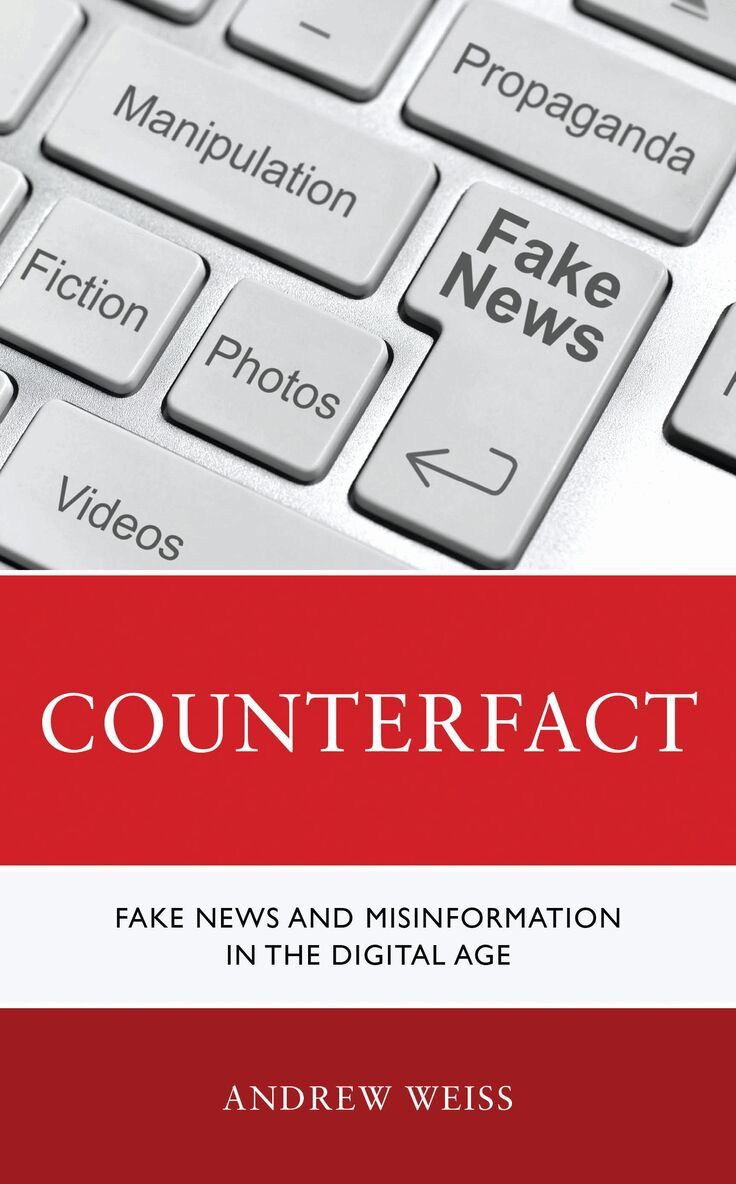
For as long as there has been a press, fake news has played a role in the disruption of how factual information is shared among people. Misinformation goes back even further, spreading through the use of lies and rumors, spoken or written, for various political and social purposes. In this book, we will trace a brief history of fake news, examine its antecedents and precursors, before looking at the way it is currently employed using digital information technologies. The current consensus on what comprises fake news is somewhat contested; as such, a more detailed look at the phenomenon is in order. Not only does fake news include false news stories spread with the intent to deceive, its purpose can be instructive and parodic, providing the very tools needed to puncture misinformation bubbles. This book will examine in detail a comprehensive model for fake news that might be used to help predict and neutralize its negative effects, as well as examine the traits that contribute to a person’s susceptibility to falling for false stories, conspiracies, and other misinformation.In this regard, the book is unique in its approach to fake news, seeing it as situated within a matrix of behaviors, conditions, and contexts that must be accounted for before its effects can be completely neutralized. The context also explores the relationship of the creator and the user of fake news, speculating on the intertwined actions and motives of both. It is hypothesized that specific conditions exploited by ‘bad actors’ would contribute to the spread of fake news and that low levels or lack of certain identifiable characteristics in users (i.e. ability to scaffold, conduct parallel thinking, be aware of one’s ignorance, know one’s strengths and weaknesses) would also make it more likely to be consumed and shared. This book also examines the wider impacts of fake news on societies, especially in the areas of education, politics, and public policy. This book makes the case for developing strategies that rely not merely upon information literacy to help individuals deal with fake news, but also on wider national and international policies that specifically aid users of information and address human behavioral characteristics. As in information behavior research, the scale and scope of examining fake news requires both a local focus and a large-scale inquiry into societal and cultural norms
428 kr
Skickas inom 10-15 vardagar
For as long as there has been a press, fake news has played a role in the disruption of how factual information is shared among people. Misinformation goes back even further, spreading through the use of lies and rumors, spoken or written, for various political and social purposes. In this book, we will trace a brief history of fake news, examine its antecedents and precursors, before looking at the way it is currently employed using digital information technologies. The current consensus on what comprises fake news is somewhat contested; as such, a more detailed look at the phenomenon is in order. Not only does fake news include false news stories spread with the intent to deceive, its purpose can be instructive and parodic, providing the very tools needed to puncture misinformation bubbles. This book will examine in detail a comprehensive model for fake news that might be used to help predict and neutralize its negative effects, as well as examine the traits that contribute to a person’s susceptibility to falling for false stories, conspiracies, and other misinformation.In this regard, the book is unique in its approach to fake news, seeing it as situated within a matrix of behaviors, conditions, and contexts that must be accounted for before its effects can be completely neutralized. The context also explores the relationship of the creator and the user of fake news, speculating on the intertwined actions and motives of both. It is hypothesized that specific conditions exploited by ‘bad actors’ would contribute to the spread of fake news and that low levels or lack of certain identifiable characteristics in users (i.e. ability to scaffold, conduct parallel thinking, be aware of one’s ignorance, know one’s strengths and weaknesses) would also make it more likely to be consumed and shared. This book also examines the wider impacts of fake news on societies, especially in the areas of education, politics, and public policy. This book makes the case for developing strategies that rely not merely upon information literacy to help individuals deal with fake news, but also on wider national and international policies that specifically aid users of information and address human behavioral characteristics. As in information behavior research, the scale and scope of examining fake news requires both a local focus and a large-scale inquiry into societal and cultural norms
270 kr
Skickas inom 10-15 vardagar
An all-in-one guide to understanding and managing the dark side of our digital lives.It all started out so well: the online world began as an effective tool for communication that carried with it a great promise to level the playing field and eliminate borders. But it’s morphed into something totally unintended. We’ve all had to endure the troll that derails a generally benign conversation; or received that scam email from a wealthy Nigerian prince; or felt the strange feeling of being watched and tracked by advertising companies as we navigate the web. Welcome to the modern internet. These are but a few of the topics that The Dark Side of Our Digital World: And What You Can Do about It examines to get at the root causes of our current problems with information technology, social media, and problematic online behavior. The book explores the issues raised by the negative side of information technology, including surveillance and spying, declining privacy, information overload, surveillance capitalism and big data analytics, conspiracy theories and fake news, misinformation and disinformation, trolling and phishing. What’s ultimately at stake is how we are able to cope with increasingly invasive anti-social behaviors, the overall decline of privacy in the face of total surveillance technologies, and the lack of a quality online experience that doesn’t devolve into flame wars and insults. The future of the internet as well as our societies depends upon our ability to discern truth from lies and reality from propaganda. The book will therefore also examine the possible directions we could take to improve the situation, looking at solutions in the areas of psychology and behavioral conditioning, social engineering through nudging techniques, the development of e-democracy movements, and the implementation of public policy.