Andrzej M. Trzynadlowski – författare
Visar alla böcker från författaren Andrzej M. Trzynadlowski. Handla med fri frakt och snabb leverans.
9 produkter
Control of Induction Motors
E-bok, 2000
1499 kr
Lägg i varukorg
This book is a comprehensive reference source for practicing engineers and students specializing in electric power engineering and industrial electronics. It will illustrate the state of the art in induction motors. Beginning with characteristics and basic dynamic models of induction motors, and …
Control of Induction Motors
Inbunden, 2000
1432 kr
Lägg i varukorg
This book is a comprehensive reference source for practicing engineers and students specializing in electric power engineering and industrial electronics. It will illustrate the state of the art in induction motors. Beginning with characteristics and basic dynamic models of induction motors, and …
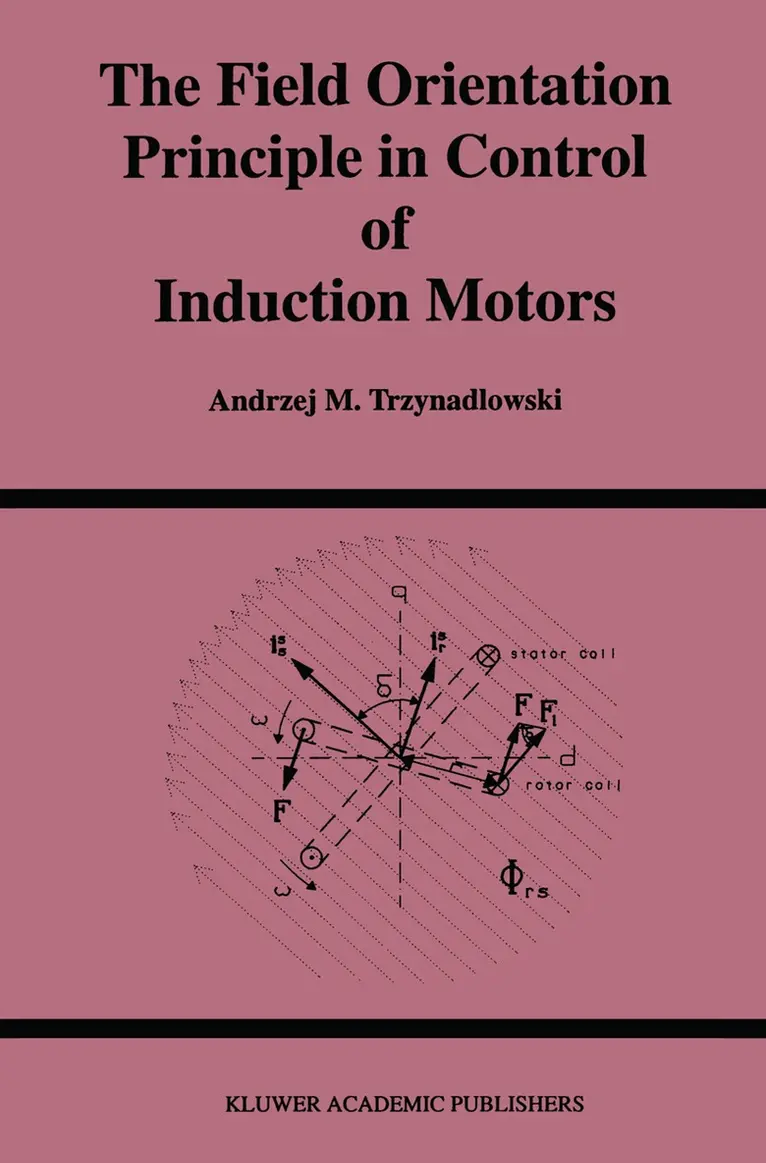
Field Orientation Principle in Control of Induction Motors
Inbunden, 1993
3048 kr
Lägg i varukorg
The Field Orientation Principle was fIrst formulated by Haase, in 1968, and Blaschke, in 1970. At that time, their ideas seemed impractical because of the insufficient means of implementation. However, in the early eighties, technological advances in static power converters and microprocessor-based …
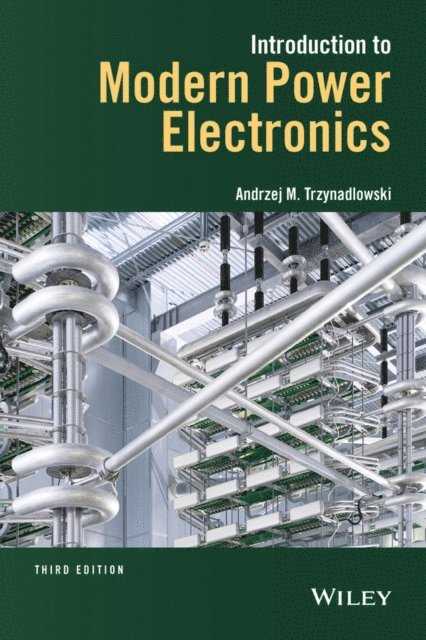
Introduction to Modern Power Electronics
Inbunden, 2015
1447 kr
Lägg i varukorg
Provides comprehensive coverage of the basic principles and methods of electric power conversion and the latest developments in the fieldThis book constitutes a comprehensive overview of the modern power electronics. Various semiconductor power switches are described, complementary components and …
Introduction to Modern Power Electronics
E-bok, 2015
1678 kr
Lägg i varukorg
Provides comprehensive coverage of the basic principles and methods of electric power conversion and the latest developments in the field This book constitutes a comprehensive overview of the modern power electronics. Various semiconductor power switches are described, complementary components and …
Introduction to Modern Power Electronics
E-bok, 2015
1678 kr
Lägg i varukorg
Provides comprehensive coverage of the basic principles and methods of electric power conversion and the latest developments in the field This book constitutes a comprehensive overview of the modern power electronics. Various semiconductor power switches are described, complementary components and …
Field Orientation Principle in Control of Induction Motors
Häftad, 2014
3265 kr
Lägg i varukorg
The Field Orientation Principle was fIrst formulated by Haase, in 1968, and Blaschke, in 1970. At that time, their ideas seemed impractical because of the insufficient means of implementation. However, in the early eighties, technological advances in static power converters and microprocessor-based …
Field Orientation Principle in Control of Induction Motors
E-bok, 2013
4066 kr
Lägg i varukorg
The Field Orientation Principle was fIrst formulated by Haase, in 1968, and Blaschke, in 1970. At that time, their ideas seemed impractical because of the insufficient means of implementation. However, in the early eighties, technological advances in static power converters and microprocessor-based …
Power Electronic Converters and Systems
Frontiers and applications
Av Andrzej M, Trzynadlowski, Andrzej M. Trzynadlowski
Inbunden, 2015
2068 kr
Lägg i varukorg
Power electronics is a branch of electrical engineering dealing with conversion and control of electric power using semiconductor power switches. This book, written by an international panel of more than 40 experts, provides an overview of modern power electronic converters and systems, and their …