Andrzej Szymonik - Böcker
Visar alla böcker från författaren Andrzej Szymonik. Handla med fri frakt och snabb leverans.
8 produkter
8 produkter
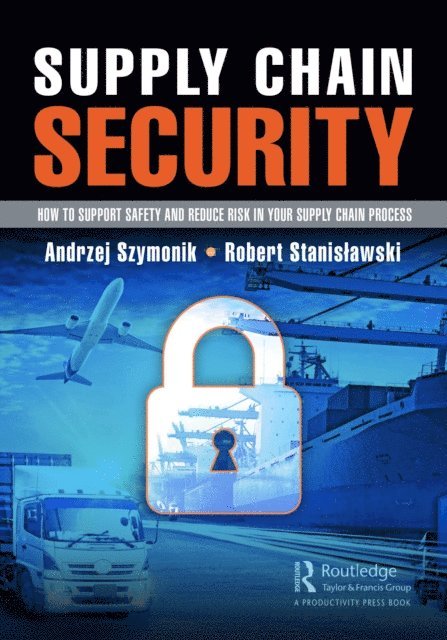
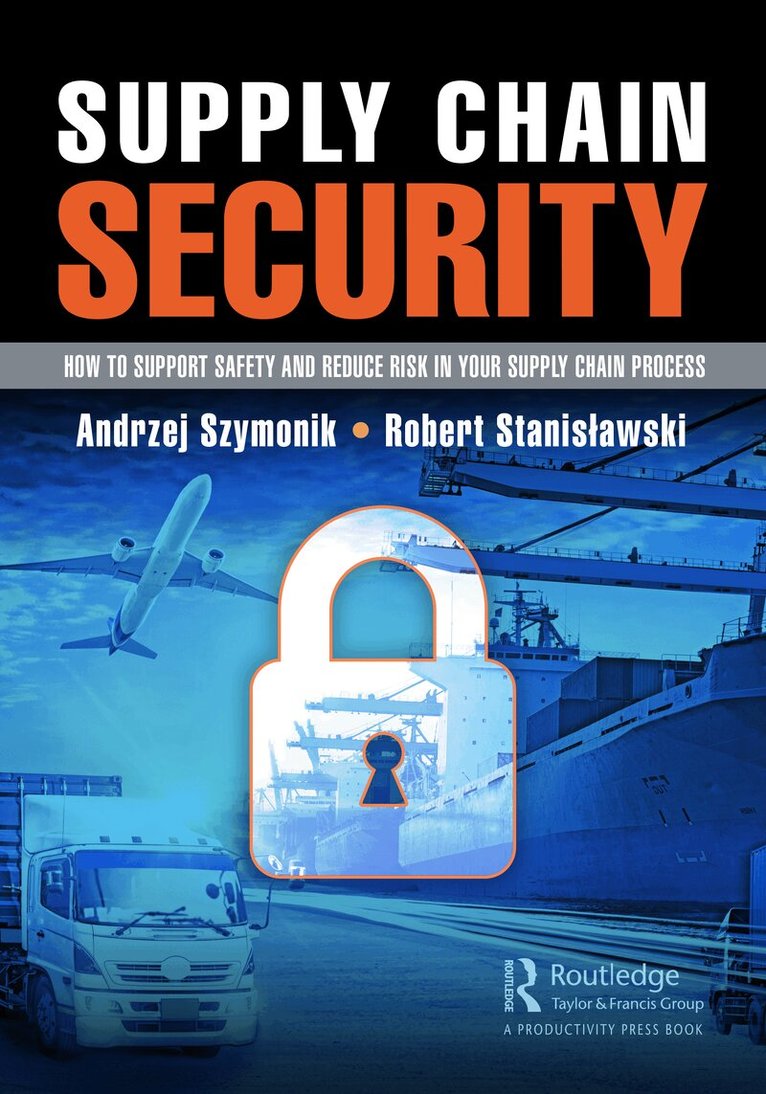
Supply Chain Security
How to Support Safety and Reduce Risk In Your Supply Chain Process
Häftad, Engelska, 2022
691 kr
Skickas inom 10-15 vardagar
Contemporary supply chains operate under the pressure of customer requirements, increasing price competition, sudden increases or decreases in demand, unforeseen obstacles and new threats. The right way to improve the functioning of the flow of material and accompanying information is not only the continuous collection of data but also their collection, analysis, inference and decision-making with the use of decision support systems, expert systems and artificial intelligence. Such procedures make it easier for logisticians not only to forecast processes but also to predict (forecast) and identify potential problems and facilitate the implementation of optimal modern solutions, paying attention to current trends in the supply chain market. An important issue that affects the quality, efficiency and availability (continuity) of the processes implemented within the supply chain is security. This is an area that is not clearly defined. This book uses theoretical and practical knowledge to define security in the supply chain as a state that gives a sense of certainty and guarantees the flow of material goods and services (in accordance with the 7w rule) as well as a smooth flow of information for the planning and management of logistics processes. Tools and instruments used to ensure the security of the supply chain contribute to the protection and survival in times of dangerous situations (threats) and adaptation to new conditions (susceptibility to unplanned situations). When analyzing the needs and structure of the 21st century supply chains, in the context of their security, it is impossible to ignore the problem of their digitization, which enables the determination of optimal routes and the anticipation of possible threats (crisis situations). Automatic data exchange between various departments of the company along the upper and lower part of the supply chain improves the functioning of the warehouse management through, among others, automation, robotization and pro-activity. It also contributes to efficient, good communication and market globalization. Automation also brings new, extremely attractive business models with regard to occupational safety, ergonomics and environmental protection. To meet the needs of creating modern supply chains, the book analyzes and presents current and future solutions that affect security and the continuity of supply chains.
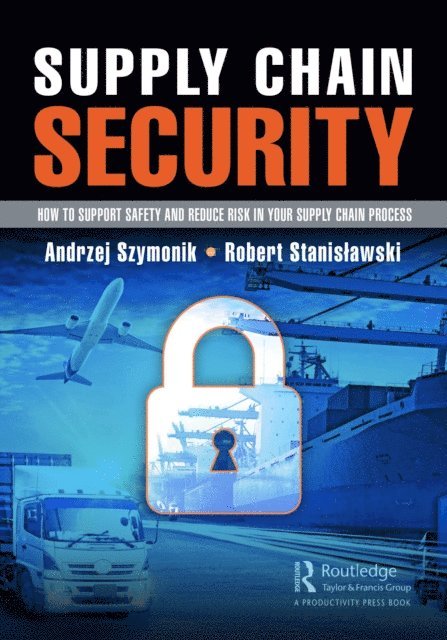
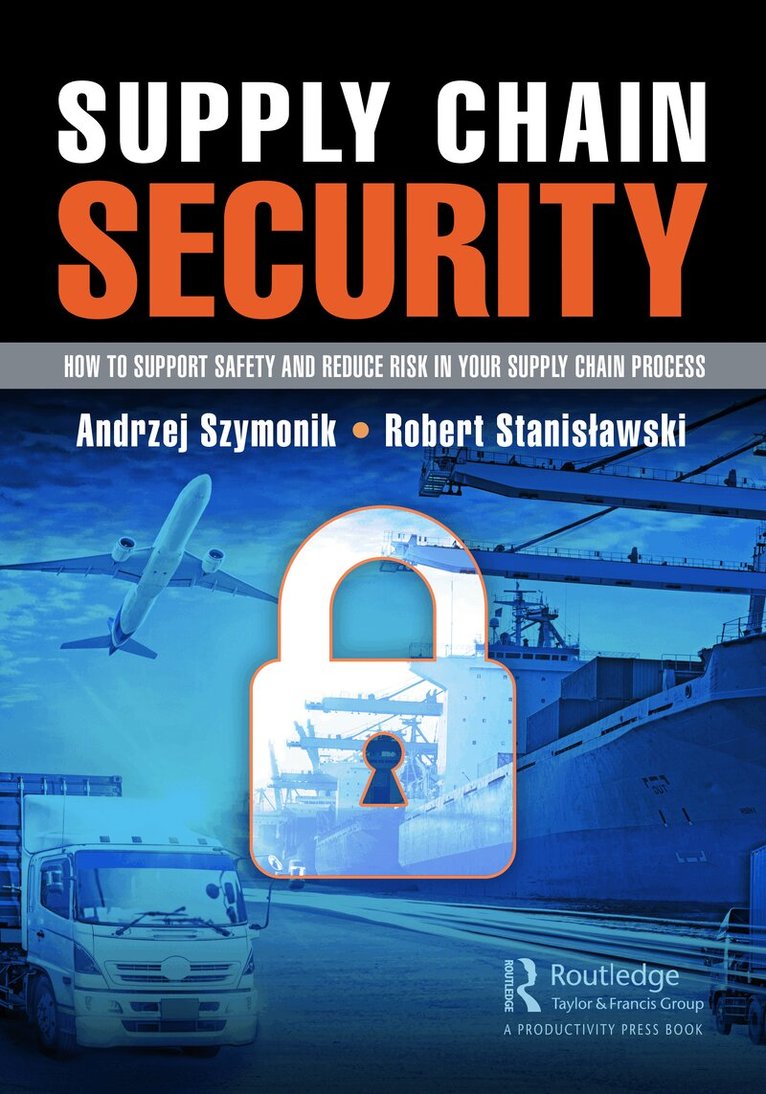
Supply Chain Security
How to Support Safety and Reduce Risk In Your Supply Chain Process
Inbunden, Engelska, 2022
2 150 kr
Skickas inom 10-15 vardagar
Contemporary supply chains operate under the pressure of customer requirements, increasing price competition, sudden increases or decreases in demand, unforeseen obstacles and new threats. The right way to improve the functioning of the flow of material and accompanying information is not only the continuous collection of data but also their collection, analysis, inference and decision-making with the use of decision support systems, expert systems and artificial intelligence. Such procedures make it easier for logisticians not only to forecast processes but also to predict (forecast) and identify potential problems and facilitate the implementation of optimal modern solutions, paying attention to current trends in the supply chain market. An important issue that affects the quality, efficiency and availability (continuity) of the processes implemented within the supply chain is security. This is an area that is not clearly defined. This book uses theoretical and practical knowledge to define security in the supply chain as a state that gives a sense of certainty and guarantees the flow of material goods and services (in accordance with the 7w rule) as well as a smooth flow of information for the planning and management of logistics processes. Tools and instruments used to ensure the security of the supply chain contribute to the protection and survival in times of dangerous situations (threats) and adaptation to new conditions (susceptibility to unplanned situations). When analyzing the needs and structure of the 21st century supply chains, in the context of their security, it is impossible to ignore the problem of their digitization, which enables the determination of optimal routes and the anticipation of possible threats (crisis situations). Automatic data exchange between various departments of the company along the upper and lower part of the supply chain improves the functioning of the warehouse management through, among others, automation, robotization and pro-activity. It also contributes to efficient, good communication and market globalization. Automation also brings new, extremely attractive business models with regard to occupational safety, ergonomics and environmental protection. To meet the needs of creating modern supply chains, the book analyzes and presents current and future solutions that affect security and the continuity of supply chains.
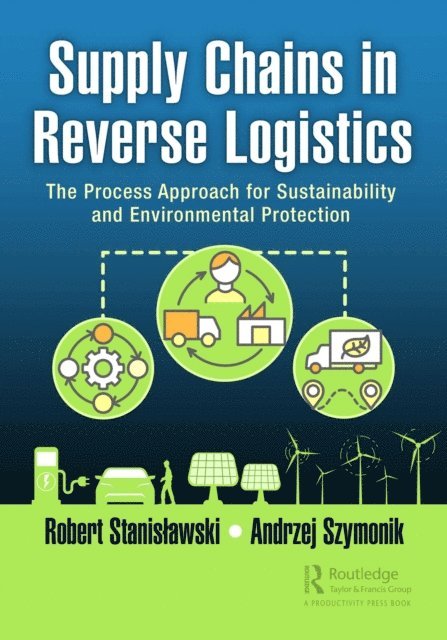
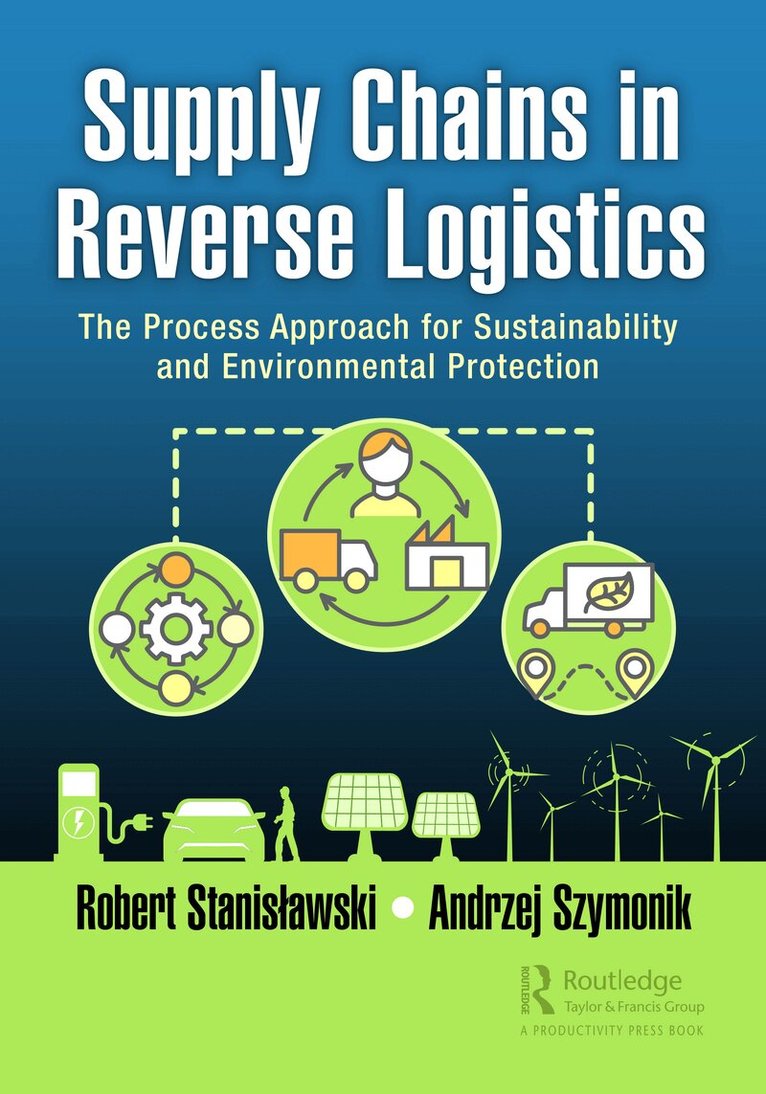
Supply Chains in Reverse Logistics
The Process Approach for Sustainability and Environmental Protection
Häftad, Engelska, 2023
752 kr
Skickas inom 10-15 vardagar
Currently, it is obvious that new types of production (Industry 4.0) are accompanying new ways of distribution, which advance logistics, physical distribution science, and even supply chain management. The changing environment for carrying out logistics activities is also important for the development of the supply chain. Care for ecology, the recent pandemic, and the situation in Ukraine are other reasons to adapt logistics to the needs of an individual customer/recipient. It would be impossible without developing an appropriate strategy and applying appropriate tools for managing supply chains in the national and international dimensions. This book specifically addresses these issues.When analyzing the needs and structure of modern supply chains, in the context of their safety and risk reduction, it is impossible to ignore the problem of digitization, which allows for logistic analysis of the company, determining optimal routes, designing logistic systems, optimizing storage processes and costs, and predicting possible threats (crisis situations) and their effects (losses). IT support, automatic data exchange, e-logistics, telematics, traceability, and chatbots between various departments of the company along the upper and lower parts of the supply chain improve the flow of material and accompanying information through automation, robotization, proactivity, and document digitization. These new trends make it possible to define logistics as modern logistics using new achievements of science and technology.Modern logistics must also consider ecological aspects in line with assumptions about protecting the environment and improving our climate. Efficiently organized reverse logistics is not without significance for ecology. It is supported by renewable energy, electric vehicles, proper education in the field of a closed economy, cleaner production, waste minimization, the use of passive infrastructure, and proper waste management that allows us to positively influence environmental protection and human health. To meet the needs of creating modern supply chains, the authors developed this powerful book in which they analyze and present current and future solutions that influence the development of these issues in modern reverse logistics.
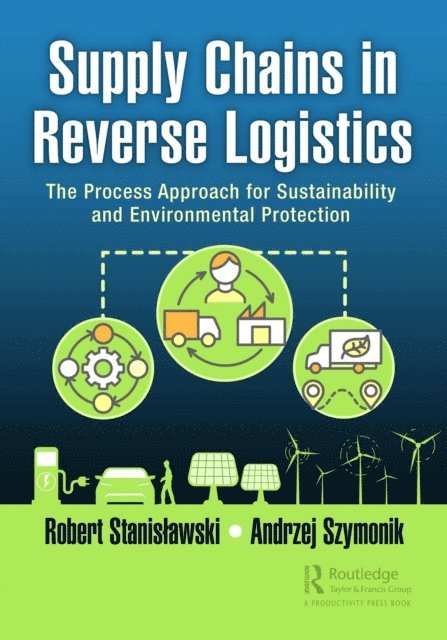
Supply Chains in Reverse Logistics
The Process Approach for Sustainability and Environmental Protection
Inbunden, Engelska, 2023
1 886 kr
Skickas inom 10-15 vardagar
Currently, it is obvious that new types of production (Industry 4.0) are accompanying new ways of distribution, which advance logistics, physical distribution science, and even supply chain management. The changing environment for carrying out logistics activities is also important for the development of the supply chain. Care for ecology, the recent pandemic, and the situation in Ukraine are other reasons to adapt logistics to the needs of an individual customer/recipient. It would be impossible without developing an appropriate strategy and applying appropriate tools for managing supply chains in the national and international dimensions. This book specifically addresses these issues.When analyzing the needs and structure of modern supply chains, in the context of their safety and risk reduction, it is impossible to ignore the problem of digitization, which allows for logistic analysis of the company, determining optimal routes, designing logistic systems, optimizing storage processes and costs, and predicting possible threats (crisis situations) and their effects (losses). IT support, automatic data exchange, e-logistics, telematics, traceability, and chatbots between various departments of the company along the upper and lower parts of the supply chain improve the flow of material and accompanying information through automation, robotization, proactivity, and document digitization. These new trends make it possible to define logistics as modern logistics using new achievements of science and technology.Modern logistics must also consider ecological aspects in line with assumptions about protecting the environment and improving our climate. Efficiently organized reverse logistics is not without significance for ecology. It is supported by renewable energy, electric vehicles, proper education in the field of a closed economy, cleaner production, waste minimization, the use of passive infrastructure, and proper waste management that allows us to positively influence environmental protection and human health. To meet the needs of creating modern supply chains, the authors developed this powerful book in which they analyze and present current and future solutions that influence the development of these issues in modern reverse logistics.
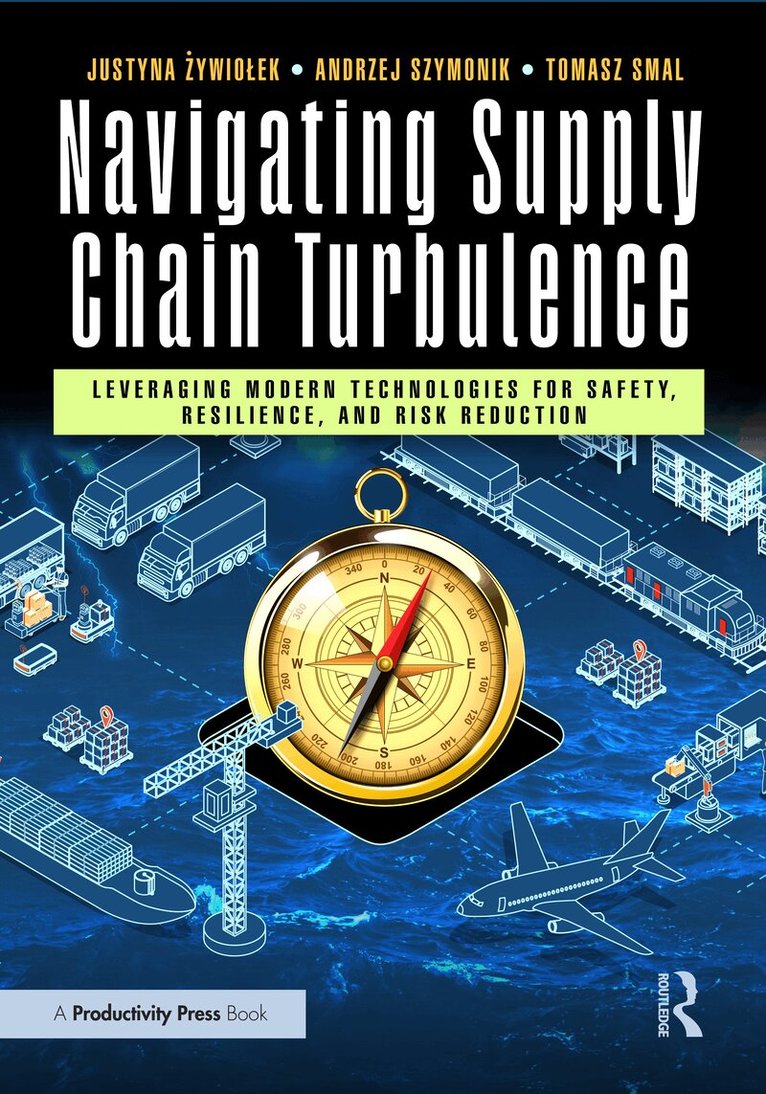
Navigating Supply Chain Turbulence
Leveraging Modern Technologies for Safety, Resilience, and Risk Reduction
Häftad, Engelska, 2025
733 kr
Skickas inom 10-15 vardagar
This book presents issues related to supply chain management, considering contemporary conditions and turmoil. It shows how global events affect the effectiveness and efficiency of logistics, and thus shows how to take them into account and better manage logistics processes in these chains.The book provides readers with easy-to-use tools to plan and build supply chains that are resilient, reliable, and have reduced risk. In addition, readers receive recommendations for the development and improvement of the efficiency of supply chains. Because of the research and case studies provided, readers learn practical knowledge coming directly from leading companies implementing logistics processes on a global scale. The research results are presented transparently, enabling their practical application in future business activities. In addition, this book discusses future technologies that are or will apply to supply chain management. These technologies are described in specific applications, so the readers can quickly adapt them to the needs of their company.
Navigating Supply Chain Turbulence
Leveraging Modern Technologies for Safety, Resilience, and Risk Reduction
Inbunden, Engelska, 2025
2 150 kr
Skickas inom 10-15 vardagar
This book presents issues related to supply chain management, considering contemporary conditions and turmoil. It shows how global events affect the effectiveness and efficiency of logistics, and thus shows how to take them into account and better manage logistics processes in these chains.The book provides readers with easy-to-use tools to plan and build supply chains that are resilient, reliable, and have reduced risk. In addition, readers receive recommendations for the development and improvement of the efficiency of supply chains. Because of the research and case studies provided, readers learn practical knowledge coming directly from leading companies implementing logistics processes on a global scale. The research results are presented transparently, enabling their practical application in future business activities. In addition, this book discusses future technologies that are or will apply to supply chain management. These technologies are described in specific applications, so the readers can quickly adapt them to the needs of their company.
1 652 kr
Kommande
This book advances a central and urgent thesis: in the hyperconnected economy of Logistics 4.0, cybersecurity is no longer a technical safeguard at the periphery of logistics systems but the primary infrastructure of supply chain continuity, economic security and sustainable development. Digital logistics has evolved into a cyber-physical ecosystem in which data flows, autonomous decisions and algorithmic coordination shape material reality. In this environment, cyber risk becomes systemic risk, transforming security from an operational concern into a strategic determinant of organisational legitimacy, competitiveness and resilience. The monograph reframes cybersecurity as a governance architecture integrating digital infrastructure, risk intelligence, institutional accountability and technological foresight.The book offers a synthesis, demonstrating that digitalisation, cybersecurity and sustainability are mutually reinforcing rather than competing agendas. Without secure digital architectures, transparent ESG reporting, reliable traceability and accountable automation remain unattainable. Trust is the scarcest resource in digital supply chains, generated through verifiable data, secure infrastructures and credible governance.More than a catalogue of tools or regulatory recommendations, the volume delivers an integrated analytical architecture for understanding and governing cyber risk in Logistics 4.0 environments. It shows that digital transformation restructures supply chains into cyber-physical systems whose stability, efficiency and legitimacy depend on the integrity of their digital foundations, and that cybersecurity is a collective supply-chain capability rather than an individual organisational attribute.The work sets out a governance logic that guides organisations from digitalisation to resilience, treating Information Security Management Systems, standards and security operations frameworks as instruments for stabilising inter-organisational cooperation, maintaining service continuity and sustaining market legitimacy. It also outlines practitioner and research pathways centred on federated logistics data governance, scenario-based cyber resilience exercises, digital traceability architectures and integrating cybersecurity metrics into ESG reporting.
680 kr
Kommande
This book advances a central and urgent thesis: in the hyperconnected economy of Logistics 4.0, cybersecurity is no longer a technical safeguard at the periphery of logistics systems but the primary infrastructure of supply chain continuity, economic security and sustainable development. Digital logistics has evolved into a cyber-physical ecosystem in which data flows, autonomous decisions and algorithmic coordination shape material reality. In this environment, cyber risk becomes systemic risk, transforming security from an operational concern into a strategic determinant of organisational legitimacy, competitiveness and resilience. The monograph reframes cybersecurity as a governance architecture integrating digital infrastructure, risk intelligence, institutional accountability and technological foresight.The book offers a synthesis, demonstrating that digitalisation, cybersecurity and sustainability are mutually reinforcing rather than competing agendas. Without secure digital architectures, transparent ESG reporting, reliable traceability and accountable automation remain unattainable. Trust is the scarcest resource in digital supply chains, generated through verifiable data, secure infrastructures and credible governance.More than a catalogue of tools or regulatory recommendations, the volume delivers an integrated analytical architecture for understanding and governing cyber risk in Logistics 4.0 environments. It shows that digital transformation restructures supply chains into cyber-physical systems whose stability, efficiency and legitimacy depend on the integrity of their digital foundations, and that cybersecurity is a collective supply-chain capability rather than an individual organisational attribute.The work sets out a governance logic that guides organisations from digitalisation to resilience, treating Information Security Management Systems, standards and security operations frameworks as instruments for stabilising inter-organisational cooperation, maintaining service continuity and sustaining market legitimacy. It also outlines practitioner and research pathways centred on federated logistics data governance, scenario-based cyber resilience exercises, digital traceability architectures and integrating cybersecurity metrics into ESG reporting.