Anibal de Almeida – författare
Visar alla böcker från författaren Anibal de Almeida. Handla med fri frakt och snabb leverans.
4 produkter
4 produkter
Häftad, Engelska, 2001
2 156 kr
Skickas inom 10-15 vardagar
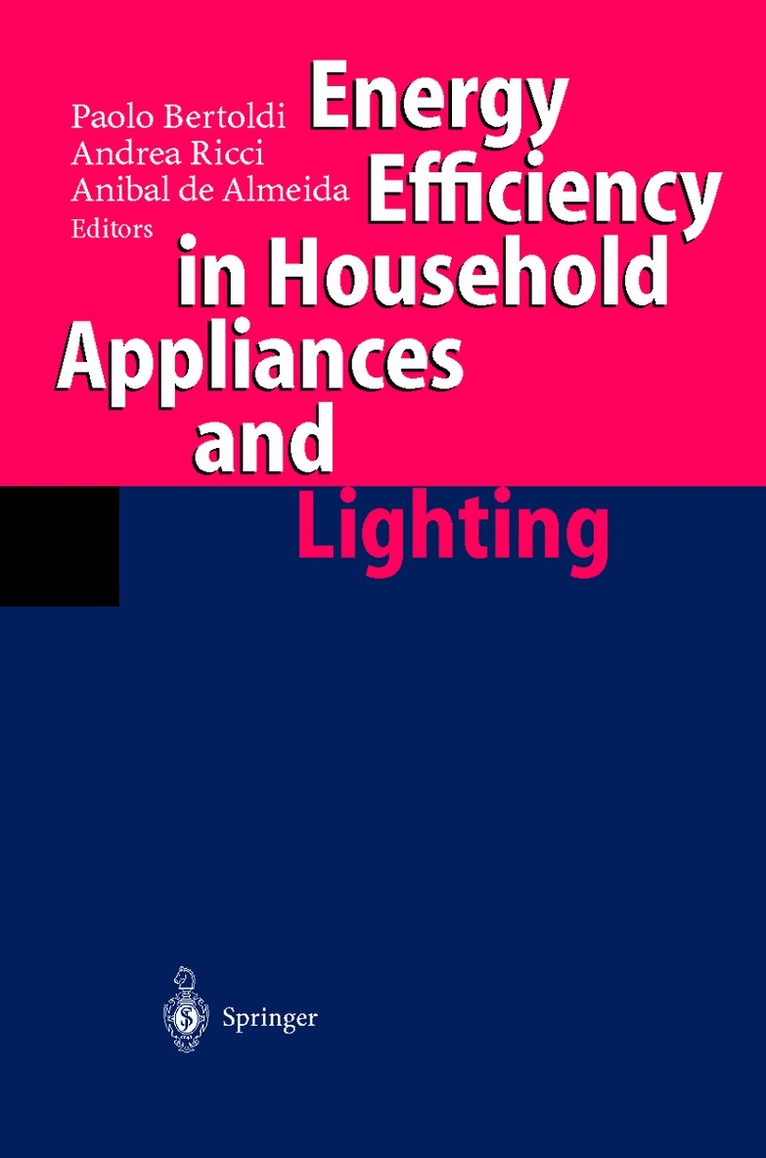
This book covers the state of the art of energy efficiency in household appliances and lighting which can be used now and in the near future to achieve significant and cost-effective energy savings. Recent developments in advanced appliance and lighting technologies by some of the largest manufacturers are also presented. Although energy-efficient household appliances and lighting technologies can save a huge amount of electricity, they still have not been widely adopted. The barriers which can hinder the adoption of those technologies are presented. Policies and programmes to promote the large-scale penetration of energy-efficient technologies and the market transformation are featured in the book, describing the experiences gained in different parts of the world. This extensive coverage includes contributions from relevant institutions in the European Union, North America, Latin America, Asia, Australia and New Zealand.
Häftad, Engelska, 1997
1 619 kr
Skickas inom 10-15 vardagar
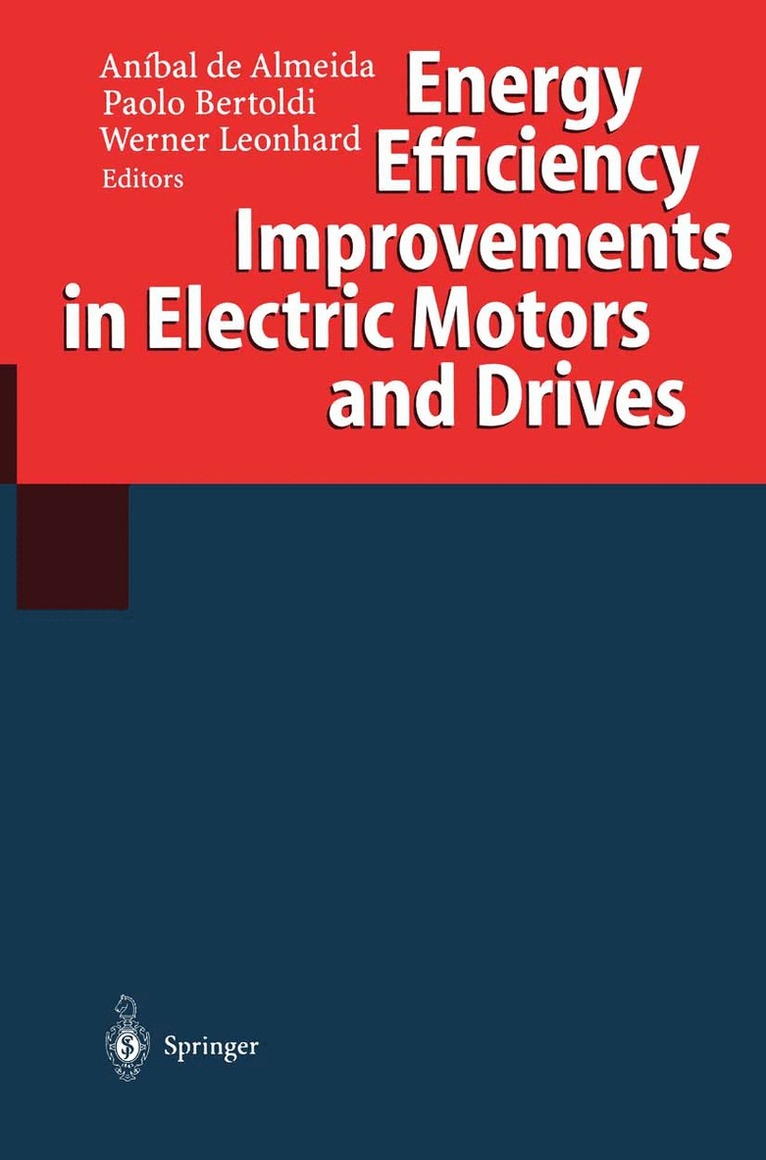
This book covers the basics and the state of the art of energy-efficient motor technologies, which can be used now and in the near future to achieve significant and cost-effective energy savings. It describes recent developments in advanced motor technologies such as permanent magnet and reluctance motors. Energy-efficient motor technologies, though enabling a huge amount of electricity to be saved, still have not been widely adopted. The book presents barriers to the adoption of those technologies and features policies to promote the large scale penetration of energy-efficient technologies, describing the experiences carried out so far in different parts of the world. The volume includes contributions from relevant institutions in the European Union, North America, Latin America, Japan and New Zealand.
E-bok
PDF, Engelska, 20122 741 kr
Läs direkt efter köp
Household appliances encompass a large variety of equipment including the cold appliances (refrigerators and freezers), the wet appliances (washing machines, dishwashers and dryers), the space conditioning appliances (heaters, air conditioners, heat pumps, fans, boilers), the water heaters, the cooking appliances, a wide array of consumer electronics (such as TVs, VCRs, HiFi systems) and miscellaneous small appliances (such as vacuum cleaners, irons, toasters, hairdryers and power tools). Household appliances save a large amount of domestic labour to perform the household tasks, as well as provide comfort conditions and convenience to the household occupants. The European Community SAVE Programme has promoted the efficient use of energy, in particular in domestic appliances. SAVE has sponsored a variety of studies to characterise the use of the main household appliances and lighting and to identify cost-effective technical options to improve the energy efficiency, as well as to identify the strategies to promote the penetration ofefficient equipment in the market place. National energy agencies, independent experts and appliance manufacturers have participated in the SAVE activities and have done a remarkable job. While the energy efficiency ofthe main household appliances has been improved, at the same time it was possible in most cases to improve the appliance performance, reliability and qualityofservice.
E-bok
PDF, Engelska, 20121 977 kr
Läs direkt efter köp
The reduction of energy consumption through improvements in energy efficiency has become an important goal for all countries, in order to improve the efficiency of the economy, to increase energy supply security, and to reduce the emissions of CO and other pollutants caused by power· generation. 2 Electric motors use over half of all electricity consumed in developed countries. Typically 60-80% of the electricity which is used in the industrial sector and about 35% of the electricity used in the commercial sector in the European Union is consumed by motors. In industry, a motor consumes an annual quantity of electricity which corresponds to approximately 5 times its purchase price, throughout its whole life of aroun~ 12 to 20 years. Motors are by far the most important type of electric load. They are used in all sectors and in a wide range of applications, namely the following: fans, compressors, pumps, mills, winders, elevators, transports, home appliances, and office equipment, etc. It is their wide use that makes motor drive systems one of the main targets to achieve significant energy savings. As motors are the largest USers of electrical energy, even small efficiency improvements will produce very large energy savings.