Ann Crabb - Böcker
Visar alla böcker från författaren Ann Crabb. Handla med fri frakt och snabb leverans.
4 produkter
4 produkter
2 402 kr
Skickas inom 10-15 vardagar
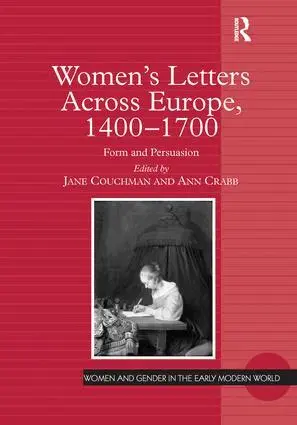
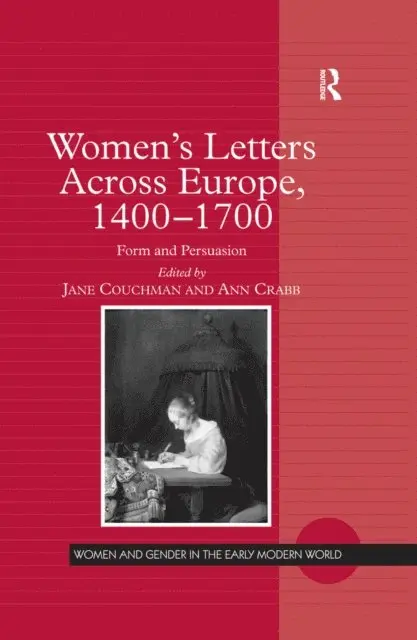
In response to a growing interest, among historians as well as literary critics, in women's use of the epistolary genre, Women's Letters Across Europe, 1400-1700: Form and Persuasion analyzes persuasive techniques in the personal correspondence of late medieval and early modern women. It includes studies of well-known women (Isabella d'Este, Teresa of Avila, Marguerite de Navarre, Catherine de Medicis), of those less-known (Alessandra Macigni Strozzi, Louise de Coligny, Glikl of Hameln, Argula von Grumbach, Luisa de Carvajal y Mendoza, Anna Maria von Schurman, Barbara of Brandenburg ) and of others virtually unknown to history (prosperous women like Elizabeth Stonor and Cornelia Collonello and pauper women seeking poor relief in Tours). Comprehensive in scope, Women's Letters Across Europe, 1400-1700 looks at women from England, Italy, France, Spain, Germany, and the Netherlands, and from various levels of society, encompassing the nobility, the gentry, the middle class, and the poor. Each of the essayists considers letters both as historical documents giving insights into women's lives, and as texts in which variations on epistolary forms are used for specific persuasive purposes. The authors of the essays analyze their subjects' capabilities and limitations as letter writers and the techniques they used to influence correspondents, setting these observations in the framework of the women's particular 'stories.' Taken together, the essays and the letter writers discussed therein illustrate in new ways how far from silenced many early modern women were, how they were able to adopt and adapt strategies from the epistolary conventions available to them, and how they could have an impact on their worlds through their letters.
943 kr
Skickas inom 10-15 vardagar
In response to a growing interest, among historians as well as literary critics, in women's use of the epistolary genre, Women's Letters Across Europe, 1400-1700: Form and Persuasion analyzes persuasive techniques in the personal correspondence of late medieval and early modern women. It includes studies of well-known women (Isabella d'Este, Teresa of Avila, Marguerite de Navarre, Catherine de Medicis), of those less-known (Alessandra Macigni Strozzi, Louise de Coligny, Glikl of Hameln, Argula von Grumbach, Luisa de Carvajal y Mendoza, Anna Maria von Schurman, Barbara of Brandenburg ) and of others virtually unknown to history (prosperous women like Elizabeth Stonor and Cornelia Collonello and pauper women seeking poor relief in Tours). Comprehensive in scope, Women's Letters Across Europe, 1400-1700 looks at women from England, Italy, France, Spain, Germany, and the Netherlands, and from various levels of society, encompassing the nobility, the gentry, the middle class, and the poor. Each of the essayists considers letters both as historical documents giving insights into women's lives, and as texts in which variations on epistolary forms are used for specific persuasive purposes. The authors of the essays analyze their subjects' capabilities and limitations as letter writers and the techniques they used to influence correspondents, setting these observations in the framework of the women's particular 'stories.' Taken together, the essays and the letter writers discussed therein illustrate in new ways how far from silenced many early modern women were, how they were able to adopt and adapt strategies from the epistolary conventions available to them, and how they could have an impact on their worlds through their letters.
576 kr
Skickas inom 10-15 vardagar
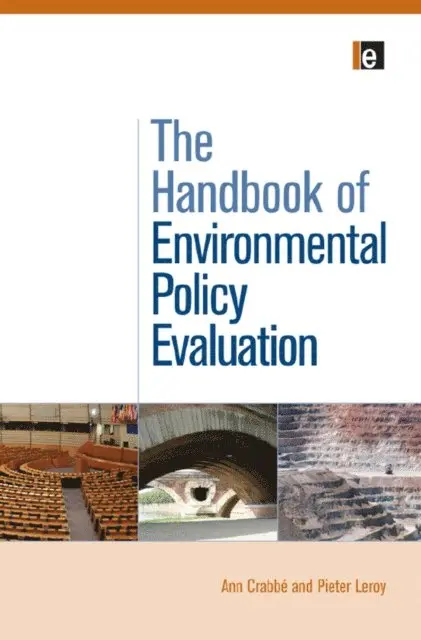
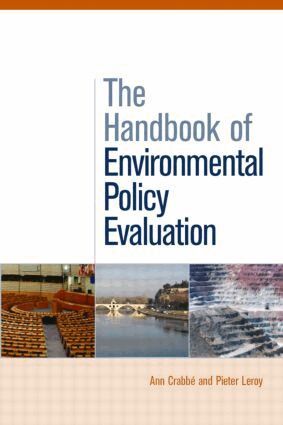
Policy evaluation is an important and well-established part of the policy process, facilitating and feeding back to promote the ongoing effectiveness of policies that have been implemented or anticipating policies in the making. Environmental policy is a special case, presenting new complexities uncommon to other areas, which standard evaluation tools are ill-equipped to grapple with. It is also an area that is experiencing rapid growth throughout the world and knowledge is now needed at all levels of government and in NGOs, businesses and other organizations, all of whom are required to assess the effectiveness of their policies.This handbook is the first guide to environmental policy evaluation in practice. Beginning with an introduction to the general principles of evaluation, it explains the particular complexities native to the environmental sphere and provides a comprehensive toolkit of evaluation methods and techniques which the practitioner can employ and refer to again and again. The authors also consider design issues which may face the policy evaluator, including involvement of stakeholders, the sensitivities between them, the a priori assessment of the evaluability of a field, the maximization of the utilization of the evaluations outcomes, and much more. Throughout, the theory is illustrated with practical examples from around the world, making this the essential companion guide for anyone tasked with ensuring that environmental policy fulfils its aims and achieves its potential.
1 887 kr
Skickas inom 10-15 vardagar
Policy evaluation is an important and well-established part of the policy process, facilitating and feeding back to promote the ongoing effectiveness of policies that have been implemented or anticipating policies in the making. Environmental policy is a special case, presenting new complexities uncommon to other areas, which standard evaluation tools are ill-equipped to grapple with. It is also an area that is experiencing rapid growth throughout the world and knowledge is now needed at all levels of government and in NGOs, businesses and other organizations, all of whom are required to assess the effectiveness of their policies.This handbook is the first guide to environmental policy evaluation in practice. Beginning with an introduction to the general principles of evaluation, it explains the particular complexities native to the environmental sphere and provides a comprehensive toolkit of evaluation methods and techniques which the practitioner can employ and refer to again and again. The authors also consider design issues which may face the policy evaluator, including involvement of stakeholders, the sensitivities between them, the a priori assessment of the evaluability of a field, the maximization of the utilization of the evaluations outcomes, and much more. Throughout, the theory is illustrated with practical examples from around the world, making this the essential companion guide for anyone tasked with ensuring that environmental policy fulfils its aims and achieves its potential.