Ann-Judith Rabenschlag – författare
Visar alla böcker från författaren . Handla med fri frakt och snabb leverans.
2 produkter
2 produkter
E-bok
PDF, Engelska, 2016260 kr
Läs direkt efter köp
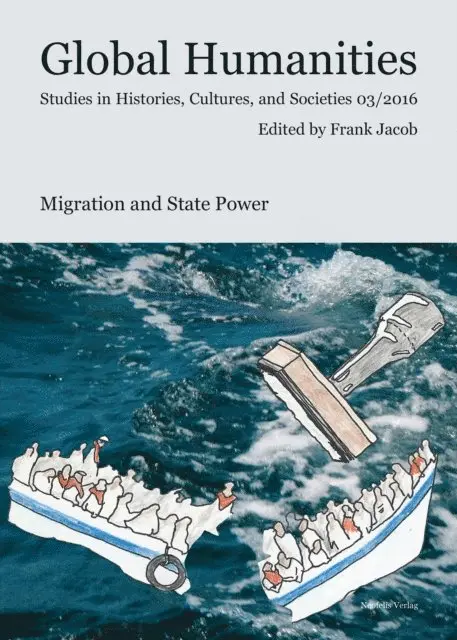
The current situation in Europe seems to emphasize that our modern society is still not ready to accept migration as an important part of human history. Instead of welcoming immigrants and refugees with open arms, state power is trying to restrict asylum for those who are in need. The reasons, why people leave their home countries are different: human trafficking, prosecution, war, or just the hope for a better future. Despite the ethical and moral perspective and the duty of a modern democratic state to support those in need, restrictions and limitations of civil rights often seem to be the sole answer. While the members of the European Union are accusing each other, a solution for the problem of refugee migration is far away.The relationship between migration and state power has always been difficult. To highlight its history the third volume of Global Humanities deals with the philosophy and the history of this interrelationship as well as its reception in popular media. It analyzes the difficulties with regard to migration and state power from Huguenot France to Korea and Taiwan after 1945. Furthermore, by providing historical case studies, it shows that the problems of migration movements are not new at all and that there have always been similarities with regard to the reaction to those movements, which more than resembles the actual situation in Europe and other parts of the world.
Häftad, Tyska, 2016
156 kr
Skickas inom 5-8 vardagar
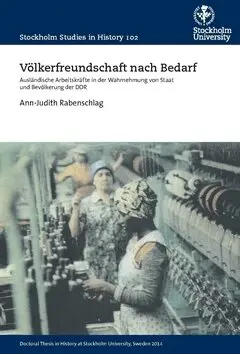
Die Behauptung, Rassismus und Fremdenfeindlichkeit „mit der Wurzel ausgerottet“ zu haben, war ein zentraler Bestandteil des politischen Selbstverständnisses der DDR. Nach Darstellung der Staatspartei SED begegneten Regierung und Bevölkerung der DDR allen Mitgliedern der Arbeiterklasse im Geiste der Völkerfreundschaft. Als sich die DDR Anfang der 1960er Jahre aus wirtschaftlichen Gründen gezwungen sah, Arbeitskräfte aus dem Ausland anzuwerben, die zunächst aus Osteuropa, bald auch aus Lateinamerika, Afrika und Asien kamen, wurden die Thesen von Antirassismus und Völkerfreundschaft auf die Probe gestellt. Mit Hilfe eines diskursanalytischen Ansatzes untersucht diese Studie, wie das Ideal der Völkerfreundschaft sowohl in der Auseinandersetzung von Bürgern mit dem Staat als auch in parteiloyalen Kreisen verhandelt, instrumentalisiert und verändert wurde. Die Studie geht damit über den ideologiekritischen Ansatz der bisherigen Forschung hinaus und analysiert den Umgang von Behörden, Betrieben und Bürgern der DDR mit dem herrschenden Diskurs. Die Studie ist ein Beitrag zur Migrationsgeschichte wie auch zur Mentalitäts- und Alltagsgeschichte der DDR.