Ann W. Astell – författare
Visar alla böcker från författaren Ann W. Astell. Handla med fri frakt och snabb leverans.
18 produkter
18 produkter
Inbunden, Engelska, 2000
1 089 kr
Skickas inom 10-15 vardagar
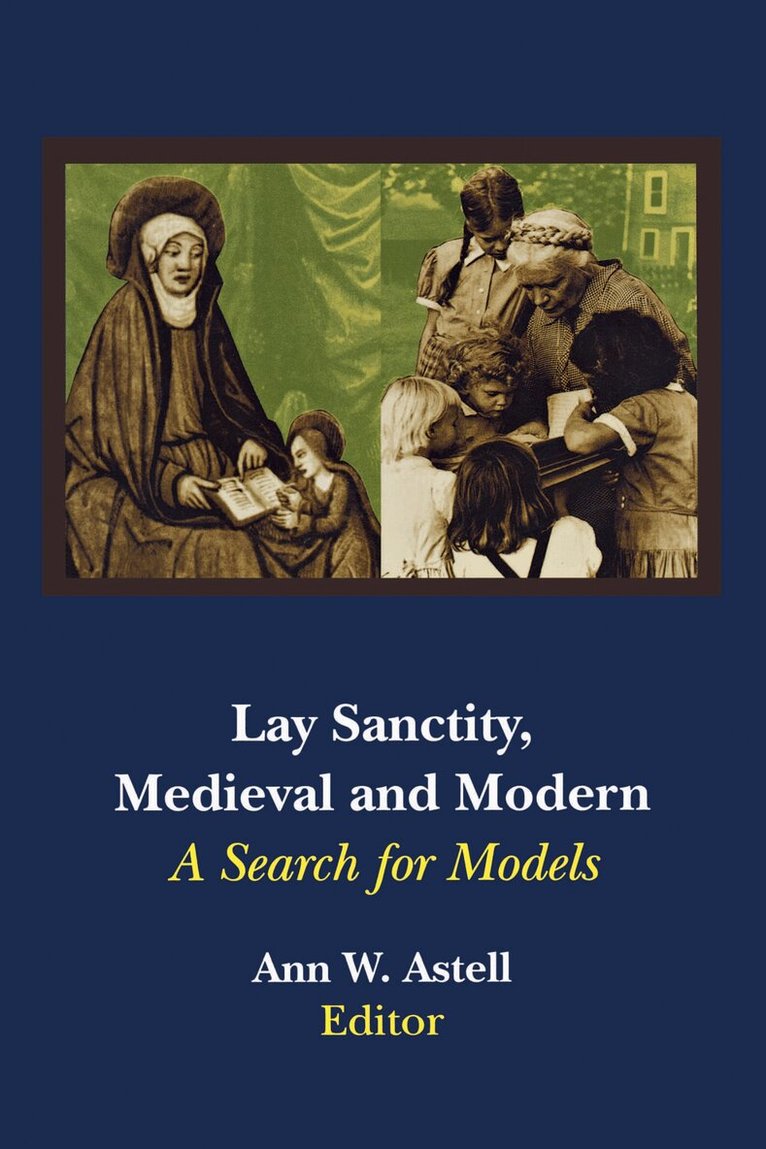
Inspired by Vatican II, which attributed a special apostolate to the laity and affirmed their calling to holiness, this volume of original essays focuses on the shifting points of intersection between changing historical definitions of laity and sanctity. Ann W. Astell and ten other scholars examine a series of medieval and modern lay "saints" in order to explore how these figures perceived their own lay status and how this status has been perceived by others. Through its examination of a series of specific historical figures and movements, Lay Sanctity, Medieval and Modern seeks answers to a set of recurring questions, such as what actually distinguishes the sanctity of the laity from that of the religious, why so few lay persons have been canonized, and to what extent the pursuit of sanctity requires lay saints to either deny or affirm their lay condition. Six essays seek to recover models for lay sanctity in the lives of early saints such as Catherine of Sienna and Angela of Foligno. The five studies of twentieth-century figures such as Elizabeth Leseuer and Jacques and Raissa Maritain suggest the emergence of new, secular ideals of lay sanctity.
Häftad, Engelska, 2001
372 kr
Skickas inom 10-15 vardagar
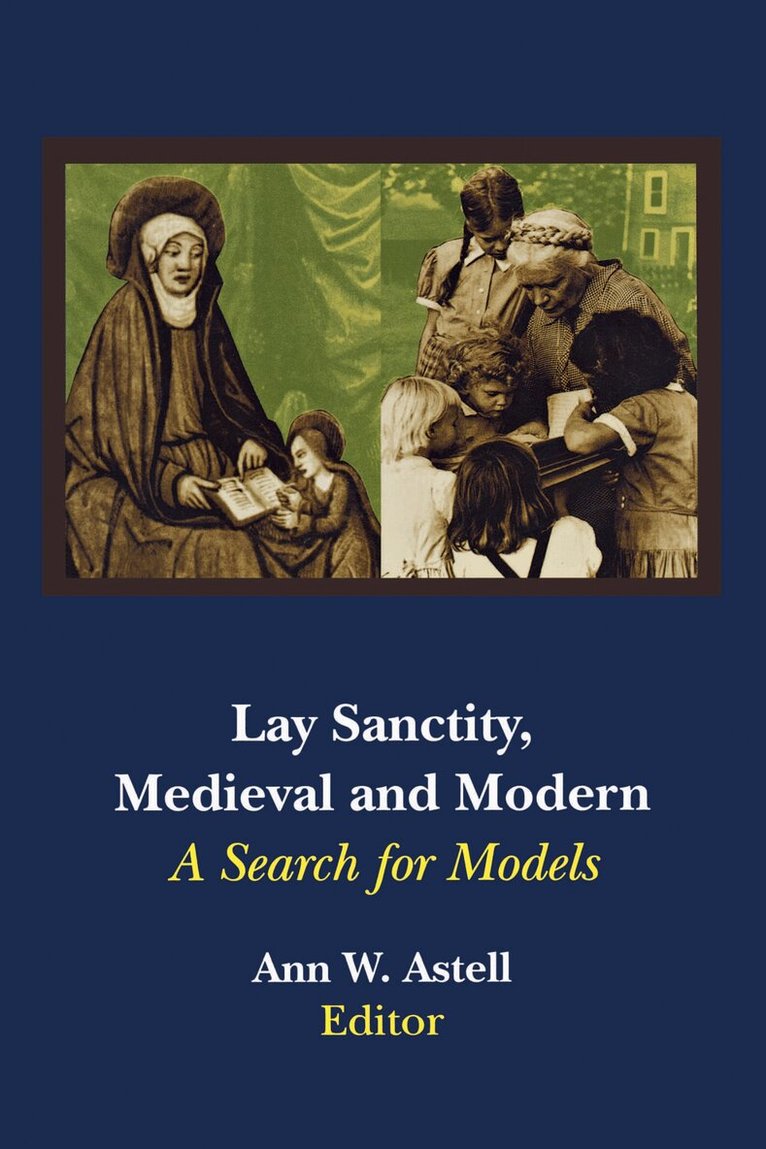
Inspired by Vatican II, which attributed a special apostolate to the laity and affirmed their calling to holiness, this volume of original essays focuses on the shifting points of intersection between changing historical definitions of laity and sanctity. Ann W. Astell and ten other scholars examine a series of medieval and modern lay "saints" in order to explore how these figures perceived their own lay status and how this status has been perceived by others. Through its examination of a series of specific historical figures and movements, Lay Sanctity, Medieval and Modern seeks answers to a set of recurring questions, such as what actually distinguishes the sanctity of the laity from that of the religious, why so few lay persons have been canonized, and to what extent the pursuit of sanctity requires lay saints to either deny or affirm their lay condition. Six essays seek to recover models for lay sanctity in the lives of early saints such as Catherine of Sienna and Angela of Foligno. The five studies of twentieth-century figures such as Elizabeth Leseuer and Jacques and Raissa Maritain suggest the emergence of new, secular ideals of lay sanctity.
Häftad, Engelska, 2011
480 kr
Skickas inom 10-15 vardagar
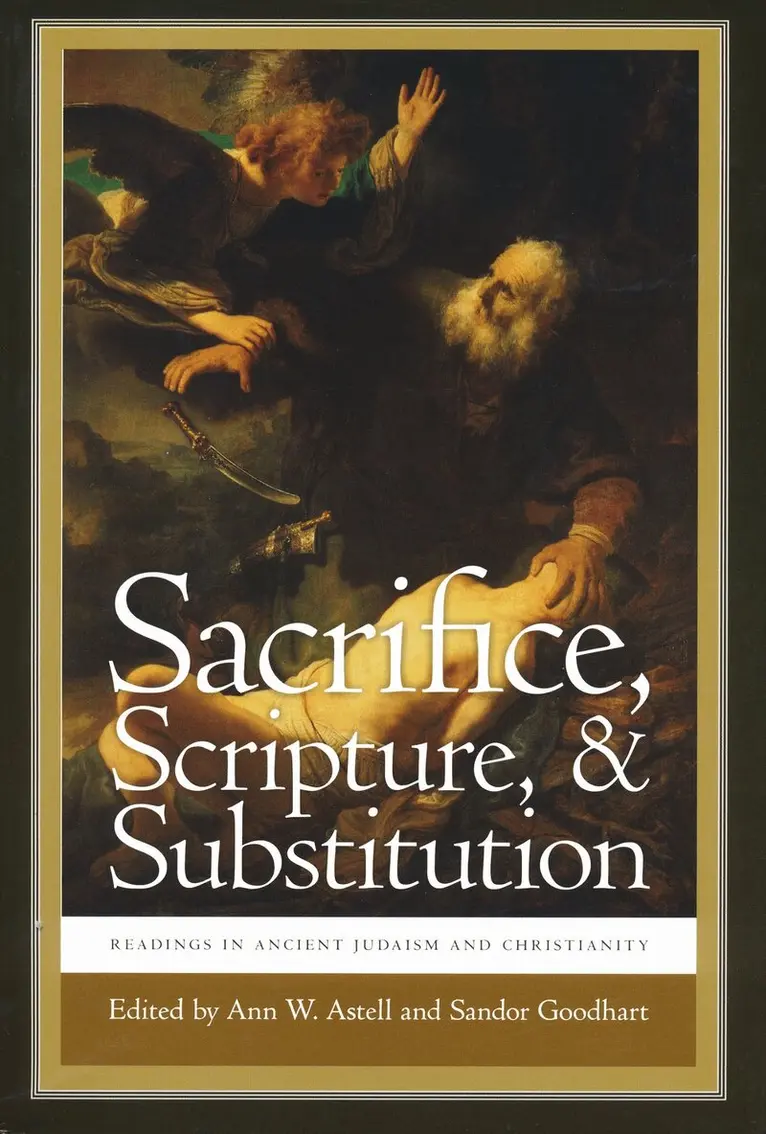
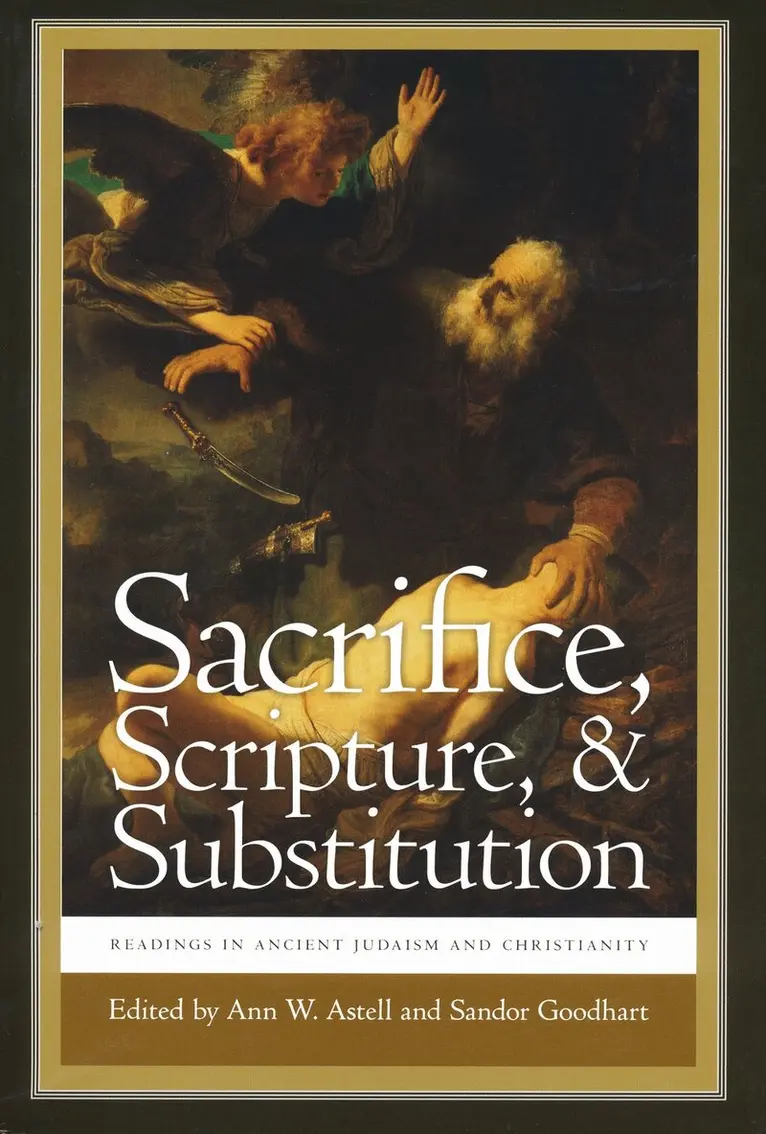
This collection of essays focuses on sacrifice in the context of Jewish and Christian scripture and is inspired by the thought and writings of René Girard. The contributors engage in a dialogue with Girard in their search for answers to key questions about the relation between religion and violence. The book is divided into two parts. The first opens with a conversation in which René Girard and Sandor Goodhart explore the relation between imitation and violence throughout human history, especially in religious culture. It is followed by essays on the subject of sacrifice contributed by some of the most distinguished scholars in the field, including Bruce Chilton, Robert Daly, Louis Feldman, Michael Fishbane, Erich Gruen, and Alan Segal. The second part contains essays on specific scriptural texts (Abraham's sacrifice of Isaac in Genesis 22 and the book of Job in the Jewish tradition, the Gospel and Epistles in the Christian tradition). The authors explore new ways of applying Girardian analysis to episodes of sacrifice and scapegoating, demonstrating that fertile ground remains to further our understanding of violence in the Hebrew and Christian scriptures.Contributors: Sandor Goodhart, Ann W. Astell, René Girard, Thomas Ryba, Michael Fishbane, Bruce Chilton, Robert Daly, S.J., Alan F. Segal, Louis H. Feldman, Erich S. Gruen, Stuart D. Robertson, Matthew Pattillo, Stephen Stern, Chris Allen Carter, William Morrow, William Martin Aiken, Gérard Rossé, Christopher S. Morrissey, Poong-In Lee, Anthony Bartlett
Häftad, Engelska, 2003
241 kr
Skickas inom 10-15 vardagar
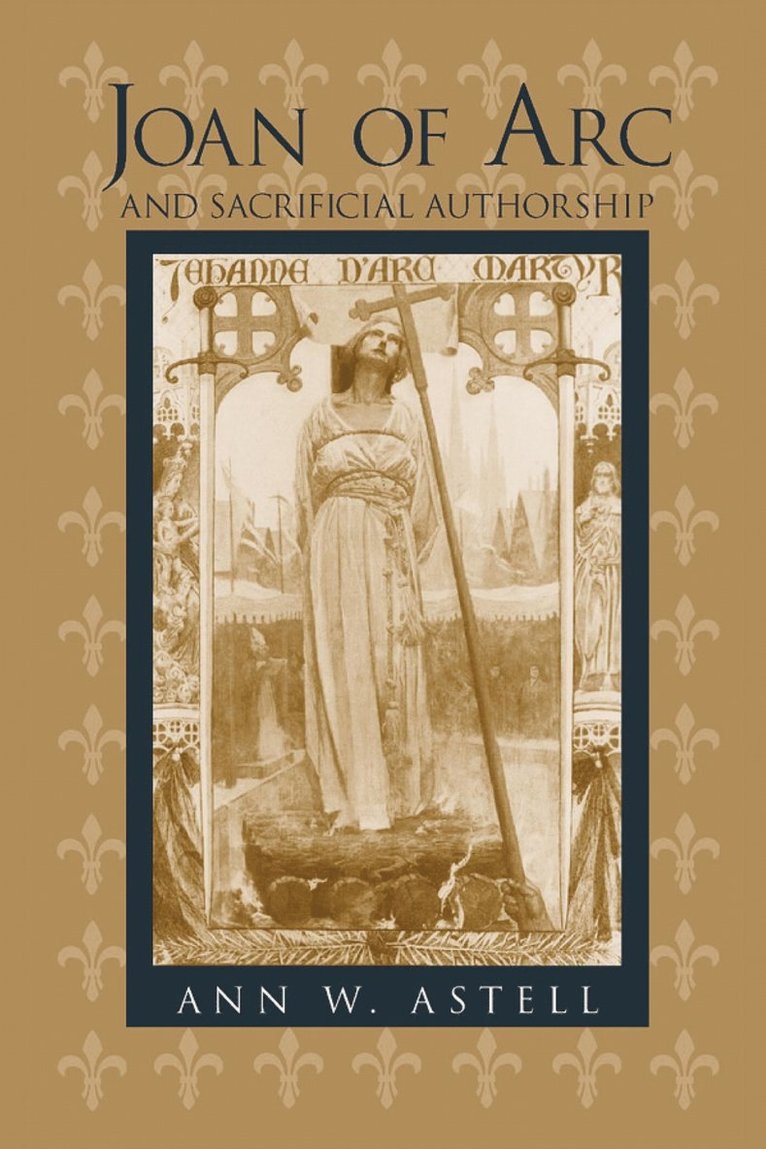
A host of modern authors have portrayed Joan of Arc as a heroine. Identifying with the medieval saint and martyr as a figure of the artist, they tell her story as a way of commenting on their own situation in a world where the aura of art has decayed. Blending the theoretical insights of Walter Benjamin, Roland Barthes, and René Girard, Ann W. Astell persuasively argues that many modern authors have seen their own artistic vocation in the visions and voices that inspired Joan.Astell's pathbreaking study explores the treatment of Joan of Arc in the works of such renowned and diverse authors as Mark Twain, Samuel Coleridge, Virginia Woolf, Friedrich Schiller, George Bernard Shaw, Bertolt Brecht, and Lillian Helman. Astell contends that in Joan's problematic identity as a peasant woman, these writers find an image for their own status as outsiders and potential scapegoats. Joan's condemnation and cruel death by fire mirror the anxious fears of artists who find themselves in a philistine marketplace. By depicting Joan's miraculous victories and ultimate canonization as a saint, these writers seek to imbue their own work with a quasi-religious aura and to secure for themselves a lasting place in the literary canon.Joan of Arc and Sacrificial Authorship offers the most comprehensive, comparative treatment to date of modern renditions of the medieval story of Joan of Arc. By connecting the societal roles of nineteenth- and twentieth-century authors and Saint Joan, Astell explains the continuing importance of the Middle Ages in the quest for a modern self-understanding.
Inbunden, Engelska, 2019
656 kr
Skickas inom 10-15 vardagar
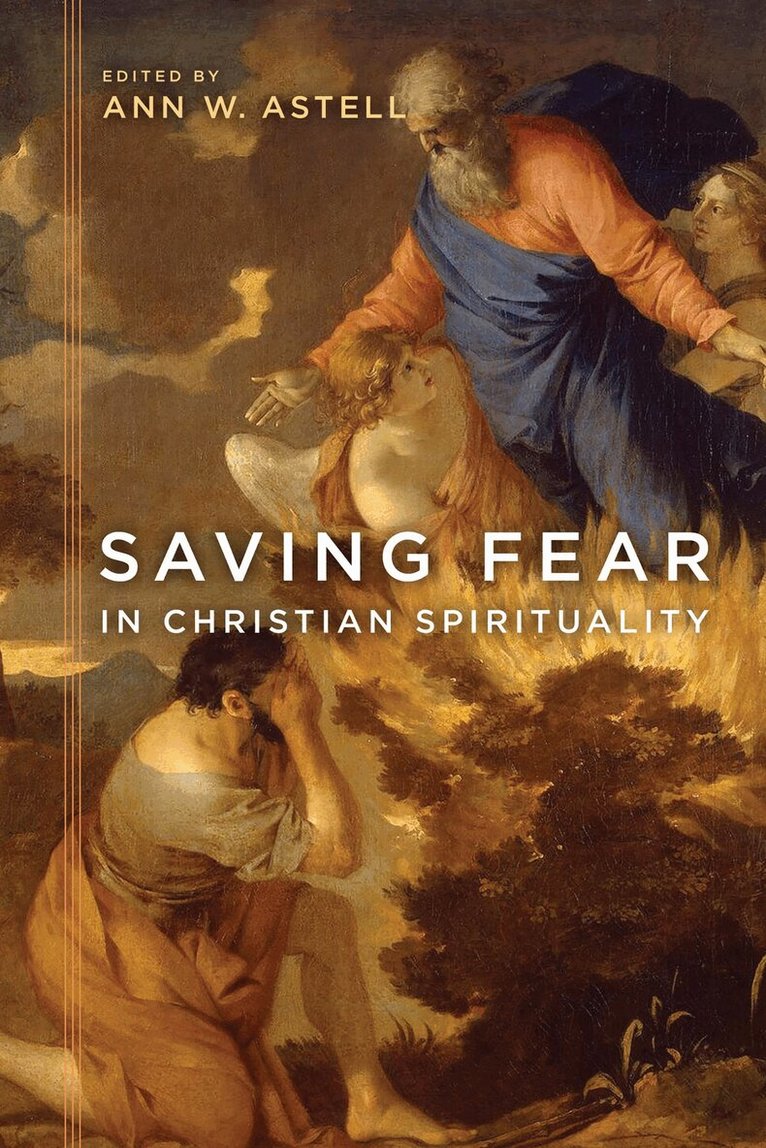
Hailed in Sacred Scripture as the "beginning of wisdom" (Ps 111:10), the "fear of the Lord" is seldom mentioned and little understood today. A gift of the Spirit and a moral virtue or disposition, the "fear of the Lord" also frequently entails emotional experiences of differing kinds: compunction, dread, reverence, wonderment, and awe. Starting with the Bible itself, this collection of seventeen essays explores the place of holy fear in Christian spirituality from the early church to the present and argues that this fear is paradoxically linked in various ways to fear's seeming opposite, love. Indeed, the charged dynamic of love and fear accounts for different experiences and expressions of Christian life in response to changing historical circumstances and events.The writings of the theologians, mystics, philosophers, saints, and artists studied here reveal the relationship between the fear and the love of God to be profoundly challenging and mysterious, its elements paradoxically conjoined in a creative tension with each other, but also tending to oscillate back-and-forth in the history of Christian spirituality as first one, then the other, comes to the fore, sometimes to correct a perceived imbalance, sometimes at the risk of losing its companion altogether. Given this historical pattern, clearly evident in these chronologically arranged essays, the palpable absence of a discourse of holy fear from the mainstream theological landscape should give us pause and invite us to consider if and how—under what aspect, in which contexts—a holy fear, inseparable from love, might be regained or discovered anew within Christian spirituality as a remedy both for a crippling anxiety and for a presumptive recklessness. This book will be of interest to students and scholars of Christian spirituality, theology, biblical studies, religious studies, and religion and literature.Contributors: Ann W. Astell, Pieter G. R. de Villiers, Donna R. Hawk-Reinhard, John Sehorn, Catherine Rose Cavadini, Joseph Wawrykow, Robert Boenig, Ralph Keen, Wendy M. Wright, Ephraim Radner, Julia A. Lamm, Cyril O'Regan, Brenna Moore, Maj-Britt Frenze, and Todd Walatka
Inbunden, Engelska, 2022
1 630 kr
Skickas inom 10-15 vardagar
This collection of essays focuses on sacrifice in the context of Jewish and Christian scripture and is inspired by the thought and writings of René Girard. The contributors engage in a dialogue with Girard in their search for answers to key questions about the relation between religion and violence. The book is divided into two parts. The first opens with a conversation in which René Girard and Sandor Goodhart explore the relation between imitation and violence throughout human history, especially in religious culture. It is followed by essays on the subject of sacrifice contributed by some of the most distinguished scholars in the field, including Bruce Chilton, Robert Daly, Louis Feldman, Michael Fishbane, Erich Gruen, and Alan Segal. The second part contains essays on specific scriptural texts (Abraham's sacrifice of Isaac in Genesis 22 and the book of Job in the Jewish tradition, the Gospel and Epistles in the Christian tradition). The authors explore new ways of applying Girardian analysis to episodes of sacrifice and scapegoating, demonstrating that fertile ground remains to further our understanding of violence in the Hebrew and Christian scriptures.Contributors: Sandor Goodhart, Ann W. Astell, René Girard, Thomas Ryba, Michael Fishbane, Bruce Chilton, Robert Daly, S.J., Alan F. Segal, Louis H. Feldman, Erich S. Gruen, Stuart D. Robertson, Matthew Pattillo, Stephen Stern, Chris Allen Carter, William Morrow, William Martin Aiken, Gérard Rossé, Christopher S. Morrissey, Poong-In Lee, Anthony Bartlett
Inbunden, Engelska, 2024
879 kr
Skickas inom 10-15 vardagar
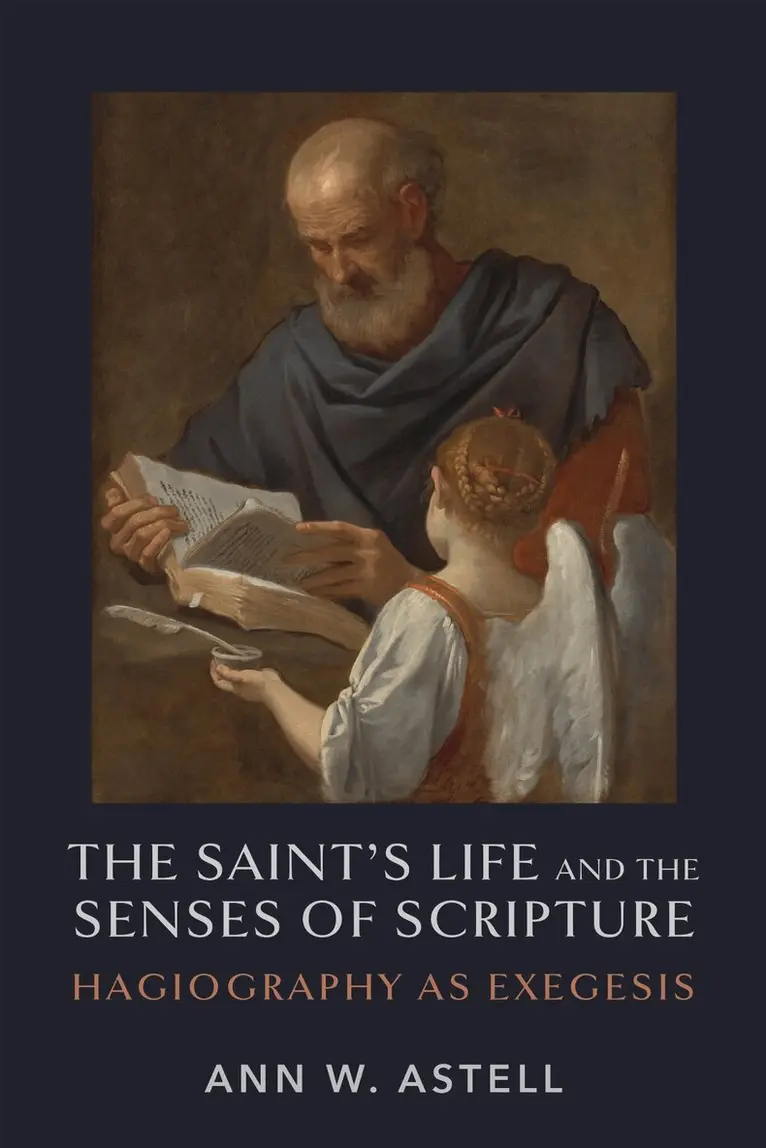
Through close examination of ancient, medieval, and modern Lives of the saints, Ann W. Astell demonstrates how the historical transformation of hagiography as a genre correlates with similar changes in biblical studies.Christian hagiography flourished from the fourth to the fifteenth centuries, illuminating the gospel through the overlapping forms of exempla and vita. Originally, the Lives of the saints were understood as hermeneutical extensions of the Bible—God authors the saint, just as God authors the divinely inspired scriptures. During the medieval period, a sense of dual authorship between God and the cooperating saint developed, paralleling the Scholastic impulse to assign greater agency to the human writers of scripture. Then, in the sixteenth century, powerful new anxieties about historical truth pushed hagiography aside for biography, its successor.Drawing on her expertise in the history of Christianity and biblical exegesis, Astell convincingly shows how this radical shift in hagiography's status—the loss of the literal, allegorical, tropological, and anagogical senses of the Lives—serves as a bellwether for modern biblical reception.
Häftad, Engelska, 2026
550 kr
Kommande
Through close examination of ancient, medieval, and modern Lives of the saints, Ann W. Astell demonstrates how the historical transformation of hagiography as a genre correlates with similar changes in biblical studies.Christian hagiography flourished from the fourth to the fifteenth centuries, illuminating the gospel through the overlapping forms of exempla and vita. Originally, the Lives of the saints were understood as hermeneutical extensions of the Bible—God authors the saint, just as God authors the divinely inspired scriptures. During the medieval period, a sense of dual authorship between God and the cooperating saint developed, paralleling the Scholastic impulse to assign greater agency to the human writers of scripture. Then, in the sixteenth century, powerful new anxieties about historical truth pushed hagiography aside for biography, its successor.Drawing on her expertise in the history of Christianity and biblical exegesis, Astell convincingly shows how this radical shift in hagiography's status—the loss of the literal, allegorical, tropological, and anagogical senses of the Lives—serves as a bellwether for modern biblical reception.
Inbunden, Engelska, 1990
683 kr
Skickas inom 10-15 vardagar
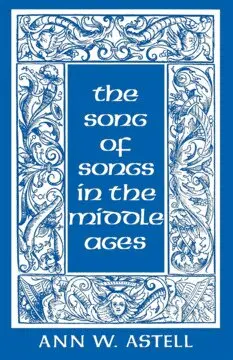
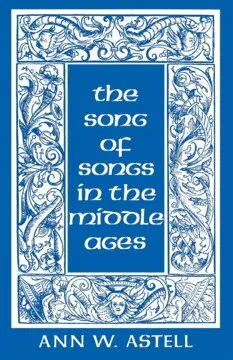
Included among the sacred books of Judaism and Christianity alike, the Song of Songs does not mention God at all; on the surface it is a lyrical exchange between unnamed lovers who articulate the range of emotions associated with sexual love. Ann W. Astell here examines medieval reader response, both interpretive and imitative, to the Song. Disputing the common view that the literal meaning of Canticles had no value for medieval readers, Astell points to twelfth-century commentaries on the Song, as well as an array of Middle English works, as evidence that the Song's sensuous imagery played an essential part in its tropological appeal.Emphasizing the ways in which a complex fusion of the Song's carnal and spiritual meanings appealed rhetorically to a variety of audiences, Astell first considers interpretive responses to Canticles, contrasting Origen's dialectical exposition with the affective commentaries of the twelfth century—ecclesiastical, Marian, and mystical. According to Astell, these commentaries present Canticles as a marriage song that mirrors a series of analogous marriages, both within the individual and between human and divine persons. Astell describes interpretations of the Song of Songs in terms of the various feminine archetypes that the expositors emphasize—the Virgin, Mother, Hetaira, or Medium. She maintains that the commentat5ors encourage the auditor's identification with the figure of the Bride so as to evoke and direct the feminine, affective powers of the soul. Turning to literature influenced by the Song, she then discusses how the reading process is reinscribed in selected works in Middle English, including Richard Rolle's autobiographical writings, Pearl, religious love lyrics, and cycle dramas.The Song of Songs in the Middle Ages provides an innovative model of reader response that opens the way for a deeper understanding of the literary influence of biblical texts.
Inbunden, Engelska, 1996
1 143 kr
Skickas inom 10-15 vardagar
The order of the fragments making up the Canterbury Tales and the structure of that collection have long been questioned. Ann W. Astell proposes that Chaucer intended the order that is preserved in what is known as the Ellesmere manuscript. In supporting her claim, Astell reveals a wealth of insights into the world of medieval learning, Chaucer's expected audience, and the meaning of the Canterbury Tales.Astell examines the conventions of medieval learning familiar to Chaucer and discovers in two related topical outlines, those of the seven planets and of the divisions of philosophy, an important key. Assimilated to each other in a kind of transparent overlay, these two outlines, which were frequently joined in the literature with which Chaucer was familiar, accommodate the actual structural divisions of the Tales (in the order in which they appear in the Ellesmere manuscript), define the story blocks as topical units, and show the pilgrims' progress from London to Canterbury to be simultaneously a planetary pilgrimage and a philosophical journey of the soul.The two patterns, Astell maintains, locate Chaucer's work in relation to that of both Gower and Dante, philosophical poets who shared Chaucer's relatively novel status as lay clerk, and who were, like him, members of the educated, secular bourgeoisie. The whole of the Canterbury Tales is thus revealed to be in dialogue with Gower's Confessio and Dante's Paradiso. Indeed, it represents an elaborately detailed response to the images used, and the stories related, in Dante's successive heavens.
Inbunden, Engelska, 1999
786 kr
Skickas inom 10-15 vardagar
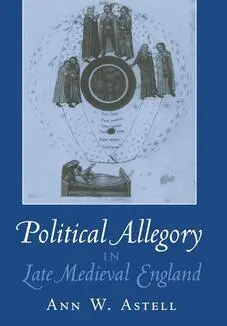
Ann W. Astell here affords a radically new understanding of the rhetorical nature of allegorical poetry in the late Middle Ages. She shows that major English writers of that era—among them, William Langland, John Gower, Geoffrey Chaucer, and the Gawain-poet—offered in their works of fiction timely commentary on current events and public issues. Poems previously regarded as only vaguely political in their subject matter are seen by Astell to be highly detailed and specific in their veiled historical references, implied audiences, and admonitions.Astell begins by describing the Augustinian and Boethian rhetorical principles involved in the invention of allegory. She then compares literary and historical treatments of key events in fourteenth- and fifteenth-century England, finding an astonishing match of allusions and code words, especially those deriving from puns, titles, heraldic devices, and personal cognizances, as well as repeated proverbs, prophecies, and exempla. Among the works she discusses are John Ball's Letters and parts of Piers Plowman, which she presents as two examples of allegorical literature associated with the Peasants' Revolution of 1381; Gower's allegorical representation of the Merciless Parliament of 1388 in Confessio Amantis; and Chaucer's brilliant literary handling of key events in the reign of Richard II. In addition Astell argues for a precise dating of Sir Gawain and the Green Knight between 1397 and 1399 and decodes the work as a political allegory.
Inbunden, Engelska, 2006
710 kr
Skickas inom 10-15 vardagar
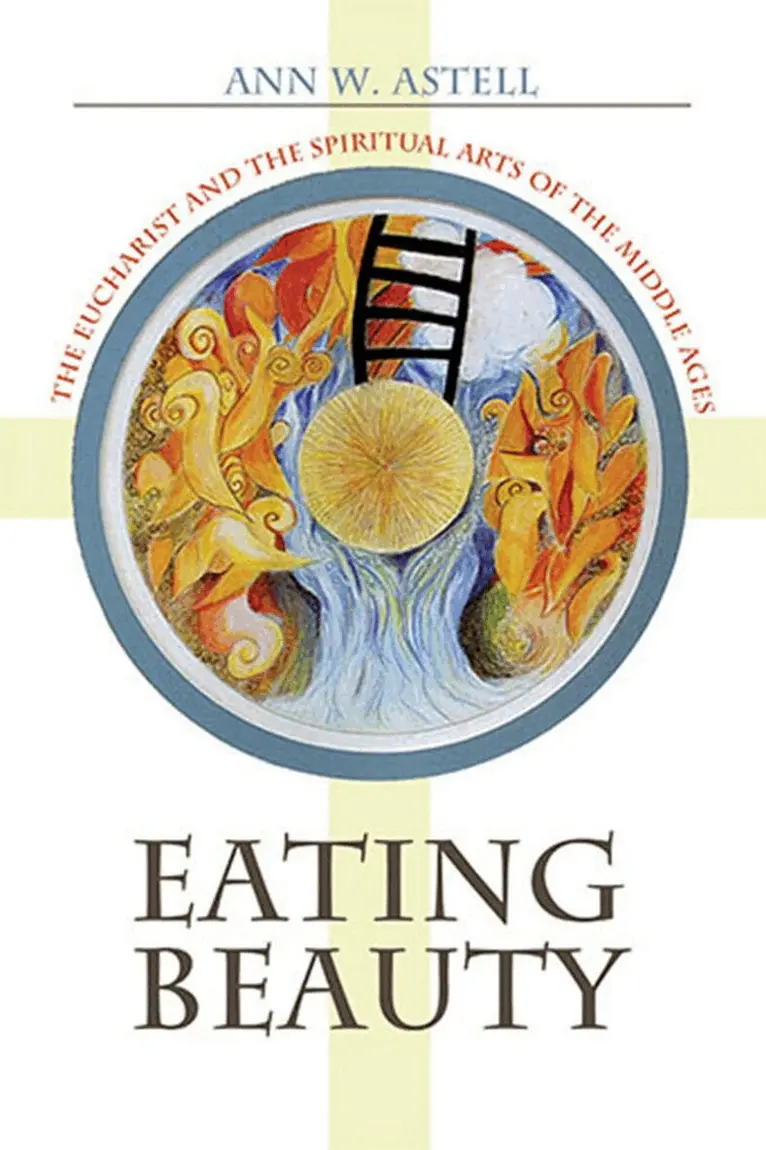
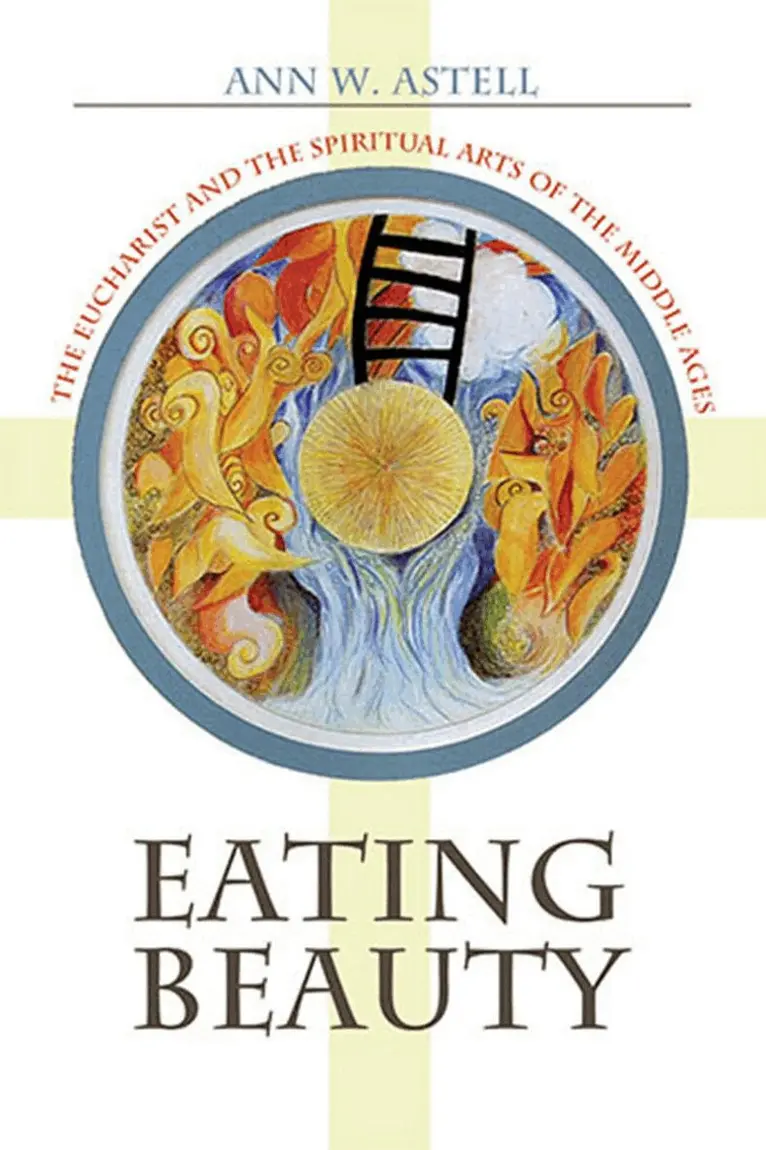
"The enigmatic link between the natural and artistic beauty that is to be contemplated but not eaten, on the one hand, and the eucharistic beauty that is both seen (with the eyes of faith) and eaten, on the other, intrigues me and inspires this book. One cannot ask theo-aesthetic questions about the Eucharist without engaging fundamental questions about the relationship between beauty, art (broadly defined), and eating."—from Eating BeautyIn a remarkable book that is at once learned, startlingly original, and highly personal, Ann W. Astell explores the ambiguity of the phrase "eating beauty." The phrase evokes the destruction of beauty, the devouring mouth of the grave, the mouth of hell. To eat beauty is to destroy it. Yet in the case of the Eucharist the person of faith who eats the Host is transformed into beauty itself, literally incorporated into Christ. In this sense, Astell explains, the Eucharist was "productive of an entire 'way' of life, a virtuous life-form, an artwork, with Christ himself as the principal artist." The Eucharist established for the people of the Middle Ages distinctive schools of sanctity—Cistercian, Franciscan, Dominican, and Ignatian—whose members were united by the eucharistic sacrament that they received. Reading the lives of the saints not primarily as historical documents but as iconic expressions of original artworks fashioned by the eucharistic Christ, Astell puts the "faceless" Host in a dynamic relationship with these icons. With the advent of each new spirituality, the Christian idea of beauty expanded to include, first, the marred beauty of the saint and, finally, that of the church torn by division—an anti-aesthetic beauty embracing process, suffering, deformity, and disappearance, as well as the radiant lightness of the resurrected body. This astonishing work of intellectual and religious history is illustrated with telling artistic examples ranging from medieval manuscript illuminations to sculptures by Michelangelo and paintings by Salvador Dalí. Astell puts the lives of medieval saints in conversation with modern philosophers as disparate as Simone Weil and G. W. F. Hegel.
Häftad, Engelska, 1995
332 kr
Skickas inom 10-15 vardagar
Included among the sacred books of Judaism and Christianity alike, the Song of Songs does not mention God at all; on the surface it is a lyrical exchange between unnamed lovers who articulate the range of emotions associated with sexual love. Ann W. Astell here examines medieval reader response, both interpretive and imitative, to the Song. Disputing the common view that the literal meaning of Canticles had no value for medieval readers, Astell points to twelfth-century commentaries on the Song, as well as an array of Middle English works, as evidence that the Song's sensuous imagery played an essential part in its tropological appeal.Emphasizing the ways in which a complex fusion of the Song's carnal and spiritual meanings appealed rhetorically to a variety of audiences, Astell first considers interpretive responses to Canticles, contrasting Origen's dialectical exposition with the affective commentaries of the twelfth century—ecclesiastical, Marian, and mystical. According to Astell, these commentaries present Canticles as a marriage song that mirrors a series of analogous marriages, both within the individual and between human and divine persons. Astell describes interpretations of the Song of Songs in terms of the various feminine archetypes that the expositors emphasize—the Virgin, Mother, Hetaira, or Medium. She maintains that the commentat5ors encourage the auditor's identification with the figure of the Bride so as to evoke and direct the feminine, affective powers of the soul. Turning to literature influenced by the Song, she then discusses how the reading process is reinscribed in selected works in Middle English, including Richard Rolle's autobiographical writings, Pearl, religious love lyrics, and cycle dramas.The Song of Songs in the Middle Ages provides an innovative model of reader response that opens the way for a deeper understanding of the literary influence of biblical texts.
Del 273 - Cistercian Studies Series
Three Pseudo-Bernardine Works
Häftad, Engelska, 2018
353 kr
Skickas inom 3-6 vardagar
During the "Silver Age" of the Cistercians (the late twelfth and thirteenth centuries), pseudepigraphical compositions bearing the name Bernard flourished. Important for the history of monasticism and, more broadly, of Christian spiritual formation and practice, these little-studied writings interpret, appropriate, transform, and apply Saint Bernard of Clairvaux's authentic works, transmitting them to new audiences.Under the direction of Ann Astell and Joseph Wawrykow, with the assistance of Thomas Clemmons, a talented team of young scholars from the University of Notre Dame (the Catena Scholarium) offers here a complete translation of three of these Pseudo-Bernardine essays, providing notes that identify sources, clarify allusions, highlight rhetorical strategies, and demonstrate overall a fascinating, intertextual complexity. The Bernard who emerges from these texts speaks with many voices to herald a living, Bernardine tradition.
Del 80 - Cistercian Fathers Series
Liturgical Sermons
The Durham and Lincoln Collections, Sermons 47-84
Häftad, Engelska, 2019
610 kr
Skickas inom 5-8 vardagar
Aelred, abbot of the Yorkshire Cistercian abbey of Rievaulx from 1147 to 1167, wrote six spiritual treatises, seven historical treatises, and 182 liturgical sermons, many of which he delivered as chapter talks to his monks. Translations of the first twenty-eight of these sermons appeared in CF 58 in 2001, translated by Theodore Berkeley and M. Basil Pennington, and sermons twenty-nine through forty-six appeared in CF 77 in 2015, translated by Marie Anne Mayeski. The current volume contains thirty-eight sermons for feasts from Advent through the Nativity of Mary, taken from the Durham and Lincoln collections, edited by Gaetano Raciti in CCCM 2B and 2C.
Häftad, Engelska, 2016
467 kr
Skickas inom 10-15 vardagar
"The enigmatic link between the natural and artistic beauty that is to be contemplated but not eaten, on the one hand, and the eucharistic beauty that is both seen (with the eyes of faith) and eaten, on the other, intrigues me and inspires this book. One cannot ask theo-aesthetic questions about the Eucharist without engaging fundamental questions about the relationship between beauty, art (broadly defined), and eating."—from Eating BeautyIn a remarkable book that is at once learned, startlingly original, and highly personal, Ann W. Astell explores the ambiguity of the phrase "eating beauty." The phrase evokes the destruction of beauty, the devouring mouth of the grave, the mouth of hell. To eat beauty is to destroy it. Yet in the case of the Eucharist the person of faith who eats the Host is transformed into beauty itself, literally incorporated into Christ. In this sense, Astell explains, the Eucharist was "productive of an entire 'way' of life, a virtuous life-form, an artwork, with Christ himself as the principal artist." The Eucharist established for the people of the Middle Ages distinctive schools of sanctity—Cistercian, Franciscan, Dominican, and Ignatian—whose members were united by the eucharistic sacrament that they received. Reading the lives of the saints not primarily as historical documents but as iconic expressions of original artworks fashioned by the eucharistic Christ, Astell puts the "faceless" Host in a dynamic relationship with these icons. With the advent of each new spirituality, the Christian idea of beauty expanded to include, first, the marred beauty of the saint and, finally, that of the church torn by division—an anti-aesthetic beauty embracing process, suffering, deformity, and disappearance, as well as the radiant lightness of the resurrected body. This astonishing work of intellectual and religious history is illustrated with telling artistic examples ranging from medieval manuscript illuminations to sculptures by Michelangelo and paintings by Salvador Dalí. Astell puts the lives of medieval saints in conversation with modern philosophers as disparate as Simone Weil and G. W. F. Hegel.
Häftad, Engelska, 2019
303 kr
Skickas inom 10-15 vardagar
Calling into question the common assumption that the Middle Ages produced no secondary epics, Ann W. Astell here revises a key chapter in literary history. She examines the connections between the Book of Job and Boethius' s Consolation of Philosophy—texts closely associated with each other in the minds of medieval readers and writers—and demonstrates that these two works served as a conduit for the tradition of heroic poetry from antiquity through the Middle Ages and into the Renaissance. As she traces the complex influences of classical and biblical texts on vernacular literature, Astell offers provocative readings of works by Dante, Chaucer, Spenser, Malory, Milton, and many others.Astell looks at the relationship between the historical reception of the epic and successive imitative forms, showing how Boethius's Consolation and Johan biblical commentaries echo the allegorical treatment of" epic truth" in the poems of Homer and Virgil, and how in turn many works classified as "romance" take Job and Boethius as their models. She considers the influences of Job and Boethius on hagiographic romance, as exemplified by the stories of Eustace, Custance, and Griselda; on the amatory romances of Abelard and Heloise, Dante and Beatrice, and Troilus and Criseyde; and on the chivalric romances of Martin of Tours, Galahad, Lancelot, and Redcrosse. Finally, she explores an encyclopedic array of interpretations of Job and Boethius in Milton's Paradise Lost, Paradise Regained, and Samson Agonistes.
Del 22 - Festschriften, Occasional Papers, and Lectures
Magistra Doctissima
Essays in Honor of Bonnie Wheeler
Inbunden, Engelska, 2013
359 kr
Skickas inom 5-8 vardagar
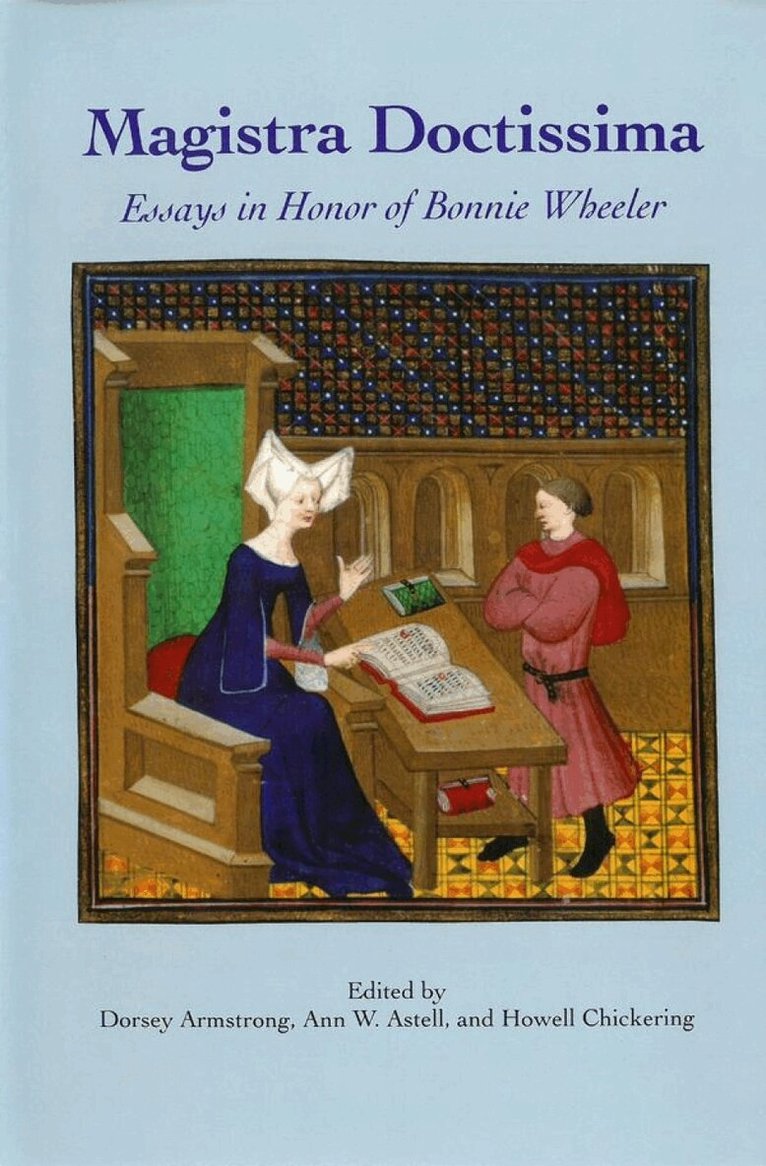
The editors of this volume use its title to honor Bonnie Wheeler for her many scholarly achievements and to celebrate her wide-ranging contributions to medieval studies in the United States. There are sections on Old and Middle English Literature, Arthuriana Then and Now, Joan of Arc Then and Now, Nuns and Spirituality, and Royal Women. As the editors note in the introduction, the volume "confirms Bonnie's commitment to the multidisciplinary study of the Middle Ages" and affirms her conviction "that the medieval and the modern are best viewed not as 'the past' and 'the present' but as interpenetrative categories."