• Fri frakt över 249 kr
  • •
  • Snabba leveranser
  • •
  • Billiga böcker
Kundservice

Du är på sajten för privatpersoner.

Företag, bibliotek eller offentlig verksamhet?

Du handlar på classic.bokus.com, där alla dina funktioner finns intakta.
Till classic.bokus.com
Bokus logotyp. Gå till startsidan.
  • Erbjudanden
  • Nyheter
  • Student
  • Topplistor
  • Barn & ungdom
  • Bokus Play
  • E-böcker
  • Pocketböcker
  • Spel & pussel

10% rabatt på allt med kod NYSTART10 →

Sidfot

Mina sidor

    Hjälp

    • Kundservice
    • Vanliga frågor och svar
    • Frakt och leverans
    • Retur vid ångerrätt
    • Reklamera vara
    • Betalning
    • Köpvillkor
    • Allmänna villkor
    • Information om webbplatsens tillgänglighet

    Om Bokus

    • Om oss
    • Pressrum
    • För studenter
    • För företag
    • För bibliotek och offentlig verksamhet
    • För leverantörer
    • Hållbarhet

    Populärt

    • Aktuella erbjudanden
    • Presentkort
    • Studentlitteratur
    • Nya böcker
    • Topplistor
    • Signerade böcker
    • Engelska böcker

    Inspiration

    • Boktips
    • BookTok
    • Populära bokserier
    • Barnbokskaraktärer
    • Populära författare
    Logotyp för Bokus
    Följ oss på Facebook (extern länk)Följ oss på Instagram (extern länk)Följ oss på YouTube (extern länk)Följ oss på TikTok (extern länk)
    bokus @ CookiesAnpassa cookiesIntegritetspolicyKöpvillkor
    Till Citymail hemsida (extern länk)Till Budbee hemsida (extern länk)Till Postnord hemsida (extern länk)Till Schenker hemsida (extern länk)Till Early Bird hemsida (extern länk)Till Walleys hemsida (extern länk)
    1. Historia och arkeologi
    2. Historia
    3. Europas historia
    4. Medeltiden

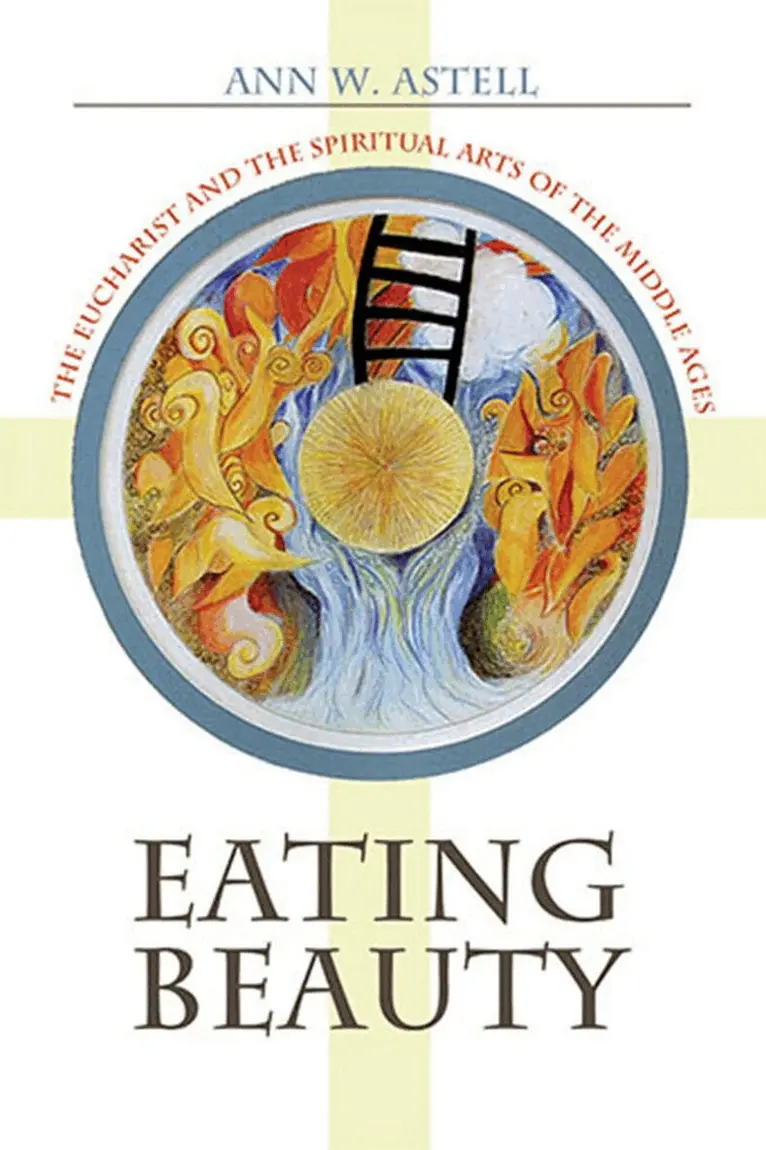
    Eating Beauty

    The Eucharist and the Spiritual Arts of the Middle Ages

    AvAnn W. Astell

    Inbunden, Engelska, 2006

    729 kr

    Beställningsvara. Skickas inom 10-15 vardagar. Fri frakt över 249 kr.

    Fler format och utgåvor

    Häftad

    479 kr

    Beskrivning

    "The enigmatic link between the natural and artistic beauty that is to be contemplated but not eaten, on the one hand, and the eucharistic beauty that is both seen (with the eyes of faith) and eaten, on the other, intrigues me and inspires this book. One cannot ask theo-aesthetic questions about the Eucharist without engaging fundamental questions about the relationship between beauty, art (broadly defined), and eating."—from Eating BeautyIn a remarkable book that is at once learned, startlingly original, and highly personal, Ann W. Astell explores the ambiguity of the phrase "eating beauty." The phrase evokes the destruction of beauty, the devouring mouth of the grave, the mouth of hell. To eat beauty is to destroy it. Yet in the case of the Eucharist the person of faith who eats the Host is transformed into beauty itself, literally incorporated into Christ. In this sense, Astell explains, the Eucharist was "productive of an entire 'way' of life, a virtuous life-form, an artwork, with Christ himself as the principal artist." The Eucharist established for the people of the Middle Ages distinctive schools of sanctity—Cistercian, Franciscan, Dominican, and Ignatian—whose members were united by the eucharistic sacrament that they received. Reading the lives of the saints not primarily as historical documents but as iconic expressions of original artworks fashioned by the eucharistic Christ, Astell puts the "faceless" Host in a dynamic relationship with these icons. With the advent of each new spirituality, the Christian idea of beauty expanded to include, first, the marred beauty of the saint and, finally, that of the church torn by division—an anti-aesthetic beauty embracing process, suffering, deformity, and disappearance, as well as the radiant lightness of the resurrected body. This astonishing work of intellectual and religious history is illustrated with telling artistic examples ranging from medieval manuscript illuminations to sculptures by Michelangelo and paintings by Salvador Dalí. Astell puts the lives of medieval saints in conversation with modern philosophers as disparate as Simone Weil and G. W. F. Hegel.

    Produktinformation

    • Utgivningsdatum:2006-08-03
    • Mått:155 x 235 x 28 mm
    • Vikt:907 g
    • Format:Inbunden
    • Språk:Engelska
    • Antal sidor:312
    • Förlag:Cornell University Press
    • ISBN:9780801444661

    Utforska kategorier

    • Medeltiden inom Historia och arkeologi
    • Religion: allmänt inom Filosofi och religion

    Mer om författaren

    Ann W. Astell is Professor of English at Purdue University. She is the author of many books, including Eating Beauty: The Eucharist and the Spiritual Arts of the Middle Ages, The Song of Songs in the Middle Ages, Chaucer and the Universe of Learning, and Political Allegory in Late Medieval England, all available from Cornell.

    Recensioner i media

    This book, as deeply felt as it is researched, is no less broad in the range of its intellectual sympathies, which embrace the histories of literature, spirituality, and art as well as aesthetics.(Speculum) With this delicious book, four Christian 'ways' of eating the Beautiful or Sacred come to life. Ann Astell, whose in-depth writing on medieval figures has introduced many to the richness of the medieval exegetical and liturgical world, adds a 'theological-aesthetic' dimension to this work. Uniting spiritual and physical senses that modern interpreters anachronistically divide, Astell invites us to a feast of medieval sensory language that dwells in scriptural interpretation as it performs its spirituality in eucharistic participation.(Journal of Religion) Educational and enlightening. Eleven full-color palettes accompany the tome, adding to the richness of the story. Eating Beauty was a journey I enjoyed.- John L. Francis (The Artistic Theologian)

    Innehållsförteckning

    • 1. "Taste and See": The Eating of Beauty 2. The Apple and the Eucharist: Foods for a Theological Aesthetics 3. "Hidden Manna": Bernard of Clairvaux, Gertrude of Helfta, and the Monastic Art of Humility 4. "Adorned with Wounds": Saint Bonaventure's Legenda maior and the Franciscan Art of Poverty 5. "Imitate Me As I Imitate Christ": Three Catherines, the Food of Souls, and the Dominican Art of Preaching 6. The Eucharist, the Spiritual Exercises, and the Art of Obedience: Saint Ignatius of Loyola and Michelangelo 7. Weil and Hegel: A Eucharistic "Ante-/Anti-Aesthetic" Aesthetics? 8. To (Fail to) Conclude: Eucharists without End Appendix Bibliography Index