Anna Marrucci – författare
Visar alla böcker från författaren Anna Marrucci. Handla med fri frakt och snabb leverans.
5 produkter
5 produkter
Inbunden, Engelska, 2023
563 kr
Skickas inom 5-8 vardagar
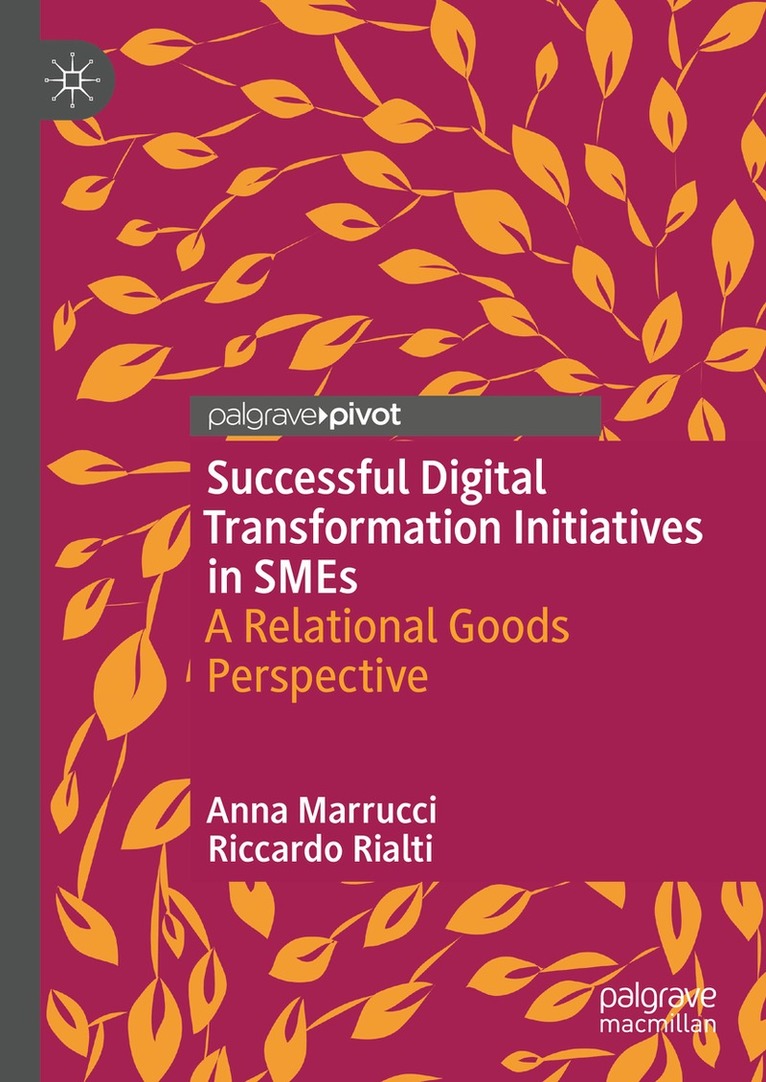
While it is clear that workforce involvement is fundamental for the success of digital transformation, it is also evident that insufficient attention has been paid to emerging strategies to convince employees to become involved. To do so, this book considers Relational Goods, the intersubjective and reflexive relationships existing between employees, within the DOI framework to evaluate how they influence digital transformation success alongside innovation traits, time and communication channels.The focus for this book is SMEs, as these businesses experience greater difficulties than their larger counterparts in keeping up with the digital revolution. The authors develop the Relational Goods model to a refined DOI framework including the role of relationship and managerial support in the adoption of technologies that may transform the business. It will be of great interest to scholars and students of management, digital transformation and SMEs, as well as HRM professionals.
E-bok
Engelska, 2023734 kr
Läs direkt efter köp
While it is clear that workforce involvement is fundamental for the success of digital transformation, it is also evident that insufficient attention has been paid to emerging strategies to convince employees to become involved. To do so, this book considers Relational Goods, the intersubjective and reflexive relationships existing between employees, within the DOI framework to evaluate how they influence digital transformation success alongside innovation traits, time and communication channels.
The focus for this book is SMEs, as these businesses experience greater difficulties than their larger counterparts in keeping up with the digital revolution. The authors develop the Relational Goods model to a refined DOI framework including the role of relationship and managerial support in the adoption of technologies that may transform the business. It will be of great interest to scholars and students of management, digital transformation and SMEs, as well as HRM professionals.Engelska, 2023
644 kr
Skickas inom 5-8 vardagar
Inbunden, Engelska, 2026
454 kr
Skickas inom 10-15 vardagar
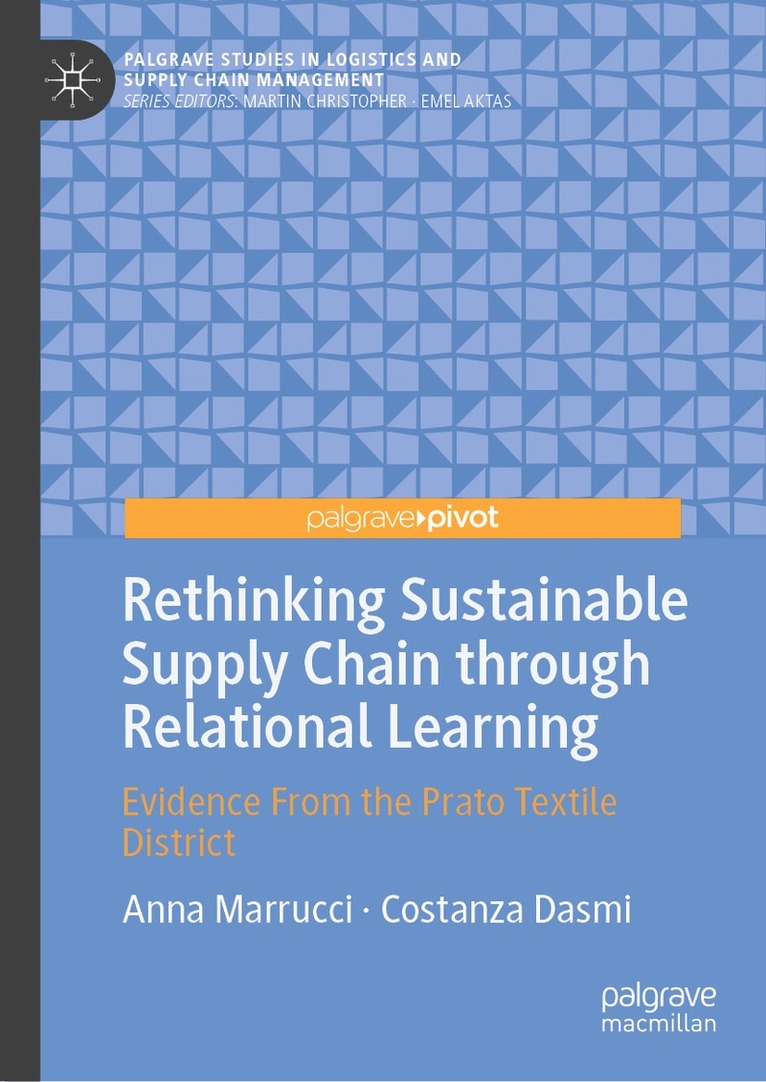
Existing literature on textile supply chains has highlighted the importance of adopting sustainable practices in their operational activities, identifying institutional pressures and digital transformation as the main drivers of sustainable change. However, supply chains should be studied as relational networks capable of involving a multitude of actors. Sustainable outcomes, therefore, depend on the collaborative efforts within a network of interdependent firms. This book conceptualizes the supply chain as a network of relationships, shifting the focus from the individual to the collective. Achieving sustainable changes in the textile industry becomes the responsibility of an entire supply chain, involving multinational corporations, manufacturers, suppliers, and subcontractors.To reconceptualize the supply chain as a relational network, this book adopts a theoretical approach rooted in relational sociology, which centers its analysis on social relationships rather than isolated individuals or social structures. The Prato textile district in Italy, the largest textile hub in Europe, provides the basis for the empirical study. The book will be of great interest to scholars and students of supply chain management, sustainability, the fashion industry and relational sociology.
E-bok
Engelska, 2026551 kr
Läs direkt efter köp
Existing literature on textile supply chains has highlighted the importance of adopting sustainable practices in their operational activities, identifying institutional pressures and digital transformation as the main drivers of sustainable change. However, supply chains should be studied as relational networks capable of involving a multitude of actors. Sustainable outcomes, therefore, depend on the collaborative efforts within a network of interdependent firms. This book conceptualizes the supply chain as a network of relationships, shifting the focus from the individual to the collective. Achieving sustainable changes in the textile industry becomes the responsibility of an entire supply chain, involving multinational corporations, manufacturers, suppliers, and subcontractors.To reconceptualize the supply chain as a relational network, this book adopts a theoretical approach rooted in relational sociology, which centers its analysis on social relationships rather than isolated individuals or social structures. The Prato textile district in Italy, the largest textile hub in Europe, provides the basis for the empirical study. The book will be of great interest to scholars and students of supply chain management, sustainability, the fashion industry and relational sociology.