Anna Wypych - Böcker
3 605 kr
Skickas inom 7-10 vardagar
Databook of Plasticizers, Third Edition contains data on more than 300 of the most important generic and commercial plasticizers in use today. The data comes from a range of sources beyond plasticizers manufacturers, allowing for a detailed comparison of properties of different plasticizers. Over 100 different data fields are provided, from general information, such as molecular structure and formula, to physical properties, health and safety information, ecological properties, and recommendations regarding appropriate use and performance of each plasticizer. This data book is an essential resource for engineers, technicians and materials scientists responsible for specifying a plasticizer.
The book has been updated to reflect the recent changes in plasticizer approvals for production of various materials, including chloroparaffins, refined oil derivatives, and phalates, and also includes data details on a range of new plasticizers that have recently gained market approval. It serves as an ideal companion to the Handbook of Plasticizers.
Enables plastics practitioners to more efficiently select the correct plasticizer for a range of applications Includes 100 data fields for each plasticizer, including physical properties, health and safety information, ecological properties and specific usage recommendations Contains data on the most important plasticizers currently in use, both commercial products and the chemical compounds used for the manufacture of plasticizers2 812 kr
Skickas inom 7-10 vardagar
3 117 kr
Skickas inom 7-10 vardagar
Databook of Adhesion Promoters, Second Edition contains data on the most important adhesion promoter products in use today. Information on each adhesion promoter is divided into five sections: General Information, Physical Properties, Health and Safety, Ecological Properties, and Use and Performance. The previous edition of this book was mostly related to silanes, but many new additives have been introduced to the market, many not based on silanes but on one of 37 chemical groups of chemical compounds needed for a variety of products in which silanes do not function, are too expensive, or better performance can be achieved with these new additives.
The years that have passed since publication of the first edition have also had a significant impact on sourcing and selection of adhesion promoters for different tasks. Due to mergers and acquisitions, many additives are no longer in use. Because of scientific developments, more products are based on renewable resources and selected from less toxic origins. There is also a clear tendency to limit the scope of application which can lead to many products being designed for specialized, frequently single product applications.
Provides detailed, up-to-date, essential data on the most important products currently in use Covers general information, physical-chemical properties, health and safety, ecological properties, and use and performance Includes recommendations for specific polymers, products, applications, processing methods and the concentration used3 837 kr
Skickas inom 7-10 vardagar
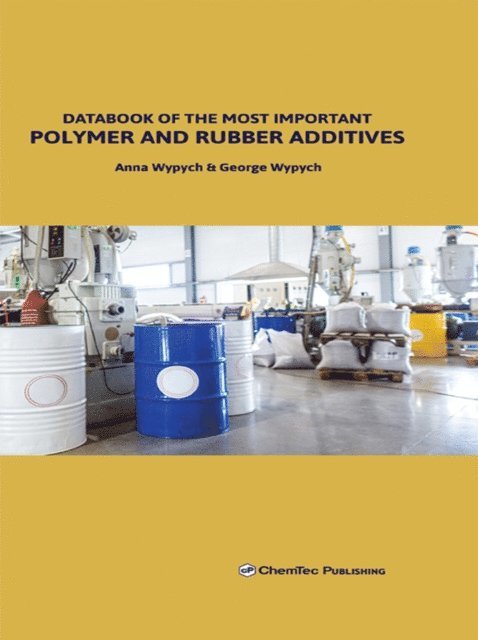
Databook of the Most Important Polymer and Rubber Additives is a vital reference for anyone working with polymers and rubbers. It provides key information on the properties of the most widely used additives that can be used to alter the physical, chemical, and mechanical properties of rubbers and plastics. Additives are presented by their main chemical component, with information for each additive provided in the form of a table divided into 5 sections, covering General Information, Physical Properties, Health and Safety Considerations, Ecological Impact, and Use and Applications. Data provided includes CAS#, acid/base properties, odor, various cloud points, volatility data, surface tension, thermal conductivity, explosion limits, carcinogenicity, oxygen demands, biodegradation probability, air pollution data, applications in different polymers and products, processing requirements and doses, food approvals, substitutes, and more.The companion book, The Encyclopedia of Polymer and Rubber Additives, contains information on the mechanisms of action of each group of additives, their suitable features and modifications, their effect and interferences in complex formulations, and it is illustrated with numerous experimental examples highlighting their performance.
Provides information on the properties of key additives that can be used to alter the physical, chemical, and mechanical properties of rubbers and plasticsCovers general information, physical properties, health and safety considerations, ecological impact, and use and applicationsPresents additives by their main chemical component, discussing anticaking agents, antidegradants, antifogging agents, curatives, crosslinkers, defoaming agents, fillers, nucleating agents, pigments, solvents, stabilizers, vulcanizing agents, and more3 483 kr
Skickas inom 7-10 vardagar
Databook of Curatives and Crosslinkers, Second Edition provides expanded coverage of the latest curative and crosslinker product data, including detailed reviews and evaluations of these product categories with key considerations, benefits, and applications highlighted. Forty groups of curatives and crosslinkers are included in the book, including the following chemical groups of additives: acids, acrylamides, aldehydes, amides, amidoamines, amines, anhydrides, aziridines, borates, epoxy-functionalized polymers, carbamides, carbodiimides, chitosan derivatives, cyanamides, diols, glutarates, glycols, graphene oxide derivatives, hydantoin glycols, hydrazides, hydroxides, hydroxyl-containing moieties, imidazoles, isocyanates, isocyanurates, ketimines, maleimides, melamines, novolacs, peroxides, peroxyketals, phenols, polyols, salts, silanes, siloxanes, thiols, titanates, and ziconium derivatives.The additives discussed in the handbook have been suggested for use in over 60 polymers and rubbers, as well as in close to 100 groups of products. Information on each additive is divided into 5 sections: General Information which covers name, CAS #, active matter, amine nitrogen, chemical class, cure schedule, and more; Physical Properties which covers odor, color, density, freezing point, gel time, particle size, thin film set time, and more; Health and Safety covering autoignition temperature, dermal LD50, exposure limits, flash point, and more; Ecological Properties covering toxicity to algae, bacteria, and fish, sewage treatment, and more, and lastly, Use and Performance which offers information on manufacturers, outstanding properties, and more.
Provides general information, physical properties, health and safety considerations, ecological properties, and use and performance details on approximately 400 curatives and crosslinkers in use todayIncludes examples of a broad array of applicationsCovers active matter, amine value and equivalent, odor, color, boiling point, chronic health effects, first aid, aquatic toxicity, biodegradation probability, recommended applications, processing methods, and more3 361 kr
Skickas inom 7-10 vardagar
3 361 kr
Skickas inom 7-10 vardagar
2 886 kr
Skickas inom 7-10 vardagar
3 264 kr
Skickas inom 7-10 vardagar
3 264 kr
Skickas inom 7-10 vardagar
3 264 kr
Skickas inom 7-10 vardagar
3 809 kr
Skickas inom 5-8 vardagar
Plasticizer Databook contains data on selection of the most important plasticizers in use today. The selection includes 375 generic and commercial plasticizers. The generic plasticizers contain data for particular chemical compound from numerous sources and these generic plasticizer tables usually contain the most extensive information. The commercial plasticizers include only data given by plasticizer manufacturers. This allows comparison of properties of commercial plasticizers coming from different sources.
The databook was developed to contain data required in plasticizers application. Attempts have been made to include plasticizers used in various sectors of industry to provide information for all users and to help in finding new solutions. Plasticizers included in the book differ from solvents by boiling point, which is above 250oC, but some plasticizers are used as temporary plasticizers or are expected to react with other components of mixture. These substances will not meet the boiling temperature criterion but will still be included since they play role of plasticizers.
Based on the biggest plasticizer database ever published Includes 375 generic and commercial plasticizers Divided into sections for ease of use3 809 kr
Skickas inom 5-8 vardagar
The Antistatics Databook contains detailed information on over 300 frequently used antistatic additives for polymers - additives capable of modifying properties of materials so that they become antistatic, conductive or EMI shielded. The potential risks of static electricity, as well as the variety of antistatic additives available, mean that selecting the correct antistatic agent is vital. This databook is an important source of information for industry, research, and academia.
Each additive is presented with data in the following categories: General Information; Physical Properties; Health and Safety; Ecological Properties; and Use and Performance. The Databook includes a large amount of data, from state, odor, and color to autoignition temperature and probability of biodegradation. Recommendations are provided for products, processing methods and dosages, and the features and benefits of each additive are assessed.
Contains the most extensive data available on a large number of antistatics Features 130 data fields for each additive, divided into the following categories: General Information, Physical Properties, Health and Safety, Ecological Properties, and Use and Performance. Includes an assessment of benefits and properties of each additive, recommended dosages and processing methods.3 809 kr
Skickas inom 5-8 vardagar
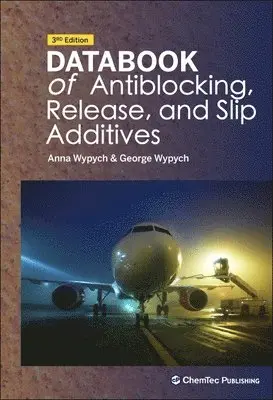
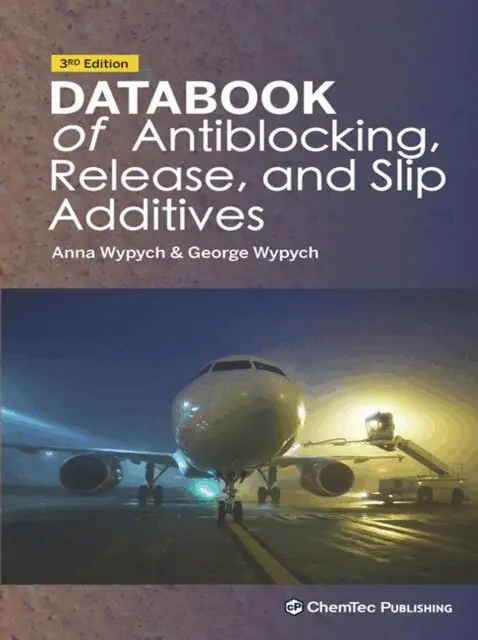
The Databook of Antiblocking, Release, and Slip Additives contains detailed information on over 300 important additives for polymers - additives which are used to minimize adhesion, aid separation and enhance processing and end-applications for polymers. The variety of additives available makes this databook an invaluable source of information for industry, research, and academia.
Each additive is presented with data in the following categories: General Information; Physical Properties; Health and Safety; Ecological Properties; and Use and Performance. The Databook includes a large amount of data, from state, odor, and color to autoignition temperature and probability of biodegradation. Recommendations are given for specific products, processing methods and mold materials, and an assessment is given for each additive's features and benefits, enabling practitioners to select the correct additive for each situation.
Contains the most extensive data available on a large number of antiblocking, release and slip additives for polymers Features 130 data fields for each additive, divided into the following categories: General Information, Physical Properties, Health and Safety, Ecological Properties, and Use and Performance Includes an assessment of benefits and properties of each additive, recommended dosages and processing methods2 081 kr
Kommande
1 898 kr
Skickas inom 7-10 vardagar
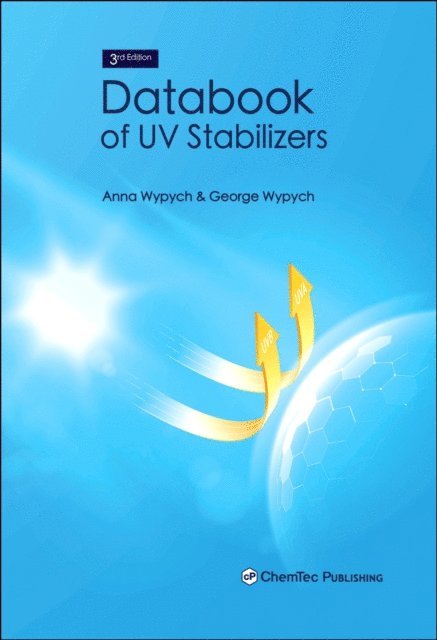
Databook of UV Stabilizers contains information on the most frequently used UV stabilizers, dividing the topic into five distinct sections: General Information, Physical Properties, Health and Safety, Ecological Properties, and Use and Performance. The data belongs to over 100 data fields, accommodating a variety of data available in source publications. A key part of the text is an introductory chapter in which general indicators of performance of UV stabilizers are discussed and a chapter containing information on the data fields included in the description of individual stabilizers.
Provides information on the most frequently used UV stabilizers Includes five distinct sections, breaking the content up into useful and manageable topics Data presented belongs to over 100 data fields, accommodating a variety of data available in source publications2 288 kr
Skickas inom 7-10 vardagar
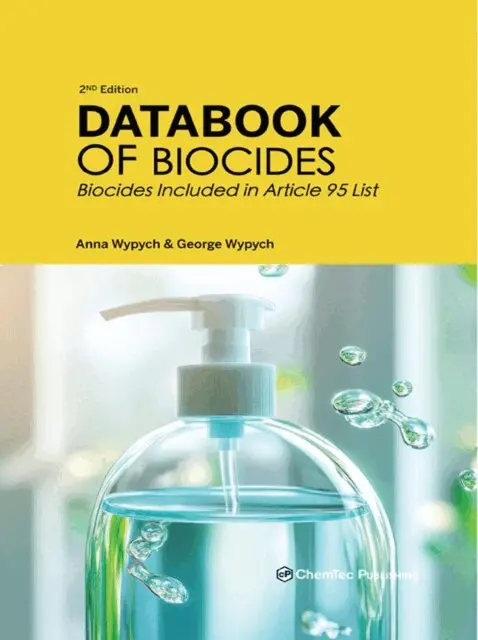
Databook of Biocides contains critical data on the most important biocides in use today. The selection includes generic and commercial biocides, which are approved for use in the European Union and the US. Data on generic biocides come from numerous sources, and can be easily compared with manufacturer information on commercial biocides, which are also included.
Physical properties are presented-including volatility, solubility, and concentration-as are health and safety considerations (such as flash point, autoignition temperature, risks of skin and eye irritation, mutagenicity and carcinogenicity) and first-aid guidance. Ecological properties are also emphasized, with data on biodegradation and acquatic toxicity.
Particular emphasis is placed on usage considerations, including recommended material-biocide combinations, processing methods and dosages, and features and benefits for each biocide. The book also contains an introductory chapter in which general indicators of performance of biocides are discussed.
Presents practical information for use in the lab and the field, including recommended processing methods, recommended dosages, and potential substitutes Emphasizes environmental, health, and safety properties to ensure safe deployment Includes the most commonly used biocides in compliance with the latest regulations in the European Union, US, and worldwide Covers the physical properties, ecological properties, and performance indicators of biocides2 434 kr
Skickas inom 7-10 vardagar
Databook of Preservatives contains data for preservatives for products during transport and storage, film preservatives, wood preservatives, fiber, leather, rubber and polymerized materials preservatives, construction material preservatives, preservatives for liquid cooling and processing systems, slimicides, and cutting fluid preservatives. The selection of preservatives includes generic and commercial products, thus allowing for a comparison of properties of products coming from different sources.
As well as general information about each preservative, the book also covers physical properties, health and safety issues and ecological properties. Over 100 data fields are included. Emphasis is particularly placed on usage and performance considerations, including information on manufacturers, an assessment of particularly notable properties, features and benefits, which combinations are recommended, and the effect of the preservative on microorganisms.
Practical, up-to-date data, including an assessment of features and benefits of each preservative Particular emphasis given to environmental, health and safety properties to ensure safe use Supported by real world examples of products produced using the compounds detailed in the book2 434 kr
Skickas inom 7-10 vardagar
Databook of Nucleating Agents gives engineers and materials scientists the information they need to increase the production rate, modify structure and morphology, and reduce haze of polymeric products with proper selection of nucleating agents and clarifying agents. Chemical origin and related properties of nucleating agents are analyzed in general terms to highlight the differences in their properties, including the essential theoretical knowledge required for correct selection and use of nucleating and clarifying agents.
This includes methods of chemical modification of nucleating agents and their deposition on suitable substrates; methods, and results of dispersion of nucleating agents, influence of their concentration and cooling rate on final result and rate of crystallization, nucleation efficiency of different products and the reasons behind it, and generally accepted mechanisms of nucleation.
The book also covers application aspects in different formulations. Patent literature and research papers are extensively reviewed for different applications, and polymer processing methods which require use of nucleating agents are discussed, with an emphasis on the intricacies of use of nucleating agents in different polymers and products.
Enables engineers to use nucleating agents more effectively to increase production rate, modify structure and morphology, and reduce haze of polymer products Provides the thorough theoretical grounding required for proper selection and use of nucleating and clarifying agents Presents an extensive review of the current applications of nucleating agents in different formulations2 812 kr
Skickas inom 7-10 vardagar
Databook of Plasticizers, Second Edition, contains data on the most important plasticizers in use today, including over 375 generic and commercial plasticizers. The data comes from a range of sources beyond plasticizers' manufacturers, allowing for a detailed comparison of properties between different plasticizers.
Over 100 different data fields are provided, from general information, such as molecular structure and formula, to physical properties, health and safety information, ecological properties, and recommendations regarding appropriate use and performance of each plasticizer.
The databook is an essential resource for engineers, technicians, and materials scientists responsible for specifying a plasticizer. It provides trustworthy and up-to-date data that is applicable to a range of numerous application areas, such as construction, automotives, food packaging, and more.
Enables plastics practitioners to more efficiently select the correct plasticizer for a range of applications Includes 100 data fields for each plasticizer, including physical properties, health and safety information, ecological properties, and specific usage recommendations Contains data on the most important plasticizers currently in use - both commercial products and the chemical compounds used for the manufacture of plasticizers2 812 kr
Skickas inom 7-10 vardagar
Databook of Adhesion Promoters contains data on the most important adhesion promoter products in use today. The information on each adhesion promoter is divided into five sections: General Information, Physical Properties, Health and Safety, Ecological Properties, and Use and Performance. This databook is an extremely useful source of data for engineers, technicians and researchers involved in development, manufacture, legislation or the production of a variety of products.
Adhesion promoters form a very important group of additives without which many industrial products cannot perform according to requirements. Silanes originally formed the most widely used group of adhesion promoters, but increasing numbers of new additives have been entering the market, increasing the options and possibilities. These additives are needed for a variety of products in which silanes do not function or are too expensive, or where better performance can be achieved with the new additive.
Provides detailed, up-to-date, essential data on the most important products currently in use Covers general information, physical-chemical properties, health and safety, ecological properties, and use and performance Includes recommendations for specific polymers, products, applications, processing methods and the concentration used2 691 kr
Skickas inom 7-10 vardagar
Databook of Curatives and Crosslinkers contains extensive data on the most important curatives and crosslinkers in use today. Forty groups of curatives/crosslinkers are included in the book. They include the following chemical groups of additives: acids, acrylamides, aldehydes, amides, amidoamines, amines, anhydrides, aziridines, borates, epoxy-functionalized polymers, carbamides, carbodiimides, chitosan derivatives, cyanamides, diols, glutarates, glycols, graphene oxide derivatives, hydantoin glycols, hydrazides, hydroxides, hydroxyl-containing moieties, imidazoles, isocyanates, isocyanurates, ketimines, maleimides, melamines, novolacs, peroxides, peroxyketals, phenols, polyols, salts, silanes, siloxanes, thiols, titanates, and ziconium derivatives. In total, 416 additives are included in the book.Information on each additive is divided into five sections: General Information, covering name, CAS #, active matter, amine nitrogen, chemical class, cure schedule, and more, Physical Properties, covering odor, color, density, freezing point, gel time, particle size, thin film set time, and more, Health and Safety, covering autoignition temperature, dermal LD50, exposure limits, flash point, and more, Ecological Properties, covering toxicity to algae, bacteria, and fish, sewage treatment, and more, and Use and Performance, offering information on manufacturers, outstanding properties, and more.
To improve navigation throughout the book, four indices have been generated, as follows. The index of curative names is placed at the beginning of the book. Indices of the chemical composition of curatives/crosslinkers, their application for different polymers, and product applications can be found at the end of this book.
Provides general information, physical properties, health and safety considerations, ecological properties, and use and performance details on approximately 400 curatives and crosslinkers in use todayIncludes examples of applicationCovers active matter, amine value and equivalent, odor, color, boiling point, chronic health effects, first aid, aquatic toxicity, biodegradation probability, recommended applications, processing methods, and more2 727 kr
Skickas inom 7-10 vardagar
Databook of Antioxidants is divided into five sections covering general information, physical properties, health and safety considerations, ecological properties and the use and performance of each featured antioxidant. A general information section includes CAS #, common name/synonym, acronym, chemical category, moisture content, and more. The physical properties section features data on state, odor, color (Gardner and Platinum-cobalt scales), acid number, ash contents, and other characteristics. The health and safety section displays data on flashpoint, autoignition temperatures, explosive LEL and UEL, NFPA flammability and reactivity, ingestion, first aid, and beyond.
The ecological properties portion of the book contains data on biodegradation probability, aquatic toxicity LC50, and partition coefficients, and the book concludes with a chapter on use and performance considerations with information on manufacturer, outstanding properties, typical applications, recommended dosage, concentration used, food approval, and more.
This book is an excellent companion to the Handbook of Antioxidants which has also been published recently. Both books supplement each other without repeating the same information - one contains data another theory, mechanisms of action, practical effects and implications of application. Contains information on each antioxidant that is broken into five sections: General Information, Physical Properties, Health and Safety, Ecological Properties and Use and Performance Includes an introductory chapter in which general indicators of performance are discussed Features a chapter with information on the data fields included in the description of individual stabilizers3 056 kr
Skickas inom 7-10 vardagar
Databook of UV Stabilizers, Second Edition, provides general indicators regarding the performance of UV stabilizers and includes details on the data fields included in the description of individual stabilizers. It provides details such as acronyms, molecular weight, odor, product form, transmittance, DOT hazard class, NFPA flammability/reactivity, aquatic toxicity, typical applications, processing methods, conditions to avoid, and much more for each stabilizer covered. Importantly, the Ecological properties section contains data on Biodegradation probability, Aquatic toxicity LC (Algae, Rainbow trout, Bluegill sunfish, Fathead minnow, Zebrafish, and Daphnia magna), Bioaccumulation potential, Bioconcentration factor, Biodegradation probability, Hydroxyl rate, and Partition coefficients (log Koc, log Kow). This book is an excellent companion to the Handbook of UV stabilizers which has also been published recently. Both books supplement each other without repeating the same information - one contains data another theory, mechanisms of action, practical effects and implications of application
Discusses general indicators of performance of UV stabilizers and information on data fields included in the description of individual stabilizers Includes five distinct sections, breaking content up into useful and manageable topics Presents data that belongs to over 100 data fields, accommodating a variety of data available in source publications2 812 kr
Skickas inom 7-10 vardagar
2 812 kr
Skickas inom 7-10 vardagar
2 812 kr
Skickas inom 7-10 vardagar
2 691 kr
Skickas inom 7-10 vardagar
Rheological additives are commonly applied in a wide range of industries and this databook provides readers with information on over 300 organic and inorganic additives. This information is presented in individual tables tor each product, whether commercial or generic. The data are divided into five groups, those being General Information, Physical Properties, Health and Safety, Ecological Properties, and Use & Performance. The following information is included in each section:General Information: name, CAS #, EC #, IUPAC name, common name, common synonyms, acronym, biobased, cellulose functionality, charge, degree of substitution, empirical formula, chemical structure, molecular mass, RTECS number, chemical category, product class, product composition, moisture content, and solids content.Physical Properties: state, odor, color, bulk density, density, specific gravity, relative density, boiling point, melting point, pour point, decomposition temperature, glass transition temperature, refractive index, vapor pressure, vapor density, volume resistivity, relative permittivity, ash content, pH, viscosity, rheological behavior, absolute viscosity, surface tension, hydration time, solubility in solvents, solubility in water, the heat of combustion, the heat of decomposition, specific heat, thermal conductivity, Henry's law constant, particle size, and volatility.Health & Safety: NFPA classification, HMIS classification, OSHA hazard class, UN Risk phrases, UN Safety phrases, UN/NA class, DOT class, ADR/RIC class, ICAO/IATA class, IMDG class, packaging group, shipping name, food approvals, autoignition temperature, self-accelerating decomposition temperature, flash point, TLV ACGIH, NIOSH and OSHA, maximum exposure concentration IDLH, animal testing oral-rat, rabbit-dermal, mouse-oral, guinea pig-dermal, rat-dermal, rat-inhalation, mouse-inhalation, ingestion, skin irritation, eye irritation, inhalation, first aid eye, skin, and inhalation, carcinogenicity IARC, NTP, OSHA, ACGIH, and mutagenicity.Ecological Properties: biological oxygen demand, chemical oxygen demand, theoretical oxygen demand, biodegradation probability, aquatic toxicity algae, Rainbow trout, Sheepshead minnow, Fathead minnow, and Daphnia magna, and partition coefficient.Use & Performance: manufacturer, product feature, recommended for polymers, recommended for products, outstanding properties, compatibility, limitations, a typical reason for use, processing methods, the concentration used, storage temperature, and food approval.
�
Provides readers with information on over 300 organic and inorganic additives, presented in individual tables tor each product Data featured are divided into five groups: General Information, Physical Properties, Health and Safety, Ecological Properties, and Use & Performance Information highlighted for each additive includes name/common name, chemical structure, state, odor, color, boiling/melting points, rheological behavior, OSHA hazard class, ingestion, skin/eye irritation, first aid, carcinogenicity, biodegradation probability, manufacturer, product feature, recommended for polymers, recommended for products, outstanding properties, compatibility, limitations, a typical reason for use, processing methods, storage temperature, and food approval2 812 kr
Kommande