Annabelle Sreberny-Mohammadi – författare
Visar alla böcker från författaren Annabelle Sreberny-Mohammadi. Handla med fri frakt och snabb leverans.
5 produkter
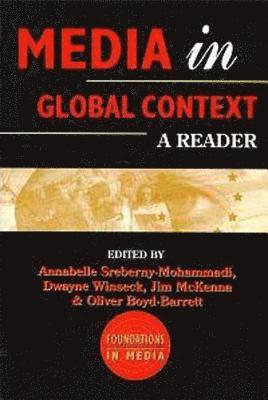
Media in Global Context
Av Annabelle Sreberny-Mohammadi, McKenna Jim m. fl.
Häftad, 1997
855 kr
Lägg i varukorg
Globalisation is one of the most potent concepts informing academic debates across many disciplines on the threshold of the 21st century. Issues of communication, culture and media lie close to the heart of this contested concept which variously refers to the collapse of time and space as obstacles …
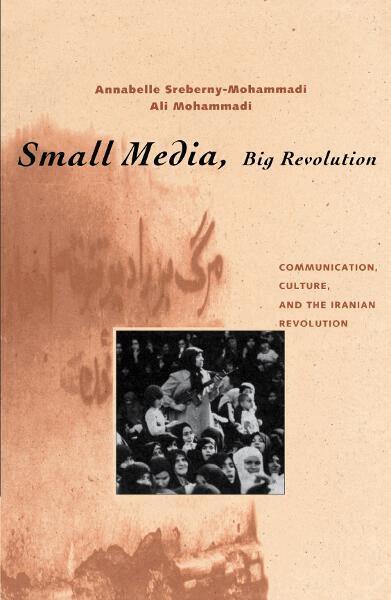
Small Media, Big Revolution
Communication, Culture, and the Iranian Revolution
Av Annabelle Sreberny-Mohammadi
Häftad, 1994
324 kr
Lägg i varukorg
Reveals how small media (leaflets and audio cassettes) played an important role in the revolution that deposed the Shah of Iran.To most Westerners, the Iranian revolution was a shocking spectacle, a distant mass upheaval suddenly breaking into the daily news. It was, in fact, a revolution of the …
Globalization, Communication and Transnational Civil Society
Av Annabelle Sreberny-Mohammadi, Sandra Braman
Häftad, 1995
299 kr
Lägg i varukorg
Contemporary theorising about globalisation processes has only recently come to acknowledge the crucial role of media systems, a theme long familiar to researchers within communications. Thus this volume situates media forms and processes as central foci of globalisation processes and gives …
Globalization, Communication and Transnational Civil Society
Av Annabelle Sreberny-Mohammadi, Sandra Braman
Inbunden, 1995
725 kr
Tillfälligt slut
Contemporary theorising about globalisation processes has only recently come to acknowledge the crucial role of media systems, a theme long familiar to researchers within communications. Thus this volume situates media forms and processes as central foci of globalisation processes and gives …
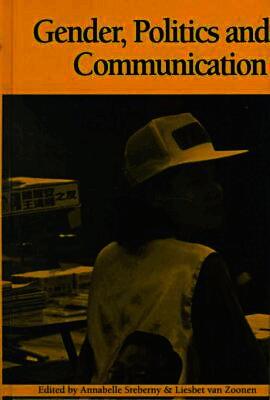
Gender, Politics and Communication
Av Annabelle Sreberny Mohammadi, Liesbet Van Zoonen m. fl.
Inbunden, 1999
819 kr
Tillfälligt slut
This text focuses specifically on three interrelated sets of questions with respect to gender, politics and communication: How do serious and popular media alike represent male and female politicians, how do they frame their politics and how can these representations and frames be explained? What …