
Anne-Christin Sa – författare
Visar alla böcker från författaren . Handla med fri frakt och snabb leverans.
2 produkter
2 produkter
E-bok
PDF, Tyska, 2012408 kr
Läs direkt efter köp
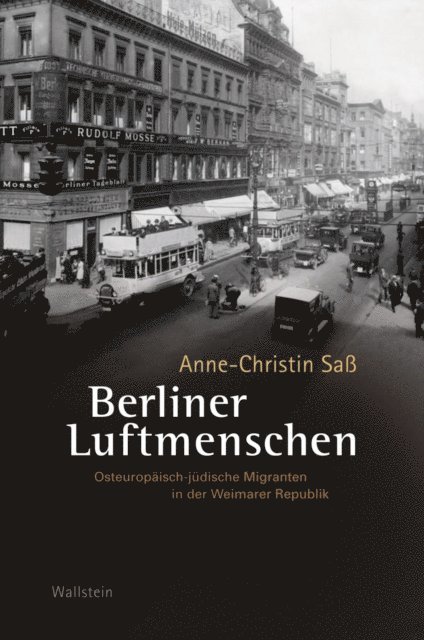
Sowohl romantisierende als auch negativ verzerrende Bilder vom "Ostjuden" prägen bis heute die Wahrnehmung der osteuropäisch-jüdischen Migranten im Berlin der Weimarer Republik. Auch die historische Forschung hat die Geschichte der osteuropäischen Juden in Deutschland vornehmlich aus der Perspektive der Aufnahmegesellschaft analysiert. Im Mittelpunkt der Studie von Anne-Christin Saß steht nun erstmals die Gesamtheit der osteuropäisch-jüdischen Lebenswelten: die unterschiedlichen gesellschaftlichen Räume, die Herkunftsländer, das Berliner Umfeld, aber auch die jüdischen Emigrationszentren weltweit. Dabei nimmt die Autorin den historischen Stadtraum Berlin als zentralen Schauplatz von Transfer- und Aushandlungsprozessen in den Blick, in dem sich Fragen nach dem Eigenen und dem Fremden, nach Zugehörigkeit und Identifikation neu stellten. Die sich hier entwickelnden Ansichten und Projekte entstanden aus dem fruchtbaren Zusammentreffen ost- und westeuropäischer Ideenwelten. Gleichzeitig spiegeln sich in den Lebenswelten der Migranten unterschiedliche Antworten auf die Ambivalenzen der Moderne, die neue Perspektiven auf die Geschichte der Weimarer Republik eröffnen.
E-bok
PDF, Engelska, 2015298 kr
Läs direkt efter köp
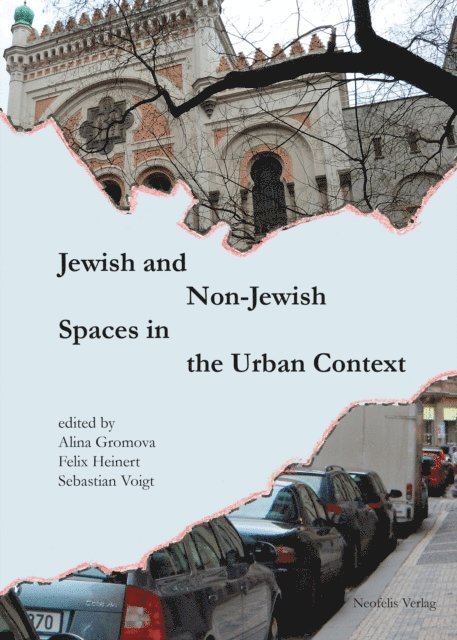
The unifying thread of the interdisciplinary volume Jewish and Non-Jewish Spaces in the Urban Context is the fact that Jewish spaces are almost always generated in relation to non-Jewish spaces; they determine and influence each other.This general phenomenon will be scrutinized and put to the test again and again in a varied collection of articles by international experienced researchers as well as junior scholars using various urban contexts and discourses as data. From the viewpoints of different temporal and regional research traditions and disciplines the contributors deal with the question of how Jewish and non-Jewish spaces are imagined, constructed, negotiated and intertwined. All examples and case studies together create a mosaic of possibilities for the construction of Jewish and non-Jewish spaces in different settings.The list of examined topics ranges from synagogues to ghettos, from urban neighborhoods to cafés and festivals, from art to literature. This diversity makes the volume a challenging effort of giving an overview of the current academic discussion in Europe and beyond. Although the majority of the contributions are focused on Central and Eastern Europe, a more general tendency becomes apparent in all articles: the negotiation of urban spaces seems to be a complex and ambivalent process in which a large number of participants are involved. In this regard, the volume would also like to contribute to trans-disciplinary urban studies and critical research on spatial relations.