Anne E. Green – författare
Visar alla böcker från författaren Anne E. Green. Handla med fri frakt och snabb leverans.
2 produkter
2 produkter
1 308 kr
Skickas inom 10-15 vardagar
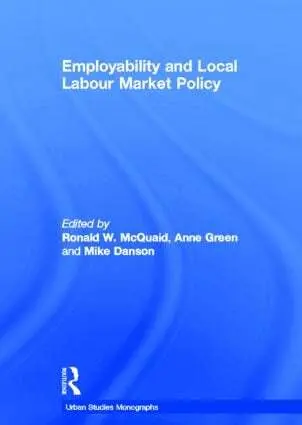
The concept of employability has provided a foundation for much current labour market policy. It has also provided a useful framework for analyzing national and urban labour markets and related policies in a variety of different circumstances both for those in and out of work.The papers in this book help progress the concept of employability, demonstrating the importance of the geographic and spatial context, and showing its flexibility and usefulness as a basis for theory, analysis and policy. The papers are divided into two main sections:understanding the concept of employabilitylessons for labour market policy in changing labour markets.The chapters also provide general insights into many current labour market policy debates. As employability continues to be the foundation of many labour market policies, this volume considers the economic and geographical dimensions of employability in local labour market analysis and policy.This book was previously published as a special issue of the journal Urban Studies.
1 363 kr
Kommande
Blending rhetorical analysis, qualitative research, and lived experience, Living Menopause: Rhetorics, Tensions, and Futures explores the forces that have long framed menopause as a problem to solve, a decline to fear, and a market to exploit. Against this backdrop, the authors craft expansive, agency-affirming futures for living with/and/through menopause.Across six chapters, the authors trace how menopause circulates through medical research, workplace expectations, caregiving pressures, health applications, and popular media. They show how decades of medicalization, beauty culture, and binary thinking through various “menobooms” have constrained what menopause can mean—and what women are allowed to feel, choose, or imagine during this transition.Living Menopause invites scholars and practitioners to join a conversation already underway—one that challenges stigma, expands agency, and opens new futures for how we understand and experience menopause. Ultimately, this book encourages readers to continue to critique and think outside current menopause discourse en route to imagining, constructing, and demanding new stories around the menopause experience.