Anne M. Cohler – författare
Visar alla böcker från författaren Anne M. Cohler. Handla med fri frakt och snabb leverans.
4 produkter
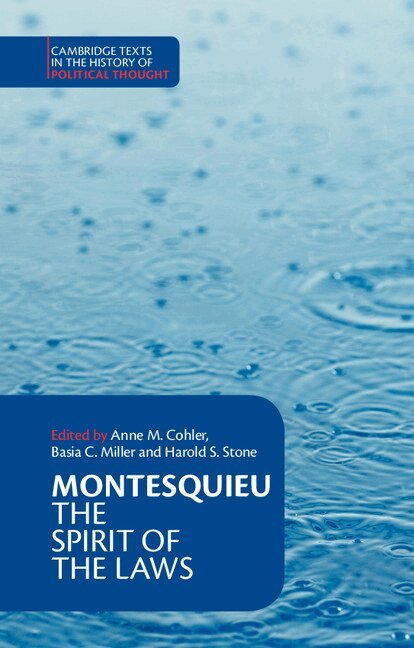
Montesquieu: The Spirit of the Laws
Av Charles de Montesquieu, Anne M. Cohler m. fl.
Häftad, 1989
667 kr
Lägg i varukorg
The Spirit of the Laws is, without question, one of the central texts in the history of eighteenth-century thought, yet there has been no complete, scholarly English-language edition since that of Thomas Nugent, published in 1750. This lucid translation renders Montesquieu's problematic text newly …
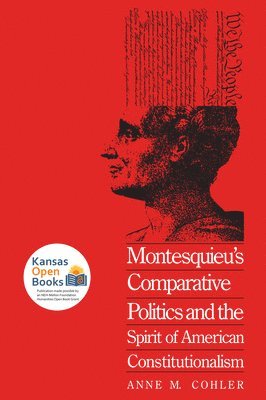
Montesquieu's Comparative Politics and the Spirit of American Constitutionalism
Häftad, 2021
332 kr
Lägg i varukorg
“American republicans,” notes Forrest McDonald, “regarded selected doctrines of Montesquieu’s as being virtually on par with Holy Writ.” But exactly how the French jurist’s labyrinthian work, The Spirit of the Laws, with was published in 1748, influenced the eighteenth-century conception of the …
Montesquieu: The Spirit of the Laws
Av Charles de Montesquieu, Harold Samuel Stone m. fl.
E-bok, 1989
632 kr
Lägg i varukorg
The Spirit of the Laws is, without question, one of the central texts in the history of eighteenth-century thought, yet there has been no complete, scholarly English-language edition since that of Thomas Nugent, published in 1750. This lucid translation renders Montesquieu''s problematic text newly …
Montesquieu: The Spirit of the Laws
Av Charles de Montesquieu, Harold Samuel Stone m. fl.
E-bok, 1989
652 kr
Lägg i varukorg
The Spirit of the Laws is, without question, one of the central texts in the history of eighteenth-century thought, yet there has been no complete, scholarly English-language edition since that of Thomas Nugent, published in 1750. This lucid translation renders Montesquieu''s problematic text newly …