Anne Wichmann – författare
2 476 kr
Skickas inom 10-15 vardagar
912 kr
Skickas inom 10-15 vardagar
1 234 kr
Skickas inom 10-15 vardagar
1 234 kr
Skickas inom 10-15 vardagar
2 476 kr
Skickas inom 10-15 vardagar
3 021 kr
Skickas inom 10-15 vardagar
1 472 kr
Läs direkt efter köp
1 472 kr
Läs direkt efter köp
1 472 kr
Läs direkt efter köp
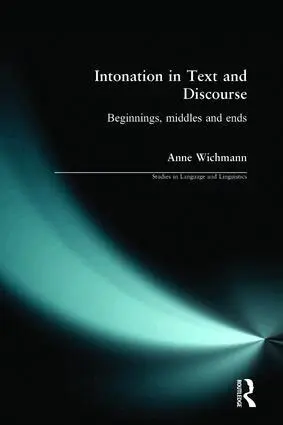
It is clear that a printed text provides the reader with more information than the words alone. This includes punctuation marks, capitalisation, paragraphs, headings and sub-headings, all of which help the reader to understand how the words are organised into sentences, and sentences are organised into a coherent text. In a spoken text, this typographical information is necessarily absent. So how do readers and speakers provide equivalent information to the listener?Intonation in Text and Discourse describes the way in which speech melody, or intonation, is used to signal the structure of spoken texts. It examines the role of intonation in clarifying the relationship between successive utterances, from close cohesive ties (''middles'') to major breaks for a new topic (''ends'' and ''beginnings'').The book is concerned chiefly with the intonational structuring of read or prepared monologue, but also devotes a chapter to current developments in the analysis of intonation in conversation. It describes not only how intonation is used to organise systematic turn-taking but also how it can signal greater or lesser degrees of co-operativeness. It addresses finally the complex issue of attitudinal intonation - the elusive ''tone of voice''.The first book on discourse intonation to deal with such a wide variety of naturally-occurring spoken data, Intonation in Text and Discourse will be of great interest to students, lecturers and researchers of intonation and all aspects of spoken discourse.
1 472 kr
Läs direkt efter köp
It is clear that a printed text provides the reader with more information than the words alone. This includes punctuation marks, capitalisation, paragraphs, headings and sub-headings, all of which help the reader to understand how the words are organised into sentences, and sentences are organised into a coherent text. In a spoken text, this typographical information is necessarily absent. So how do readers and speakers provide equivalent information to the listener?Intonation in Text and Discourse describes the way in which speech melody, or intonation, is used to signal the structure of spoken texts. It examines the role of intonation in clarifying the relationship between successive utterances, from close cohesive ties (''middles'') to major breaks for a new topic (''ends'' and ''beginnings'').The book is concerned chiefly with the intonational structuring of read or prepared monologue, but also devotes a chapter to current developments in the analysis of intonation in conversation. It describes not only how intonation is used to organise systematic turn-taking but also how it can signal greater or lesser degrees of co-operativeness. It addresses finally the complex issue of attitudinal intonation - the elusive ''tone of voice''.The first book on discourse intonation to deal with such a wide variety of naturally-occurring spoken data, Intonation in Text and Discourse will be of great interest to students, lecturers and researchers of intonation and all aspects of spoken discourse.
Where Prosody Meets Pragmatics
2 531 kr
Skickas inom 5-8 vardagar
376 kr
Skickas inom 3-6 vardagar