Dawn Archer - Böcker
Visar alla böcker från författaren Dawn Archer. Handla med fri frakt och snabb leverans.
7 produkter
7 produkter
2 166 kr
Skickas inom 10-15 vardagar
Routledge Applied Linguistics is a series of comprehensive textbooks, providing students and researchers with the support they need for advanced study in the core areas of English language and applied linguistics.Each book in the series guides readers through three main sections, enabling them to explore and develop major themes within the discipline.Section A: Introduction, establishes the key terms and concepts and extends readers’ techniques of analysis through practical application.Section B: Extension, brings together influential articles, sets them in context, and discusses their contribution to the field.Section C: Exploration, builds on knowledge gained in the first two sections, setting thoughtful tasks around further illustrative material. This enables readers to engage more actively with the subject matter and encourages them to develop their own research responses.Throughout the book, topics are revisited, extended, interwoven and deconstructed, with the reader’s understanding strengthened by tasks and follow-up questions.Pragmatics:provides a broad view of pragmatics from a range of perspectives, gathering readings from key names in the discipline, including Geoffrey Leech, Michael McCarthy, Thomas Kohnen, Joan Manes and Nessa Wolfsoncovers a wide variety of topics, including speech acts, pragmatic markers, implicature, research methods in pragmatics, facework and politeness, and prosodyexamines the social and cultural contexts in which pragmatics occurs, such as in cross-cultural pragmatics (silence, indirectness, forms of address, cultural scripts) and pragmatics and power (the courtroom, police interaction, political interviews and doctor-patient communication)uses a wide range of corpora to provide both illustrative examples and exploratory tasksis supported by a companion website at www.routledge.com/cw/archer featuring extra activities and additional data for analysis, guidance on undertaking corpus analysis and research, including how to create your own corpus with CMC, and suggestions for further reading. Written by experienced teachers and researchers in the field, Pragmatics provides an essential resource for students and researchers of applied linguistics.
851 kr
Skickas inom 10-15 vardagar
Routledge Applied Linguistics is a series of comprehensive textbooks, providing students and researchers with the support they need for advanced study in the core areas of English language and applied linguistics.Each book in the series guides readers through three main sections, enabling them to explore and develop major themes within the discipline.Section A: Introduction, establishes the key terms and concepts and extends readers’ techniques of analysis through practical application.Section B: Extension, brings together influential articles, sets them in context, and discusses their contribution to the field.Section C: Exploration, builds on knowledge gained in the first two sections, setting thoughtful tasks around further illustrative material. This enables readers to engage more actively with the subject matter and encourages them to develop their own research responses.Throughout the book, topics are revisited, extended, interwoven and deconstructed, with the reader’s understanding strengthened by tasks and follow-up questions.Pragmatics:provides a broad view of pragmatics from a range of perspectives, gathering readings from key names in the discipline, including Geoffrey Leech, Michael McCarthy, Thomas Kohnen, Joan Manes and Nessa Wolfsoncovers a wide variety of topics, including speech acts, pragmatic markers, implicature, research methods in pragmatics, facework and politeness, and prosodyexamines the social and cultural contexts in which pragmatics occurs, such as in cross-cultural pragmatics (silence, indirectness, forms of address, cultural scripts) and pragmatics and power (the courtroom, police interaction, political interviews and doctor-patient communication)uses a wide range of corpora to provide both illustrative examples and exploratory tasksis supported by a companion website at www.routledge.com/cw/archer featuring extra activities and additional data for analysis, guidance on undertaking corpus analysis and research, including how to create your own corpus with CMC, and suggestions for further reading. Written by experienced teachers and researchers in the field, Pragmatics provides an essential resource for students and researchers of applied linguistics.
2 374 kr
Skickas inom 10-15 vardagar
The Pragmatics Reader is the indispensable set of readings for all students studying Pragmatics at advanced undergraduate and postgraduate levels. Combining key classic texts with newer extracts covering current developments in contemporary Pragmatics, each reading has been carefully selected to both showcase the best thinking and latest research and also to reflect the international nature of the field.The 30 varied readings, including four specially commissioned papers, have been organised into eight themed sections: Linguistic Pragmatics; Post-Gricean Pragmatics; Indexicality; Historical Pragmatics; Politeness, Face and Impoliteness; Cross-cultural and intercultural pragmatics; Pragmatics and Conversation - Development and Impairment; and Pragmaticians on Pragmatics. Each of these sections is supported and enhanced by substantial editorial commentaries, pre-reading, in-reading and post-reading activities and suggestions for further reading, both in print and online. The book also features a general introduction, a glossary of key terms, and a conclusion that explores the relationship between pragmatic theory and practice before anticipating the future directions of the subject.Readings: Dawn Archer and Peter Grundy - J. L. Austin - John R. Searle - H. P. Grice - Pieter A. M. Seuren - Robert C. Stalnaker - Stephen C. Levinson - Reinhard Blutner - Diane Blakemore - Billy Clark - Robyn Carston - Dan Sperber and Deirdre Wilson - Stephen C. Levinson - Jo Rubba - Jef Verschueren - Elizabeth Close Traugott - Laurel J. Brinton - Andreas H. Jucker and Irma Taavitsainen - Erving Goffman - Penelope Brown and Stephen C. Levinson - Miriam A. Locher and Richard J. Watts - Jonathan Culpeper - Shoshana Blum-Kulka, Julianne House and Gabriele Kasper - Haruko Minegishi Cook - Istvan Kecskes - Anat Ninio and Catherine E. Snow - Emanuel A. Schegloff - Heidi Ehrenberger Hamilton - Roman Kopytko - Jon F. Pressman - Charles L. Briggs
851 kr
Skickas inom 10-15 vardagar
The Pragmatics Reader is the indispensable set of readings for all students studying Pragmatics at advanced undergraduate and postgraduate levels. Combining key classic texts with newer extracts covering current developments in contemporary Pragmatics, each reading has been carefully selected to both showcase the best thinking and latest research and also to reflect the international nature of the field.The 30 varied readings, including four specially commissioned papers, have been organised into eight themed sections: Linguistic Pragmatics; Post-Gricean Pragmatics; Indexicality; Historical Pragmatics; Politeness, Face and Impoliteness; Cross-cultural and intercultural pragmatics; Pragmatics and Conversation - Development and Impairment; and Pragmaticians on Pragmatics. Each of these sections is supported and enhanced by substantial editorial commentaries, pre-reading, in-reading and post-reading activities and suggestions for further reading, both in print and online. The book also features a general introduction, a glossary of key terms, and a conclusion that explores the relationship between pragmatic theory and practice before anticipating the future directions of the subject.Readings: Dawn Archer and Peter Grundy - J. L. Austin - John R. Searle - H. P. Grice - Pieter A. M. Seuren - Robert C. Stalnaker - Stephen C. Levinson - Reinhard Blutner - Diane Blakemore - Billy Clark - Robyn Carston - Dan Sperber and Deirdre Wilson - Stephen C. Levinson - Jo Rubba - Jef Verschueren - Elizabeth Close Traugott - Laurel J. Brinton - Andreas H. Jucker and Irma Taavitsainen - Erving Goffman - Penelope Brown and Stephen C. Levinson - Miriam A. Locher and Richard J. Watts - Jonathan Culpeper - Shoshana Blum-Kulka, Julianne House and Gabriele Kasper - Haruko Minegishi Cook - Istvan Kecskes - Anat Ninio and Catherine E. Snow - Emanuel A. Schegloff - Heidi Ehrenberger Hamilton - Roman Kopytko - Jon F. Pressman - Charles L. Briggs
2 235 kr
Skickas inom 10-15 vardagar
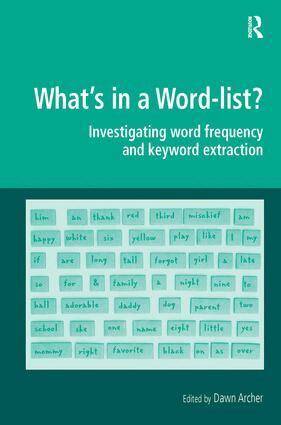
The frequency with which particular words are used in a text can tell us something meaningful both about that text and also about its author because their choice of words is seldom random. Focusing on the most frequent lexical items of a number of generated word frequency lists can help us to determine whether all the texts are written by the same author. Alternatively, they might wish to determine whether the most frequent words of a given text (captured by its word frequency list) are suggestive of potentially meaningful patterns that could have been overlooked had the text been read manually. This edited collection brings together cutting-edge research written by leading experts in the field on the construction of word-lists for the analysis of both frequency and keyword usage. Taken together, these papers provide a comprehensive and up-to-date survey of the most exciting research being conducted in this subject.
790 kr
Skickas inom 10-15 vardagar
The frequency with which particular words are used in a text can tell us something meaningful both about that text and also about its author because their choice of words is seldom random. Focusing on the most frequent lexical items of a number of generated word frequency lists can help us to determine whether all the texts are written by the same author. Alternatively, they might wish to determine whether the most frequent words of a given text (captured by its word frequency list) are suggestive of potentially meaningful patterns that could have been overlooked had the text been read manually. This edited collection brings together cutting-edge research written by leading experts in the field on the construction of word-lists for the analysis of both frequency and keyword usage. Taken together, these papers provide a comprehensive and up-to-date survey of the most exciting research being conducted in this subject.
3 402 kr
Skickas inom 7-10 vardagar
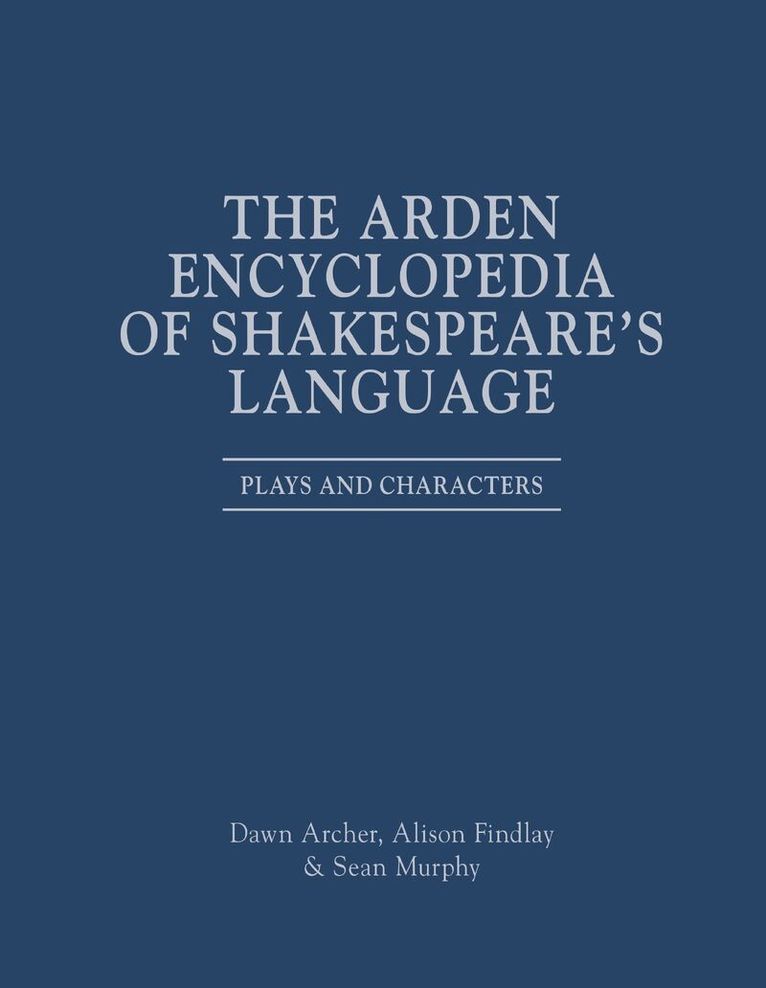
The Arden Encyclopedia of Shakespeare’s Language is the first comprehensive account of Shakespeare’s language to use computational methods derived from corpus linguistics – methods of choice for today's historical linguist. This third volume focuses on keywords in Shakespeare's plays. Play keywords are derived by conducting a statistical comparison between the words in one play with those in all the other plays. For characters, the statistical comparison is made between the vocabulary of one character and that of all the other characters in the same play. These keywords are then used to create 'linguistic profiles' of each play and main character. The profiles show how patterns of words around keywords contribute to themes in plays and characterization of the protagonists. For example, we reveal how the simple word ‘Goodnight’ contributes to dramatic tension in Julius Caesar, or how in Romeo and Juliet, Juliet's most distinctive yet apparently innocuous words, ‘if’, ‘yet’ and ‘but’, create an important aspect of her character.