Annette Giesecke - Böcker
Visar alla böcker från författaren Annette Giesecke. Handla med fri frakt och snabb leverans.
9 produkter
9 produkter
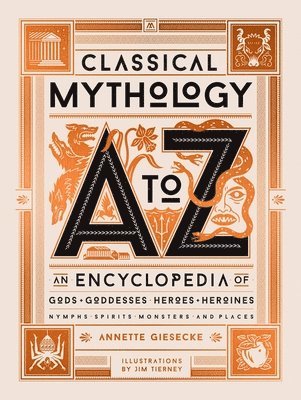
Classical Mythology A to Z
An Encyclopedia of Gods & Goddesses, Heroes & Heroines, Nymphs, Spirits, Monsters, and Places
Inbunden, Engelska, 2020
335 kr
Skickas inom 7-10 vardagar
An encyclopedic A-to-Z guide, this beautifully illustrated volume offers hundreds of rich, fascinating definitions of 700 major and minor characters, creatures, and places of classical mythology.Classical Mythology A-to-Z is a comprehensive and engrossing guide to Greek and Roman mythology. Written by Annette Giesecke, PhD, Professor of Classics and Chair of Ancient Greek and Roman Studies at the University of Delaware, this brilliant reference offers clear explanations of every character and locale, and captures the essence of these timeless tales.From the gods and goddesses of Mount Olympus and the heroes of the Trojan War to the nymphs, monsters, and other mythical creatures that populate these ancient stories, Giesecke recounts, with clarity and energy, the details of more than 700 characters and places. Each definition includes cross-references to related characters, locations, and myths, as well their equivalent in Roman mythology and cult.In addition to being an important standalone work, Classical Mythology A-to-Z is also written, designed, and illustrated to serve as an essential companion to the bestselling illustrated 75th-anniversary edition of Mythology by Edith Hamilton, including 10 full-color plates and 2-color illustrations throughout by artist Jim Tierney.
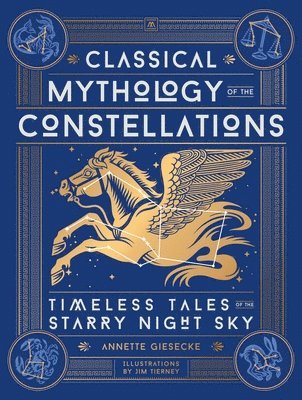
Classical Mythology of the Constellations
Timeless Tales of the Starry Night Sky
Inbunden, Engelska, 2025
117 kr
Skickas inom 3-6 vardagar
A retelling of the classic myths and timeless tales by bestselling author Annette Giesecke that underlie the 88 named constellations in the night sky--from Andromeda to Orion to Ursa Major.Classical Mythology of the Constellations is a stargazer's guide to the wondrous stories of the gods, heroes, and monsters that populate the night sky. As long as humans have lived on Earth, they have gazed up at the starry sky with fascination and longing. For the ancient Greeks and Romans, the Sun, Moon, and Earth were gods. The stars beyond our Solar System, however, represented heroes, animals, and monsters that the gods placed in the sky after their death. These include the great hunter Orion and the scorpion who killed him with its sting, the beautiful maiden Callisto who was turned into a bear (Ursa Major) by the goddess Hera, Perseus, the slayer of Medusa, and many more.In this beautifully designed work, stunningly illustrated by Jim Tierney, Giesecke tells the origin stories of the 48 constellations, first catalogued by the astronomer Ptolemy in the first century CE. A final section covers the names, locations, and brief descriptions of the remaining 40 constellations catalogued by astronomers in the sixteenth, seventeenth, and eighteenth centuries, which are not named for Classical figures. Organized by hemisphere and celestial quadrant, the book also includes two illustrated star maps to help guide the reader to the location of each constellation, as well as 48 color plates throughout.
359 kr
Skickas inom 7-10 vardagar
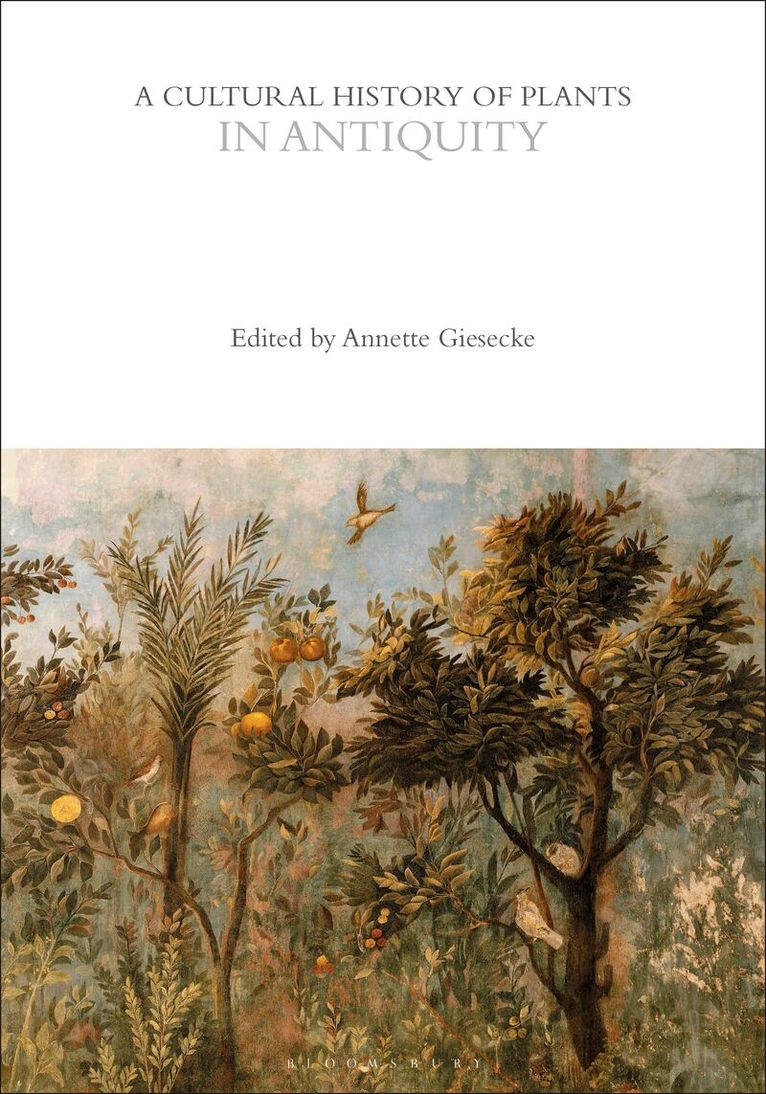
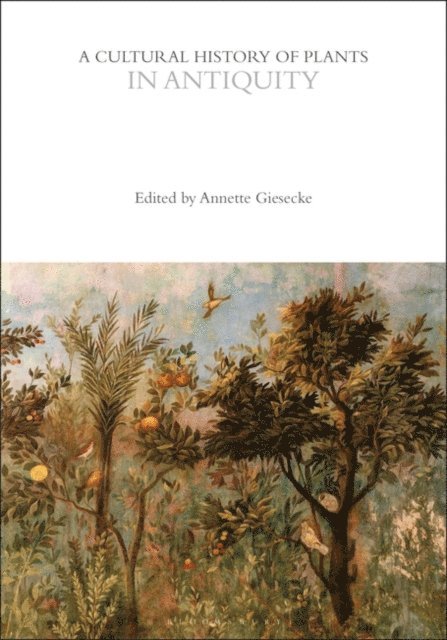
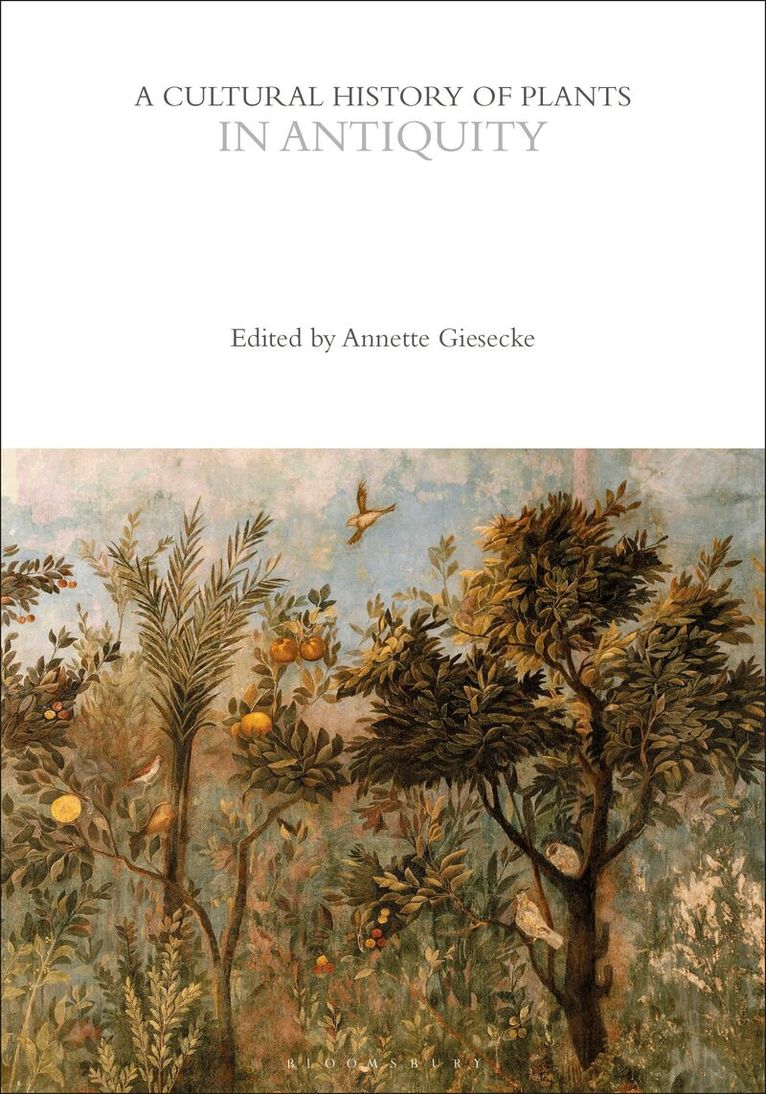
A Cultural History of Plants in Antiquity covers the period from 10,000 BCE to 500 CE. This period witnessed the transition from hunter-gatherer subsistence to the practice of agriculture in Mesopotamia and elsewhere, and culminated in the fall of the Roman Empire, the end of the Han Dynasty in China, the rise of Byzantium, and the first flowering of Mayan civilization. Human uses for and understanding of plants drove cultural evolution and were inextricably bound to all aspects of cultural practice. The growth of botanical knowledge was fundamental to the development of agriculture, technology, medicine, and science, as well as to the birth of cities, the rise of religions and mythologies, and the creation of works of literature and art.The six-volume set of the Cultural History of Plants presents the first comprehensive history of the uses and meanings of plants from prehistory to today. The themes covered in each volume are plants as staple foods; plants as luxury foods; trade and exploration; plant technology and science; plants and medicine; plants in culture; plants as natural ornaments; the representation of plants.Annette Giesecke, PhD, is a specialist in the history, meaning, and representation of ancient gardens and designed landscapes at Victoria University of Wellington, New Zealand.A Cultural History of Plants in Antiquity is the first volume in the six-volume set, A Cultural History of Plants, also available online as part of Bloomsbury Cultural History, a fully-searchable digital library (see www.bloomsburyculturalhistory.com).General Editors: Annette Giesecke, Victoria University of Wellington, New Zealand, and David Mabberley, University of Oxford, UK.
359 kr
Skickas inom 7-10 vardagar
A Cultural History of Plants in the Early Modern Era covers the period from 1400 to 1650, a time of discovery and rediscovery, of experiment and innovation. Renaissance learning brought ancient knowledge to modern European consciousness whilst exploration placed all the continents in contact with one another. The dissemination of knowledge was further speeded by the spread of printing. New staples and spices, new botanical medicines, and new garden plants all catalysed agriculture, trade, and science. The great medical botanists of the period attempted no less than what Marlowe’s Dr Faustus demanded - a book “wherein I might see all plants, herbs, and trees that grow upon the earth.” Human impact on plants and our botanical knowledge had irrevocably changed.The six-volume set of the Cultural History of Plants presents the first comprehensive history of the uses and meanings of plants from prehistory to today. The themes covered in each volume are plants as staple foods; plants as luxury foods; trade and exploration; plant technology and science; plants and medicine; plants in culture; plants as natural ornaments; the representation of plants.Andrew Dalby is an independent scholar and writer, based in France. Annette Giesecke, PhD, is a specialist in the history, meaning, and representation of ancient gardens and designed landscapes at Victoria University of Wellington, New Zealand.A Cultural History of Plants in the Early Modern Era is the third volume in the six-volume set, A Cultural History of Plants, also available online as part of Bloomsbury Cultural History, a fully-searchable digital library (see www.bloomsburyculturalhistory.com).General Editors: Annette Giesecke, Victoria University of Wellington, New Zealand, and David Mabberley, University of Oxford, UK.
2 064 kr
Skickas inom 7-10 vardagar
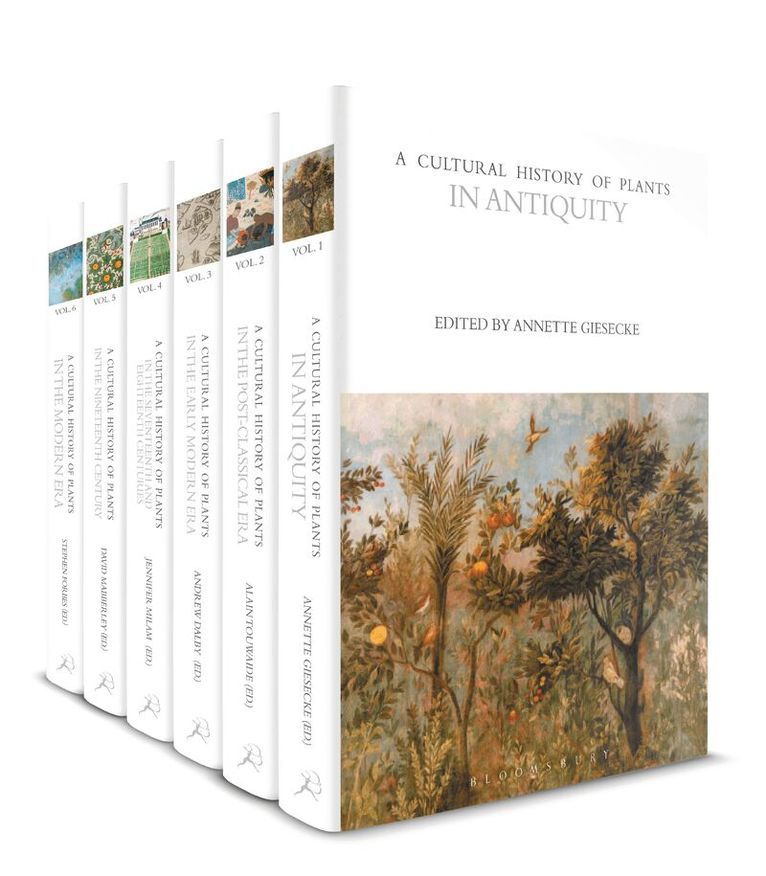
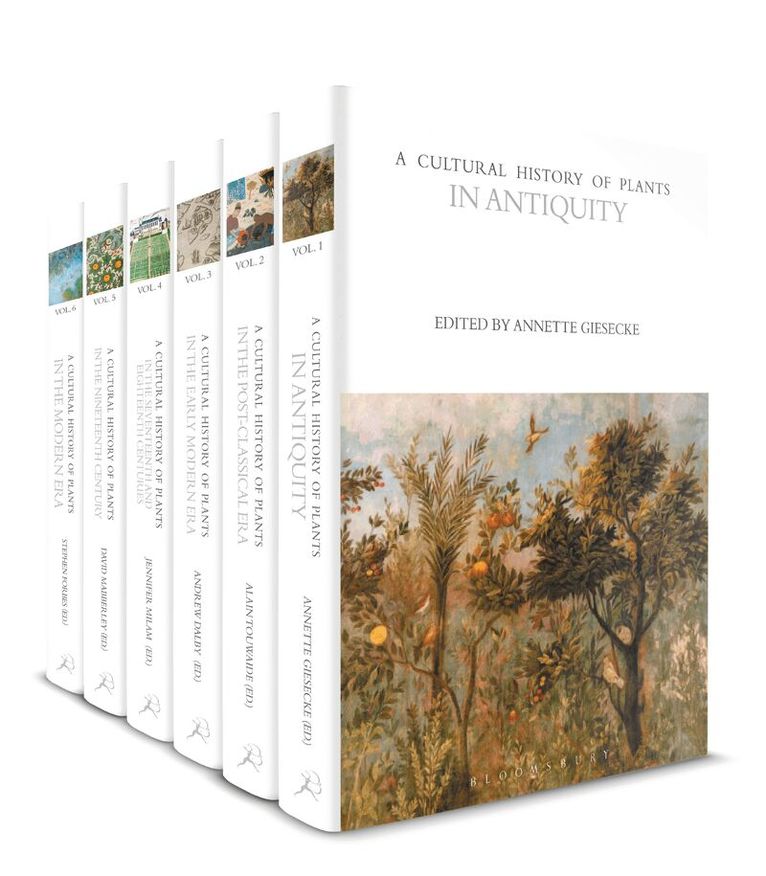
PROSE Award for Excellence in Humanities - Reference Works Finalist 2023Winner of the 2022 Society of Economic Botany’s Daniel F. Austin Award A Cultural History of Plants presents a global exploration of how plants have shaped human culture. Covering the last 12,000 years, it is the definitive history of how we have cultivated, traded, classified, and altered plants and how, in turn, plants have influenced our ideas of luxury and wealth, health and well-being, art and architecture.Chapter titles are identical across each of the volumes. This gives the choice of reading about a specific period in one of the volumes, or following a theme across history by reading the relevant chapter in each of the six.The themes (and chapter titles) are: Plants as Staple Foods; Plants as Luxury Foods; Trade and Exploration; Plant Technology and Science; Plants and Medicine; Plants in Culture; Plants as Natural Ornaments; The Representation of Plants.The six volumes cover: 1 – Antiquity (10,000 BCE to 500 CE); 2 – Post-Classical Era (500 to 1400); 3 – Early Modern Era (1400 to 1650); 4 – the Seventeenth and Eighteenth Centuries (1650 to 1800); 5 – the Nineteenth Century(1800 to 1920); 6 – Modern Era (1920 to the present).The page extent for the pack is 1744pp. Each volume opens with Notes on Contributors and an Introduction and concludes with Notes, Bibliography, and an Index.The Cultural Histories SeriesA Cultural History of Plants is part of The Cultural Histories Series. Titles are available both as printed hardcover sets for libraries needing just one subject or preferring a one-off purchase and tangible reference for their shelves, or as part of a fully-searchable digital library available to institutions by annual subscription or on perpetual access (see www.bloomsburyculturalhistory.com). A Cultural History of Plants is part of The Cultural Histories Series. Titles are available as hardcover sets for libraries needing just one subject or preferring a tangible reference for their shelves or as part of a fully-searchable digital library. The digital product is available to institutions by annual subscription or on perpetual access via www.bloomsburyculturalhistory.com . Individual volumes for academics and researchers interested in specific historical periods are also available in print or digitally via www.bloomsburycollections.com .
1 108 kr
Skickas inom 10-15 vardagar
A Cultural History of Plants in Antiquity covers the period from 10,000 BCE to 500 CE. This period witnessed the transition from hunter-gatherer subsistence to the practice of agriculture in Mesopotamia and elsewhere, and culminated in the fall of the Roman Empire, the end of the Han Dynasty in China, the rise of Byzantium, and the first flowering of Mayan civilization. Human uses for and understanding of plants drove cultural evolution and were inextricably bound to all aspects of cultural practice. The growth of botanical knowledge was fundamental to the development of agriculture, technology, medicine, and science, as well as to the birth of cities, the rise of religions and mythologies, and the creation of works of literature and art.The six-volume set of the Cultural History of Plants presents the first comprehensive history of the uses and meanings of plants from prehistory to today. The themes covered in each volume are plants as staple foods; plants as luxury foods; trade and exploration; plant technology and science; plants and medicine; plants in culture; plants as natural ornaments; the representation of plants.Annette Giesecke, PhD, is a specialist in the history, meaning, and representation of ancient gardens and designed landscapes at Victoria University of Wellington, New Zealand. A Cultural History of Plants in Antiquity is the first volume in the six-volume set, A Cultural History of Plants, also available online as part of Bloomsbury Cultural History, a fully-searchable digital library (see www.bloomsburyculturalhistory.com).General Editors: Annette Giesecke, Victoria University of Wellington, New Zealand, and David Mabberley, University of Oxford, UK.
1 108 kr
Skickas inom 10-15 vardagar
A Cultural History of Plants in the Early Modern Era covers the period from 1400 to 1650, a time of discovery and rediscovery, of experiment and innovation. Renaissance learning brought ancient knowledge to modern European consciousness whilst exploration placed all the continents in contact with one another. The dissemination of knowledge was further speeded by the spread of printing. New staples and spices, new botanical medicines, and new garden plants all catalysed agriculture, trade, and science. The great medical botanists of the period attempted no less than what Marlowe’s Dr Faustus demanded - a book “wherein I might see all plants, herbs, and trees that grow upon the earth.” Human impact on plants and our botanical knowledge had irrevocably changed.The six-volume set of the Cultural History of Plants presents the first comprehensive history of the uses and meanings of plants from prehistory to today. The themes covered in each volume are plants as staple foods; plants as luxury foods; trade and exploration; plant technology and science; plants and medicine; plants in culture; plants as natural ornaments; the representation of plants.Andrew Dalby is an independent scholar and writer, based in France. Annette Giesecke, PhD, is a specialist in the history, meaning, and representation of ancient gardens and designed landscapes at Victoria University of Wellington, New Zealand. A Cultural History of Plants in the Early Modern Era is the third volume in the six-volume set, A Cultural History of Plants, also available online as part of Bloomsbury Cultural History, a fully-searchable digital library (see www.bloomsburyculturalhistory.com).General Editors: Annette Giesecke, Victoria University of Wellington, New Zealand, and David Mabberley, University of Oxford, UK.
9 434 kr
Tillfälligt slut
Winner of the 2022 Society of Economic Botany’s Daniel F. Austin AwardFinalist: PROSE Awards 2023 – Reference Works - HumanitiesA Cultural History of Plants presents a global exploration of how plants have shaped human culture. Covering the last 12,000 years, it is the definitive history of how we have cultivated, traded, classified, and altered plants and how, in turn, plants have influenced our ideas of luxury and wealth, health and well-being, art and architecture.Chapter titles are identical across each of the volumes. This gives the choice of reading about a specific period in one of the volumes, or following a theme across history by reading the relevant chapter in each of the six. The themes (and chapter titles) are: Plants as Staple Foods; Plants as Luxury Foods; Trade and Exploration; Plant Technology and Science; Plants and Medicine; Plants in Culture; Plants as Natural Ornaments; The Representation of Plants.The six volumes cover: 1 – Antiquity (10,000 BCE to 500 CE); 2 – Post-Classical Era (500 to 1400); 3 – Early Modern Era (1400 to 1650); 4 – the Seventeenth and Eighteenth Centuries (1650 to 1800); 5 – the Nineteenth Century(1800 to 1920); 6 – Modern Era (1920 to the present).The page extent for the pack is 1744pp. Each volume opens with Notes on Contributors and an Introduction and concludes with Notes, Bibliography, and an Index.The Cultural Histories SeriesA Cultural History of Plants is part of The Cultural Histories Series. Titles are available as hardcover sets for libraries needing just one subject or preferring a tangible reference for their shelves or as part of a fully-searchable digital library. The digital product is available to institutions by annual subscription or on perpetual access via www.bloomsburyculturalhistory.com . Individual volumes for academics and researchers interested in specific historical periods are also available in print or digitally via www.bloomsburycollections.com .
333 kr
Tillfälligt slut