Anousha Sedighi - Böcker
Visar alla böcker från författaren Anousha Sedighi. Handla med fri frakt och snabb leverans.
3 produkter
3 produkter
2 161 kr
Skickas inom 7-10 vardagar
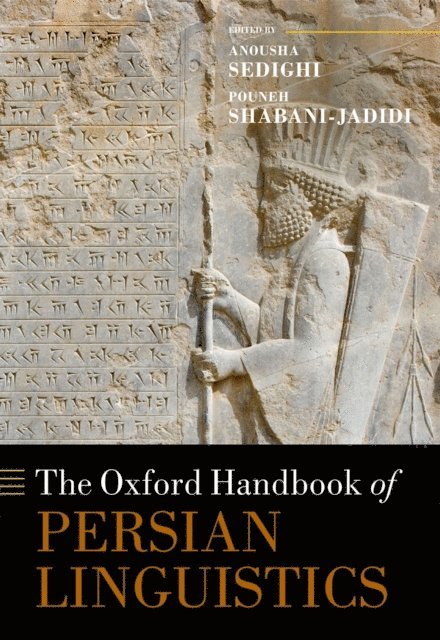
This handbook offers a comprehensive overview of the field of Persian linguistics, discusses its development, and captures critical accounts of cutting edge research within its major subfields, as well as outlining current debates and suggesting productive lines of future research. Leading scholars in the major subfields of Persian linguistics examine a range of topics split into six thematic parts. Following a detailed introduction from the editors, the volume begins by placing Persian in its historical and typological context in Part I. Chapters in Part II examine topics relating to phonetics and phonology, while Part III looks at approaches to and features of Persian syntax. The fourth part of the volume explores morphology and lexicography, as well as the work of the Academy of Persian Language and Literature. Part V, language and people, covers topics such as language contact and teaching Persian as a foreign language, while the final part examines psycho- neuro-, and computational linguistics. The volume will be an essential resource for all scholars with an interest in Persian language and linguistics.
2 026 kr
Skickas inom 7-10 vardagar
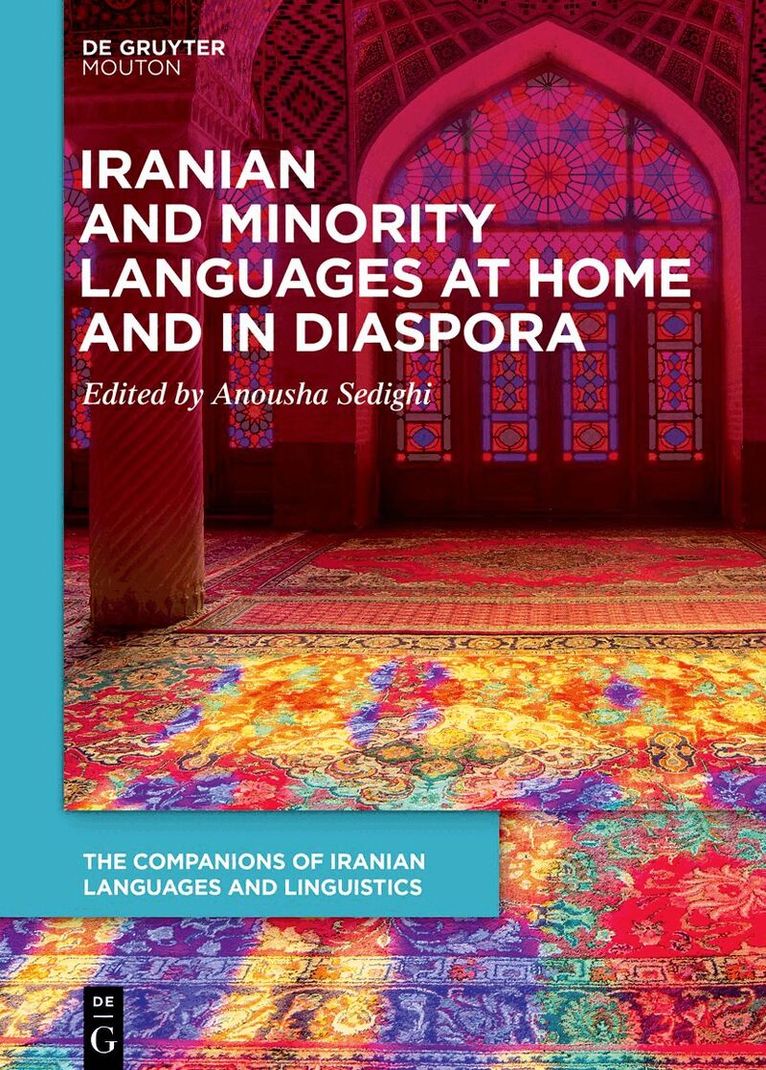
While the typology, syntax, and morphology of Iranian languages have been widely explored, the sociolinguistic aspects remain largely understudied. The present companion addresses this essential yet overlooked area of research in two ways: (i) The book explores multilingualism within Iran and its neighbouring countries. (ii) It also investigates Iranian heritage languages within the diasporic context of the West. The scope of languages covered is vast: In addition to discussing Iranian minority languages such as Tati and Balochi, the book explores non-Iranian minority languages such as Azeri, Tukmen, Armenian and Mandaic. Furthermore, the companion investigates Iranian heritage languages such as Wakhi, Pashto, and Persian within their diasporic and global contexts. In the current era of migration and globalization, minority and heritage speakers are increasingly valuable resources. By focusing on the speakers, the companion provides new insights into a multitude of sociolinguistic issues including language attitude and identity, language use and literacy practices, language policy, language shift and loss. The companion is an essential reference for those interested in Iranian languages, minority languages, heritage languages, sociolinguistics, bilingualism, language policy and planning, diaspora and migration studies, as well as those researching in related fields.
617 kr
Tillfälligt slut
Agreement Restrictions in Persian is the first comprehensive attempt to tackle the issue of verbal agreement in Persian from a cross-linguistic point of view. Persian is a field of research within theoretical linguistics that is yet to be sufficiently explored. This book adopts the Minimalist Program of Chomsky (1995-2004) which is at the forefront of recent theories of formal syntax and applies it to the Persian language. Although it is commonly believed that in Persian the verb agrees with the subject, several constructions seem to constrain this obligatory rule. Adopting the framework of Distributed Morphology, the author argues that agreement is in fact obtained with the plural inanimate subjects but a morphological rule may block the result. Unlike the previous analyses which consider the experiencer as the subject of the psychological constructions, the author argues that the psychological state is the subject of the sentence. The findings of this book not only contribute to better understanding of Persian syntax, but also have important implications for grammar theory.