Anthony K. Jensen – författare
Visar alla böcker från författaren Anthony K. Jensen. Handla med fri frakt och snabb leverans.
15 produkter
Philosophy of Will
A Reexamination of Late Modern German Philosophy
Inbunden, 2025
2893 kr
Lägg i varukorg
This book argues that the history of 19th-century German philosophy has neglected an important narrative: the philosophy of ‘Will’. It aims to reconsider the history of late modern philosophy in terms of the interconnected philosophies of ‘Will’ of several notable thinkers: Goethe, Schelling, …
Philosophy of Will
A Reexamination of Late Modern German Philosophy
E-bok, 2025
745 kr
Lägg i varukorg
This book argues that the history of 19th-century German philosophy has neglected an important narrative: the philosophy of ‘Will’. It aims to reconsider the history of late modern philosophy in terms of the interconnected philosophies of ‘Will’ of several notable thinkers: Goethe, …
Philosophy of Will
A Reexamination of Late Modern German Philosophy
E-bok, 2025
745 kr
Lägg i varukorg
This book argues that the history of 19th-century German philosophy has neglected an important narrative: the philosophy of ‘Will’. It aims to reconsider the history of late modern philosophy in terms of the interconnected philosophies of ‘Will’ of several notable thinkers: Goethe, …
Nietzsche's Philosophy of History
Inbunden, 2013
1628 kr
Lägg i varukorg
Nietzsche, the so-called herald of the 'philosophy of the future', nevertheless dealt with the past on nearly every page of his writing. Not only was he concerned with how past values, cultural practices and institutions influence the present - he was plainly aware that any attempt to understand …
Nietzsche's Philosophy of History
Häftad, 2015
557 kr
Lägg i varukorg
Nietzsche, the so-called herald of the 'philosophy of the future', nevertheless dealt with the past on nearly every page of his writing. Not only was he concerned with how past values, cultural practices and institutions influence the present - he was plainly aware that any attempt to understand …
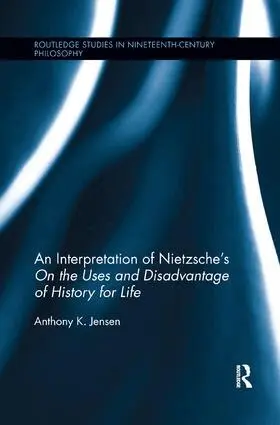
Interpretation of Nietzsche's On the Uses and Disadvantage of History for Life
Häftad, 2018
809 kr
Lägg i varukorg
With his An Interpretation of Nietzsche’s "On the Uses and Disadvantage of History for Life", Anthony K. Jensen shows how 'timely' Nietzsche’s second "Untimely Meditation" really is. This comprehensive and insightful study contextualizes and analyzes a wide range of Nietzsche’s earlier thoughts …
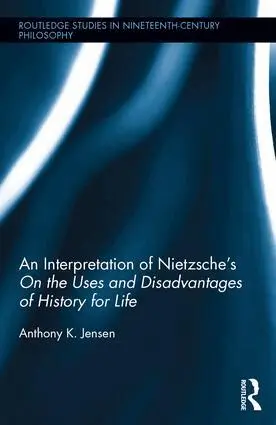
Interpretation of Nietzsche's On the Uses and Disadvantage of History for Life
Inbunden, 2016
2515 kr
Lägg i varukorg
With his An Interpretation of Nietzsche’s "On the Uses and Disadvantage of History for Life", Anthony K. Jensen shows how 'timely' Nietzsche’s second "Untimely Meditation" really is. This comprehensive and insightful study contextualizes and analyzes a wide range of Nietzsche’s earlier thoughts …
Interpretation of Nietzsche's On the Uses and Disadvantage of History for Life
E-bok, 2016
953 kr
Lägg i varukorg
With his An Interpretation of Nietzsche’s "On the Uses and Disadvantage of History for Life ", Anthony K. Jensen shows how ''timely'' Nietzsche’s second "Untimely Meditation" really is. This comprehensive and insightful study contextualizes and analyzes a wide range of Nietzsche’s earlier thoughts …
Interpretation of Nietzsche's On the Uses and Disadvantage of History for Life
E-bok, 2016
953 kr
Lägg i varukorg
With his An Interpretation of Nietzsche’s "On the Uses and Disadvantage of History for Life ", Anthony K. Jensen shows how ''timely'' Nietzsche’s second "Untimely Meditation" really is. This comprehensive and insightful study contextualizes and analyzes a wide range of Nietzsche’s earlier thoughts …
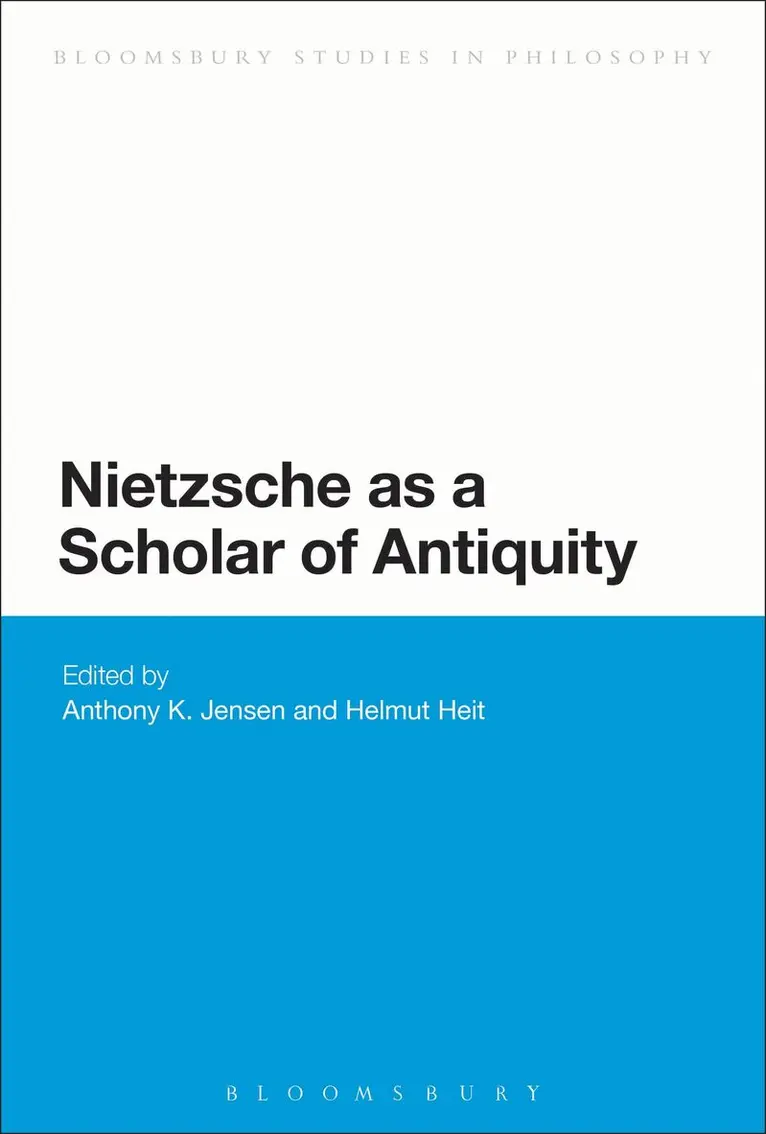
Nietzsche as a Scholar of Antiquity
Av Anthony K. Jensen, Helmut Heit
Inbunden, 2014
1980 kr
Lägg i varukorg
Typically, the first decade of Friedrich Nietzsche's career is considered a sort of précis to his mature thinking. Yet his philological articles, lectures, and notebooks on Ancient Greek culture and thought - much of which has received insufficient scholarly attention - were never intended to serve …
Nietzsche as a Scholar of Antiquity
Av Anthony K. Jensen, Helmut Heit
E-bok, 2014
595 kr
Lägg i varukorg
Typically, the first decade of Friedrich Nietzsche''s career is considered a sort of précis to his mature thinking. Yet his philological articles, lectures, and notebooks on Ancient Greek culture and thought - much of which has received insufficient scholarly attention - were never intended to …
Nietzsche as a Scholar of Antiquity
Av Anthony K. Jensen, Helmut Heit
E-bok, 2014
590 kr
Lägg i varukorg
Typically, the first decade of Friedrich Nietzsche''s career is considered a sort of précis to his mature thinking. Yet his philological articles, lectures, and notebooks on Ancient Greek culture and thought - much of which has received insufficient scholarly attention - were never intended to …
Nietzsche as a Scholar of Antiquity
Av Anthony K. Jensen, Helmut Heit
Häftad, 2015
559 kr
Lägg i varukorg
Typically, the first decade of Friedrich Nietzsche's career is considered a sort of précis to his mature thinking. Yet his philological articles, lectures, and notebooks on Ancient Greek culture and thought - much of which has received insufficient scholarly attention - were never intended to serve …
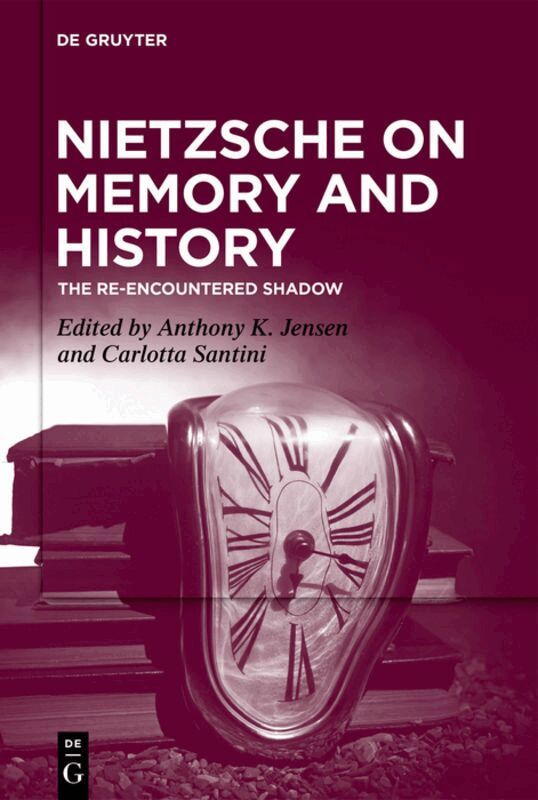
Nietzsche on Memory and History
The Re-Encountered Shadow
Av Anthony K. Jensen, Carlotta Santini
Inbunden, 2020
1992 kr
Lägg i varukorg
History and memory rank as central themes in the philosophy of Friedrich Nietzsche. As one of the last philosophers of the 19th century, Nietzsche naturally belongs to the so-called ‘historical century’. The contentious exchange with the past and with antiquity – as much as the mechanisms, the …
Nietzsche on Memory and History
The Re-Encountered Shadow
Av Carlotta Santini, Anthony K. Jensen
E-bok, 2020
2061 kr
Lägg i varukorg
History and memory rank as central themes in the philosophy of Friedrich Nietzsche. As one of the last philosophers of the 19th century, Nietzsche naturally belongs to the so-called ‘historical century’. The contentious exchange with the past and with antiquity – as much as the mechanisms, the …