Anthoula Malkopoulou - Böcker
Visar alla böcker från författaren Anthoula Malkopoulou. Handla med fri frakt och snabb leverans.
5 produkter
5 produkter
644 kr
Skickas inom 10-15 vardagar
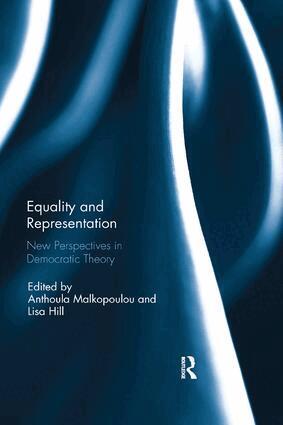
This volume is primarily concerned with equality as a basic component of the democratic character of representation. In other words, of the many types of equality that have attracted the attention of theorists since democracy’s beginnings – arithmetic equality, equality before the law, equality of opportunity– we would like to draw attention to representational equality, that is, the role of equality in systems of democratic representation. In what form is equality present in traditional forms of electoral representation? How can it be secured in new forms of representation, such as claims-making, deliberative, klerotarian and epistemic representation? And to what extent are electoral or non-electoral models of representation able to accommodate increasing social inequalities? The articles in this volume discuss these issues from a normative and conceptual point of view, seeking to shed new light on the important but under-explored relationship between equality and representation. This book was originally published as a special issue of Critical Review of International Social and Political Philosophy.
2 289 kr
Skickas inom 10-15 vardagar
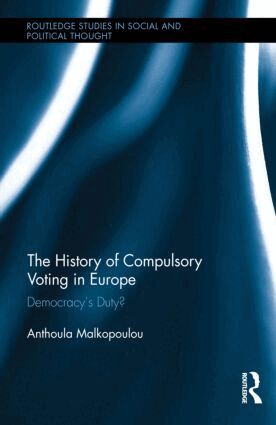
Is voting out of fashion? Does it matter if voters don't show up at the polls? If yes, is legal enforcement of voting compatible with democracy? These are just a few of the questions linked to the thorny problem of electoral abstention. This book addresses the hot question whether there is a duty to vote and if this is enforceable in the form of compulsory voting.Divided into two parts, Anthoula Malkopoulou begins by expertly presenting the importance of compulsory voting today, situating the debate within the contemporary discussion on liberty, equality and democracy. Then, she questions the historical origins of the idea in Europe. In particular, she examines parliamentary discussions and other primary sources from France and Greece, including a few additional insights from other countries like Switzerland and Belgium. Focusing especially on the years between 1870 and 1930, the reader learns about the historical actors of the debates, their efforts to legitimate punishment of abstention through normative arguments, but also their strategic motivations and political interests. While discussions at the beginning of the century focus on introducing compulsory voting, Malkopoulou criticizes its misuse after the Second World War, exposing the contingency of relevant normative claims today and the conditionality of compulsory voting.From ancient times until today, you learn about the ideological debates, their political context and how the problems of equal representation and democratic moderation persist through the ages.
2 088 kr
Skickas inom 10-15 vardagar
This volume is primarily concerned with equality as a basic component of the democratic character of representation. In other words, of the many types of equality that have attracted the attention of theorists since democracy’s beginnings – arithmetic equality, equality before the law, equality of opportunity– we would like to draw attention to representational equality, that is, the role of equality in systems of democratic representation. In what form is equality present in traditional forms of electoral representation? How can it be secured in new forms of representation, such as claims-making, deliberative, klerotarian and epistemic representation? And to what extent are electoral or non-electoral models of representation able to accommodate increasing social inequalities? The articles in this volume discuss these issues from a normative and conceptual point of view, seeking to shed new light on the important but under-explored relationship between equality and representation. This book was originally published as a special issue of Critical Review of International Social and Political Philosophy.
1 991 kr
Skickas inom 3-6 vardagar
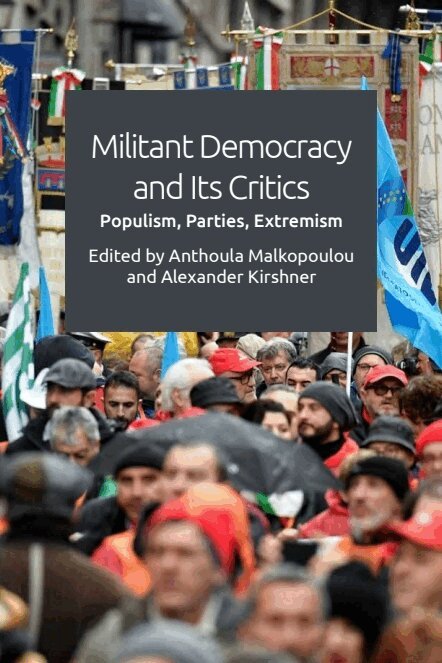
Militant Democracy refers to the defensive policies democracies use to respond to antidemocratic movements. Can defensive efforts that curtail rights of participation be consistent with democratic values? In this collection of essays, scholars from across politics, philosophy and law address the unresolved practical and theoretical questions concerning democracy and extremism. The collection provides an update to a key contemporary debate in democratic theory and asks us to reconsider the potential promise and costs of militant democracy.
356 kr
Skickas
Militant Democracy refers to the defensive policies democracies use to respond to antidemocratic movements. Can defensive efforts that curtail rights of participation be consistent with democratic values? In this collection of essays, scholars from across politics, philosophy and law address the unresolved practical and theoretical questions concerning democracy and extremism. The collection provides an update to a key contemporary debate in democratic theory and asks us to reconsider the potential promise and costs of militant democracy.