Anupama Mallik - Böcker
Visar alla böcker från författaren Anupama Mallik. Handla med fri frakt och snabb leverans.
4 produkter
4 produkter
902 kr
Skickas inom 10-15 vardagar
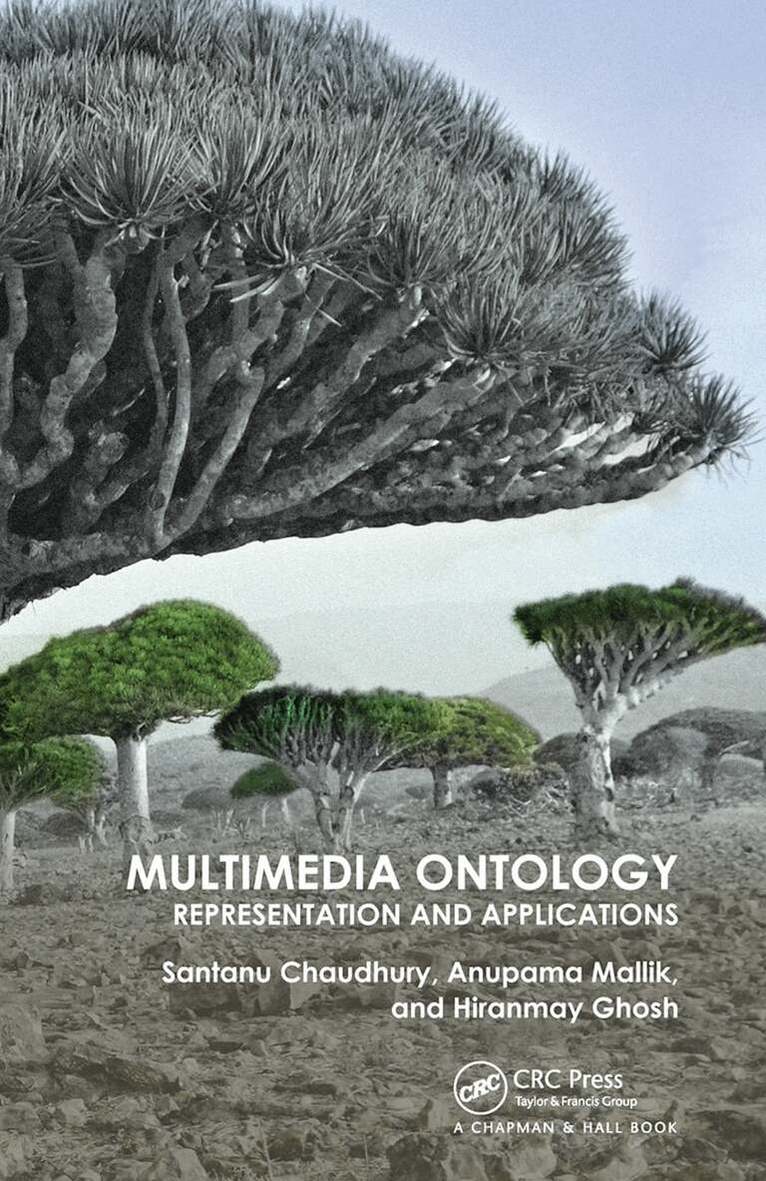
The result of more than 15 years of collective research, Multimedia Ontology: Representation and Applications provides a theoretical foundation for understanding the nature of media data and the principles involved in its interpretation. The book presents a unified approach to recent advances in multimedia and explains how a multimedia ontology can fill the semantic gap between concepts and the media world. It relays real-life examples of implementations in different domains to illustrate how this gap can be filled.The book contains information that helps with building semantic, content-based search and retrieval engines and also with developing vertical application-specific search applications. It guides you in designing multimedia tools that aid in logical and conceptual organization of large amounts of multimedia data. As a practical demonstration, it showcases multimedia applications in cultural heritage preservation efforts and the creation of virtual museums.The book describes the limitations of existing ontology techniques in semantic multimedia data processing, as well as some open problems in the representations and applications of multimedia ontology. As an antidote, it introduces new ontology representation and reasoning schemes that overcome these limitations. The long, compiled efforts reflected in Multimedia Ontology: Representation and Applications are a signpost for new achievements and developments in efficiency and accessibility in the field.
1 236 kr
Skickas inom 10-15 vardagar
The result of more than 15 years of collective research, Multimedia Ontology: Representation and Applications provides a theoretical foundation for understanding the nature of media data and the principles involved in its interpretation. The book presents a unified approach to recent advances in multimedia and explains how a multimedia ontology can fill the semantic gap between concepts and the media world. It relays real-life examples of implementations in different domains to illustrate how this gap can be filled.The book contains information that helps with building semantic, content-based search and retrieval engines and also with developing vertical application-specific search applications. It guides you in designing multimedia tools that aid in logical and conceptual organization of large amounts of multimedia data. As a practical demonstration, it showcases multimedia applications in cultural heritage preservation efforts and the creation of virtual museums.The book describes the limitations of existing ontology techniques in semantic multimedia data processing, as well as some open problems in the representations and applications of multimedia ontology. As an antidote, it introduces new ontology representation and reasoning schemes that overcome these limitations. The long, compiled efforts reflected in Multimedia Ontology: Representation and Applications are a signpost for new achievements and developments in efficiency and accessibility in the field.
1 624 kr
Skickas inom 10-15 vardagar
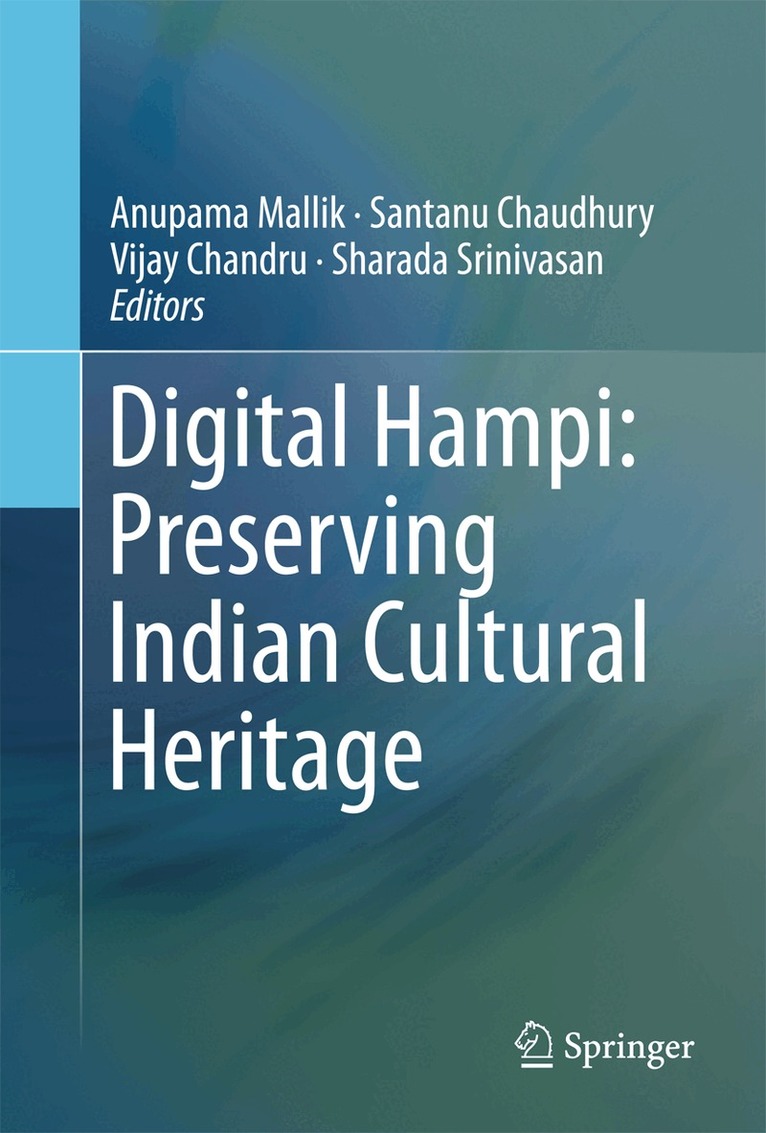
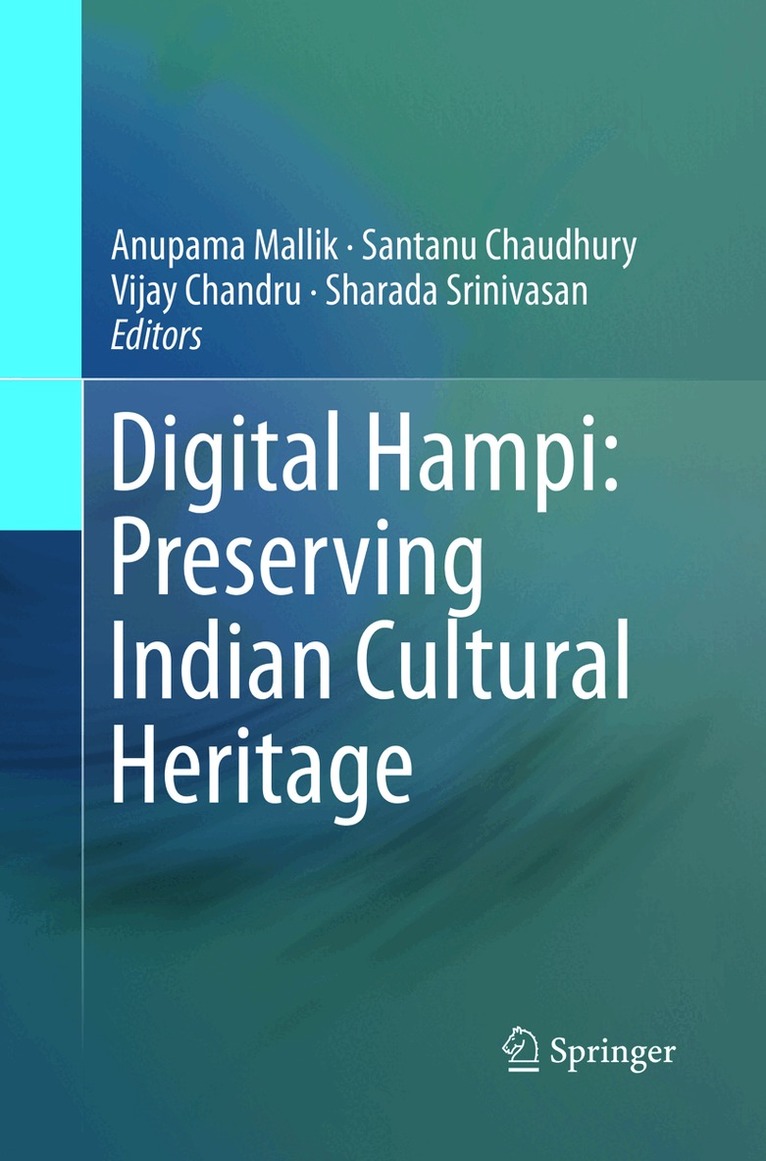
The book represents the culmination of a hugely successful heritage preservation project initiated by the Government of India’s Department of Science and Technology. It presents extensive research on the digital preservation of the history, mythology, art, architecture and culture of the world heritage site Hampi in Karnataka, the seat of the Vijayanagara dynasty in medieval India. Further, the book introduces readers to a range of techniques developed by Indian technical research groups for digitally preserving both the tangible and intangible cultural heritage of the region. These techniques are sufficiently generic to be applied in heritage preservation efforts for other historical sites around the world as well.Technological advances have made it possible to not only create digital archives of these heritage artifacts, but to also share these resources for people to view, explore, experience, and analyze. This book showcases how cutting-edge technology can be combined with cultural and historical research to digitize and preserve heritage. It is the consolidation of work conducted under the Indian Digital Heritage project, a unique initiative of the Department of Science & Technology (DST), Government of India. The project involved collaboration between researchers in the areas of Technology, Computer Science, Architecture and the Humanities for the digital documentation and interpretation of India’s tangible and intangible heritage. It highlights the art, architecture, and cultural legacy of the world heritage site of Hampi in Karnataka, the medieval capital of the 14th-16th century Vijayanagara dynasty.The contributors to this book are scientists and technology experts from prominent academic institutes in India such as the IITs (Indian Institutes of Technology), NIIT, and NID (National Institute of Design) working in collaboration with some of India’s top architects, art historians, anthropologists, heritage groups and multi-disciplinary cultural institutions such as the National Institute of Advanced Studies (NIAS). Their papers will introduce readers to cutting-edge technologies from research areas such as computer vision, 3D modeling and artificial intelligence as they are employed to preserve art and culture in the digital domain.The book is divided into four parts. Part 1 details efforts and techniques for modeling and representing the tangible heritage of Hampi, such as the reconstruction of damaged structures, realistic walk-throughs, and haptic rendering. Part 2 includes chapters detailing the analysis and digital restoration of artifacts such as mural paintings, inscriptions and sculptures, as well as mobile-based visual search for artifacts. Part 3 includes chapters on conjectural re-constructions of the architectural life, social life and traditions of Hampi. Lastly, Part 4 addresses the knowledge-based archiving and exploration of cultural heritage.
1 624 kr
Skickas inom 10-15 vardagar
The book represents the culmination of a hugely successful heritage preservation project initiated by the Government of India’s Department of Science and Technology. It presents extensive research on the digital preservation of the history, mythology, art, architecture and culture of the world heritage site Hampi in Karnataka, the seat of the Vijayanagara dynasty in medieval India. Further, the book introduces readers to a range of techniques developed by Indian technical research groups for digitally preserving both the tangible and intangible cultural heritage of the region. These techniques are sufficiently generic to be applied in heritage preservation efforts for other historical sites around the world as well.Technological advances have made it possible to not only create digital archives of these heritage artifacts, but to also share these resources for people to view, explore, experience, and analyze. This book showcases how cutting-edge technology can be combined with cultural and historical research to digitize and preserve heritage. It is the consolidation of work conducted under the Indian Digital Heritage project, a unique initiative of the Department of Science & Technology (DST), Government of India. The project involved collaboration between researchers in the areas of Technology, Computer Science, Architecture and the Humanities for the digital documentation and interpretation of India’s tangible and intangible heritage. It highlights the art, architecture, and cultural legacy of the world heritage site of Hampi in Karnataka, the medieval capital of the 14th-16th century Vijayanagara dynasty.The contributors to this book are scientists and technology experts from prominent academic institutes in India such as the IITs (Indian Institutes of Technology), NIIT, and NID (National Institute of Design) working in collaboration with some of India’s top architects, art historians, anthropologists, heritage groups and multi-disciplinary cultural institutions such as the National Institute of Advanced Studies (NIAS). Their papers will introduce readers to cutting-edge technologies from research areas such as computer vision, 3D modeling and artificial intelligence as they are employed to preserve art and culture in the digital domain.The book is divided into four parts. Part 1 details efforts and techniques for modeling and representing the tangible heritage of Hampi, such as the reconstruction of damaged structures, realistic walk-throughs, and haptic rendering. Part 2 includes chapters detailing the analysis and digital restoration of artifacts such as mural paintings, inscriptions and sculptures, as well as mobile-based visual search for artifacts. Part 3 includes chapters on conjectural re-constructions of the architectural life, social life and traditions of Hampi. Lastly, Part 4 addresses the knowledge-based archiving and exploration of cultural heritage.