Vijay Chandru - Böcker
Visar alla böcker från författaren Vijay Chandru. Handla med fri frakt och snabb leverans.
4 produkter
4 produkter
Del 34 - Wiley Series in Discrete Mathematics and Optimization
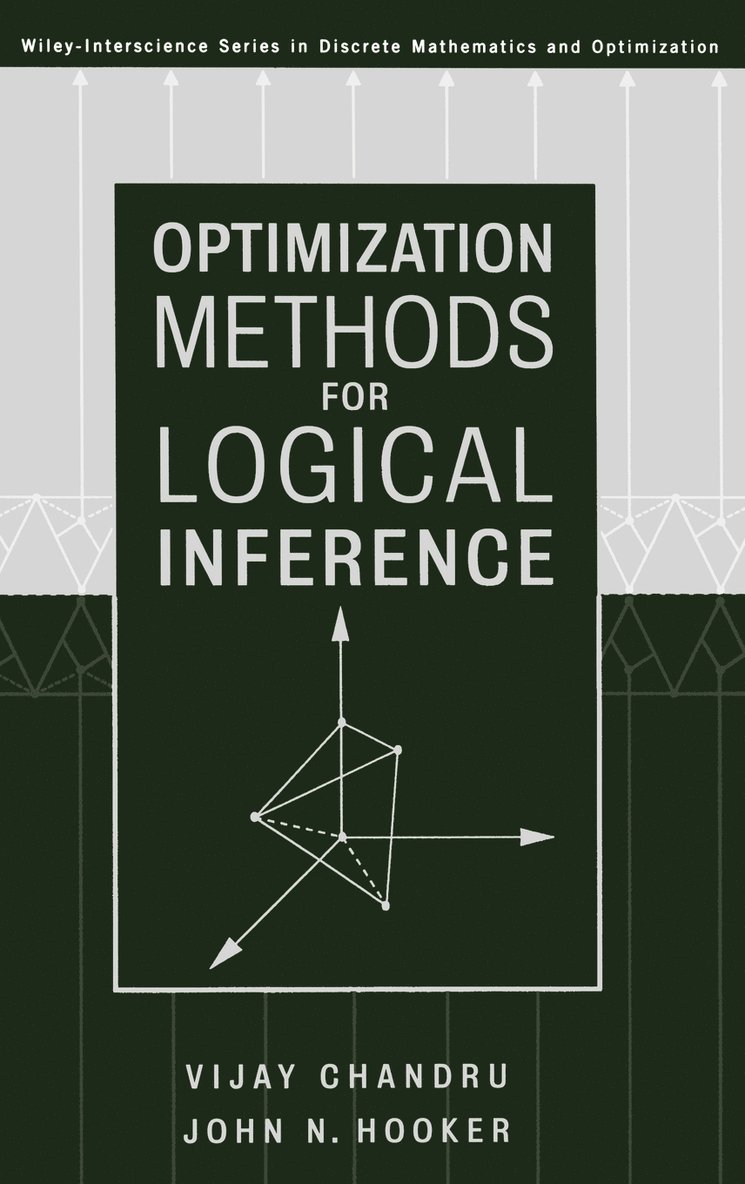
Optimization Methods for Logical Inference
Inbunden, Engelska, 1999
1 981 kr
Skickas inom 7-10 vardagar
Merging logic and mathematics in deductive inference-an innovative, cutting-edge approach. Optimization methods for logical inference? Absolutely, say Vijay Chandru and John Hooker, two major contributors to this rapidly expanding field. And even though "solving logical inference problems with optimization methods may seem a bit like eating sauerkraut with chopsticks. . . it is the mathematical structure of a problem that determines whether an optimization model can help solve it, not the context in which the problem occurs." Presenting powerful, proven optimization techniques for logic inference problems, Chandru and Hooker show how optimization models can be used not only to solve problems in artificial intelligence and mathematical programming, but also have tremendous application in complex systems in general. They survey most of the recent research from the past decade in logic/optimization interfaces, incorporate some of their own results, and emphasize the types of logic most receptive to optimization methods-propositional logic, first order predicate logic, probabilistic and related logics, logics that combine evidence such as Dempster-Shafer theory, rule systems with confidence factors, and constraint logic programming systems. Requiring no background in logic and clearly explaining all topics from the ground up, Optimization Methods for Logical Inference is an invaluable guide for scientists and students in diverse fields, including operations research, computer science, artificial intelligence, decision support systems, and engineering.
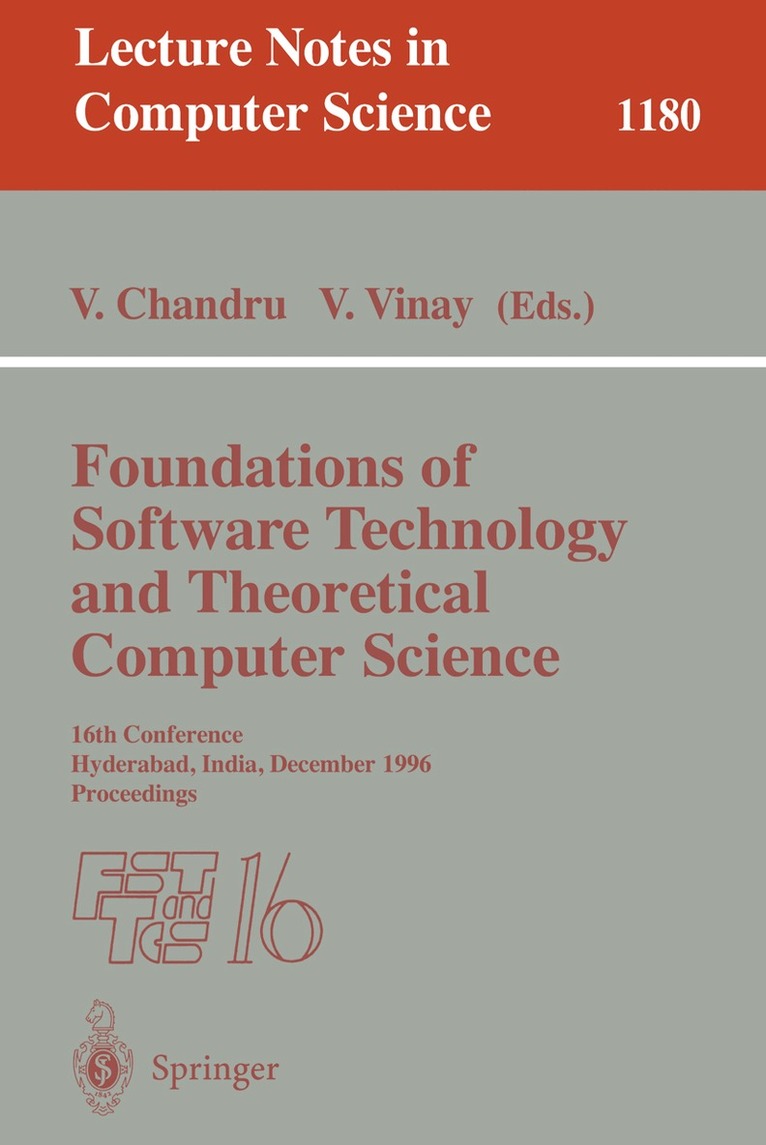
Foundations of Software Technology and Theoretical Computer Science
16th Conference, Hyderabad, India, December 18 - 20, 1996, Proceedings
Häftad, Engelska, 1996
551 kr
Skickas inom 10-15 vardagar
This book constitutes the refereed proceedings of the 16th International Conference on Foundations of Software Technology and Theoretical Computer Science, FST&TCS '96, held in Hyderabad, India, in December 1996.The volume presents 28 revised full papers selected from a total of 98 submissions; also included are four invited contributions. The papers are organized in topical sections on computational geometry, process algebras, program semantics, algorithms, rewriting and equational-temporal logics, complexity theory, and type theory.
1 624 kr
Skickas inom 10-15 vardagar
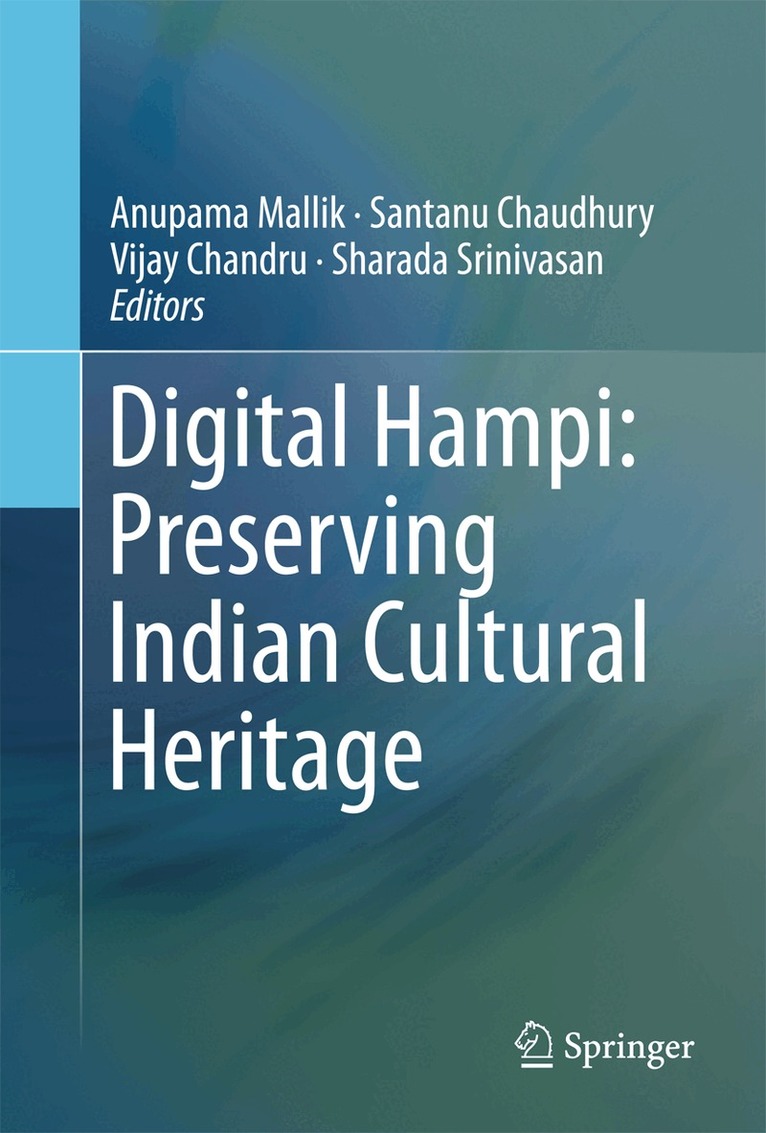
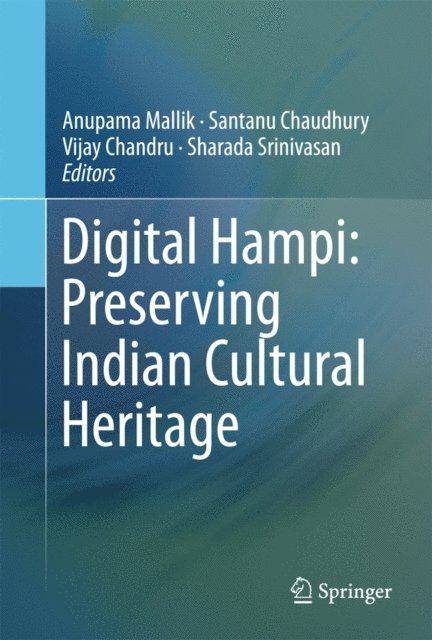
The book represents the culmination of a hugely successful heritage preservation project initiated by the Government of India’s Department of Science and Technology. It presents extensive research on the digital preservation of the history, mythology, art, architecture and culture of the world heritage site Hampi in Karnataka, the seat of the Vijayanagara dynasty in medieval India. Further, the book introduces readers to a range of techniques developed by Indian technical research groups for digitally preserving both the tangible and intangible cultural heritage of the region. These techniques are sufficiently generic to be applied in heritage preservation efforts for other historical sites around the world as well.Technological advances have made it possible to not only create digital archives of these heritage artifacts, but to also share these resources for people to view, explore, experience, and analyze. This book showcases how cutting-edge technology can be combined with cultural and historical research to digitize and preserve heritage. It is the consolidation of work conducted under the Indian Digital Heritage project, a unique initiative of the Department of Science & Technology (DST), Government of India. The project involved collaboration between researchers in the areas of Technology, Computer Science, Architecture and the Humanities for the digital documentation and interpretation of India’s tangible and intangible heritage. It highlights the art, architecture, and cultural legacy of the world heritage site of Hampi in Karnataka, the medieval capital of the 14th-16th century Vijayanagara dynasty.The contributors to this book are scientists and technology experts from prominent academic institutes in India such as the IITs (Indian Institutes of Technology), NIIT, and NID (National Institute of Design) working in collaboration with some of India’s top architects, art historians, anthropologists, heritage groups and multi-disciplinary cultural institutions such as the National Institute of Advanced Studies (NIAS). Their papers will introduce readers to cutting-edge technologies from research areas such as computer vision, 3D modeling and artificial intelligence as they are employed to preserve art and culture in the digital domain.The book is divided into four parts. Part 1 details efforts and techniques for modeling and representing the tangible heritage of Hampi, such as the reconstruction of damaged structures, realistic walk-throughs, and haptic rendering. Part 2 includes chapters detailing the analysis and digital restoration of artifacts such as mural paintings, inscriptions and sculptures, as well as mobile-based visual search for artifacts. Part 3 includes chapters on conjectural re-constructions of the architectural life, social life and traditions of Hampi. Lastly, Part 4 addresses the knowledge-based archiving and exploration of cultural heritage.
1 624 kr
Skickas inom 10-15 vardagar
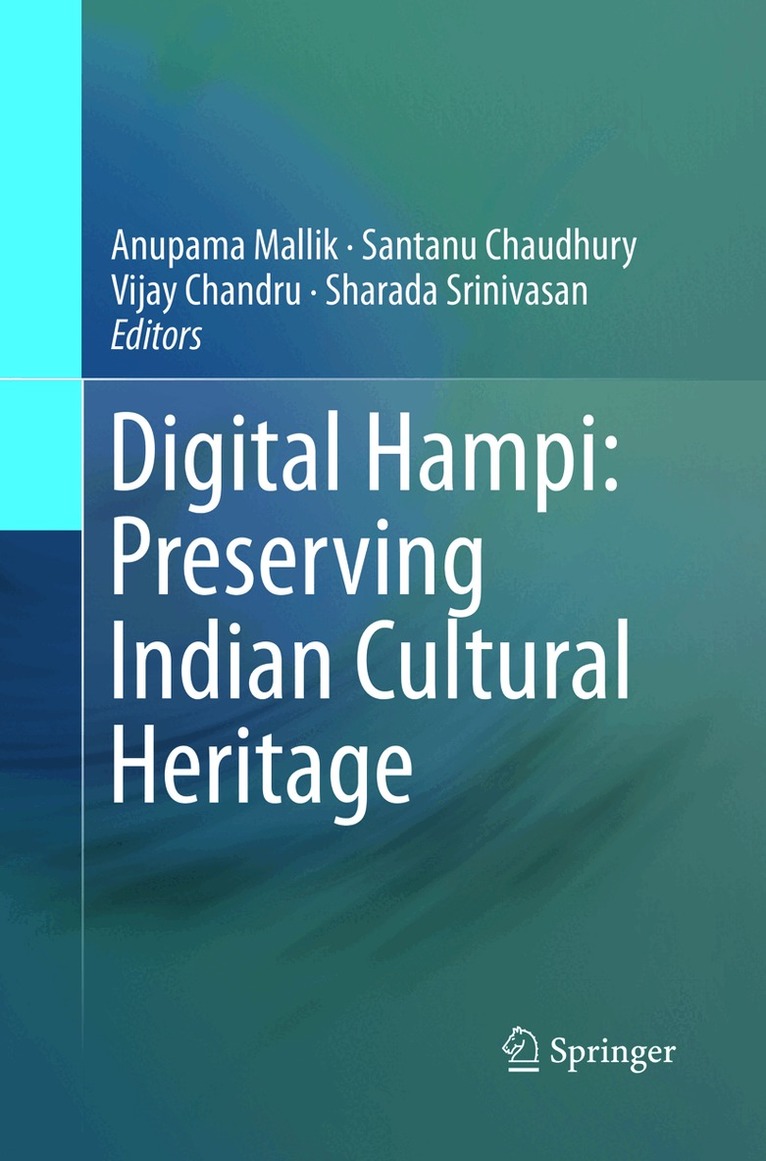
The book represents the culmination of a hugely successful heritage preservation project initiated by the Government of India’s Department of Science and Technology. It presents extensive research on the digital preservation of the history, mythology, art, architecture and culture of the world heritage site Hampi in Karnataka, the seat of the Vijayanagara dynasty in medieval India. Further, the book introduces readers to a range of techniques developed by Indian technical research groups for digitally preserving both the tangible and intangible cultural heritage of the region. These techniques are sufficiently generic to be applied in heritage preservation efforts for other historical sites around the world as well.Technological advances have made it possible to not only create digital archives of these heritage artifacts, but to also share these resources for people to view, explore, experience, and analyze. This book showcases how cutting-edge technology can be combined with cultural and historical research to digitize and preserve heritage. It is the consolidation of work conducted under the Indian Digital Heritage project, a unique initiative of the Department of Science & Technology (DST), Government of India. The project involved collaboration between researchers in the areas of Technology, Computer Science, Architecture and the Humanities for the digital documentation and interpretation of India’s tangible and intangible heritage. It highlights the art, architecture, and cultural legacy of the world heritage site of Hampi in Karnataka, the medieval capital of the 14th-16th century Vijayanagara dynasty.The contributors to this book are scientists and technology experts from prominent academic institutes in India such as the IITs (Indian Institutes of Technology), NIIT, and NID (National Institute of Design) working in collaboration with some of India’s top architects, art historians, anthropologists, heritage groups and multi-disciplinary cultural institutions such as the National Institute of Advanced Studies (NIAS). Their papers will introduce readers to cutting-edge technologies from research areas such as computer vision, 3D modeling and artificial intelligence as they are employed to preserve art and culture in the digital domain.The book is divided into four parts. Part 1 details efforts and techniques for modeling and representing the tangible heritage of Hampi, such as the reconstruction of damaged structures, realistic walk-throughs, and haptic rendering. Part 2 includes chapters detailing the analysis and digital restoration of artifacts such as mural paintings, inscriptions and sculptures, as well as mobile-based visual search for artifacts. Part 3 includes chapters on conjectural re-constructions of the architectural life, social life and traditions of Hampi. Lastly, Part 4 addresses the knowledge-based archiving and exploration of cultural heritage.