Arang Keshavarzian - Böcker
Visar alla böcker från författaren Arang Keshavarzian. Handla med fri frakt och snabb leverans.
6 produkter
6 produkter
Del 26 - Cambridge Middle East Studies
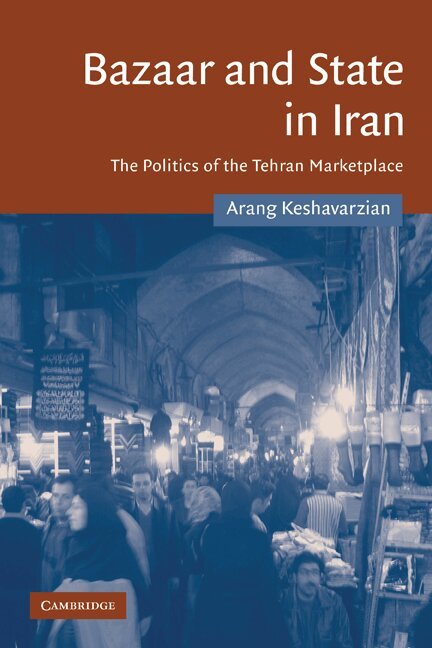
Bazaar and State in Iran
The Politics of the Tehran Marketplace
Häftad, Engelska, 2009
428 kr
Skickas inom 7-10 vardagar
The Tehran Bazaar has always been central to the Iranian economy and indeed, to the Iranian urban experience. Arang Keshavarzian's fascinating book compares the economics and politics of the marketplace under the Pahlavis, who sought to undermine it in the drive for modernisation and under the subsequent revolutionary regime, which came to power with a mandate to preserve the bazaar as an 'Islamic' institution. The outcomes of their respective policies were completely at odds with their intentions. Despite the Shah's hostile approach, the bazaar flourished under his rule and maintained its organisational autonomy to such an extent that it played an integral role in the Islamic revolution. Conversely, the Islamic Republic implemented policies that unwittingly transformed the ways in which the bazaar operated, thus undermining its capacity for political mobilisation. Arang Keshavarizian's book affords unusual insights into the politics, economics and society of Iran across four decades.
Del 26 - Cambridge Middle East Studies
Bazaar and State in Iran
The Politics of the Tehran Marketplace
Inbunden, Engelska, 2007
1 192 kr
Skickas inom 7-10 vardagar
The Tehran Bazaar has always been central to the Iranian economy and indeed, to the Iranian urban experience. Arang Keshavarzian's fascinating book compares the economics and politics of the marketplace under the Pahlavis, who sought to undermine it in the drive for modernisation and under the subsequent revolutionary regime, which came to power with a mandate to preserve the bazaar as an 'Islamic' institution. The outcomes of their respective policies were completely at odds with their intentions. Despite the Shah's hostile approach, the bazaar flourished under his rule and maintained its organisational autonomy to such an extent that it played an integral role in the Islamic revolution. Conversely, the Islamic Republic implemented policies that unwittingly transformed the ways in which the bazaar operated, thus undermining its capacity for political mobilisation. Arang Keshavarizian's book affords unusual insights into the politics, economics and society of Iran across four decades.
Del 18 - The Global Middle East
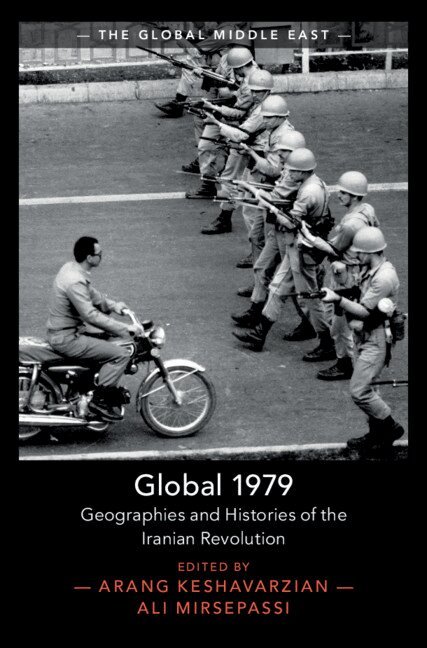
Global 1979
Geographies and Histories of the Iranian Revolution
Inbunden, Engelska, 2021
1 065 kr
Skickas inom 7-10 vardagar
The Iranian revolution of 1979 not only had an impact on regional and international affairs, but was made possible by the world and time in which it unfolded. This multi-disciplinary volume presents this revolution within its transnational and global contexts. Moving deftly from the personal to the global and from the provincial to the national, it draws attention to the multiplicity of spaces of the revolution such as streets, schools, prisons, personal lives, and histories such as the Cold War and Global 1960s and 70s. With a broad range of approaches, Global 1979 conceives of the Iranian Revolution not as exceptional or anachronistic, but as an uprising constituted by multiple, interwoven geographies and histories, which disrupt static and bounded notions of the local, national, regional, and global.
Del 18 - The Global Middle East
Global 1979
Geographies and Histories of the Iranian Revolution
Häftad, Engelska, 2021
331 kr
Skickas inom 7-10 vardagar
The Iranian revolution of 1979 not only had an impact on regional and international affairs, but was made possible by the world and time in which it unfolded. This multi-disciplinary volume presents this revolution within its transnational and global contexts. Moving deftly from the personal to the global and from the provincial to the national, it draws attention to the multiplicity of spaces of the revolution such as streets, schools, prisons, personal lives, and histories such as the Cold War and Global 1960s and 70s. With a broad range of approaches, Global 1979 conceives of the Iranian Revolution not as exceptional or anachronistic, but as an uprising constituted by multiple, interwoven geographies and histories, which disrupt static and bounded notions of the local, national, regional, and global.
1 304 kr
Skickas inom 7-10 vardagar
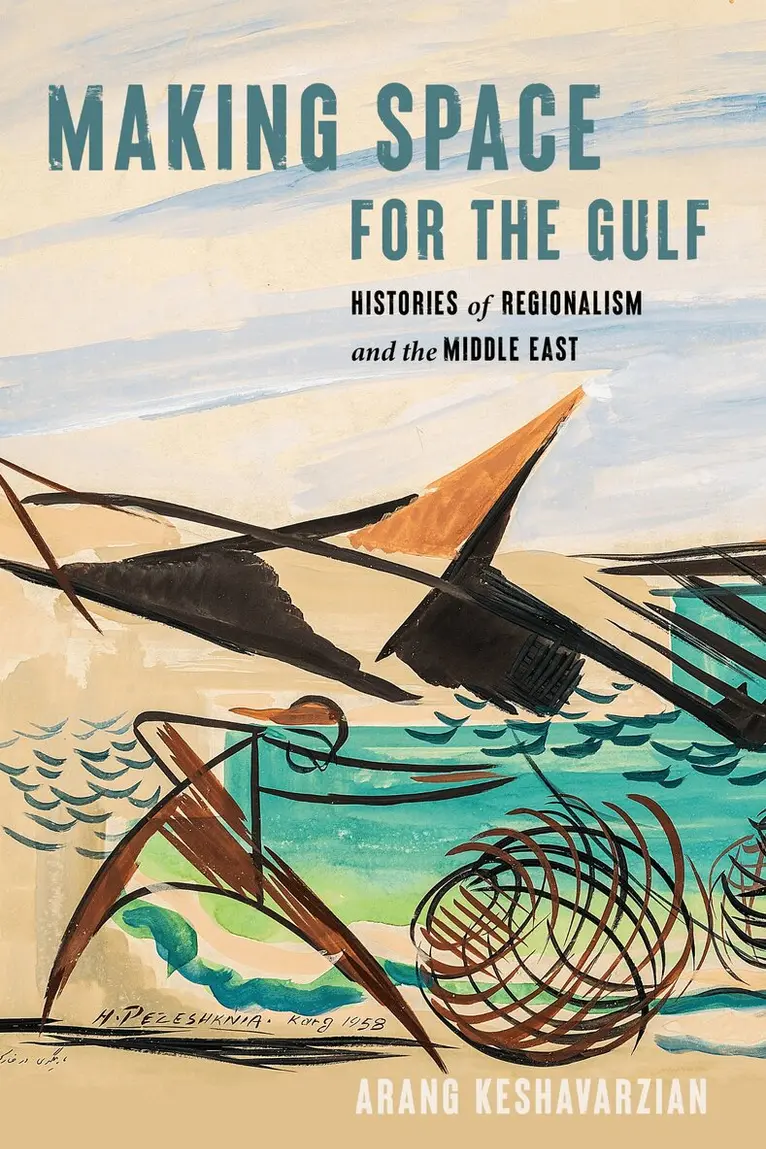
The Persian Gulf has long been a contested space—an object of imperial ambitions, national antagonisms, and migratory dreams. The roots of these contestations lie in the different ways the Gulf has been defined as a region, both by those who live there and those beyond its shore. Making Space for the Gulf reveals how capitalism, empire-building, geopolitics, and urbanism have each shaped understandings of the region over the last two centuries. Here, the Gulf comes into view as a created space, encompassing dynamic social relations and competing interests.Arang Keshavarzian writes a new history of the region that places Iran, Iraq, and the Arabian Peninsula together within global processes. He connects moments more often treated as ruptures—the discovery of oil, the Iranian Revolution, the rise and decline of British empire, the emergence of American power—and crafts a narrative populated by a diverse range of people—migrants and ruling families, pearl-divers and star architects, striking taxi drivers and dethroned rulers, protectors of British India and stewards of globalized American universities. Tacking across geographic scales, Keshavarzian reveals how the Gulf has been globalized through transnational relations, regionalized as a geopolitical category, and cleaved along national divisions and social inequalities. When understood as a process, not an object, the Persian Gulf reveals much about how regions and the world have been made in modern times. Making Space for the Gulf offers a fresh understanding of this globally consequential place.
318 kr
Skickas inom 7-10 vardagar
The Persian Gulf has long been a contested space—an object of imperial ambitions, national antagonisms, and migratory dreams. The roots of these contestations lie in the different ways the Gulf has been defined as a region, both by those who live there and those beyond its shore. Making Space for the Gulf reveals how capitalism, empire-building, geopolitics, and urbanism have each shaped understandings of the region over the last two centuries. Here, the Gulf comes into view as a created space, encompassing dynamic social relations and competing interests.Arang Keshavarzian writes a new history of the region that places Iran, Iraq, and the Arabian Peninsula together within global processes. He connects moments more often treated as ruptures—the discovery of oil, the Iranian Revolution, the rise and decline of British empire, the emergence of American power—and crafts a narrative populated by a diverse range of people—migrants and ruling families, pearl-divers and star architects, striking taxi drivers and dethroned rulers, protectors of British India and stewards of globalized American universities. Tacking across geographic scales, Keshavarzian reveals how the Gulf has been globalized through transnational relations, regionalized as a geopolitical category, and cleaved along national divisions and social inequalities. When understood as a process, not an object, the Persian Gulf reveals much about how regions and the world have been made in modern times. Making Space for the Gulf offers a fresh understanding of this globally consequential place.