Argelia Lorence - Böcker
Visar alla böcker från författaren Argelia Lorence. Handla med fri frakt och snabb leverans.
7 produkter
7 produkter
1 906 kr
Skickas inom 10-15 vardagar
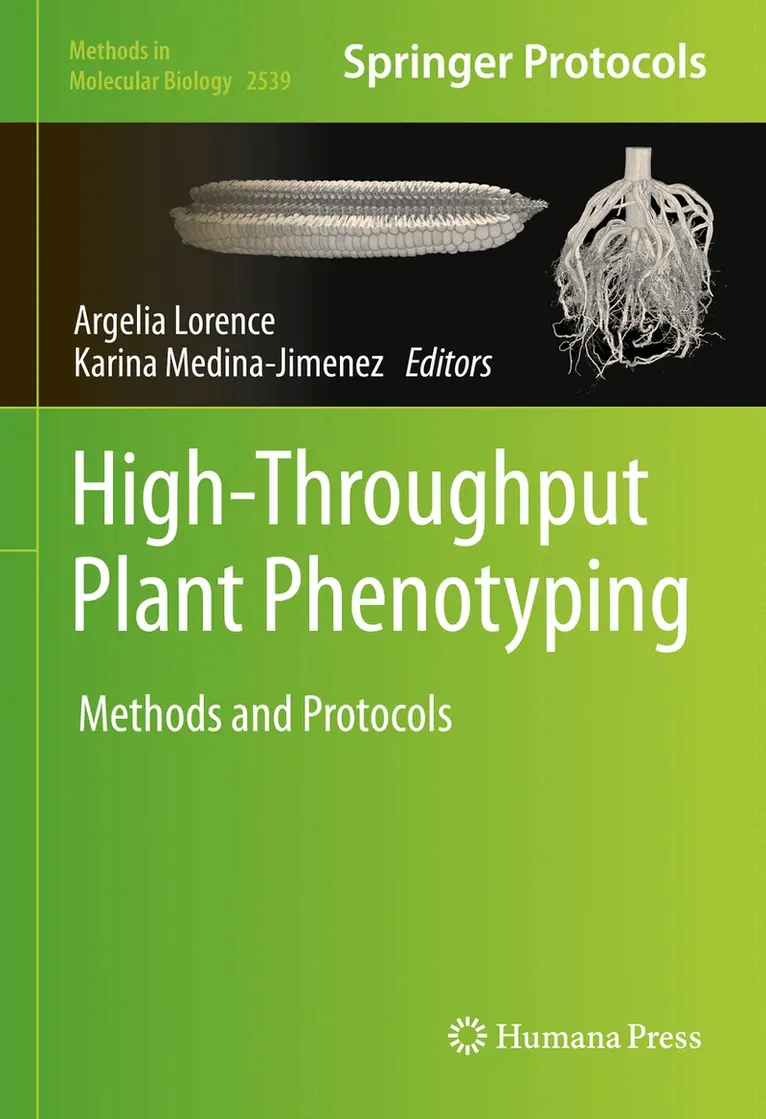
This volume looks at a collection of the latest techniques used to quantify the genome-by-environment-by-management (GxExM) interactions in a variety of model and plant crops. The chapters in this book are organized into five parts. Part One discusses high-throughput plant phenotyping (HTPP) protocols for plants growing under controlled conditions. Part Two present novel algorithms for extracting data from seed images, color analysis from fruits, and other digital readouts from 2D objects. Part Three covers molecular imaging protocols using PET and X-ray approaches, and Part Four presents a collection of HTPP techniques for crops growing under field conditions. The last part focuses on molecular analysis, metabolomics, network analysis, and statistical methods for the quantitative genetic analysis of HTP data. Written in the highly successful Methods in Molecular Biology series format, chapters include introductions to their respective topics, lists of the necessary materials and reagents, step-by-step, readily reproducible laboratory protocols, and tips on troubleshooting and avoiding known pitfalls.Cutting-edge and practical, High-Throughput Plant Phenotyping: Review and Protocols is a valuable resource for both novice and expert researchers looking to learn more about this important field.Chapter 21 is available open access under a Creative Commons Attribution 4.0 International License via link.springer.com.
1 378 kr
Skickas inom 10-15 vardagar
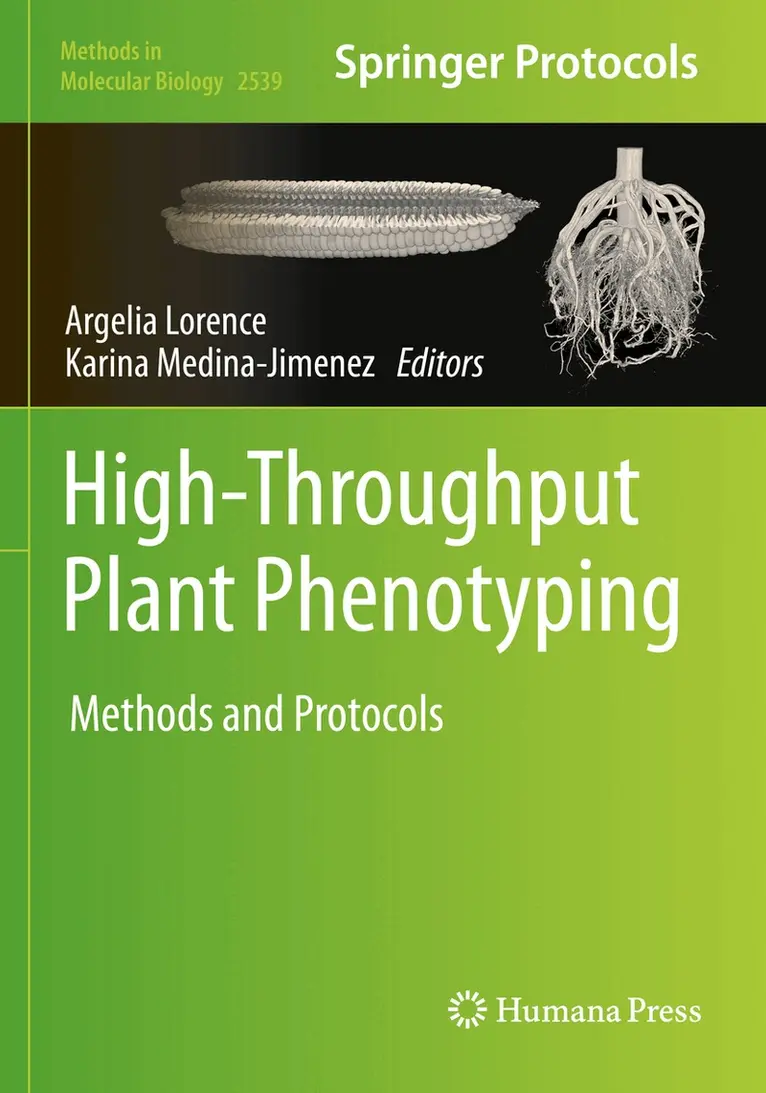
This volume looks at a collection of the latest techniques used to quantify the genome-by-environment-by-management (GxExM) interactions in a variety of model and plant crops. The chapters in this book are organized into five parts. Part One discusses high-throughput plant phenotyping (HTPP) protocols for plants growing under controlled conditions. Part Two present novel algorithms for extracting data from seed images, color analysis from fruits, and other digital readouts from 2D objects. Part Three covers molecular imaging protocols using PET and X-ray approaches, and Part Four presents a collection of HTPP techniques for crops growing under field conditions. The last part focuses on molecular analysis, metabolomics, network analysis, and statistical methods for the quantitative genetic analysis of HTP data. Written in the highly successful Methods in Molecular Biology series format, chapters include introductions to their respective topics, lists of the necessary materials and reagents, step-by-step, readily reproducible laboratory protocols, and tips on troubleshooting and avoiding known pitfalls.Cutting-edge and practical, High-Throughput Plant Phenotyping: Review and Protocols is a valuable resource for both novice and expert researchers looking to learn more about this important field.Chapter 21 is available open access under a Creative Commons Attribution 4.0 International License via link.springer.com.
1 800 kr
Skickas inom 10-15 vardagar
Studies related to recombinant gene expression have brought new advance such as the emergence of the “omics” technologies. While Escherichia coli, Sacharomyces cerevisiae and insect cells continue to be the dominant production platforms of recombinant proteins. In Recombinant Gene Expression: Review and Protocols, Third Edition, expert researchers in the field detail many of the methods now commonly used to study recombinant gene expression. These include methods and techniques for bacteria, lower eukaryotes, fungi, plants and plant cells, and animals and animal cells. Written in the highly successful Methods in Molecular Biology™ series format, chapters include introductions to their respective topics, lists of the necessary materials and reagents, step-by-step, readily reproducible laboratory protocols, and key tips on troubleshooting and avoiding known pitfalls. Authoritative and practical, Recombinant Gene Expression: Review and Protocols, Third Edition seeks to aid scientists in the further study of this crucially important research into recombinant gene expression.
1 589 kr
Skickas inom 10-15 vardagar
In this second updated edition, the editors have added critical reviews to a collection of cutting-edge protocols for gene expression in bacteria, fungi, plants, plant cells, animals, and animal cells. The review articles survey new directions in recombinant gene expression research, technique, and application, and point the way to using recombinant gene expression for metabolic engineering and the production of non-protein molecules. The readily reproducible protocols offer new host vector systems, such as Anarctic bacteria and moderately halophytic bacteria, vectors for chromosomal editing and metabolic engineering, and information to aid in problem solving, strategy planning, and the promotion of protein folding. Recombinant Gene Expression: Reviews and Protocols, Second Edition offers investigators seeking an overview of this critically important field the understanding and the tools needed to begin producing nonprotein products and altering the central metabolic pathways of cells to enhance heterologous gene expression.
1 589 kr
Skickas inom 10-15 vardagar
In this second updated edition, the editors have added critical reviews to a collection of cutting-edge protocols for gene expression in bacteria, fungi, plants, plant cells, animals, and animal cells. The review articles survey new directions in recombinant gene expression research, technique, and application, and point the way to using recombinant gene expression for metabolic engineering and the production of non-protein molecules. The readily reproducible protocols offer new host-vector systems, such as Anarctic bacteria and moderately halophytic bacteria, vectors for chromosomal editing and metabolic engineering, and information to aid in problem solving, strategy planning, and the promotion of protein folding. Recombinant Gene Expression: Reviews and Protocols, Second Edition offers investigators seeking an overview of this critically important field the understanding and the tools needed to begin producing nonprotein products and altering the central metabolic pathways of cells to enhance heterologous gene expression.
2 117 kr
Skickas inom 10-15 vardagar
Studies related to recombinant gene expression have brought new advance such as the emergence of the “omics” technologies. While Escherichia coli, Sacharomyces cerevisiae and insect cells continue to be the dominant production platforms of recombinant proteins. In Recombinant Gene Expression: Review and Protocols, Third Edition, expert researchers in the field detail many of the methods now commonly used to study recombinant gene expression. These include methods and techniques for bacteria, lower eukaryotes, fungi, plants and plant cells, and animals and animal cells. Written in the highly successful Methods in Molecular Biology™ series format, chapters include introductions to their respective topics, lists of the necessary materials and reagents, step-by-step, readily reproducible laboratory protocols, and key tips on troubleshooting and avoiding known pitfalls. Authoritative and practical, Recombinant Gene Expression: Review and Protocols, Third Edition seeks to aid scientists in the further study of this crucially important research into recombinant gene expression.
2 117 kr
Skickas inom 10-15 vardagar
Ascorbic acid (AsA), vitamin C, is one of the most abundant water-soluble antioxidant in plants and animals. In plants AsA serves as a major redox buffer and regulates various physiological processes controlling growth, development, and stress tolerance. Recent studies on AsA homeostasis have broadened our understanding of these physiological events. At the mechanistic level, AsA has been shown to participate in numerous metabolic and cell signaling processes, and the dynamic relationship between AsA and reactive oxygen species (ROS) has been well documented. Being a major component of the ascorbate-glutathione (AsA-GSH) cycle, AsA helps to modulate oxidative stress in plants by controlling ROS detoxification alone and in co-operation with glutathione. In contrast to the single pathway responsible for AsA biosynthesis in animals, plants utilize multiple pathways to synthesize AsA, perhaps reflecting the importance of this molecule to plant health. Any fluctuations, increases or decreases, in cellular AsA levels can have profound effects on plant growth and development, as AsA is associated with the regulation of the cell cycle, redox signaling, enzyme function and defense gene expression. Although there has been significant progress made investigating the multiple roles AsA plays in stress tolerance, many aspects of AsA-mediated physiological responses require additional research if AsA metabolism is to be manipulated to enhance stress-tolerance. This book summarizes the roles of AsA that are directly or indirectly involved in the metabolic processes and physiological functions of plants. Key topics include AsA biosynthesis and metabolism, compartmentation and transport, AsA-mediated ROS detoxification, as well as AsA signaling functions in plant growth, development and responses to environmental stresses. The main objective of this volume is therefore to supply comprehensive and up-to-date information for students, scholars and scientists interested in or currentlyengaged in AsA research.