Masayuki Fujita – författare
3 073 kr
Skickas inom 10-15 vardagar
Advances in Rice Research for Abiotic Stress Tolerance provides an important guide to recognizing, assessing and addressing the broad range of environmental factors that can inhibit rice yield.
As a staple food for nearly half of the world's population, and in light of projected population growth, improving and increasing rice yield is imperative. This book presents current research on abiotic stresses including extreme temperature variance, drought, hypoxia, salinity, heavy metal, nutrient deficiency and toxicity stresses. Going further, it identifies a variety of approaches to alleviate the damaging effects and improving the stress tolerance of rice.
Advances in Rice Research for Abiotic Stress Tolerance provides an important reference for those ensuring optimal yields from this globally important food crop.
Covers aspects of abiotic stress, from research, history, practical field problems faced by rice, and the possible remedies to the adverse effects of abiotic stresses Provides practical insights into a wide range of management and crop improvement practices Presents a valuable, single-volume sourcebook for rice scientists dealing with agronomy, physiology, molecular biology and biotechnology4 419 kr
Läs direkt efter köp
2 111 kr
Skickas inom 10-15 vardagar
Cadmium Toxicity and Tolerance in Plants: From Physiology to Remediation presents a single research resource on the latest in cadmium toxicity and tolerance in plants. The book covers many important areas, including means of Cd reduction, from plant adaptation, including antioxidant defense, active excretion and chelation, to phytoextraction, rhizo filtration, phytodegradation, and much more. In addition, it explores important insights into the physiological and molecular mechanisms of Cd uptake and transport and presents options for improving resistance to Cd stresses. It will be ideal for both researchers and students working on cadmium pollution, plant responses and related fields of environmental contamination and toxicology.
Includes all aspects of cadmium toxicity and tolerance in plants Provides a comprehensive overview of advances in cadmium toxicity, tolerance and adaptation in plants Elaborates on the advancement of eco-friendly techniques for cadmium remediation from soil and water Provides real-world, application focused techniques3 006 kr
Läs direkt efter köp
1 426 kr
Skickas inom 10-15 vardagar
Priming-Mediated Stress and Cross-Stress Tolerance in Crop Plants provides the latest, in-depth understanding of the molecular mechanisms associated with the development of stress and cross-stress tolerance in plants. Plants growing under field conditions are constantly exposed, either sequentially or simultaneously, to many abiotic or biotic stress factors. As a result, many plants have developed unique strategies to respond to ever-changing environmental conditions, enabling them to monitor their surroundings and adjust their metabolic systems to maintain homeostasis. Recently, priming mediated stress and cross-stress tolerance (i.e., greater tolerance to a second, stronger stress after exposure to a different, milder primary stress) have attracted considerable interest within the scientific community as potential means of stress management and for producing stress-resistant crops to aid global food security.
Priming-Mediated Stress and Cross-Stress Tolerance in Crop Plants comprehensively reviews the physiological, biochemical, and molecular basis of cross-tolerance phenomena, allowing researchers to develop strategies to enhance crop productivity under stressful conditions and to utilize natural resources more efficiently. The book is a valuable asset for plant and agricultural scientists in corporate or government environments, as well as educators and advanced students looking to promote future research into plant stress tolerance.
Provides comprehensive information for developing multiple stress-tolerant crop varieties Includes in-depth physiological, biochemical, and molecular information associated with cross-tolerance Includes contribution from world-leading cross-tolerance research group Presents color images and diagrams for effective communication of key concepts1 975 kr
Läs direkt efter köp
1 630 kr
Skickas inom 10-15 vardagar
Silicon and Nano-silicon in Environmental Stress Management and Crop Quality Improvement: Progress and Prospects provides a comprehensive overview of the latest understanding of the physiological, biochemical and molecular basis of silicon- and nano-silicon-mediated environmental stress tolerance and crop quality improvements in plants. The book not only covers silicon-induced biotic and abiotic stress tolerance in crops but is also the first to include nano-silicon-mediated approaches to environmental stress tolerance in crops. As nanotechnology has emerged as a prominent tool for enhancing agricultural productivity, and with the production and applications of nanoparticles (NPs) greatly increasing in many industries, this book is a welcomed resource.
Enables the development of strategies to enhance crop productivity and better utilize natural resources to ensure future food security Focuses on silicon- and nano-silicon-mediated environmental stress tolerance Addresses the challenges of both biotic and abiotic stresses2 319 kr
Läs direkt efter köp
2 375 kr
Kommande
3 296 kr
Skickas inom 10-15 vardagar
721 kr
Skickas inom 10-15 vardagar
721 kr
Skickas inom 10-15 vardagar
5 190 kr
Läs direkt efter köp
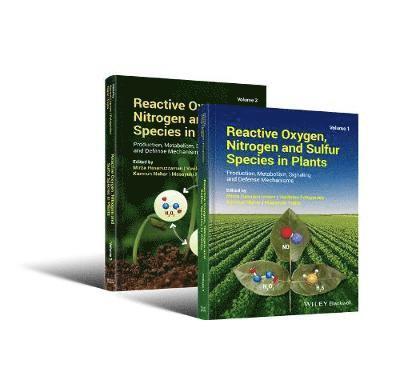
Presents a multidisciplinary analysis of the integration among reactive oxygen species (ROS), reactive nitrogen species (RNS), and reactive sulfur species (RSS).
Since plants are the main source of our food, the improvement of their productivity is the most important task for plant biologists. In this book, leading experts accumulate the recent development in the research on oxidative stress and approaches to enhance antioxidant defense system in crop plants. They discuss both the plant responses to oxidative stress and mechanisms of abiotic stress tolerance, and cover all of the recent approaches towards understanding oxidative stress in plants, providing comprehensive information about the topics. It also discusses how reactive nitrogen species and reactive sulfur species regulate plant physiology and plant tolerance to environmental stresses.
Reactive Oxygen, Nitrogen and Sulfur Species in Plants: Production, Metabolism, Signaling and Defense Mechanisms covers everything readers need to know in four comprehensive sections. It starts by looking at reactive oxygen species metabolism and antioxidant defense. Next, it covers reactive nitrogen species metabolism and signaling before going on to reactive sulfur species metabolism and signaling. The book finishes with a section that looks at crosstalk among reactive oxygen, nitrogen, and sulfur species based on current research done by experts.
Presents the newest method for understanding oxidative stress in plants. Covers both the plant responses to oxidative stress and mechanisms of abiotic stress tolerance Details the integration among reactive oxygen species (ROS), reactive nitrogen species (RNS) and reactive sulfur species (RSS) Written by 140 experts in the field of plant stress physiology, crop improvement, and genetic engineeringProviding a comprehensive collection of up-to-date knowledge spanning from biosynthesis and metabolism to signaling pathways implicated in the involvement of RONSS to plant defense mechanisms, Reactive Oxygen, Nitrogen and Sulfur Species in Plants: Production, Metabolism, Signaling and Defense Mechanisms is an excellent book for plant breeders, molecular biologists, and plant physiologists, as well as a guide for students in the field of Plant Science.
5 190 kr
Läs direkt efter köp
Presents a multidisciplinary analysis of the integration among reactive oxygen species (ROS), reactive nitrogen species (RNS), and reactive sulfur species (RSS).
Since plants are the main source of our food, the improvement of their productivity is the most important task for plant biologists. In this book, leading experts accumulate the recent development in the research on oxidative stress and approaches to enhance antioxidant defense system in crop plants. They discuss both the plant responses to oxidative stress and mechanisms of abiotic stress tolerance, and cover all of the recent approaches towards understanding oxidative stress in plants, providing comprehensive information about the topics. It also discusses how reactive nitrogen species and reactive sulfur species regulate plant physiology and plant tolerance to environmental stresses.
Reactive Oxygen, Nitrogen and Sulfur Species in Plants: Production, Metabolism, Signaling and Defense Mechanisms covers everything readers need to know in four comprehensive sections. It starts by looking at reactive oxygen species metabolism and antioxidant defense. Next, it covers reactive nitrogen species metabolism and signaling before going on to reactive sulfur species metabolism and signaling. The book finishes with a section that looks at crosstalk among reactive oxygen, nitrogen, and sulfur species based on current research done by experts.
Presents the newest method for understanding oxidative stress in plants. Covers both the plant responses to oxidative stress and mechanisms of abiotic stress tolerance Details the integration among reactive oxygen species (ROS), reactive nitrogen species (RNS) and reactive sulfur species (RSS) Written by 140 experts in the field of plant stress physiology, crop improvement, and genetic engineeringProviding a comprehensive collection of up-to-date knowledge spanning from biosynthesis and metabolism to signaling pathways implicated in the involvement of RONSS to plant defense mechanisms, Reactive Oxygen, Nitrogen and Sulfur Species in Plants: Production, Metabolism, Signaling and Defense Mechanisms is an excellent book for plant breeders, molecular biologists, and plant physiologists, as well as a guide for students in the field of Plant Science.
4 622 kr
Skickas inom 5-8 vardagar
2 820 kr
Skickas inom 5-8 vardagar
3 358 kr
Läs direkt efter köp
Comprehensive resource detailing the molecular mechanisms underlying heavy metal toxicity and tolerance in plants
Heavy Metal Toxicity and Tolerance in Plants provides a comprehensive overview of the physiological, biochemical, and molecular basis of heavy metal tolerance and functional omics that allow for a deeper understanding of using heavy metal tolerance for deliberate manipulation of plants. Through the authors’ unique approach, the text enables researchers to develop strategies to enhance metal toxicity and deficiency tolerance as well as crop productivity under stressful conditions, in order to better utilize natural resources to ensure future food security.
The text presents the basic knowledge of plant heavy metal/metalloid tolerance using modern approaches, including omics, nanotechnology, and genetic manipulation, and covers molecular breeding, genetic engineering, and approaches for high yield and quality under metal toxicity or deficiency stress conditions.
With a collection of 26 chapters contributed by the leading experts in the fields surrounding heavy metal and metalloids toxicity and tolerance in crop plants, Heavy Metal Toxicity and Tolerance in Plants includes further information on:
Advanced techniques in omics research in relation to heavy metals/metalloids toxicity and tolerance Heavy metals/metalloids in food crops and their implications for human health Molecular mechanisms of heavy metals/metalloids toxicity and tolerance in plants Molecular breeding approaches for reducing heavy metals load in the edible plant parts Hormonal regulation of heavy metals toxicity and tolerance Applications of nanotechnology for improving heavy metals stress tolerance Genetic engineering for heavy metals/metalloids stress tolerance in plantsWith comprehensive coverage of the subject, Heavy Metal Toxicity and Tolerance in Plants is an essential reference for researchers working on developing plants tolerant to metals/metalloids stress and effective strategies for reducing the risk of health hazards.
3 358 kr
Läs direkt efter köp
Comprehensive resource detailing the molecular mechanisms underlying heavy metal toxicity and tolerance in plants
Heavy Metal Toxicity and Tolerance in Plants provides a comprehensive overview of the physiological, biochemical, and molecular basis of heavy metal tolerance and functional omics that allow for a deeper understanding of using heavy metal tolerance for deliberate manipulation of plants. Through the authors’ unique approach, the text enables researchers to develop strategies to enhance metal toxicity and deficiency tolerance as well as crop productivity under stressful conditions, in order to better utilize natural resources to ensure future food security.
The text presents the basic knowledge of plant heavy metal/metalloid tolerance using modern approaches, including omics, nanotechnology, and genetic manipulation, and covers molecular breeding, genetic engineering, and approaches for high yield and quality under metal toxicity or deficiency stress conditions.
With a collection of 26 chapters contributed by the leading experts in the fields surrounding heavy metal and metalloids toxicity and tolerance in crop plants, Heavy Metal Toxicity and Tolerance in Plants includes further information on:
Advanced techniques in omics research in relation to heavy metals/metalloids toxicity and tolerance Heavy metals/metalloids in food crops and their implications for human health Molecular mechanisms of heavy metals/metalloids toxicity and tolerance in plants Molecular breeding approaches for reducing heavy metals load in the edible plant parts Hormonal regulation of heavy metals toxicity and tolerance Applications of nanotechnology for improving heavy metals stress tolerance Genetic engineering for heavy metals/metalloids stress tolerance in plantsWith comprehensive coverage of the subject, Heavy Metal Toxicity and Tolerance in Plants is an essential reference for researchers working on developing plants tolerant to metals/metalloids stress and effective strategies for reducing the risk of health hazards.
3 280 kr
Skickas inom 5-8 vardagar
828 kr
Läs direkt efter köp
Plants are frequently exposed to unfavorable and adverse environmental conditions known as abiotic stressors. These factors can include salinity, drought, heat, cold, flooding, heavy metals, and UV radiation which pose serious threats to the sustainability of crop yields. Since abiotic stresses are major constraints for crop production, finding the approaches to enhance stress tolerance is crucial to increase crop production and increase food security. This book discusses approaches to enhance abiotic stress tolerance in crop plants on a global scale. Plants scientists and breeders will learn how to further mitigate plant responses and develop new crop varieties for the changing climate.
828 kr
Läs direkt efter köp
Plants are frequently exposed to unfavorable and adverse environmental conditions known as abiotic stressors. These factors can include salinity, drought, heat, cold, flooding, heavy metals, and UV radiation which pose serious threats to the sustainability of crop yields. Since abiotic stresses are major constraints for crop production, finding the approaches to enhance stress tolerance is crucial to increase crop production and increase food security. This book discusses approaches to enhance abiotic stress tolerance in crop plants on a global scale. Plants scientists and breeders will learn how to further mitigate plant responses and develop new crop varieties for the changing climate.
828 kr
Läs direkt efter köp
Global climate change affects crop production through altered weather patterns and increased environmental stresses. Such stresses include soil salinity, drought, flooding, metal/metalloid toxicity, pollution, and extreme temperatures. The variability of these environmental conditions pared with the sessile lifestyle of plants contribute to high exposure to these stress factors. Increasing tolerance of crop plants to abiotic stresses is needed to fulfill increased food needs of the population.
This book focuses on methods of improving plants tolerance to abiotic stresses. It provides information on how protective agents, including exogenous phytoprotectants, can mitigate abiotic stressors affecting plants. The application of various phytoprotectants has become one of the most effective approaches in enhancing the tolerance of plants to these stresses. Phytoprotectants are discussed in detail including information on osmoprotectants, antioxidants, phytohormones, nitric oxide, polyamines, amino acids, and nutrient elements of plants.
Providing a valuable resource of information on phytoprotectants, this book is useful in diverse areas of life sciences including agronomy, plant physiology, cell biology, environmental sciences, and biotechnology.
835 kr
Läs direkt efter köp
Global climate change affects crop production through altered weather patterns and increased environmental stresses. Such stresses include soil salinity, drought, flooding, metal/metalloid toxicity, pollution, and extreme temperatures. The variability of these environmental conditions pared with the sessile lifestyle of plants contribute to high exposure to these stress factors. Increasing tolerance of crop plants to abiotic stresses is needed to fulfill increased food needs of the population.
This book focuses on methods of improving plants tolerance to abiotic stresses. It provides information on how protective agents, including exogenous phytoprotectants, can mitigate abiotic stressors affecting plants. The application of various phytoprotectants has become one of the most effective approaches in enhancing the tolerance of plants to these stresses. Phytoprotectants are discussed in detail including information on osmoprotectants, antioxidants, phytohormones, nitric oxide, polyamines, amino acids, and nutrient elements of plants.
Providing a valuable resource of information on phytoprotectants, this book is useful in diverse areas of life sciences including agronomy, plant physiology, cell biology, environmental sciences, and biotechnology.
2 370 kr
Skickas inom 5-8 vardagar
1 773 kr
Skickas
1 952 kr
Läs direkt efter köp
1 952 kr
Läs direkt efter köp
1 872 kr
Skickas inom 5-8 vardagar
1 630 kr
Skickas inom 10-15 vardagar
1 977 kr
Läs direkt efter köp
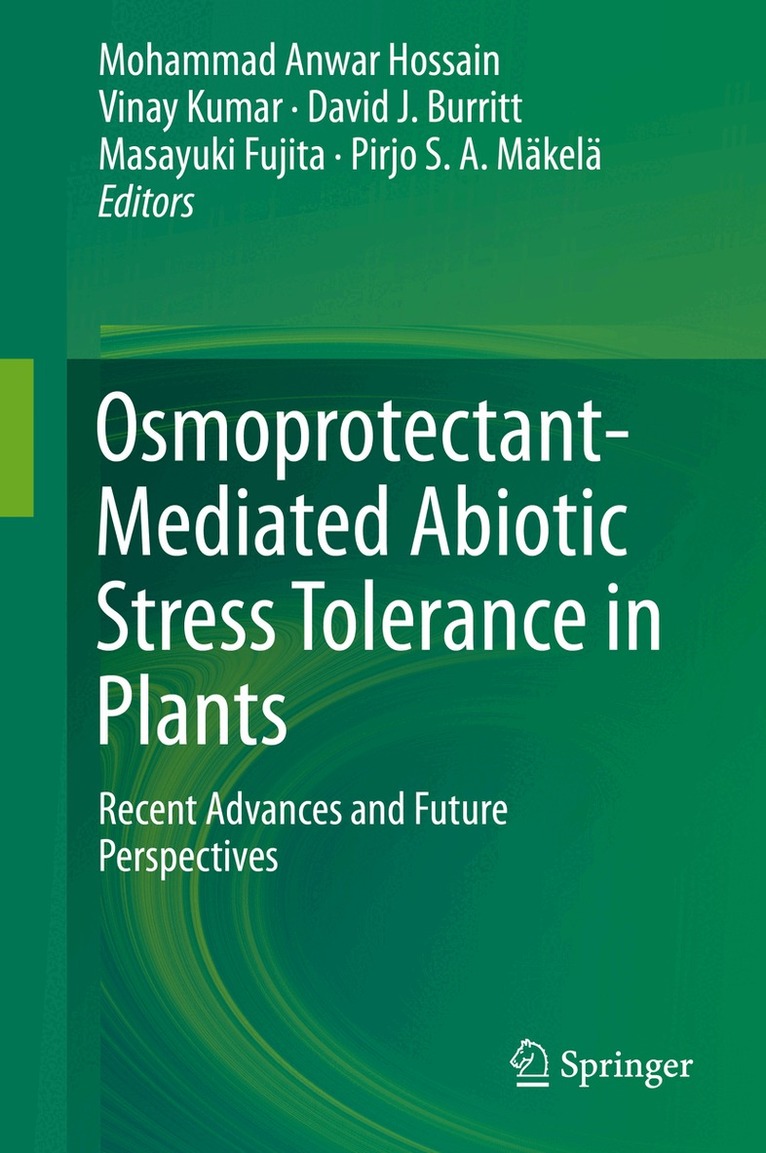
In nature, plants are constantly challenged by various abiotic and biotic stresses that can restrict their growth, development and yields. In the course of their evolution, plants have evolved a variety of sophisticated and efficient mechanisms to sense, respond to, and adapt to changes in the surrounding environment. A common defensive mechanism activated by plants in response to abiotic stress is the production and accumulation of compatible solutes (also called osmolytes). This include amino acids (mainly proline), amines (such as glycinebetaine and polyamines), and sugars (such as trehalose and sugar alcohols), all of which are readily soluble in water and non-toxic at high concentrations. The metabolic pathways involved in the biosynthesis and catabolism of compatible solutes, and the mechanisms that regulate their cellular concentrations and compartmentalization are well characterized in many important plant species. Numerous studies have provided evidence that enhancedaccumulation of compatible solutes in plants correlates with increased resistance to abiotic stresses. New insights into the mechanisms associated with osmolyte accumulation in transgenic plants and the responses of plants to exogenous application of osmolyte, will further enhance our understanding of the mechanisms by which compatible solutes help to protect plants from damage due to abiotic stress and the potential roles compatible solutes could play in improving plants growth and development under optimal conditions for growth. Although there has been significant progress made in understanding the multiple roles of compatible solute in abiotic stress tolerance, many aspects associated with compatible solute-mediated abiotic stress responses and stress tolerance still require more research. As well as providing basic up-to-date information on the biosynthesis, compartmentalization and transport of compatible solute in plants, this book will also give insights into the direct or indirect involvement of these key compatible solutes in many important metabolic processes and physiological functions, including their antioxidant and signaling functions, and roles in modulating plant growth, development and abiotic stress tolerance.
In this book, Osmoprotectant-mediated abiotic stress tolerance in plants: recent advances and future perspectives, we present a collection of 16 chapters written by leading experts engaged with compatible solute-induced abiotic stress tolerance in plants. The main objective of this volume is to promote the important roles of these compatible solutes in plant biology, by providing an integrated and comprehensive mix of basic and advanced information for students, scholars and scientists interested in, or already engaged in, research involving osmoprotectant. Finally, this book will be a valuable resource for future environmental stress-related research, and can be considered as a textbook for graduate students and as a reference book for front-line researchers working on the relationships between osmoprotectant and abiotic stress responses and tolerance in plants.