• Fri frakt över 249 kr
  • •
  • Snabba leveranser
  • •
  • Billiga böcker
Kundservice

Du är på sajten för privatpersoner.

Företag, bibliotek eller offentlig verksamhet?

Du handlar på classic.bokus.com, där alla dina funktioner finns intakta.
Till classic.bokus.com
Bokus logotyp. Gå till startsidan.
  • Erbjudanden
  • Nyheter
  • Student
  • Topplistor
  • Barn & ungdom
  • Bokus Play
  • E-böcker
  • Pocketböcker
  • Spel & pussel

10% rabatt på allt med kod: NYSTART10 →

Sidfot

Mina sidor

    Hjälp

    • Kundservice
    • Vanliga frågor och svar
    • Frakt och leverans
    • Retur vid ångerrätt
    • Reklamera vara
    • Betalning
    • Köpvillkor
    • Allmänna villkor
    • Information om webbplatsens tillgänglighet

    Om Bokus

    • Om oss
    • Pressrum
    • För studenter
    • För företag
    • För bibliotek och offentlig verksamhet
    • För leverantörer
    • Hållbarhet

    Populärt

    • Aktuella erbjudanden
    • Presentkort
    • Studentlitteratur
    • Nya böcker
    • Topplistor
    • Signerade böcker
    • Engelska böcker

    Inspiration

    • Boktips
    • BookTok
    • Populära bokserier
    • Barnbokskaraktärer
    • Populära författare
    Logotyp för Bokus
    Följ oss på Facebook (extern länk)Följ oss på Instagram (extern länk)Följ oss på YouTube (extern länk)Följ oss på TikTok (extern länk)
    bokus @ CookiesAnpassa cookiesIntegritetspolicyKöpvillkor
    Till Citymail hemsida (extern länk)Till Budbee hemsida (extern länk)Till Postnord hemsida (extern länk)Till Schenker hemsida (extern länk)Till Early Bird hemsida (extern länk)Till Walleys hemsida (extern länk)
    1. Naturvetenskap och teknik
    2. Matematik och naturvetenskap
    3. Biologi
    4. Biokemi

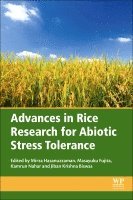
    Advances in Rice Research for Abiotic Stress Tolerance

    AvMirza Hasanuzzaman,Masayuki Fujita

    Häftad, Engelska, 2018

    3 184 kr

    Beställningsvara. Skickas inom 10-15 vardagar. Fri frakt över 249 kr.

    Beskrivning

    Advances in Rice Research for Abiotic Stress Tolerance provides an important guide to recognizing, assessing and addressing the broad range of environmental factors that can inhibit rice yield.

    As a staple food for nearly half of the world's population, and in light of projected population growth, improving and increasing rice yield is imperative. This book presents current research on abiotic stresses including extreme temperature variance, drought, hypoxia, salinity, heavy metal, nutrient deficiency and toxicity stresses. Going further, it identifies a variety of approaches to alleviate the damaging effects and improving the stress tolerance of rice.

    Advances in Rice Research for Abiotic Stress Tolerance provides an important reference for those ensuring optimal yields from this globally important food crop.


    • Covers aspects of abiotic stress, from research, history, practical field problems faced by rice, and the possible remedies to the adverse effects of abiotic stresses
    • Provides practical insights into a wide range of management and crop improvement practices
    • Presents a valuable, single-volume sourcebook for rice scientists dealing with agronomy, physiology, molecular biology and biotechnology

    Produktinformation

    • Utgivningsdatum:2018-11-14
    • Mått:191 x 235 x undefined mm
    • Vikt:1 930 g
    • Format:Häftad
    • Språk:Engelska
    • Antal sidor:986
    • Förlag:Elsevier Science
    • ISBN:9780128143322

    Utforska kategorier

    • Biokemi inom Naturvetenskap och teknik
    • Agronomi och lantbruk inom Naturvetenskap och teknik

    Mer om författaren

    Mirza Hasanuzzaman is a professor of agronomy at Sher-e-Bangla Agricultural University, Dhaka, Bangladesh. He received his PhD from the United Graduate School of Agricultural Sciences. Later, he completed his postdoctoral research in the Center of Molecular Biosciences (COMB), University of the Ryukyus, Okinawa, Japan. Subsequently, he became an adjunct senior researcher at the University of Tasmania with an Australian government’s Endeavour Research Fellowship. Over his career he has mentored numerous master's, doctoral, and postdoctoral researchers and has published widely on plant physiology, plant stress responses, and environmental challenges affecting plant species, including authored and edited books and book chapters. He serves as an editor and reviewer for many peer-reviewed international journals and was a recipient of the Publons Peer Review Awards (2017, 2018, and 2019). He is an active member of numerous professional societies and holds office as acting general secretary of the Bangladesh JSPS Alumni Association and as publication secretary of both the Bangladesh Society of Agronomy and the Weed Science Society of Bangladesh. His honors include the World Academy of Sciences (TWAS) Young Scientist Award (2014), the University Grants Commission (UGC) Gold Medal (2018), the Bangladesh Academy of Sciences (BAS) Gold Medal Award (Senior Group, 2022), the Global Network of Bangladeshi Biotechnologists (GNOBB) Award (2021), and the Society for Plant Research Young Scientist Award (Agriculture, 2023). He is a fellow of the Bangladesh Academy of Sciences (BAS), the World Academy of Sciences (TWAS), the Royal Society of Biology, and the International Society of Environmental Botanists, and a foreign fellow of the Society for Science of Climate Change and Sustainable Environment. Masayuki Fujita is a former professor at the Faculty of Agriculture, Kagawa University, Kagawa, Japan. He received his BSc in chemistry from Shizuoka University, Shizuoka, and his MAgr and PhD in plant biochemistry from Nagoya University, Nagoya, Japan. His research interests include physiological, biochemical, and molecular biological responses based on secondary metabolism in plants under various abiotic and biotic stresses; phytoalexins, cytochrome P450, glutathione S-transferase, and phytochelatins; and redox reactions and antioxidants. In the last decade, his work has focused on oxidative stress and antioxidant defense in plants under environmental stress. His group investigates the role of various exogenous protectants in enhancing antioxidant defense and methylglyoxal detoxification systems in plants. He has supervised numerous master's and doctoral students and has authored many publications in journals and books, as well as edited several books. Kamrun Nahar is an associate professor in the Department of Agricultural Botany at Sher-e-Bangla Agricultural University, Dhaka, Bangladesh. She received her PhD in environmental stress physiology of plants in 2016 from the United Graduate School of Agricultural Sciences, Ehime University, Japan, on a Japanese Government (MEXT) scholarship. Dr. Nahar has been engaged in research on field crops, with an emphasis on stress physiology, since 2006. She has completed several research projects and is currently conducting research funded by the Sher-e-Bangla Agricultural University Research System and the Ministry of Science and Technology (Bangladesh). She supervises master's students. Dr. Nahar has published numerous articles and book chapters on plant physiology and environmental stresses with publishers including Springer, Elsevier, CRC Press, and Wiley. She is involved in editorial activities and serves as a reviewer for international journals. She is an active member of numerous professional societies. She has attended and presented papers and posters at national and international conferences in several countries. Jiban Krishna Biswas is the former director general of the Bangladesh Rice Research Institute (BRRI), where he devoted his entire career as a rice scientist. He was an IRRI (International Rice Research Institute) fellow and a JSPS (Japan Society for the Promotion of Science) fellow during his PhD and postdoctoral research, respectively. As a plant physiologist, he worked closely with colleagues to develop rice varieties for both favorable and unfavorable ecosystems. He has published numerous articles in national and international journals and several books on rice, climate change, and the history of rice research. He was the chief editor of the Bangladesh Rice Journal, a regular publication of BRRI.

    Innehållsförteckning

    • 1. Major Constraints for Global Rice Production2. Managing Abiotic Stresses With Rice Agriculture to Achieve Sustainable Food Security: Bangladesh Perspective3. Recent Progress in Rice Varietal Development for Abiotic Stress Tolerance4. Plant Growth and Morphological Changes in Rice Under Abiotic Stress5. Recent Advancements in Developing Salinity Tolerant Rice6. Deciphering Strategies for Salt Stress Tolerance in Rice in the Context of Climate Change7. A Comprehensive Review on Rice Responses and Tolerance to Salt Stress8. Effects of Salinity on Rice and Rice Weeds: Shortand Long-Term Adaptation Strategies and Weed Management9. Drought Stress Responses and its Management in Rice10. Rice Responses and Tolerance to High Temperature11. Scope and Progress of Rice Research Harnessing Cold Tolerance12. Current Scenarios, Progress and Prospects of Developing Technologies for Flood-Tolerant Rice in Bangladesh13. Responses of Rice to Individual and Combined Stresses of Flooding and Salinity14. Rice Responses and Tolerance to Metal/Metalloid Toxicity15. Metal Toxicity in Rice and Strategies for Improving Stress Tolerance16. Physiological and Molecular Responses for Metalloid Stress in Rice—A Comprehensive Overview17. Plausible Strategies to Reduce Arsenic Accumulation in Rice18. Recent Advances in Arsenic Accumulation in Rice19. Rice Responses and Tolerance to Elevated Ozone20. Tools and Techniques in the Assessment of Plant Tolerance to High Irradiance Stress With Illustration of Cereal Crops Like Rice21. Soil Nutrient Stress and Rice Production in Bangladesh22. Organic Carbon Sources and Nitrogen Management Improve Biomass of Hybrid Rice (Oryza sativa L.) Under Nitrogen Deficient Condition23. A Review on the Protocols and Comparative Studies of Oxidative Stress Tolerance in Rice24. Abiotic Stress-Induced Oxidative Stress in Rice25. Climate Change and Abiotic Stress-Induced Oxidative Burst in Rice26. Comparative Metabolomics Approach Towards Understanding Chemical Variation in Rice Under Abiotic Stress27. Abiotic Stress Signaling in Rice Crop28. Abiotic Stress and Rice Grain Quality29. Advances in Rice Research for Abiotic Stress Tolerance: Agronomic Approaches to Improve Rice Production Under Abiotic Stress30. Advances in Biotechnological Tools: Improving Abiotic Stress Tolerance in Rice31. Use of Phytohormones in Improving Abiotic Stress Tolerance to Rice32. Use of Phytohormones in Improving Abiotic Stress Tolerance in Rice33. Emerging Role of Osmolytes in Enhancing Abiotic Stress Tolerance in Rice34. Rice Responses and Tolerance to Ultraviolet-B (UV-B) Radiation: Plant Growth Regulators Provide a Management Option35. Ameliorative Mechanisms of Polyamines Against Abiotic Stress in the Rice Plants36. Genomic Footprints Uncovering Abiotic Stress Tolerance in Rice37. Engineering of Abiotic Stress Tolerance by Modulating Antioxidant Defense Systems38. Omics Approaches in Developing Abiotic Stress Tolerance in Rice (Oryza sativa L.)39. Proteomics Study in Rice Responses and Tolerance to Salt Stress40. Rice Responses and Tolerance to Salt Stress: Deciphering the Physiological and Molecular Mechanisms of Salinity Adaptation41. Progress and Challenges of Detecting Biomarkers for the Development of Pesticide Biosensor in Rice Plants42. Molecular Approaches for Dissecting and Improving Drought and Heat Tolerance in Rice43. Use of QTLs in Developing Abiotic Stress Tolerance in Rice44. Policy Directions Toward Increasing Rice Productivity—Lessons from Bangladesh