Arnold Schlissel – författare
Visar alla böcker från författaren Arnold Schlissel. Handla med fri frakt och snabb leverans.
3 produkter
3 produkter
Inbunden, Engelska, 2001
1 633 kr
Skickas inom 10-15 vardagar
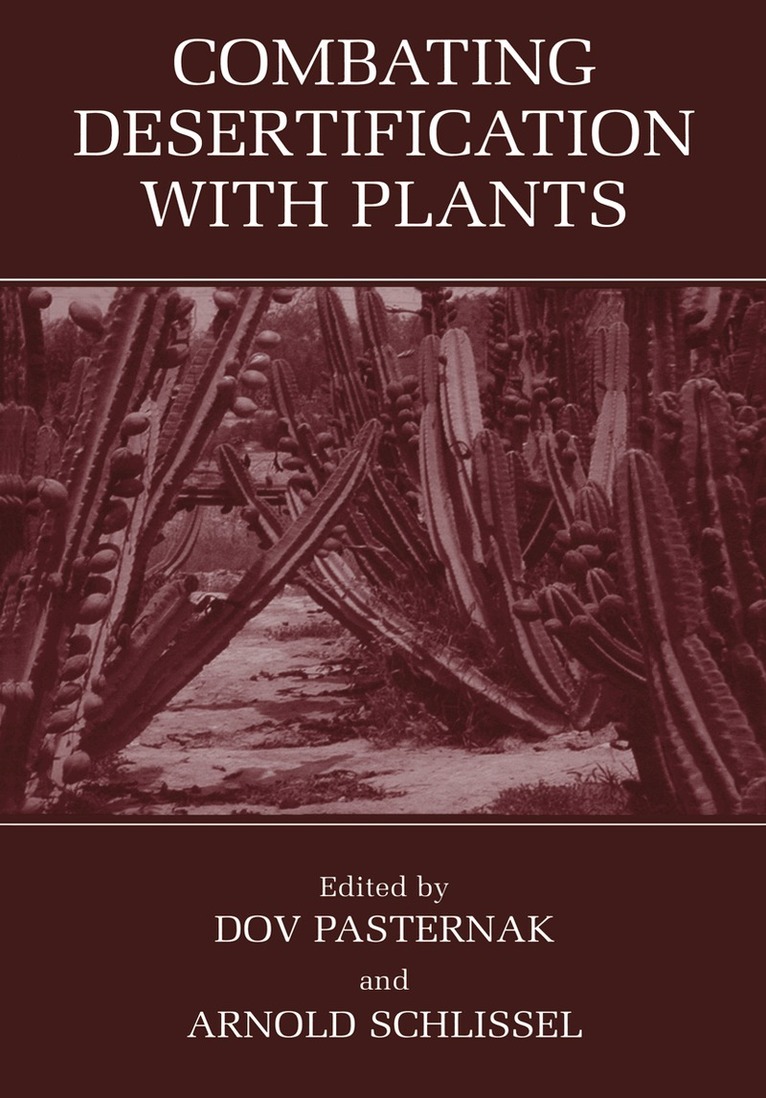
This title discusses the role of plants in combating desertification. Desertification - the degradation of soils in drylands - is a phenomenon occurring in scores of countries around the globe. The number of people (in semiarid regions) affected by the steady decline in the productivity of their lands is in the hundred millions. This work provides the reader with the experience of scientists from 30 countries and international institutions around the globe, working in cold and warm dry regions to bring plant-based solutions to one of the most severe problems of our times. The measures required to halt or reverse the process of desertification fall into many categories - policy, institutional, sociological/anthropological, and technical.
Häftad, Engelska, 2012
1 633 kr
Skickas inom 10-15 vardagar
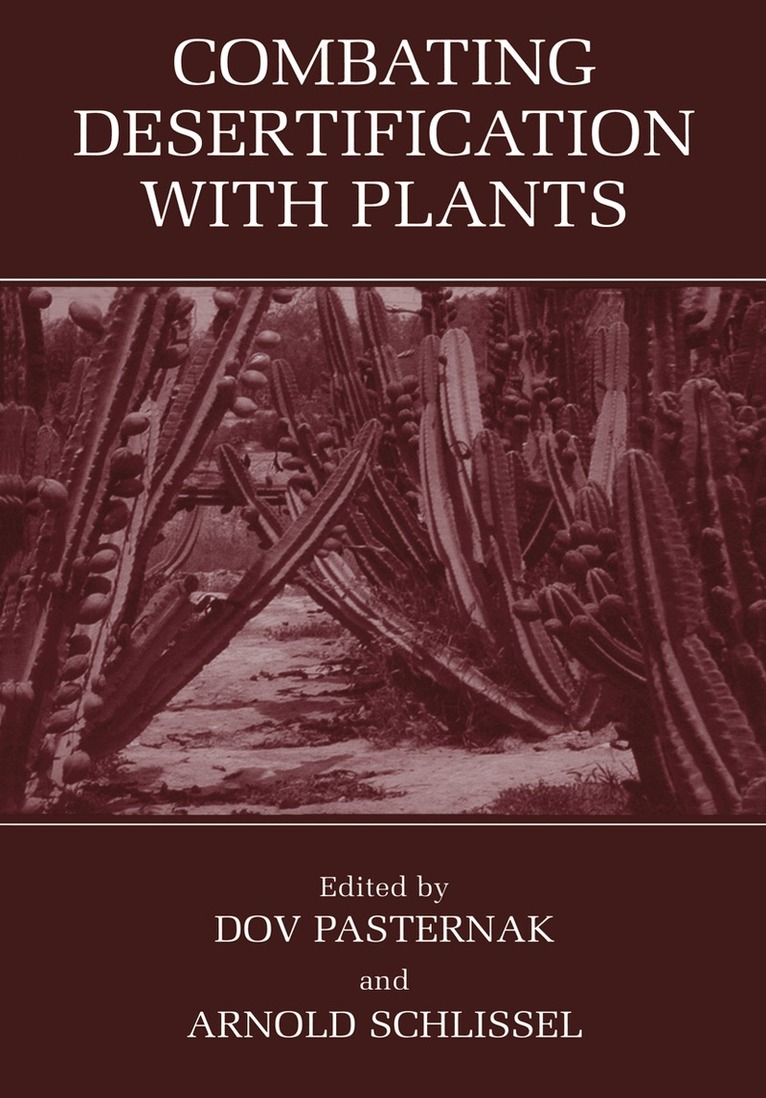
The conference "Combating Desertification with Plants" was held in Beer Sheva, Israel, from November 2-5, 1999, and was attended by 70 participants from 30 countries and/or international organisations. Desertification - the degradation of soils in drylands - is a phenomenon occurring in scores of countries around the globe. The number of people (in semiarid regions) affected by the steady decline in the productivity of their lands is in the hundred millions. The measures required to halt and reverse the process of desertification fall into many categories - policy, institutional, sociological-anthropological, and technical. Although technical "solutions" are not currently in vogue, the conference organizers felt that perhaps the pendulum had swung too far in the direction of "participatory approaches." Hence IPALAC - The International Program for Arid Land Crops - whose function is to serve as a catalyst for optimizing the contribution of plant germplasm to sustainable development in desertification-prone regions - felt the time was opportune for providing a platform for projects where the "plant-driven" approach to development finds expression. Some 45 papers were delivered at the conference, falling into the categories of this volume: Overview, Potential Germplasm for Arid Lands, Introduction, Domestication and Dissemination of Arid Land Plants, Land Rehabilitation, and Mechanisms of Plant Transfer. The conference was funded by UNESCO (Division of Ecological Sciences), the Ministry of Foreign Affairs of Finland, and MASHAV, Israel's Center for International Development Cooperation.
E-bok
PDF, Engelska, 20121 977 kr
Läs direkt efter köp
The conference "Combating Desertification with Plants" was held in Beer Sheva, Israel, from November 2-5, 1999, and was attended by 70 participants from 30 countries and/or international organisations. Desertification - the degradation of soils in drylands - is a phenomenon occurring in scores of countries around the globe. The number of people (in semiarid regions) affected by the steady decline in the productivity of their lands is in the hundred millions. The measures required to halt and reverse the process of desertification fall into many categories - policy, institutional, sociological-anthropological, and technical. Although technical "solutions" are not currently in vogue, the conference organizers felt that perhaps the pendulum had swung too far in the direction of "participatory approaches." Hence IPALAC - The International Program for Arid Land Crops - whose function is to serve as a catalyst for optimizing the contribution of plant germplasm to sustainable development in desertification-prone regions - felt the time was opportune for providing a platform for projects where the "plant-driven" approach to development finds expression. Some 45 papers were delivered at the conference, falling into the categories of this volume: Overview, Potential Germplasm for Arid Lands, Introduction, Domestication and Dissemination of Arid Land Plants, Land Rehabilitation, and Mechanisms of Plant Transfer. The conference was funded by UNESCO (Division of Ecological Sciences), the Ministry of Foreign Affairs of Finland, and MASHAV, Israel''s Center for International Development Cooperation.