Arthur Lyons - Böcker
Visar alla böcker från författaren Arthur Lyons. Handla med fri frakt och snabb leverans.
6 produkter
6 produkter
186 kr
Skickas inom 5-8 vardagar
Robert Mitchum once commented to Arthur Lyons about his movies of the 1940s and 1950s: "Hell, we didn't know what film noir was in those days. We were just making movies. Cary Grant and all the big stars at RKO got all the lights. We lit our sets with cigarette butts." Film noir was made to order for the "B," or low-budget, part of the movie double bill. It was cheaper to produce because it made do with less lighting, smaller casts, limited sets, and compact story lines,about con men, killers, cigarette girls, crooked cops, down-and-out boxers, and calculating, scheming, very deadly women. In Death on the Cheap , Arthur Lyons entertainingly looks at the history of the B movie and how it led to the genre that would come to be called noir, a genre that decades later would be transformed in such "neo-noir" films as Pulp Fiction, Fargo , and L.A. Confidential . The book, loaded with movie stills, also features a witty and informative filmography (including video sources) of B films that have largely been ignored or neglected, lost" to the general public but now restored to their rightful place in movie history thanks to Death on the Cheap .
2 150 kr
Skickas inom 10-15 vardagar
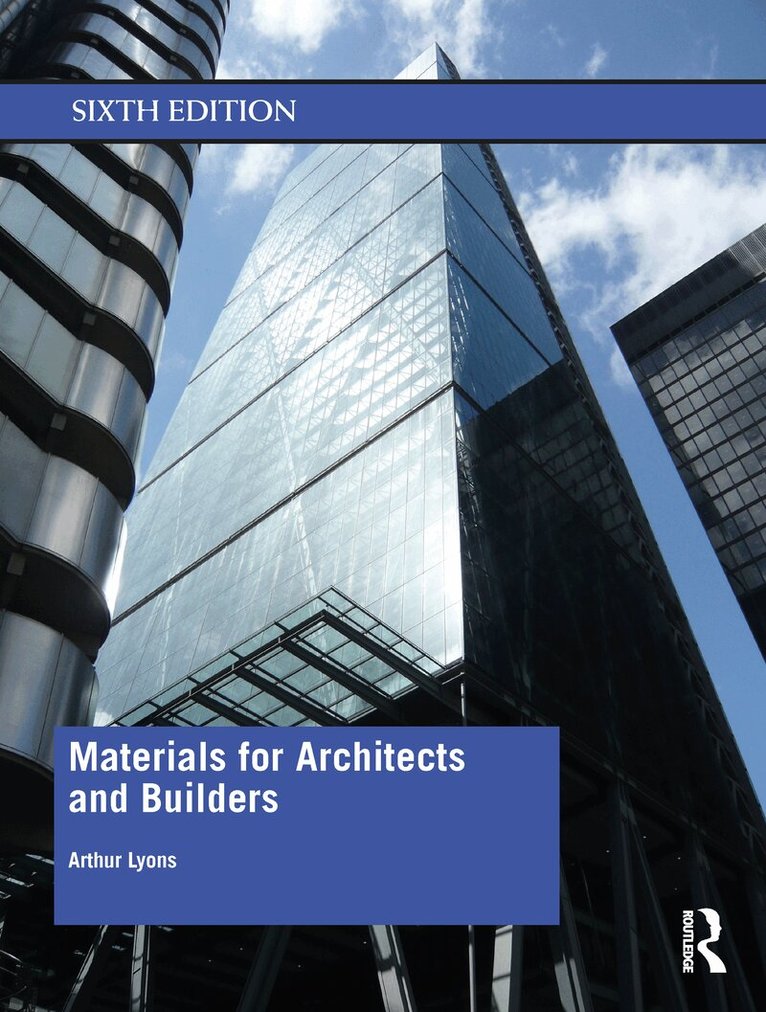
Materials for Architects and Builders provides a clear and concise introduction to the broad range of materials used within the construction industry and covers the essential details of their manufacture, key physical properties, specification and uses.Understanding the basics of materials is a crucial part of undergraduate and diploma construction or architecture-related courses, and this established textbook helps the reader to do just that with the help of colour photographs and clear diagrams throughout.This new sixth edition has been completely revised and updated to include the latest developments in materials research, new images, appropriate technologies and relevant legislation. The ecological effects of building construction and lifetime use remain an important focus, and this new edition includes a wide range of energy-saving building components.
831 kr
Skickas inom 10-15 vardagar
Materials for Architects and Builders provides a clear and concise introduction to the broad range of materials used within the construction industry and covers the essential details of their manufacture, key physical properties, specification and uses.Understanding the basics of materials is a crucial part of undergraduate and diploma construction or architecture-related courses, and this established textbook helps the reader to do just that with the help of colour photographs and clear diagrams throughout.This new sixth edition has been completely revised and updated to include the latest developments in materials research, new images, appropriate technologies and relevant legislation. The ecological effects of building construction and lifetime use remain an important focus, and this new edition includes a wide range of energy-saving building components.
399 kr
Skickas inom 3-6 vardagar
733 kr
Skickas inom 10-15 vardagar
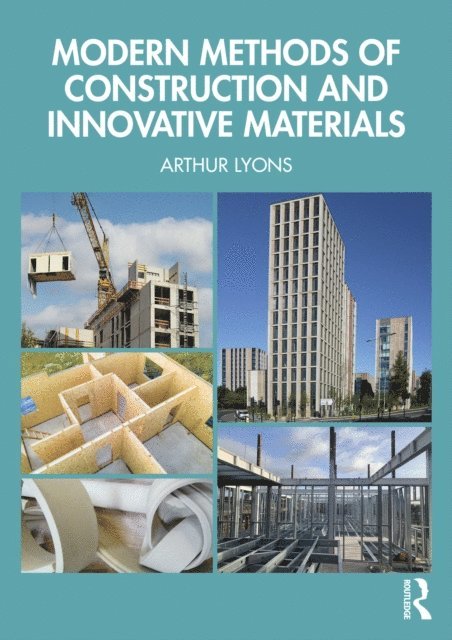
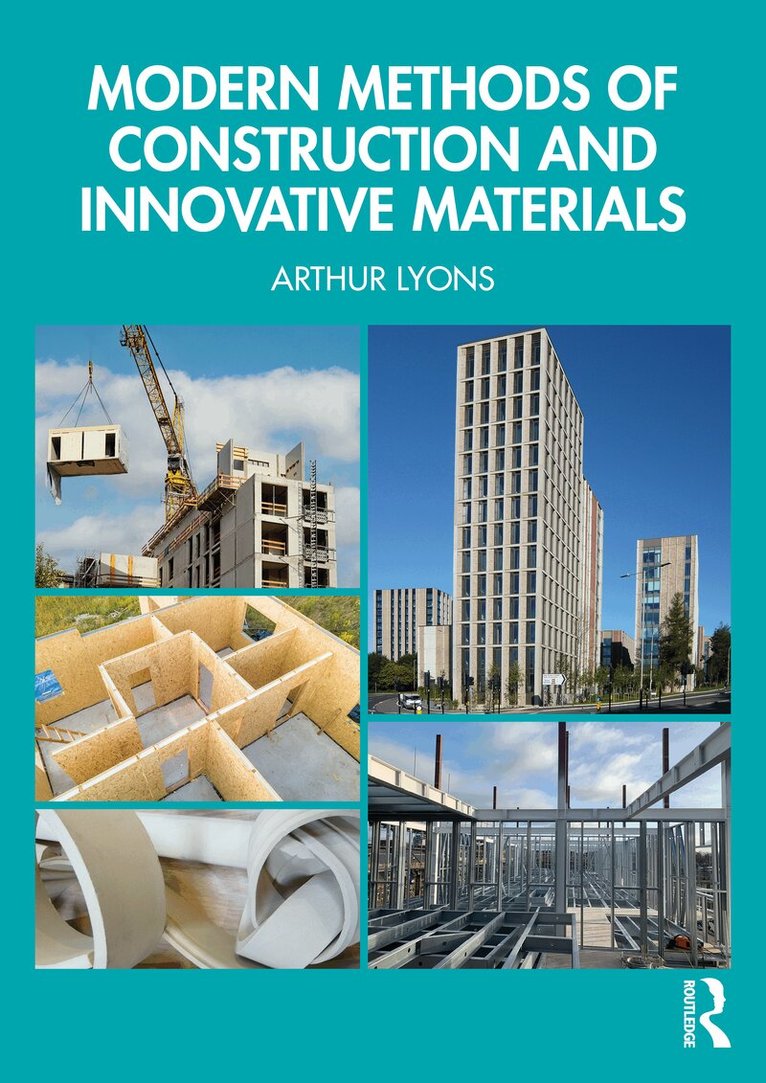
This new textbook has two main themes. The first is Modern Methods of Construction (MMC) which is the off-site manufacture of a wide spectrum of products, ranging from whole buildings to be transported onto site, down to smaller units or components for site integration. The second theme describes the innovation and progress towards carbon zero by the major generators of CO2 in the construction industry – namely cement, steel and masonry.The first section of the book describes and illustrates with photographs, the major forms of Modern Methods of Construction. These include fully completed 3D units, panelised systems, pods, sub-assemblies and on-site MMC. The section on Innovative Materials then describes a wide range of construction products which are entering into the built environment sector. Some new entrants are variants on well-established construction materials such as steel and concrete. Materials such as these will remain major construction materials for the foreseeable future, but their composition and manufacturing processes will inevitably have to change. Timber also will remain a major construction material, but sustainable sourcing is key and its utilisation as cross-lamination timber (CLT) or as modified timber is rapidly developing. As a result, students and practitioners must familiarise themselves with these materials, their composition, and various uses.The book goes on to describe variants of other traditional building products, such as glass, plastic and insulation, which are undergoing major developments leading towards enhanced environmental sustainability, as well as many emergent materials, some of which are likely to be significant in future. Modern Methods of Construction and Innovative Materials is the only book combining these important elements of the future of the industry in an easy-to-read guide for students and new practitioners. It is essential reading for anyone studying and working in the built environment, be they architects, construction managers, surveyors or engineers.
2 426 kr
Skickas inom 10-15 vardagar
This new textbook has two main themes. The first is Modern Methods of Construction (MMC) which is the off-site manufacture of a wide spectrum of products, ranging from whole buildings to be transported onto site, down to smaller units or components for site integration. The second theme describes the innovation and progress towards carbon zero by the major generators of CO2 in the construction industry – namely cement, steel and masonry.The first section of the book describes and illustrates with photographs, the major forms of Modern Methods of Construction. These include fully completed 3D units, panelised systems, pods, sub-assemblies and on-site MMC. The section on Innovative Materials then describes a wide range of construction products which are entering into the built environment sector. Some new entrants are variants on well-established construction materials such as steel and concrete. Materials such as these will remain major construction materials for the foreseeable future, but their composition and manufacturing processes will inevitably have to change. Timber also will remain a major construction material, but sustainable sourcing is key and its utilisation as cross-lamination timber (CLT) or as modified timber is rapidly developing. As a result, students and practitioners must familiarise themselves with these materials, their composition, and various uses.The book goes on to describe variants of other traditional building products, such as glass, plastic and insulation, which are undergoing major developments leading towards enhanced environmental sustainability, as well as many emergent materials, some of which are likely to be significant in future. Modern Methods of Construction and Innovative Materials is the only book combining these important elements of the future of the industry in an easy-to-read guide for students and new practitioners. It is essential reading for anyone studying and working in the built environment, be they architects, construction managers, surveyors or engineers.