Arthur P. Wolf - Böcker
Visar alla böcker från författaren Arthur P. Wolf. Handla med fri frakt och snabb leverans.
6 produkter
6 produkter
388 kr
Skickas inom 7-10 vardagar
A Stanford University Press classic.
996 kr
Skickas inom 10-15 vardagar
A Stanford University Press classic.
Sexual Attraction and Childhood Association
A Chinese Brief for Edward Westermarck
Inbunden, Engelska, 1995
1 044 kr
Skickas inom 10-15 vardagar
In 1891, the anthropologist Edward Westermarck proposed that early childhood association inhibits sexual attraction and that this aversion was manifested in custom and law as the basis of the universal incest taboo. Then, in 1910, in the essays later published as Totem and Taboo, Sigmund Freud challenged the "Westermarck hypothesis" on the ground that "the earliest sexual excitations of youthful human beings are invariably of an incestuous character." The incest taboo only existed, Freud argued, because of this natural propensity.Freud's challenge carried the day and became the standard view throughout the social and biological sciences. Consequently, the question was: why do all societies repress this natural inclination? Biologists argued that the incest taboo protected us from dangers of inbreeding; sociologists argued that it was necessary to prevent sexual rivalry that would destroy the family; and anthropologists saw the real purpose of the taboo as forcing families to exchange women in marriage.The book uses a wide range of research - from studies of nonhuman primates to reports of incestuous child abuse - from African divorce practices to animal behavior - to demonstrate that Westermarck was right and Freud wrong. It shows that there is a critical period in human development - approximately the first thirty months of life - during which association permanently inhibits sexual attraction. It concludes that the incest taboo is unnecessary and cannot be explained in functional terms, and that encouraging early association between father and daughter is probably the best way of preventing sexual abuse.
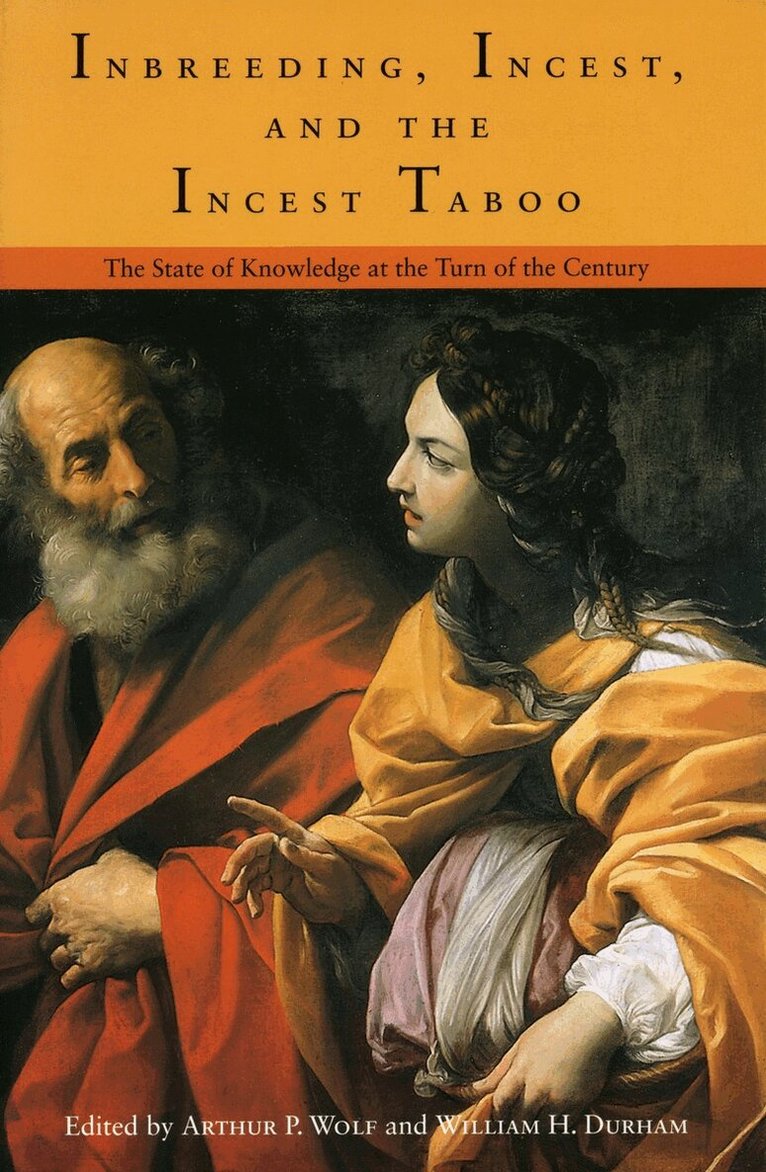
Inbreeding, Incest, and the Incest Taboo
The State of Knowledge at the Turn of the Century
Inbunden, Engelska, 2004
1 164 kr
Skickas inom 7-10 vardagar
Is inbreeding harmful? Are human beings and other primates naturally inclined to mate with their closest relatives? Why is incest widely prohibited? Why does the scope of the prohibition vary from society to society? Why does incest occur despite the prohibition? What are the consequences? After one hundred years of intense argument, a broad consensus has emerged on the first two questions, but the debate over the others continues.That there is a biological basis for the avoidance of inbreeding seems incontrovertible, but just how injurious inbreeding really is for successive generations remains an open question. Nor has there been any conclusion to the debate over Freud's view that the incest taboo is necessary because humans are sexually attracted to their closest relatives—a claim countered by Westermarck's argument for the sexually inhibiting effects of early childhood association.This book brings together contributions from the fields of genetics, behavioral biology, primatology, biological and social anthropology, philosophy, and psychiatry which reexamine these questions.
Inbreeding, Incest, and the Incest Taboo
The State of Knowledge at the Turn of the Century
Häftad, Engelska, 2004
283 kr
Skickas inom 7-10 vardagar
Is inbreeding harmful? Are human beings and other primates naturally inclined to mate with their closest relatives? Why is incest widely prohibited? Why does the scope of the prohibition vary from society to society? Why does incest occur despite the prohibition? What are the consequences? After one hundred years of intense argument, a broad consensus has emerged on the first two questions, but the debate over the others continues.That there is a biological basis for the avoidance of inbreeding seems incontrovertible, but just how injurious inbreeding really is for successive generations remains an open question. Nor has there been any conclusion to the debate over Freud's view that the incest taboo is necessary because humans are sexually attracted to their closest relatives—a claim countered by Westermarck's argument for the sexually inhibiting effects of early childhood association.This book brings together contributions from the fields of genetics, behavioral biology, primatology, biological and social anthropology, philosophy, and psychiatry which reexamine these questions.
152 kr
Skickas inom 7-10 vardagar
Why do most people never have sex with close relatives? And why do they disapprove of other people doing so? Incest Avoidance and Incest Taboos investigates our human inclination to avoid incest and the powerful taboo against incest found in all societies. Both subjects stir strong feelings and vigorous arguments within and beyond academic circles. With great clarity, Wolf lays out the modern assumptions about both, concluding that all previous approaches lack precision and balance on insecure evidence. Researchers he calls "constitutionalists" explain human incest avoidance by biologically-based natural aversion, but fail to explain incest taboos as cultural universals. By contrast, "conventionalists" ignore the evolutionary roots of avoidance and assume that incest avoidant behavior is guided solely by cultural taboos. Both theories are incomplete.Wolf tests his own theory with three natural experiments: bint'amm (cousin) marriage in Morocco, the rarity of marriage within Israeli kibbutz peer groups, and "minor marriages" (in which baby girls were raised by their future mother-in-law to marry an adoptive "brother") in China and Taiwan. These cross-cultural comparisons complete his original and intellectually rich theory of incest, one that marries biology and culture by accounting for both avoidance and taboo.