Ashley Bear – författare
618 kr
Skickas
899 kr
Läs direkt efter köp
In the United States, broad study in an array of different disciplines —arts, humanities, science, mathematics, engineering— as well as an in-depth study within a special area of interest, have been defining characteristics of a higher education. But over time, in-depth study in a major discipline has come to dominate the curricula at many institutions. This evolution of the curriculum has been driven, in part, by increasing specialization in the academic disciplines. There is little doubt that disciplinary specialization has helped produce many of the achievement of the past century. Researchers in all academic disciplines have been able to delve more deeply into their areas of expertise, grappling with ever more specialized and fundamental problems.
Yet today, many leaders, scholars, parents, and students are asking whether higher education has moved too far from its integrative tradition towards an approach heavily rooted in disciplinary "silos". These "silos" represent what many see as an artificial separation of academic disciplines. This study reflects a growing concern that the approach to higher education that favors disciplinary specialization is poorly calibrated to the challenges and opportunities of our time.
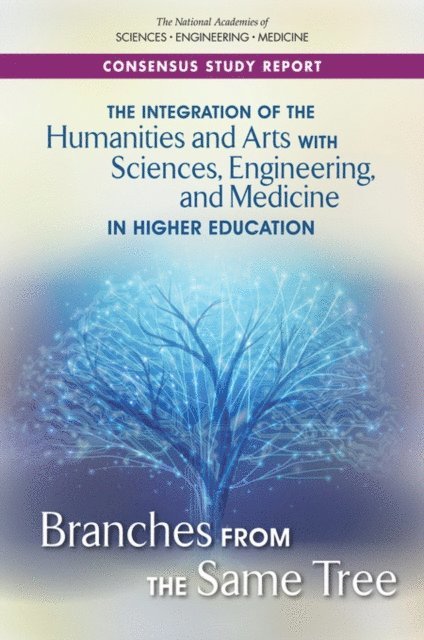
The Integration of the Humanities and Arts with Sciences, Engineering, and Medicine in Higher Education examines the evidence behind the assertion that educational programs that mutually integrate learning experiences in the humanities and arts with science, technology, engineering, mathematics, and medicine (STEMM) lead to improved educational and career outcomes for undergraduate and graduate students. It explores evidence regarding the value of integrating more STEMM curricula and labs into the academic programs of students majoring in the humanities and arts and evidence regarding the value of integrating curricula and experiences in the arts and humanities into college and university STEMM education programs.
488 kr
Skickas inom 11-20 vardagar
757 kr
Läs direkt efter köp
Careers in science, engineering, and medicine offer opportunities to advance knowledge, contribute to the well-being of communities, and support the security, prosperity, and health of the United States. But many women do not pursue or persist in these careers, or advance to leadership positions - not because they lack the talent or aspirations, but because they face barriers, including: implicit and explicit bias; sexual harassment; unequal access to funding and resources; pay inequity; higher teaching and advising loads; and fewer speaking invitations, among others.
There are consequences from this underrepresentation of women for the nation as well: a labor shortage in many science, engineering, and medical professions that cannot be filled unless institutions and organizations recruit from a broad and diverse talent pool; lost opportunities for innovation and economic gain; and lost talent as a result of discrimination, unconscious bias, and sexual harassment.
Promising Practices for Addressing the Underrepresentation of Women in Science, Engineering, and Medicine reviews and synthesizes existing research on policies, practices, programs, and other interventions for improving the recruitment, retention, and sustained advancement into leadership roles of women in these disciplines. This report makes actionable recommendations to leverage change and drive swift, coordinated improvements to the systems of education, research, and employment in order to improve both the representation and leadership of women.
184 kr
Skickas inom 5-8 vardagar
140 kr
Skickas inom 5-8 vardagar