and Medicine Committee on Women in Science, Engineering – författare
690 kr
Läs direkt efter köp
Rising awareness of and increased attention to sexual harassment has resulted in momentum to implement sexual harassment prevention efforts in higher education institutions. Work on preventing sexual harassment is an area that has recently garnered a lot of attention, especially around education and programs that go beyond the standard anti-sexual harassment trainings often used to comply with legal requirements.
On April 20-21, 2021, the National Academies of Sciences, Engineering, and Medicine hosted the workshop Developing Evaluation Metrics for Sexual Harassment Prevention Efforts. The workshop explored approaches and strategies for evaluating and measuring the effectiveness of sexual harassment interventions being implemented at higher education institutions and research and training sites, in order to assist institutions in transforming promising ideas into evidence-based best practices. Workshop participants also addressed methods, metrics, and measures that could be used to evaluate sexual harassment prevention efforts that lead to change in the organizational climate and culture and/or a change in behavior among community members. This publication summarizes the presentations and discussion of the workshop.
613 kr
Läs direkt efter köp
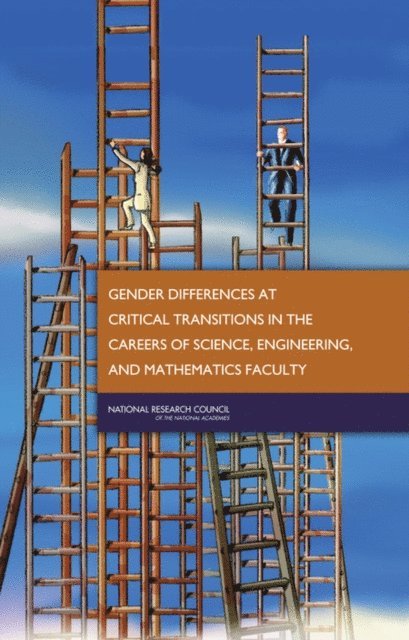
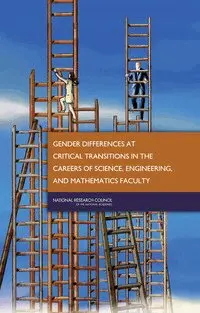
Gender Differences at Critical Transitions in the Careers of Science, Engineering, and Mathematics Faculty presents new and surprising findings about career differences between female and male full-time, tenure-track, and tenured faculty in science, engineering, and mathematics at the nation''s top research universities. Much of this congressionally mandated book is based on two unique surveys of faculty and departments at major U.S. research universities in six fields: biology, chemistry, civil engineering, electrical engineering, mathematics, and physics. A departmental survey collected information on departmental policies, recent tenure and promotion cases, and recent hires in almost 500 departments. A faculty survey gathered information from a stratified, random sample of about 1,800 faculty on demographic characteristics, employment experiences, the allocation of institutional resources such as laboratory space, professional activities, and scholarly productivity.
This book paints a timely picture of the status of female faculty at top universities, clarifies whether male and female faculty have similar opportunities to advance and succeed in academia, challenges some commonly held views, and poses several questions still in need of answers. This book will be of special interest to university administrators and faculty, graduate students, policy makers, professional and academic societies, federal funding agencies, and others concerned with the vitality of the U.S. research base and economy.
867 kr
Läs direkt efter köp
Gender Differences at Critical Transitions in the Careers of Science, Engineering, and Mathematics Faculty presents new and surprising findings about career differences between female and male full-time, tenure-track, and tenured faculty in science, engineering, and mathematics at the nation''s top research universities. Much of this congressionally mandated book is based on two unique surveys of faculty and departments at major U.S. research universities in six fields: biology, chemistry, civil engineering, electrical engineering, mathematics, and physics. A departmental survey collected information on departmental policies, recent tenure and promotion cases, and recent hires in almost 500 departments. A faculty survey gathered information from a stratified, random sample of about 1,800 faculty on demographic characteristics, employment experiences, the allocation of institutional resources such as laboratory space, professional activities, and scholarly productivity.
This book paints a timely picture of the status of female faculty at top universities, clarifies whether male and female faculty have similar opportunities to advance and succeed in academia, challenges some commonly held views, and poses several questions still in need of answers. This book will be of special interest to university administrators and faculty, graduate students, policy makers, professional and academic societies, federal funding agencies, and others concerned with the vitality of the U.S. research base and economy.
579 kr
Skickas inom 3-6 vardagar
519 kr
Läs direkt efter köp
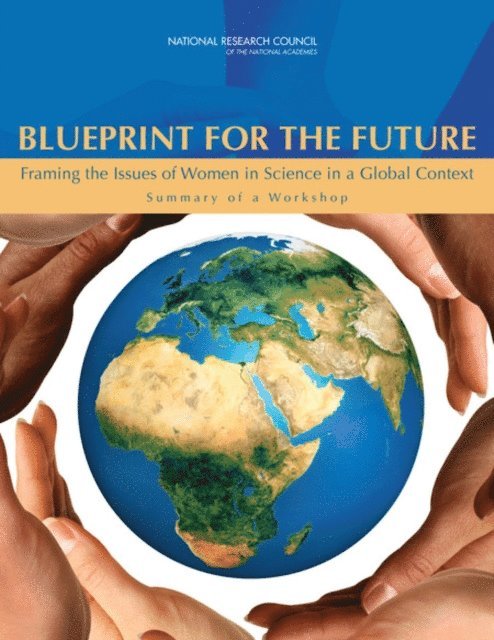
The scientific work of women is often viewed through a national or regional lens, but given the growing worldwide connectivity of most, if not all, scientific disciplines, there needs to be recognition of how different social, political, and economic mechanisms impact women''s participation in the global scientific enterprise. Although these complex sociocultural factors often operate in different ways in various countries and regions, studies within and across nations consistently show inverse correlations between levels in the scientific and technical career hierarchy and the number of women in science: the higher the positions, the fewer the number of women. Understanding these complex patterns requires interdisciplinary and international approaches. In April 2011, a committee overseen by the National Academies'' standing Committee on Women in Science, Engineering, and Medicine (CWSEM) convened a workshop entitled, "Blueprint for the Future: Framing the Issues of Women in Science in a Global Context" in Washington, D.C.
CWSEM''s goals are to coordinate, monitor, and advocate action to increase the participation of women in science, engineering, and medicine. The scope of the workshop was limited to women''s participation in three scientific disciplines: chemistry, computer science, mathematics, and statistics. The workshop presentations came from a group of scholars and professionals who have been working for several years on documenting, analyzing, and interpreting the status of women in selected technical fields around the world. Examination of the three disciplines-chemistry, computer science, and mathematics and statistics-can be considered a first foray into collecting and analyzing information that can be replicated in other fields.
The complexity of studying science internationally cannot be underestimated, and the presentations demonstrate some of the evidentiary and epistemological challenges that scholars and professionals face in collecting and analyzing data from many different countries and regions. Blueprint for the Future: Framing the Issues of Women in Science in a Global Context summarizes the workshop presentations, which provided an opportunity for dialogue about the issues that the authors have been pursuing in their work to date.
410 kr
Läs direkt efter köp
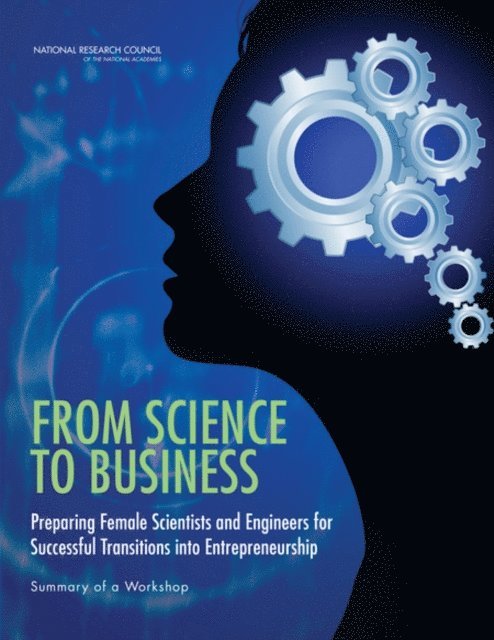
Scientists, engineers, and medical professionals play a vital role in building the 21st- century science and technology enterprises that will create solutions and jobs critical to solving the large, complex, and interdisciplinary problems faced by society: problems in energy, sustainability, the environment, water, food, disease, and healthcare. As a growing percentage of the scientific and technological workforce, women need to participate fully not just in finding solutions to technical problems, but also in building the organizations responsible for the job creation that will bring these solutions to market and to bear on pressing issues. To accomplish this, it is important that more women in science and engineering become entrepreneurs in order to start new companies; create business units inside established organizations, mature companies, and the government; and/or function as social entrepreneurs focused on societal issues. Entrepreneurship represents a vital source of change in all facets of society, empowering individuals to seek opportunity where others see insurmountable problems.
From Science to Business: Preparing Female Scientists and Engineers for Successful Transitions into Entrepreneurship is the summary of an August 2009 workshop that assesses the current status of women undertaking entrepreneurial activity in technical fields, to better understand the nature of the barriers they encounter, and to identify what it takes for women scientists and engineers to succeed as entrepreneurs. This report focuses on women''s career transitions from academic science and engineering to entrepreneurship, with a goal of identifying knowledge gaps in women''s skills as well as experiences crucial to future success in business and critical for achieving leadership positions in entrepreneurial organizations.
From Science to Business makes the case that in addition to educating women scientists and engineers in rigorous problem solving, it is equally important to provide exposure and training to impart the skills that will enable more women to move from the role of expert to that of leader in dynamic new business enterprises. This book will be of interest to professionals in both academia and industry, graduate and post-graduate students, and organizations that advocate for a stronger economy.
536 kr
Läs direkt efter köp
The spring of 2020 marked a change in how almost everyone conducted their personal and professional lives, both within science, technology, engineering, mathematics, and medicine (STEMM) and beyond. The COVID-19 pandemic disrupted global scientific conferences and individual laboratories and required people to find space in their homes from which to work. It blurred the boundaries between work and non-work, infusing ambiguity into everyday activities. While adaptations that allowed people to connect became more common, the evidence available at the end of 2020 suggests that the disruptions caused by the COVID-19 pandemic endangered the engagement, experience, and retention of women in academic STEMM, and may roll back some of the achievement gains made by women in the academy to date.
The Impact of COVID-19 on the Careers of Women in Academic Sciences, Engineering, and Medicine identifies, names, and documents how the COVID-19 pandemic disrupted the careers of women in academic STEMM during the initial 9-month period since March 2020 and considers how these disruptions - both positive and negative - might shape future progress for women. This publication builds on the 2020 report Promising Practices for Addressing the Underrepresentation of Women in Science, Engineering, and Medicine to develop a comprehensive understanding of the nuanced ways these disruptions have manifested. The Impact of COVID-19 on the Careers of Women in Academic Sciences, Engineering, and Medicine will inform the academic community as it emerges from the pandemic to mitigate any long-term negative consequences for the continued advancement of women in the academic STEMM workforce and build on the adaptations and opportunities that have emerged.
488 kr
Läs direkt efter köp
Demand for tech professionals is expected to increase substantially over the next decade, and increasing the number of women of color in tech will be critical to building and maintaining a competitive workforce. Despite years of efforts to increase the diversity of the tech workforce, women of color have remained underrepresented, and the numbers of some groups of women of color have even declined. Even in cases where some groups of women of color may have higher levels of representation, data show that they still face significant systemic challenges in advancing to positions of leadership. Research evidence suggests that structural and social barriers in tech education, the tech workforce, and in venture capital investment disproportionately and negatively affect women of color.
Transforming Trajectories for Women of Color in Tech uses current research as well as information obtained through four public information-gathering workshops to provide recommendations to a broad set of stakeholders within the tech ecosystem for increasing recruitment, retention, and advancement of women of color. This report identifies gaps in existing research that obscure the nature of challenges faced by women of color in tech, addresses systemic issues that negatively affect outcomes for women of color in tech, and provides guidance for transforming existing systems and implementing evidence-based policies and practices to increase the success of women of color in tech.
488 kr
Läs direkt efter köp
The United States has long made substantial investments in clinical research with the goal of improving the health and well-being of our nation. There is no doubt that these investments have contributed significantly to treating and preventing disease and extending human life. Nevertheless, clinical research faces a critical shortcoming. Currently, large swaths of the U.S. population, and those that often face the greatest health challenges, are less able to benefit from these discoveries because they are not adequately represented in clinical research studies. While progress has been made with representation of white women in clinical trials and clinical research, there has been little progress in the last three decades to increase participation of racial and ethnic minority population groups. This underrepresentation is compounding health disparities, with serious consequences for underrepresented groups and for the nation.
At the request of Congress, Improving Representation in Clinical Trials and Research: Building Research Equity for Women and Underrepresented Groups identifies policies, procedures, programs, or projects aimed at increasing the inclusion of these groups in clinical research and the specific strategies used by those conducting clinical trials and clinical and translational research to improve diversity and inclusion. This report models the potential economic benefits of full inclusion of men, women, and racial and ethnic groups in clinical research and highlights new programs and interventions in medical centers and other clinical settings designed to increase participation.
741 kr
Läs direkt efter köp
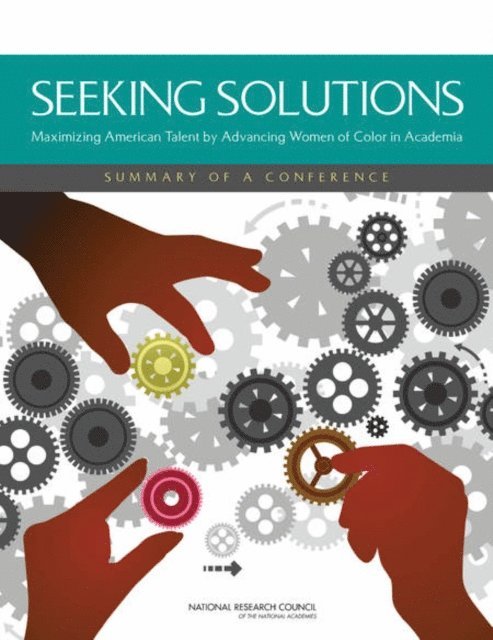
Seeking Solutions: Maximizing American Talent by Advancing Women of Color in Academia is the summary of a 2013 conference convened by the Committee on Women in Science, Engineering and Medicine of the National Research Council to discuss the current status of women of color in academia and explore the challenges and successful initiatives for creating the institutional changes required to increase representation of women of color at all levels of the academic workforce. While the number of women, including minority women, pursuing higher education in science, engineering and medicine has grown, the number of minority women faculty in all institutions of higher education has remained small and has grown less rapidly than the numbers of nonminority women or minority men.
Seeking Solutions reviews the existing research on education and academic career patterns for minority women in science, engineering, and medicine to enhance understanding of the barriers and challenges to the full participation of all minority women in STEM disciplines and academic careers. Additionally, this report identifies reliable and credible data source and data gaps, as well as key aspects of exemplary policies and programs that are effective in enhancing minority women''s participation in faculty ranks. Success in academia is predicated on many factors and is not solely a function of talent. Seeking Solutions elucidates those other factors and highlights ways that institutions and the individuals working there can take action to create institutional cultures hospitable to people of any gender, race, and ethnicity.
754 kr
Skickas inom 3-6 vardagar
673 kr
Läs direkt efter köp
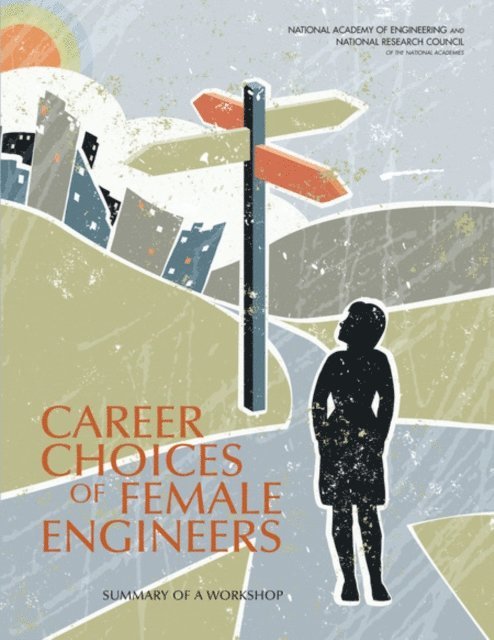
Despite decades of government, university, and employer efforts to close the gender gap in engineering, women make up only 11 percent of practicing engineers in the United States. What factors influence women graduates'' decisions to enter the engineering workforce and either to stay in or leave the field as their careers progress? Researchers are both tapping existing data and fielding new surveys to help answer these questions.
On April 24, 2013, the National Research Council Committee on Women in Science, Engineering, and Medicine held a workshop to explore emerging research and to discuss career pathways and outcomes for women who have received bachelor''s degrees in engineering. Participants included academic researchers and representatives from the Department of Labor, National Science Foundation, and Census Bureau, as well as several engineering professional societies. Career Choices of Female Engineers summarizes the presentations and discussions of the workshop.
730 kr
Läs direkt efter köp
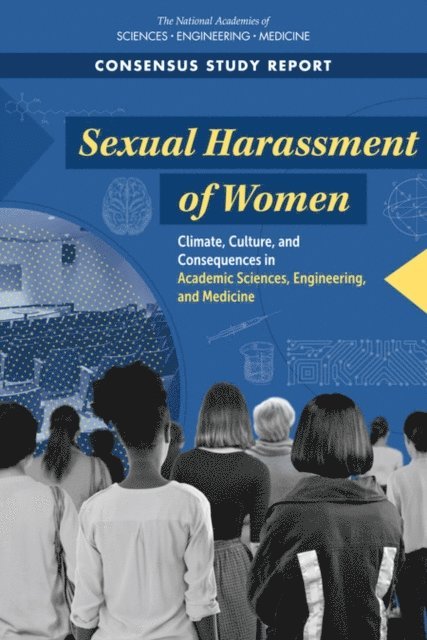
Over the last few decades, research, activity, and funding has been devoted to improving the recruitment, retention, and advancement of women in the fields of science, engineering, and medicine. In recent years the diversity of those participating in these fields, particularly the participation of women, has improved and there are significantly more women entering careers and studying science, engineering, and medicine than ever before. However, as women increasingly enter these fields they face biases and barriers and it is not surprising that sexual harassment is one of these barriers.
Over thirty years the incidence of sexual harassment in different industries has held steady, yet now more women are in the workforce and in academia, and in the fields of science, engineering, and medicine (as students and faculty) and so more women are experiencing sexual harassment as they work and learn. Over the last several years, revelations of the sexual harassment experienced by women in the workplace and in academic settings have raised urgent questions about the specific impact of this discriminatory behavior on women and the extent to which it is limiting their careers.
Sexual Harassment of Women explores the influence of sexual harassment in academia on the career advancement of women in the scientific, technical, and medical workforce. This report reviews the research on the extent to which women in the fields of science, engineering, and medicine are victimized by sexual harassment and examines the existing information on the extent to which sexual harassment in academia negatively impacts the recruitment, retention, and advancement of women pursuing scientific, engineering, technical, and medical careers. It also identifies and analyzes the policies, strategies and practices that have been the most successful in preventing and addressing sexual harassment in these settings.
488 kr
Skickas inom 11-20 vardagar
730 kr
Läs direkt efter köp
Careers in science, engineering, and medicine offer opportunities to advance knowledge, contribute to the well-being of communities, and support the security, prosperity, and health of the United States. But many women do not pursue or persist in these careers, or advance to leadership positions - not because they lack the talent or aspirations, but because they face barriers, including: implicit and explicit bias; sexual harassment; unequal access to funding and resources; pay inequity; higher teaching and advising loads; and fewer speaking invitations, among others.
There are consequences from this underrepresentation of women for the nation as well: a labor shortage in many science, engineering, and medical professions that cannot be filled unless institutions and organizations recruit from a broad and diverse talent pool; lost opportunities for innovation and economic gain; and lost talent as a result of discrimination, unconscious bias, and sexual harassment.
Promising Practices for Addressing the Underrepresentation of Women in Science, Engineering, and Medicine reviews and synthesizes existing research on policies, practices, programs, and other interventions for improving the recruitment, retention, and sustained advancement into leadership roles of women in these disciplines. This report makes actionable recommendations to leverage change and drive swift, coordinated improvements to the systems of education, research, and employment in order to improve both the representation and leadership of women.
355 kr
Läs direkt efter köp
Based primarily on a conference, this book examines the need for interventions to increase the number of U.S. students, both males and females, pursuing careers in the sciences and engineering and describes interventions supported by the private and public sectors at the undergraduate and graduate levels of education.
The individually authored chapters also describe actions taken by employers of scientists and engineers to retain their technical work force.
276 kr
Läs direkt efter köp
Before the COVID-19 pandemic, research demonstrated a significant impact of family caregiving responsibilities on the careers of professionals who work in science, technology, engineering, mathematics, and medicine (STEMM) - especially women. The COVID-19 pandemic increased public recognition of the challenges experienced by caregivers in STEMM fields and created a sense of urgency among many stakeholders. As part of the information-gathering stage of a forthcoming consensus study to address the barriers faced by caregivers, of all genders, in STEMM fields, the Committee on Policies and Practices for Supporting Family Caregivers Working in Science, Engineering, and Medicine organized two national symposia on February 27 and March 27, 2023. Scholars and leaders from a range of sectors convened to identify evidence-based interventions that can support the recruitment, retention, and advancement of caregivers in science, engineering, and medical fields. This publication summarizes the presentations and discussion of the symposia.
325 kr
Läs direkt efter köp
Family caregiving is not simply an outside obligation that has no bearing on the workings of academic science, technology, engineering, mathematics, and medicine (STEMM) as it affects the lives of so many people working and studying in colleges and universities around the country. Caregiving responsibilities often clash with ingrained norms in academic STEMM environments, which demand that STEMM students and workers demonstrate immense devotion to their fields and are always available and visibly working.
Supporting Family Caregivers in STEMM describes the ways in which the labor and contributions of caregivers are often invisible and undervalued, with a specific focus on the academic STEMM ecosystem, including undergraduate and graduate students, postdoctoral scholars, resident physicians and other trainees, tenure-track and non-tenure-track faculty, staff, and researchers. This report reviews policies and practices that support caregivers, locally and nationally, and describes best practices in policy implementation and design. Supporting Family Caregivers in STEMM also highlights innovative practices and offers actionable recommendations to higher education institutions, public and private funders, and the federal government.
341 kr
Läs direkt efter köp
1 312 kr
Tillfälligt slut
458 kr
Tillfälligt slut
809 kr
Tillfälligt slut
274 kr
Tillfälligt slut
351 kr
Tillfälligt slut
316 kr
Tillfälligt slut
316 kr
Tillfälligt slut
514 kr
Tillfälligt slut
488 kr
Tillfälligt slut
180 kr
Tillfälligt slut
213 kr
Tillfälligt slut