Ashraf Mishrif – författare
2 026 kr
Läs direkt efter köp
1 623 kr
Skickas inom 10-15 vardagar
1 995 kr
Läs direkt efter köp
This volume focuses on the role of the private sector in diversifying the economics of Gulf countries in the post-petrodollar era, when fluctuating and declining oil prices are negatively impacting national expenditures. It explores current policies of countries in the Gulf Cooperation Council and their efforts to shift their economies away from heavy dependence on hydrocarbons. The structural changes will create favorable conditions for the private sector to flourish, shift production dependence from public to private sector, and allow for more efficient resource allocation. Such changes will also allow local banks to provide financial support to small and medium enterprises, boost entrepreneurship for job creation, and strengthen organizational structure and efficiency.
This is the first volume in Economic Diversification in the Gulf Region.
1 246 kr
Skickas inom 10-15 vardagar
1 258 kr
Läs direkt efter köp
1 439 kr
Skickas inom 5-8 vardagar
1 005 kr
Skickas inom 10-15 vardagar
1 515 kr
Skickas inom 10-15 vardagar
1 891 kr
Läs direkt efter köp
This book addresses critical aspects of the nationalization of labour markets in the Gulf countries. It examines the role of higher education institutions in providing the market with the right skills that are most needed in the era of the fourth industrial revolution (industry 4.0). The book also explores the new dynamics of technology and information systems in upgrading the skills, changing the work environment, and generating employment for the youth in the Gulf countries. The holistic approach of the subject area makes this volume indispensable to academics, researchers, students, and policy makers in the Gulf region and beyond.
The book covers a broad range of topics including the nationalization of labour market programmes such as Emiratization and Saudization, attitudes toward women in workplace, the role of high-tech firms in upskilling and enhancing the productivity of workforce, while also providing sector-specific investigations in healthcare, banking, finance, tourism, and hospitality.
The analysis is based on original research and primary data collected by a group of scholars from 15 countries and presented in an illustrative, accessible, and concise manner.
644 kr
Skickas inom 5-8 vardagar
1 515 kr
Skickas inom 10-15 vardagar
1 893 kr
Skickas inom 10-15 vardagar
2 436 kr
Läs direkt efter köp
2 226 kr
Skickas inom 10-15 vardagar
2 925 kr
Läs direkt efter köp
This book assesses the resilience of enterprises and their abilities to adapt to changing circumstances and new business environments in the time of crises. Entrepreneurs, small and medium enterprises, and large corporations proved to be capable of utilizing innovation and technology to survive the economic and financial consequences of the COVID-19 pandemic. Many enterprises have succeeded in turning the pandemic crisis into viable business opportunities, dominating local and regional markets, and putting them at the heart of technological transformation.
The book also emphasizes the role of innovation, digitalization, and technology in developing new business models and innovative strategies that contributed to enhancing business resilience and market adaptability during the pandemic. The implementation of the new business model and working methods has not only made companies more competitive, but it also ensured the sustainability of the flow of goods and services in the time of the crisis. The analysis is provided through a detailed examination of key sectors, including small and medium enterprises, logistics and supply chain, food security, and labor market.
While acknowledging the unprecedented economic and financial consequences of the pandemic on enterprises and markets, this book stresses the importance of the lessons learned from this experience that are critical for supporting the business sector and strengthening market fundamentals to withstand similar crises in the future.
2 226 kr
Skickas inom 10-15 vardagar
1 946 kr
Skickas inom 10-15 vardagar
2 524 kr
Läs direkt efter köp
This book addresses the impact and implications of the COVID-19 pandemic, one of the most challenging public health risks to human wellbeing, on the economic activities and behaviors of Middle Eastern countries during and in the aftermath of the pandemic. It provides detailed examination of how the global and Middle Eastern economies incurred significant financial and economic damages, human losses, and hundreds of millions of people losing their jobs.
The analysis of this book is entirely based on primary data and a mix of quantitative and qualitative research methods to accurately account for the effects of the pandemic on the economy, finance, and tourism. While providing in-depth analysis of the macro and micro economy at global and national levels, the book investigates the impact of the pandemic on human behavior including household and water consumptions in the GCC countries, as well as offering potential green strategies for sustainable recovery in the post-pandemic era. As well as explaining the negative effects of the pandemic on the tourism and hospitality industries, the book also offers some positive outcomes from the pandemic, most notably in the innovation and IT sector and creative approaches in banking practices and services to ensure financial stability and sufficient liquidity in the market. Readers, students, researchers, industry practitioners and policy makers will benefit from the new insights offered by a diverse group of senior researchers and experts from across the world.
1 782 kr
Skickas inom 10-15 vardagar
2 207 kr
Läs direkt efter köp
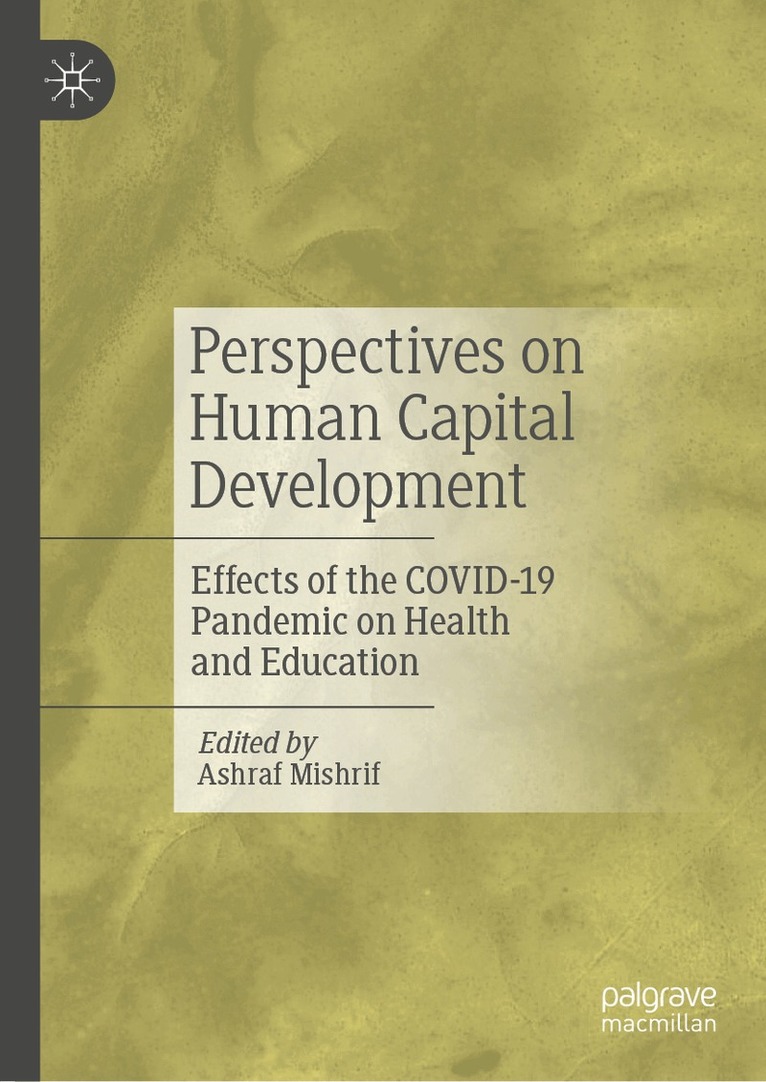
This book examines human capital development in the Middle East. It focuses on the investment in human capabilities, namely education and health, the two most critical components of growth and development. The book assesses the impact of the COVID-19 pandemic on the healthcare sector, with particular attention paid to effectiveness of public health policies and services, health expenditure, mortality rates, and psychological effects of the pandemic on the wider society. It also evaluates the pandemic effects on the education sector, more specifically medical education, physical education, emotional effects on students and teachers, method of communications, learning and teaching, and the extent to which digital readiness has minimized these effects. The book reveals the severity of the pandemic on human capabilities in terms of loss of lives, illness, vaccinations, knowledge acquisitions, skills development, and productivity, while providing new insights for governments to deal with similar crises in the future. It uses a variety of research methods and quantitative and qualitative techniques, country case studies, and primary data collected through survey questionnaires, interviews, and official reports to analyse the impact of the pandemic on health and education. The analyses are supported by statistical data and illustrated by tables and figures. Readers, students, researchers, industry practitioners and policy makers will benefit from the new insights offered by a diverse group of 40 professors, researchers, and industry experts from across the Middle East and beyond.