Asma Mehan – författare
791 kr
Skickas inom 10-15 vardagar
306 kr
Skickas inom 10-15 vardagar
351 kr
Läs direkt efter köp
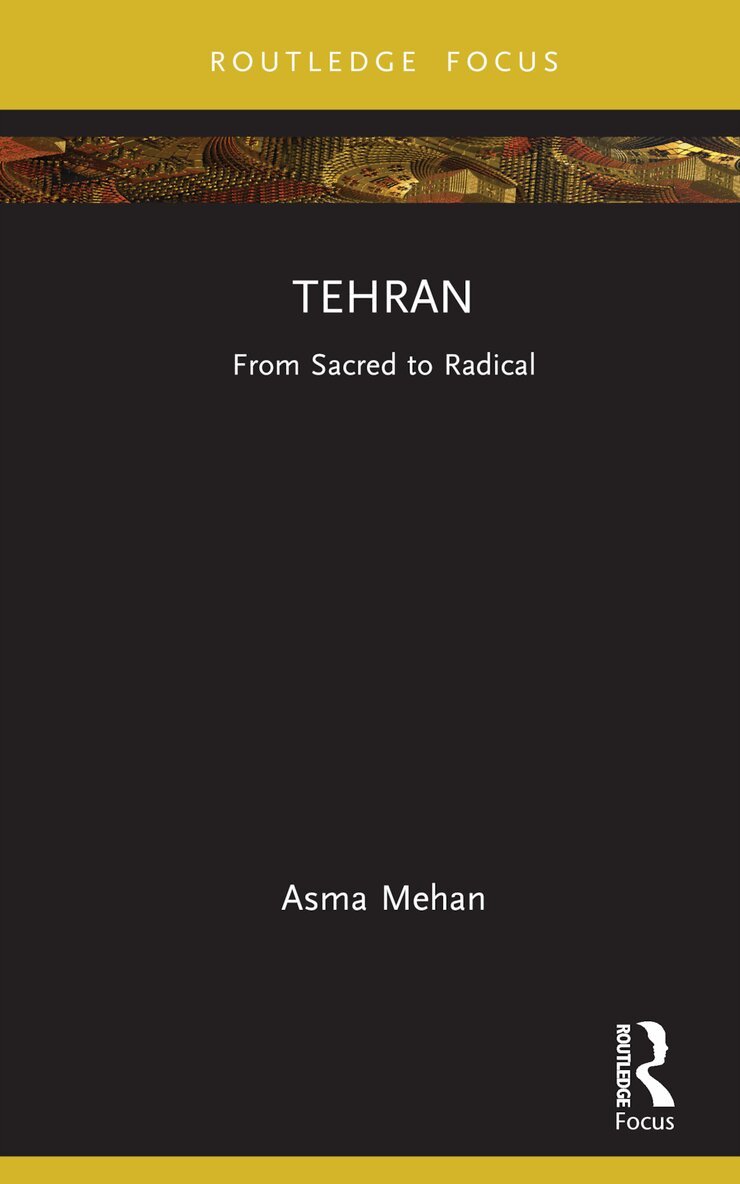
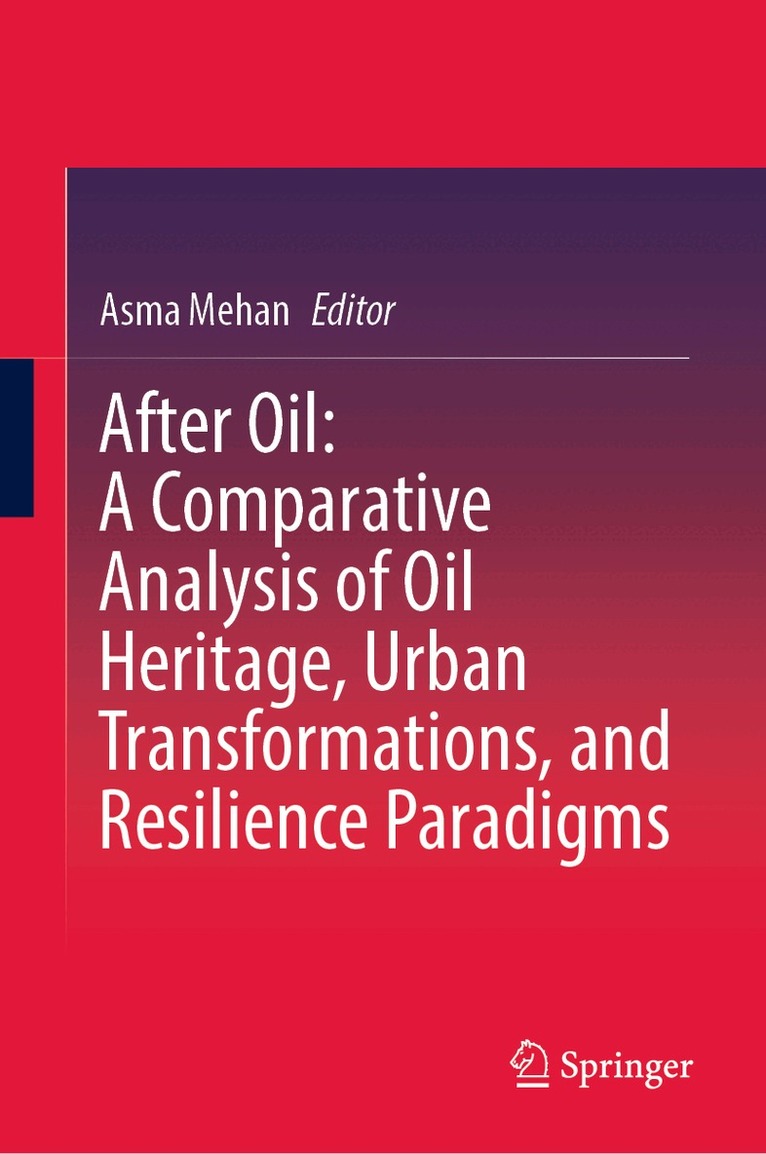
This book is an interdisciplinary research work designed to be of interest to a broad range of academics. The book examines the relationship between democracy and the (trans)formations of urban spaces through comparative perspective. It engages with the ideas of ‘modernity’ in architecture and investigates how they might align (or not) with other forms of radical power.
This book offers an understanding of the public spaces through political change, power struggle, and autocratic modernity manifested. It addresses the subject of politics in architecture and built environment by examining the various academic literature in urban studies, architectural history, urban anthropology, urban sociology, cultural geographies, planning history, philosophy, and the broader social and political sciences. Followingly, it will be focused on the less well-known traditions of architecture and democratic values drawing upon western and (non)western perspectives to decolonize the notion of public space in the global south. In better words, the book investigates the mechanisms of power struggles and the transformative dynamism of totalization and state-led modernization, which motivates or shapes a creative tension in the form of the city.
The topic of the work is novel and aims to examine the relationship between the affordances of public spaces, their micro-histories, and the emergence of critical social events and movements. The breadth of the topic demanded engagement with a rich body of architectural theory and history and relevant texts in urban sociology, colonial and postcolonial studies, political geography, and cultural studies, a challenge to which the book has responded outstandingly. The issue is urgent for policymakers and architects, urban designers, political and cultural geographers, and other practitioners working on the built environment to create more democratic public spaces in the global south.
351 kr
Läs direkt efter köp
This book is an interdisciplinary research work designed to be of interest to a broad range of academics. The book examines the relationship between democracy and the (trans)formations of urban spaces through comparative perspective. It engages with the ideas of ‘modernity’ in architecture and investigates how they might align (or not) with other forms of radical power.
This book offers an understanding of the public spaces through political change, power struggle, and autocratic modernity manifested. It addresses the subject of politics in architecture and built environment by examining the various academic literature in urban studies, architectural history, urban anthropology, urban sociology, cultural geographies, planning history, philosophy, and the broader social and political sciences. Followingly, it will be focused on the less well-known traditions of architecture and democratic values drawing upon western and (non)western perspectives to decolonize the notion of public space in the global south. In better words, the book investigates the mechanisms of power struggles and the transformative dynamism of totalization and state-led modernization, which motivates or shapes a creative tension in the form of the city.
The topic of the work is novel and aims to examine the relationship between the affordances of public spaces, their micro-histories, and the emergence of critical social events and movements. The breadth of the topic demanded engagement with a rich body of architectural theory and history and relevant texts in urban sociology, colonial and postcolonial studies, political geography, and cultural studies, a challenge to which the book has responded outstandingly. The issue is urgent for policymakers and architects, urban designers, political and cultural geographers, and other practitioners working on the built environment to create more democratic public spaces in the global south.
349 kr
Skickas inom 10-15 vardagar
2 151 kr
Skickas inom 10-15 vardagar
1 708 kr
Skickas inom 5-8 vardagar
443 kr
Läs direkt efter köp
443 kr
Läs direkt efter köp
769 kr
Läs direkt efter köp
769 kr
Läs direkt efter köp
626 kr
Kommande
2 292 kr
Kommande
791 kr
Skickas inom 10-15 vardagar
401 kr
Läs direkt efter köp
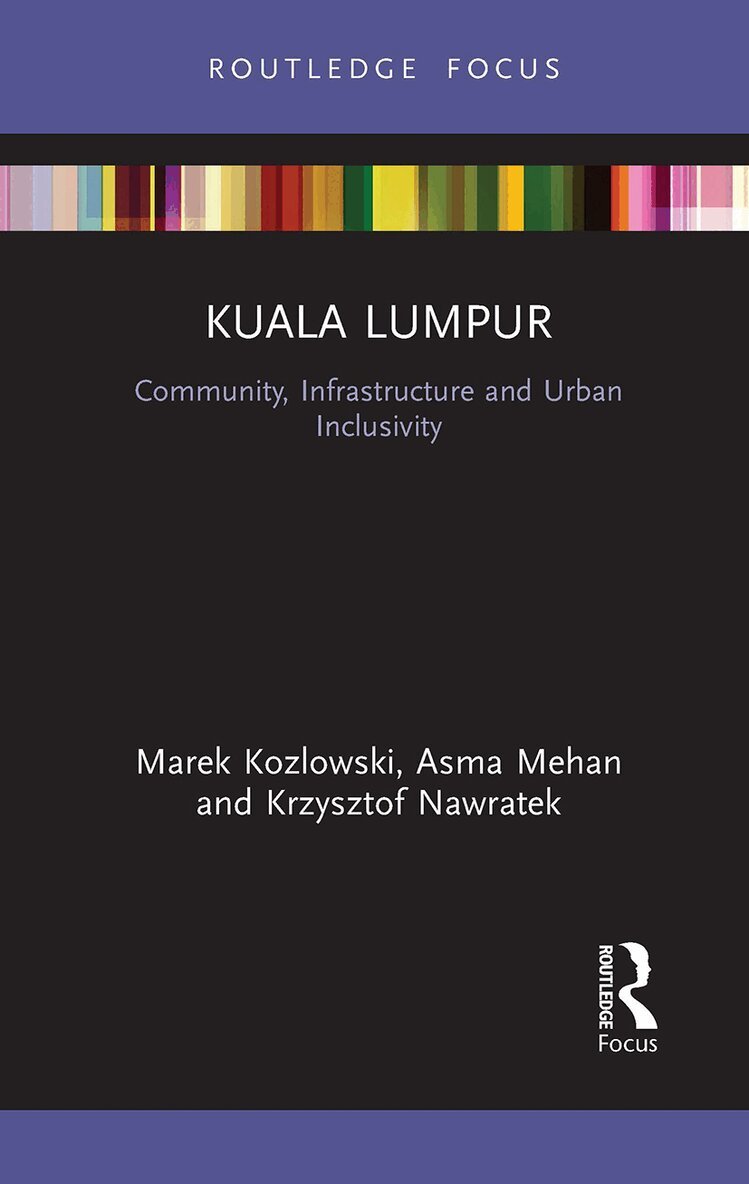
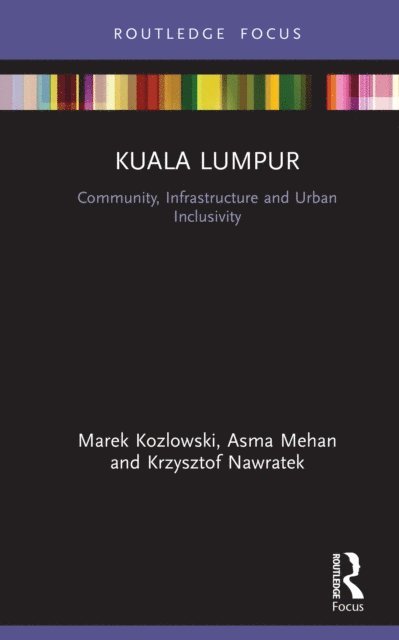
Kuala Lumpur is a diverse city representing many different religions and nationalities. Recent government policy has actively promoted unity and cohesion throughout the city; and the country of Malaysia, with the implementation of a programme called 1Malaysia. In this book, the authors investigate the aims of this programme—predominantly to unify the Malaysian society—and how these objectives resonate in the daily spatial practices of the city’s residents.
This book argues that elements of urban infrastructure could work as an essential mediator ‘beyond community’, allowing inclusive social structures to be built, despite cultural and religious tensions existing within the city. It builds on the premise of an empirical study which explores the ways in which different communities use the same spaces, supported through the implementation of a theoretical framework which looks at both Western and Islamic conceptualisations of the notion of community. Through the analysis of Kuala Lumpur, this book contributes towards the creation of more inclusive places in multi-ethnic, multi-cultural and multi-religious communities across the world.
401 kr
Läs direkt efter köp
Kuala Lumpur is a diverse city representing many different religions and nationalities. Recent government policy has actively promoted unity and cohesion throughout the city; and the country of Malaysia, with the implementation of a programme called 1Malaysia. In this book, the authors investigate the aims of this programme—predominantly to unify the Malaysian society—and how these objectives resonate in the daily spatial practices of the city’s residents.
This book argues that elements of urban infrastructure could work as an essential mediator ‘beyond community’, allowing inclusive social structures to be built, despite cultural and religious tensions existing within the city. It builds on the premise of an empirical study which explores the ways in which different communities use the same spaces, supported through the implementation of a theoretical framework which looks at both Western and Islamic conceptualisations of the notion of community. Through the analysis of Kuala Lumpur, this book contributes towards the creation of more inclusive places in multi-ethnic, multi-cultural and multi-religious communities across the world.
377 kr
Kommande
1 834 kr
Skickas inom 10-15 vardagar
2 303 kr
Läs direkt efter köp
1 612 kr
Skickas inom 3-6 vardagar
1 252 kr
Läs direkt efter köp
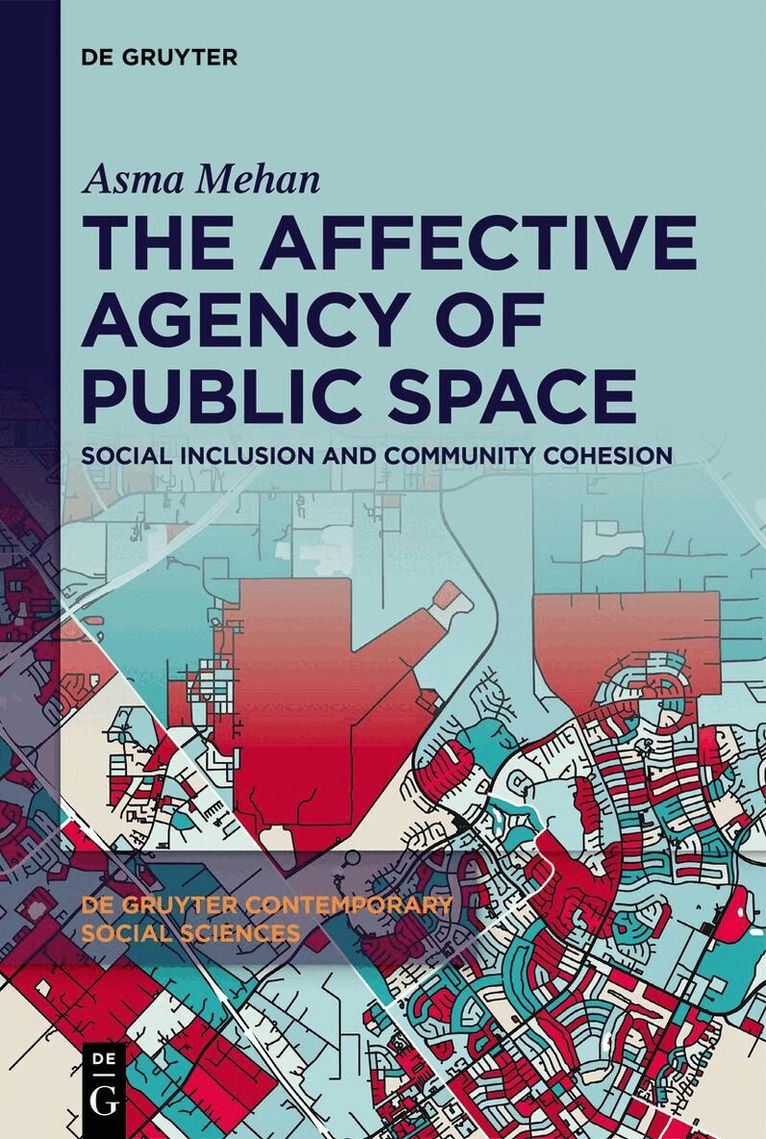
The Affective Agency of Public Space explores the pivotal role that public spaces play in fostering social inclusion and community cohesion within various settings, including Europe and the United States. This scholarly work underscores the critical importance of developing inclusive public zones that enhance urban life and promote integration and interaction among diverse community groups. It also confronts and debunks common myths about ‘different people,’ actively addressing misconceptions while promoting the recognition of diverse identities and voices. Through a comparative lens, the book presents insightful case studies that illustrate its core themes. Serving as a timely and important academic resource, this text is indispensable for urban planners, educators, architects, designers, and sociologists committed to progressive urban planning methodologies.
1 252 kr
Läs direkt efter köp
The Affective Agency of Public Space explores the pivotal role that public spaces play in fostering social inclusion and community cohesion within various settings, including Europe and the United States. This scholarly work underscores the critical importance of developing inclusive public zones that enhance urban life and promote integration and interaction among diverse community groups. It also confronts and debunks common myths about ‘different people,’ actively addressing misconceptions while promoting the recognition of diverse identities and voices. Through a comparative lens, the book presents insightful case studies that illustrate its core themes. Serving as a timely and important academic resource, this text is indispensable for urban planners, educators, architects, designers, and sociologists committed to progressive urban planning methodologies.