Assif Assad – författare
Visar alla böcker från författaren Assif Assad. Handla med fri frakt och snabb leverans.
3 produkter
3 produkter
E-bok
PDF, Engelska, 2019390 kr
Läs direkt efter köp
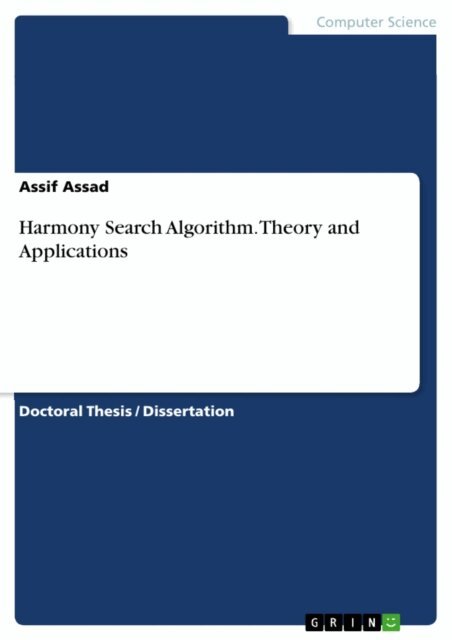
Doctoral Thesis / Dissertation from the year 2018 in the subject Computer Sciences - Artificial Intelligence, grade: A, Indian Institute of Technology Roorkee, language: English, abstract: The aim of this book is to introduce Harmony Search algorithm in the context of solving real life problems. Harmony Search (HS) is a musician's behavior inspired metaheuristic algorithm developed in 2001, though it is a relatively new meta heuristic algorithm, its effectiveness and advantages have been demonstrated in various applications like traffic routing, multi objective optimization, design of municipal water distribution networks, load dispatch problem in electrical engineering, rostering problems, clustering, structural design, classification and feature selection to name a few. Optimization is the process of finding the best alternate solution among a given set of solutions under some given constraints. The process of finding the maximum or minimum possible value, which a function can attain in its domain, is known as optimization. One of the most striking trends that emerged in the optimization field is the simulation of natural processes as efficient global search methods. The natural processes or phenomena are firstly analyzed mathematically and then coded as computer programs for solving complex nonlinear real-world problems. The resulting methods are called Nature Inspired Algorithms that can often outperform classic methods. The advantages of these methods are their ability to solve various standard or application-based problems successfully without any prior knowledge of the problem space. Moreover, these algorithms are more likely to obtain the global optima of a given problem. They do not require any continuity and differentiability of the objective functions. Also, they work on a randomly generated population of solutions instead of one solution. They are easy to program and can be easily implemented on a computer. Some of the examples of Nature Inspired Optimization Techniques are Genetic Algorithm, Particle Swarm Optimization, Artificial Bee Colony Optimization and Ant Colony Optimization.
Inbunden, Engelska, 2025
2 444 kr
Skickas inom 5-8 vardagar
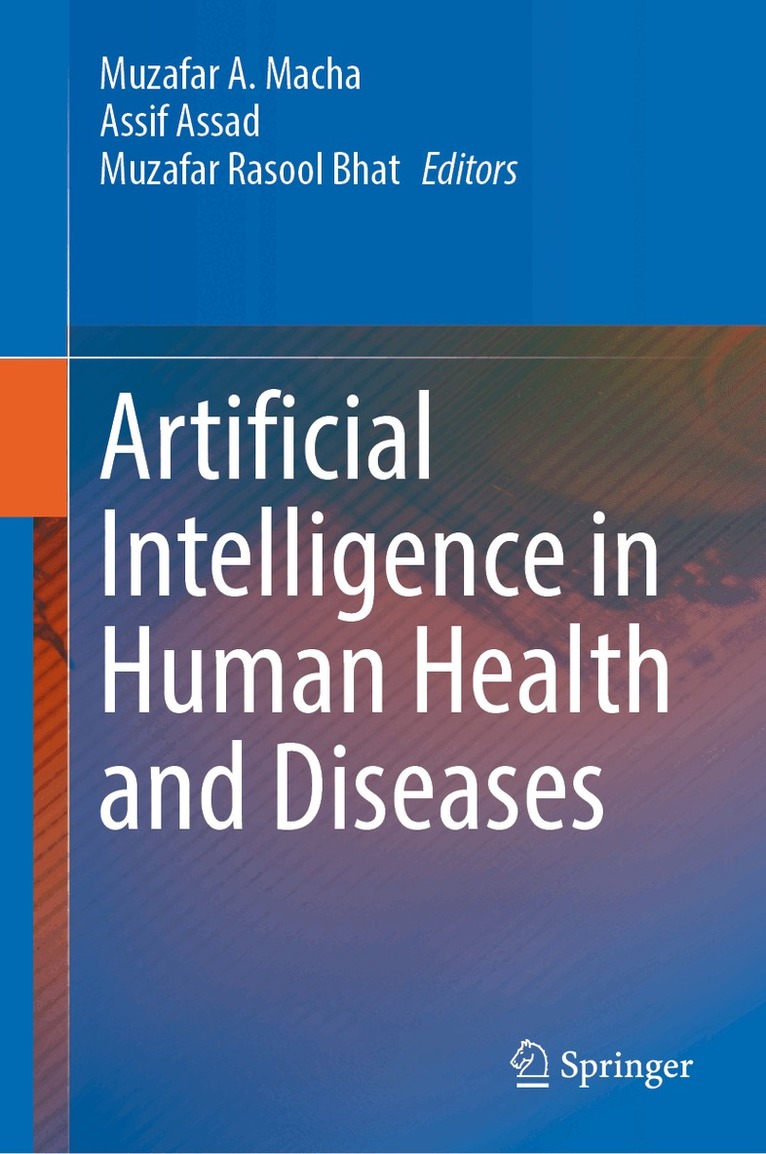
This book discusses current concepts and future translational possibilities of Artificial Intelligence (AI) in human healthcare and diseases. The initial chapter reviews the application and integration of AI and multi-omics to develop novel diagnostic and therapeutic strategies. The book chapter also explores the recent advances in data-driven approaches that aided state-of-the-art AI for biomarker discovery and better disease diagnosis. The book also offers computational and oncological prospects for the role of AI in radio genomics, as well as its offers, achievements, opportunities, and limitations in the current clinical practices. The chapters further cover the role of the current state of AI in Cardiovascular Disease, Obesity and Diabetes, Neurological Diseases, and Infectious Diseases. Towards the end, the book highlights the use of AI in diverse pharmaceutical industry sectors, including drug discovery and development, drug repurposing, and improving pharmaceutical productivity. This book is handy for basic, translational, clinical & interdisciplinary researchers and bioinformaticians.
E-bok
Engelska, 20253 251 kr
Läs direkt efter köp
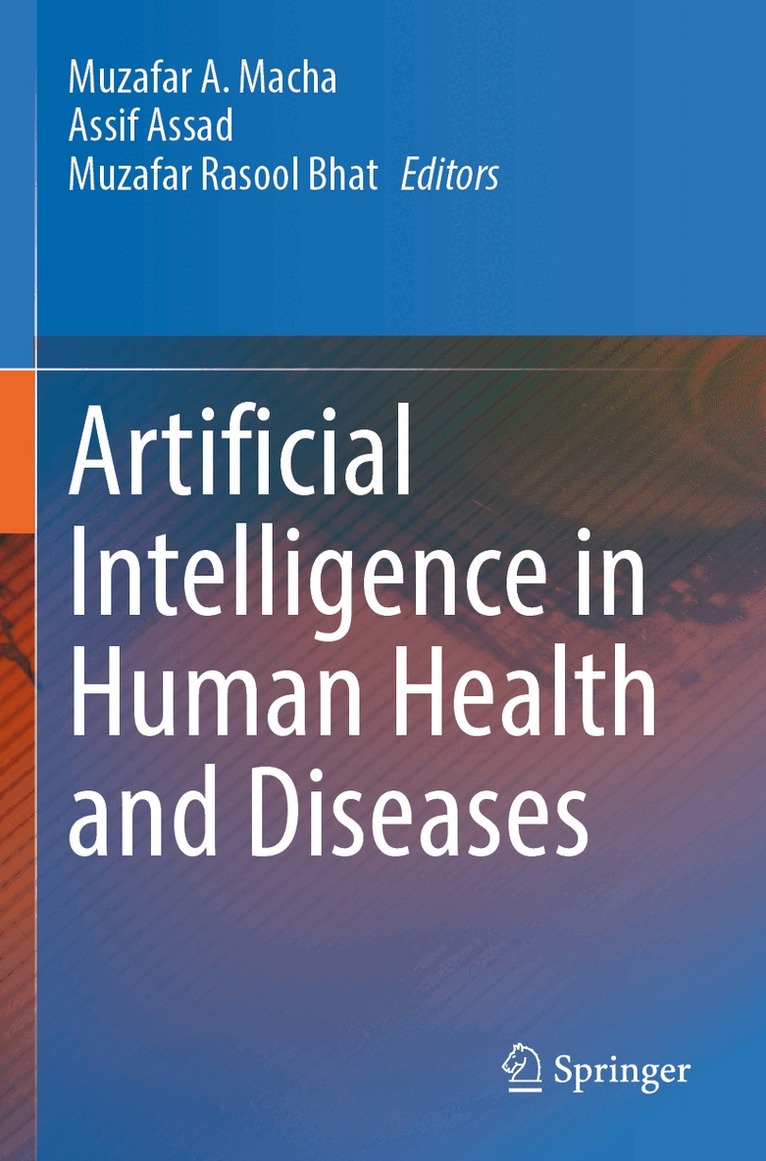
This book discusses current concepts and future translational possibilities of Artificial Intelligence (AI) in human healthcare and diseases. The initial chapter reviews the application and integration of AI and multi-omics to develop novel diagnostic and therapeutic strategies. The book chapter also explores the recent advances in data-driven approaches that aided state-of-the-art AI for biomarker discovery and better disease diagnosis. The book also offers computational and oncological prospects for the role of AI in radio genomics, as well as its offers, achievements, opportunities, and limitations in the current clinical practices. The chapters further cover the role of the current state of AI in Cardiovascular Disease, Obesity and Diabetes, Neurological Diseases, and Infectious Diseases. Towards the end, the book highlights the use of AI in diverse pharmaceutical industry sectors, including drug discovery and development, drug repurposing, and improving pharmaceutical productivity. This book is handy for basic, translational, clinical & interdisciplinary researchers and bioinformaticians.