Atef Z. Elsherbeni - Böcker
Visar alla böcker från författaren Atef Z. Elsherbeni. Handla med fri frakt och snabb leverans.
8 produkter
8 produkter
1 458 kr
Skickas inom 7-10 vardagar
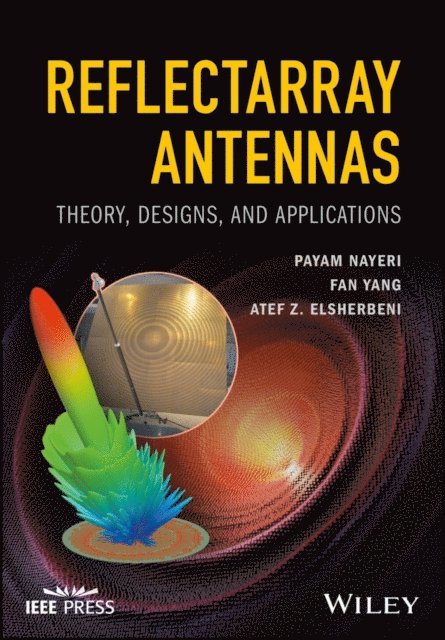
This book provides engineers with a comprehensive review of the state-of-the-art in reflectarray antenna research and development. The authors describe, in detail, design procedures for a wide range of applications, including broadband, multi-band, multi-beam, contour-beam, beam-scanning, and conformal reflectarray antennas. They provide sufficient coverage of basic reflectarray theory to fully understand reflectarray antenna design and analysis such that the readers can pursue reflectarray research on their own. Throughout the book numerous illustrative design examples including numerical and experimental results are provided. Featuring in-depth theoretical analysis along with practical design examples, Reflectarray Antennas is an excellent text/reference for engineering graduate students, researchers, and engineers in the field of antennas. It belongs on the bookshelves of university libraries, research institutes, and industrial labs and research facilities.
1 419 kr
Skickas inom 7-10 vardagar
Advances in Time-Domain Computational Electromagnetic Methods Discover state-of-the-art time domain electromagnetic modeling and simulation algorithms Advances in Time-Domain Computational Electromagnetic Methods delivers a thorough exploration of recent developments in time domain computational methods for solving complex electromagnetic problems. The book discusses the main time domain computational electromagnetics techniques, including finite-difference time domain (FDTD), finite-element time domain (FETD), discontinuous Galerkin time domain (DGTD), time domain integral equation (TDIE), and other methods in electromagnetic, multiphysics modeling and simulation, and antenna designs. The book bridges the gap between academic research and real engineering applications by comprehensively surveying the full picture of current state-of-the-art time domain electromagnetic simulation techniques. Among other topics, it offers readers discussions of automatic load balancing schemes for DG-FETD/SETD methods and convolution quadrature time domain integral equation methods for electromagnetic scattering. Advances in Time-Domain Computational Electromagnetic Methods also includes: Introductions to cylindrical, spherical, and symplectic FDTD, as well as FDTD for metasurfaces with GSTC and FDTD for nonlinear metasurfacesExplorations of FETD for dispersive and nonlinear media and SETD-DDM for periodic/ quasi-periodic arraysDiscussions of TDIE, including explicit marching-on-in-time solvers for second-kind time domain integral equations, TD-SIE DDM, and convolution quadrature time domain integral equation methods for electromagnetic scatteringTreatments of deep learning, including time domain electromagnetic forward and inverse modeling using a differentiable programming platformIdeal for undergraduate and graduate students studying the design and development of various kinds of communication systems, as well as professionals working in these fields, Advances in Time-Domain Computational Electromagnetic Methods is also an invaluable resource for those taking advanced graduate courses in computational electromagnetic methods and simulation techniques.
2 692 kr
Skickas inom 10-15 vardagar
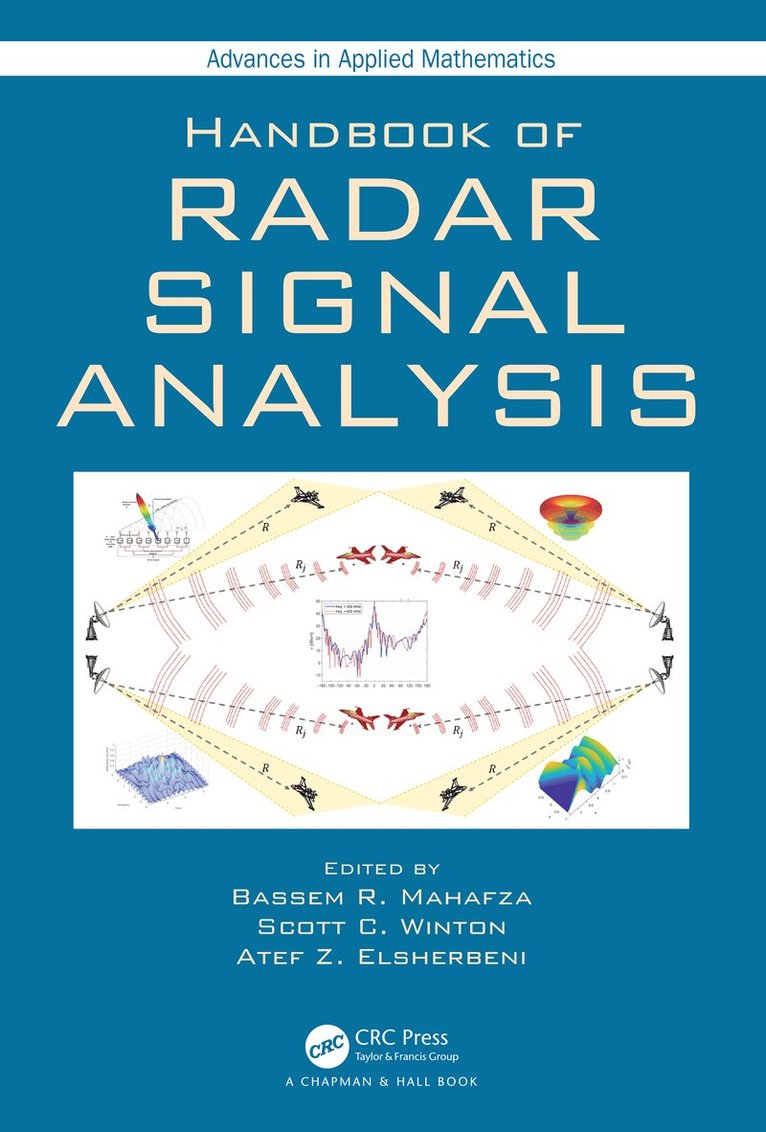
This new handbook on radar signal analysis adopts a deliberate and systematic approach. It uses a clear and consistent level of delivery while maintaining strong and easy-to-follow mathematical details. The emphasis of this book is on radar signal types and their relevant signal processing and not on radar systems hardware or components. This handbook serves as a valuable reference to a wide range of audience. More specifically, college-level students, practicing radar engineers, as well as casual readers of the subject are the intended target audience of the first few chapters of this book. As the book chapters progress, these grow in complexity and specificity. Accordingly, later chapters are intended for practicing engineers, graduate college students, and advanced readers. Finally, the last few chapters contain several special topics on radar systems that are both educational and scientifically entertaining to all readers.The presentation of topics in this handbook takes the reader on a scientific journey whose major landmarks comprise the different radar subsystems and components. In this context, the chapters follow the radar signal along this journey from its birth to the end of its life. Along the way, the different relevant radar subsystems are analyzed and discussed in great detail.The chapter contributors of this new handbook comprise experienced academia members and practicing radar engineers. Their combined years of academic and real-world experiences are in excess of 175. Together, they bring a unique, easy-to-follow mix of mathematical and practical presentations of the topics discussed in this book. See the "Chapter Contributors" section to learn more about these individuals.
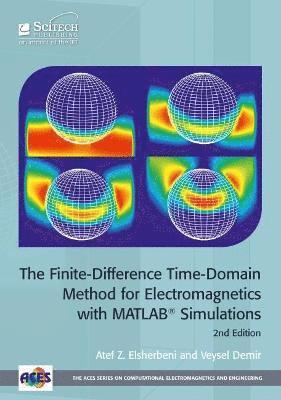
Finite-Difference Time-Domain Method for Electromagnetics with MATLAB® Simulations
Inbunden, Engelska, 2015
1 586 kr
Skickas inom 3-6 vardagar
This book introduces the powerful Finite-Difference Time-Domain method to students and interested researchers and readers. An effective introduction is accomplished using a step-by-step process that builds competence and confidence in developing complete working codes for the design and analysis of various antennas and microwave devices. This book will serve graduate students, researchers, and those in industry and government who are using other electromagnetics tools and methods for the sake of performing independent numerical confirmation. No previous experience with finite-difference methods is assumed of readers.Key features Presents the fundamental techniques of the FDTD method at a graduate level, taking readers from conceptual understanding to actual program development.Full derivations are provided for final equations.Includes 3D illustrations to aid in visualization of field components and fully functional MATLAB® code examples.Completely revised and updated for this second edition, including expansion into advanced techniques such as total field/scattered field formulation, dispersive material modeling, analysis of periodic structures, non-uniform grid, and graphics processing unit acceleration of finite-difference time-domain method.
991 kr
Skickas inom 5-8 vardagar
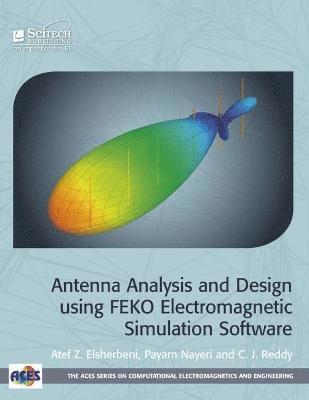
The objective of this book is to introduce students and interested researchers to antenna design and analysis using the popular commercial electromagnetic software FEKO. This book, being tutorial in nature, is primarily intended for students working in the field of antenna analysis and design; however the wealth of hands-on design examples presented in this book along with simulation details, makes it a valuable reference for practicing engineers. The requirement for the readers of this book is to be familiar with the basics of antenna theory; however electrical engineering students taking an introductory course in antenna engineering can also benefit from this book as a supplementary text.The key strengths of this book are as follows: First, the basics of antenna simulation will be presented in a detailed, understandable, and easy to follow procedure through study of the simplest types of radiators, i.e. dipole and loop antennas, in chapters 2 and 3. This will build the fundamental knowledge a student would need in order to utilize antenna simulation software in general. Second, comparison between theoretical analysis and full-wave simulation results of FEKO are given for a variety of antenna types, which will aid the readers with a better understanding of the theory, approximations and limitations in the theoretical analysis, and solution accuracy. Third, and of paramount importance, is the visualization of the antenna current distribution, radiation patterns, and other radiation characteristics that are made available through full-wave simulations using FEKO. A proper analysis of the radiation characteristics through these visualizations serves as a powerful educational tool to fully understand the radiation behaviour of antennas
536 kr
Skickas inom 10-15 vardagar
In recent years, transmitarray antennas have attracted growing interest with many antenna researchers. Transmitarrays combines both optical and antenna array theory, leading to a low profile design with high gain, high radiation efficiency, and versatile radiation performance for many wireless communication systems. In this book, comprehensive analysis, new methodologies, and novel designs of transmitarray antennas are presented.Detailed analysis for the design of planar space-fed array antennas is presented. The basics of aperture field distribution and the analysis of the array elements are described. The radiation performances (directivity and gain) are discussed using array theory approach, and the impacts of element phase errors are demonstrated.The performance of transmitarray design using multilayer frequency selective surfaces (M-FSS) approach is carefully studied, and the transmission phase limit which are generally independent from the selection ofa specific element shape is revealed. The maximum transmission phase range is determined based on the number of layers, substrate permittivity, and the separations between layers.In order to reduce the transmitarray design complexity and cost, three different methods have been investigated. As a result, one design is performed using quad-layer cross-slot elements with no dielectric material and another using triple-layer spiral dipole elements. Both designs were fabricated and tested at X-Band for deep space communications. Furthermore, the radiation pattern characteristics were studied under different feed polarization conditions and oblique angles of incident field from the feed.New design methodologies are proposed to improve the bandwidth of transmitarray antennas through the control of the transmission phase range of the elements. These design techniques are validated through the fabrication and testing of two quad-layer transmitarray antennas at Ku-band.A single-feed quad-beam transmitarray antenna with 50 degrees elevation separation between the beams is investigated, designed, fabricated, and tested at Ku-band. In summary, various challenges in the analysis and design of transmitarray antennas are addressed in this book. New methodologies to improve the bandwidth of transmitarray antennas have been demonstrated. Several prototypes have been fabricated and tested, demonstrating the desirable features and potential new applications of transmitarray antennas.
356 kr
Skickas inom 10-15 vardagar
Contents: Introduction / Orthagonal Arrays / Taguchi's Optimization Method / Linear Antenna Array Designs / Planar Filter Designs / Ultra-wide Band (UWB) Antenna Designs / OA-PSO Method / Conclusions
356 kr
Skickas inom 10-15 vardagar
In this work, an iterative approach using the finite difference frequency domain method is presented to solve the problem of scattering from large-scale electromagnetic structures. The idea of the proposed iterative approach is to divide one computational domain into smaller subregions and solve each subregion separately. Then the subregion solutions are combined iteratively to obtain a solution for the complete domain. As a result, a considerable reduction in the computation time and memory is achieved. This procedure is referred to as the iterative multiregion (IMR) technique. Different enhancement procedures are investigated and introduced toward the construction of this technique. These procedures are the following: 1) a hybrid technique combining the IMR technique and a method of moment technique is found to be efficient in producing accurate results with a remarkable computer memory saving; 2) the IMR technique is implemented on a parallel platform that led to a tremendous computational time saving; 3) together, the multigrid technique and the incomplete lower and upper preconditioner are used with the IMR technique to speed up the convergence rate of the final solution, which reduces the total computational time. Thus, the proposed iterative technique, in conjunction with the enhancement procedures, introduces a novel approach to solving large open-boundary electromagnetic problems including unconnected objects in an efficient and robust way. Contents: Basics of the FDFD Method / IMR Technique for Large-Scale Electromagnetic Scattering Problems: 3D Case / IMR Technique for Large-Scale Electromagnetic Scattering Problems: 2D Case / The IMR Algorithm Using a Hybrid FDFD and Method of Moments Technique / Parallelization of the Iterative Multiregion Technique / Combined Multigrid Technique and IMR Algorithm / Concluding Remarks / Appendices