Bassem R. Mahafza – författare
3 244 kr
Läs direkt efter köp
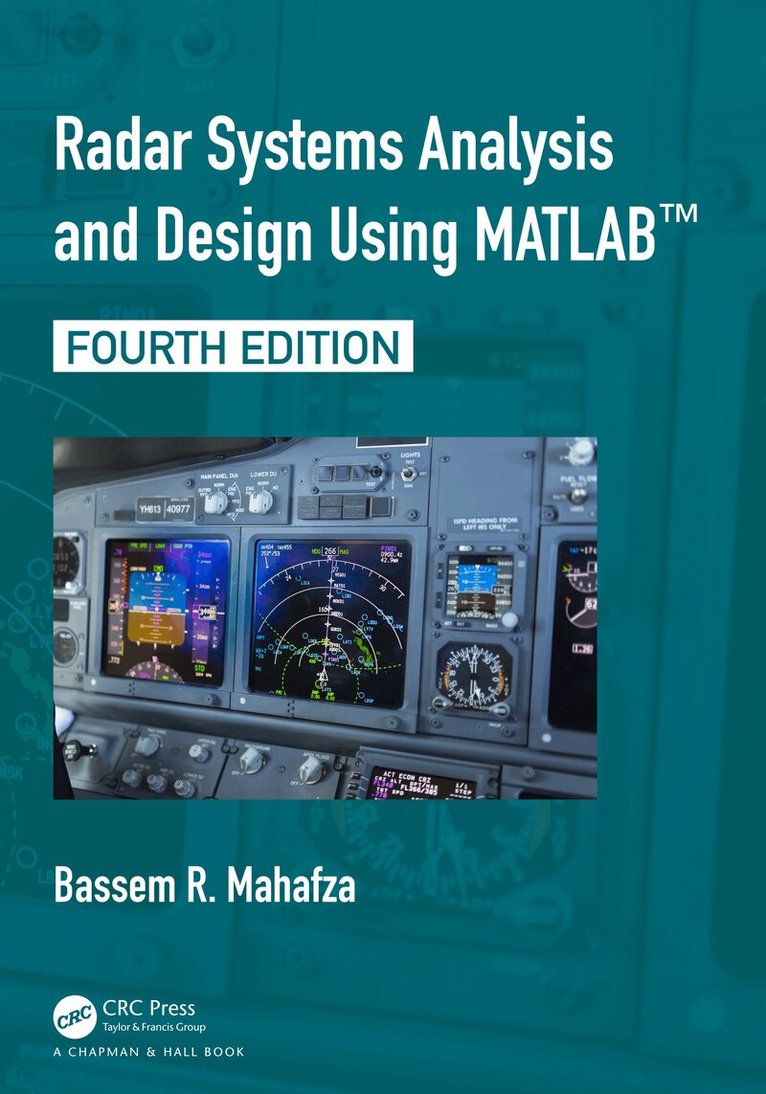
Simulation is integral to the successful design of modern radar systems, and there is arguably no better software for this purpose than MATLAB. But software and the ability to use it does not guarantee success. One must also:Understand radar operations and design philosophyKnow how to select the radar parameters to meet the design req
1 736 kr
Skickas inom 10-15 vardagar
909 kr
Läs direkt efter köp
The first edition of this ground-breaking and widely used book introduced a comprehensive textbook on radar systems analysis and design providing hands-on experience facilitated by its companion MATLAB® software. The book very quickly turned into a bestseller. Based on feedback provided by several users and drawing from the author''s own teaching experience, the 4th edition adopts a new approach.
The presentation in this edition takes the reader on a scientific journey whose major landmarks comprise the different radar sub-systems and components. Along the way, the different relevant radar subsystems are analyzed and discussed in great level of detail. Understanding the radar signal types and their associated radar signal processing techniques are key to understating how radar systems function.
Each chapter provides the necessary mathematical and analytical coverage required for a sound understanding of radar theory. Additionally, dedicated MATLAB® functions/programs enhance the understanding of the theory and establish a means to perform radar system analysis and design trades.
The software provides users with numerous varieties of graphical outputs. Additionally, a complete set of MATLAB® code that generates all plot and graphs found within the pages of this textbook are also available. All companion MATLAB® code can be downloaded from the book’s web page.
The 4th Edition:
Takes advantage of the new features offered by MATLAB® 2021 release Brings the text to a current state of the art Incorporates much of the feedback received from users using this book as a text and from practicing engineers; accordingly, several chapters have been rewritten Presents unique topics not found in other books Maintains a comprehensive and exhaustive presentation Restructures the presentation to be more convenient for course use Provides a post-course reference for engineering students as they enter the field Offers a companion solutions manual for instructorsThe 4th edition will serve as a valuable tool to students and radar engineers by helping them better analyze and understand the many topics of radar systems. This book is written primarily as a graduate-level textbook, although parts of it can be used as a senior level course. A companion solutions manual has been developed for use by instructors.
909 kr
Läs direkt efter köp
The first edition of this ground-breaking and widely used book introduced a comprehensive textbook on radar systems analysis and design providing hands-on experience facilitated by its companion MATLAB® software. The book very quickly turned into a bestseller. Based on feedback provided by several users and drawing from the author''s own teaching experience, the 4th edition adopts a new approach.
The presentation in this edition takes the reader on a scientific journey whose major landmarks comprise the different radar sub-systems and components. Along the way, the different relevant radar subsystems are analyzed and discussed in great level of detail. Understanding the radar signal types and their associated radar signal processing techniques are key to understating how radar systems function.
Each chapter provides the necessary mathematical and analytical coverage required for a sound understanding of radar theory. Additionally, dedicated MATLAB® functions/programs enhance the understanding of the theory and establish a means to perform radar system analysis and design trades.
The software provides users with numerous varieties of graphical outputs. Additionally, a complete set of MATLAB® code that generates all plot and graphs found within the pages of this textbook are also available. All companion MATLAB® code can be downloaded from the book’s web page.
The 4th Edition:
Takes advantage of the new features offered by MATLAB® 2021 release Brings the text to a current state of the art Incorporates much of the feedback received from users using this book as a text and from practicing engineers; accordingly, several chapters have been rewritten Presents unique topics not found in other books Maintains a comprehensive and exhaustive presentation Restructures the presentation to be more convenient for course use Provides a post-course reference for engineering students as they enter the field Offers a companion solutions manual for instructorsThe 4th edition will serve as a valuable tool to students and radar engineers by helping them better analyze and understand the many topics of radar systems. This book is written primarily as a graduate-level textbook, although parts of it can be used as a senior level course. A companion solutions manual has been developed for use by instructors.
699 kr
Skickas inom 10-15 vardagar
3 273 kr
Läs direkt efter köp
Simulation is integral to the successful design of modern radar systems, and there is arguably no better software for this purpose than MATLAB. But software and the ability to use it does not guarantee success. One must also:Understand radar operations and design philosophyKnow how to select the radar parameters to meet the design req
2 773 kr
Skickas inom 10-15 vardagar
3 244 kr
Läs direkt efter köp
This new handbook on radar signal analysis adopts a deliberate and systematic approach. It uses a clear and consistent level of delivery while maintaining strong and easy-to-follow mathematical details. The emphasis of this book is on radar signal types and their relevant signal processing and not on radar systems hardware or components.
This handbook serves as a valuable reference to a wide range of audience. More specifically, college-level students, practicing radar engineers, as well as casual readers of the subject are the intended target audience of the first few chapters of this book. As the book chapters progress, these grow in complexity and specificity. Accordingly, later chapters are intended for practicing engineers, graduate college students, and advanced readers. Finally, the last few chapters contain several special topics on radar systems that are both educational and scientifically entertaining to all readers.
The presentation of topics in this handbook takes the reader on a scientific journey whose major landmarks comprise the different radar subsystems and components. In this context, the chapters follow the radar signal along this journey from its birth to the end of its life. Along the way, the different relevant radar subsystems are analyzed and discussed in great detail.
The chapter contributors of this new handbook comprise experienced academia members and practicing radar engineers. Their combined years of academic and real-world experiences are in excess of 175. Together, they bring a unique, easy-to-follow mix of mathematical and practical presentations of the topics discussed in this book. See the "Chapter Contributors" section to learn more about these individuals.
3 244 kr
Läs direkt efter köp
This new handbook on radar signal analysis adopts a deliberate and systematic approach. It uses a clear and consistent level of delivery while maintaining strong and easy-to-follow mathematical details. The emphasis of this book is on radar signal types and their relevant signal processing and not on radar systems hardware or components.
This handbook serves as a valuable reference to a wide range of audience. More specifically, college-level students, practicing radar engineers, as well as casual readers of the subject are the intended target audience of the first few chapters of this book. As the book chapters progress, these grow in complexity and specificity. Accordingly, later chapters are intended for practicing engineers, graduate college students, and advanced readers. Finally, the last few chapters contain several special topics on radar systems that are both educational and scientifically entertaining to all readers.
The presentation of topics in this handbook takes the reader on a scientific journey whose major landmarks comprise the different radar subsystems and components. In this context, the chapters follow the radar signal along this journey from its birth to the end of its life. Along the way, the different relevant radar subsystems are analyzed and discussed in great detail.
The chapter contributors of this new handbook comprise experienced academia members and practicing radar engineers. Their combined years of academic and real-world experiences are in excess of 175. Together, they bring a unique, easy-to-follow mix of mathematical and practical presentations of the topics discussed in this book. See the "Chapter Contributors" section to learn more about these individuals.
2 773 kr
Skickas inom 10-15 vardagar
2 151 kr
Skickas inom 10-15 vardagar
811 kr
Läs direkt efter köp
Introduction to Radar Analysis, Second Edition is a major revision of the popular textbook. It is written within the context of communication theory as well as the theory of signals and noise. By emphasizing principles and fundamentals, the textbook serves as a vital source for students and engineers.
Part I bridges the gap between communication, signal analysis, and radar. Topics include modulation techniques and associated Continuous Wave (CW) and pulsed radar systems.
Part II is devoted to radar signal processing and pulse compression techniques.
Part III presents special topics in radar systems including radar detection, radar clutter, target tracking, phased arrays, and Synthetic Aperture Radar (SAR).
Many new exercise are included and the author provides comprehensive easy-to-follow mathematical derivations of all key equations and formulas.
The author has worked extensively for the U.S. Army, the U.S. Space and Missile Command, and other military agencies. This is not just a textbook for senior level and graduates students, but a valuable tool for practicing radar engineers.
Features
Authored by a leading industry radar professional.
Comprehensive up-to-date coverage of radar systems analysis issues.
Easy to follow mathematical derivations of all equations and formulas
Numerous graphical plots and table format outputs. One part of the book is dedicated to radar waveforms and radar signal processing.
811 kr
Läs direkt efter köp
Introduction to Radar Analysis, Second Edition is a major revision of the popular textbook. It is written within the context of communication theory as well as the theory of signals and noise. By emphasizing principles and fundamentals, the textbook serves as a vital source for students and engineers.
Part I bridges the gap between communication, signal analysis, and radar. Topics include modulation techniques and associated Continuous Wave (CW) and pulsed radar systems.
Part II is devoted to radar signal processing and pulse compression techniques.
Part III presents special topics in radar systems including radar detection, radar clutter, target tracking, phased arrays, and Synthetic Aperture Radar (SAR).
Many new exercise are included and the author provides comprehensive easy-to-follow mathematical derivations of all key equations and formulas.
The author has worked extensively for the U.S. Army, the U.S. Space and Missile Command, and other military agencies. This is not just a textbook for senior level and graduates students, but a valuable tool for practicing radar engineers.
Features
Authored by a leading industry radar professional.
Comprehensive up-to-date coverage of radar systems analysis issues.
Easy to follow mathematical derivations of all equations and formulas
Numerous graphical plots and table format outputs. One part of the book is dedicated to radar waveforms and radar signal processing.
2 773 kr
Skickas inom 10-15 vardagar