Ato Kwamena Onoma - Böcker
Visar alla böcker från författaren . Handla med fri frakt och snabb leverans.
6 produkter
6 produkter
1 245 kr
Skickas inom 7-10 vardagar
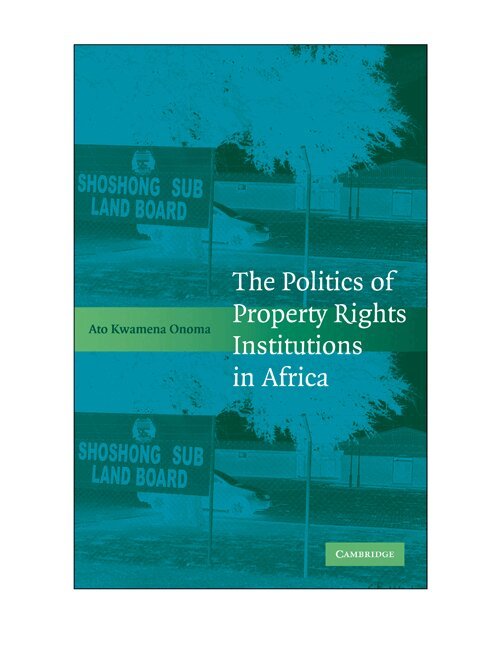
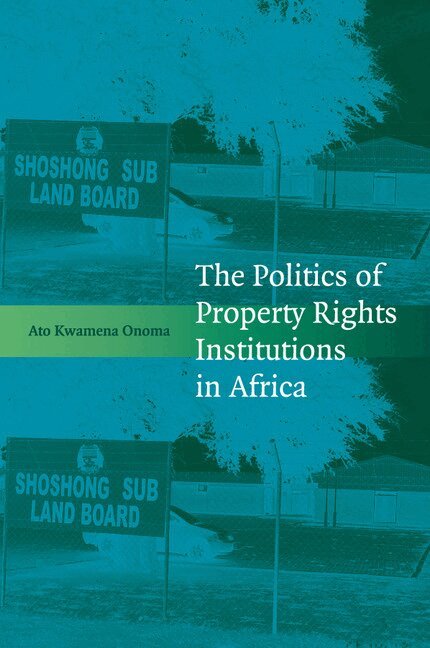
Why do some political leaders create and strengthen institutions like title registries and land tribunals that secure property rights to land while others neglect these institutions or destroy those that already exist? How do these institutions evolve once they have been established? This book answers these questions through spatial and temporal comparison of national and subnational cases from Botswana, Ghana, and Kenya and, to a lesser extent, Zimbabwe. Onoma argues that the level of property rights security that leaders prefer depends on how they use land. However, the extent to which leaders' institutional preferences are translated into actual institutions depends on the level of leaders' capacity. Further, once established, these institutions through their very working can contribute to their own decline over time. This book is unique in revealing the political and economic reasons why some leaders unlike others prefer an environment of insecure rights even as land prices increase.
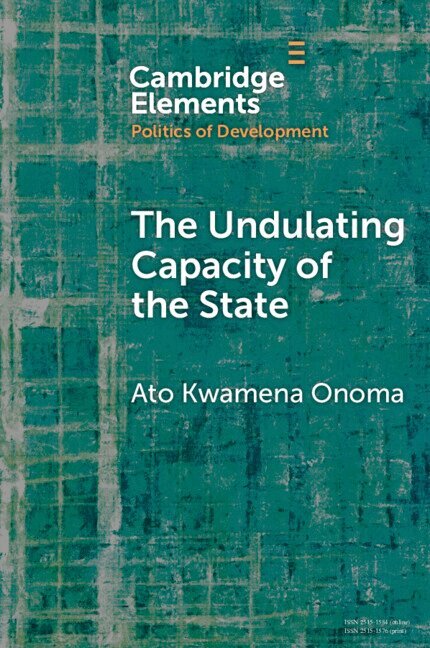
The Undulating Capacity of the State
Autochthony and Infrastructure Development in African Cities
Inbunden, Engelska, 2025
753 kr
Skickas inom 7-10 vardagar
This Element weaves together literatures on autochthony and belonging and on African urbanism to shed new light on the ability of the African state to undertake development interventions in some of the most important urban centers on the continent. It explains variations in levels of trust in the African state that shape neighborhoods' responses to states' development interventions. Focusing on the Senegalese state's construction of the VDN 2 highway on the outskirts of the capital, Dakar, the author argues that in major African cities with colonial origins, whether neighborhoods project themselves as 'autochthonous' or 'migrant' communities shapes general attitudes toward the state and influences the capacity of the state to carry out development interventions in these areas. In these cities, states are more likely to successfully intervene in neighborhoods dominated by 'new' migrants to the city than in those neighborhoods that portray themselves as 'autochthones' of these cities.
The Undulating Capacity of the State
Autochthony and Infrastructure Development in African Cities
Häftad, Engelska, 2025
234 kr
Skickas inom 7-10 vardagar
This Element weaves together literatures on autochthony and belonging and on African urbanism to shed new light on the ability of the African state to undertake development interventions in some of the most important urban centers on the continent. It explains variations in levels of trust in the African state that shape neighborhoods' responses to states' development interventions. Focusing on the Senegalese state's construction of the VDN 2 highway on the outskirts of the capital, Dakar, the author argues that in major African cities with colonial origins, whether neighborhoods project themselves as 'autochthonous' or 'migrant' communities shapes general attitudes toward the state and influences the capacity of the state to carry out development interventions in these areas. In these cities, states are more likely to successfully intervene in neighborhoods dominated by 'new' migrants to the city than in those neighborhoods that portray themselves as 'autochthones' of these cities.
1 245 kr
Skickas inom 7-10 vardagar
Using comparative cases from Guinea, Uganda, and the Democratic Republic of Congo, this study explains why some refugee-hosting communities launch large-scale attacks on civilian refugees whereas others refrain from such attacks even when encouraged to do so by state officials. Ato Kwamena Onoma argues that such outbreaks only happen when states instigate them because of links between a few refugees and opposition groups. Locals embrace these attacks when refugees are settled in areas that privilege residence over indigeneity in the distribution of rights, ensuring that they live autonomously of local elites. The resulting opacity of their lives leads locals to buy into their demonization by the state. Locals do not buy into state denunciation of refugees in areas that privilege indigeneity over residence in the distribution of rights because refugees in such areas are subjugated to locals who come to know them very well. Onoma reorients the study of refugees back to a focus on the disempowered civilian refugees that constitute the majority of refugees even in cases of severe refugee militarization.
428 kr
Skickas inom 7-10 vardagar
Why do some political leaders create and strengthen institutions like title registries and land tribunals that secure property rights to land while others neglect these institutions or destroy those that already exist? How do these institutions evolve once they have been established? This book answers these questions through spatial and temporal comparison of national and subnational cases from Botswana, Ghana, and Kenya and, to a lesser extent, Zimbabwe. Onoma argues that the level of property rights security that leaders prefer depends on how they use land. However, the extent to which leaders' institutional preferences are translated into actual institutions depends on the level of leaders' capacity. Further, once established, these institutions through their very working can contribute to their own decline over time. This book is unique in revealing the political and economic reasons why some leaders unlike others prefer an environment of insecure rights even as land prices increase.
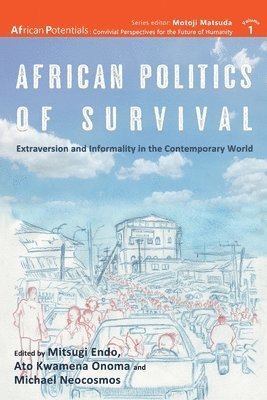
African Politics of Survival Extraversion and Informality in the Contemporary World
Häftad, Engelska, 2021
607 kr
Skickas inom 5-8 vardagar