Attila Nóbik – författare
Visar alla böcker från författaren Attila Nóbik. Handla med fri frakt och snabb leverans.
2 produkter
2 produkter
Del 7 - Erziehung in Wissenschaft Und Praxis
Normalitaet, Abnormalitaet und Devianz
Gesellschaftliche Konstruktionsprozesse und ihre Umwaelzungen in der Moderne
Inbunden, Engelska, 2010
592 kr
Tillfälligt slut
Normalität, Abnormalität und Devianz existieren in allen Gesellschaften. Allerdings entfalten sie in der Moderne ihre spezifische Bedeutung und Brisanz. Die Beiträge in diesem Band analysieren die Konzeptionen und Konstruktionsprozesse aus inter- bzw. teildisziplinären Perspektiven der Erziehungswissenschaft. Historisch interessierte Vertreterinnen der Allgemeinen Pädagogik und der Sonderpädagogik nähern sich den Phänomenen und deren Interpretationen behutsam und (selbst-)kritisch aus unterschiedlichen Blickwinkeln. Sie schreiben ein Stück Geschichte der Erziehung und zugleich auch der Sonderpädagogik entlang der sozialen Konstruktionen von normalen und abnormalen Kindern und Jugendlichen. Verschiedene, aber verwandte Gesichtspunkte der beiden Teildisziplinen verweben sich zu einem farbigen Gesamtbild der Thematik.Dieser Band enthält neben 17 Beiträgen auf Deutsch auch 6 Beiträge auf Englisch.
Del 10 - Studia Educationis Historica
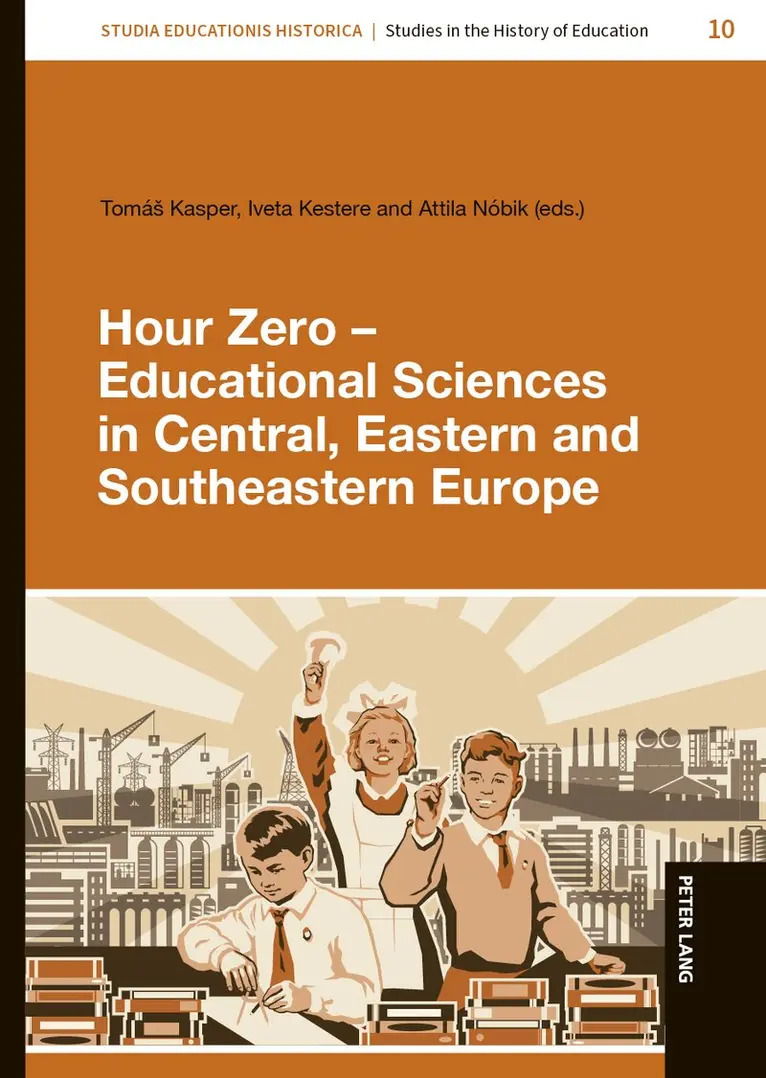
Hour Zero – Educational Sciences in Central, Eastern and Southeastern Europe
Inbunden, Engelska, 2026
978 kr
Skickas inom 3-6 vardagar
The book explores the ideologization, political instrumentalization and sovietization of educational sciences in Eastern and Central Europe following World War II, with a particular focus on the 1950s. Amid the revolutionary transformation of communist society and under Moscow's influence, educational sciences were positioned as instruments for shaping the "New Soviet Man". However, this process of subordinating science to political-ideological objectives was not uniform across the Eastern Bloc. The authors examine the tensions between continuity and rupture in the emerging "new order of science," navigating the interplay between national traditions and the Soviet model of "best practices." The book employs a transnational comparative approach, drawing on methodologies for analysing scientific transfer and policy of borrowing-lending. Through discursive and content analysis of primary sources it provides a nuanced understanding of how educational sciences were reshaped under Soviet influence.